
Gun Control Groups Urge Faster Protection Order Changes
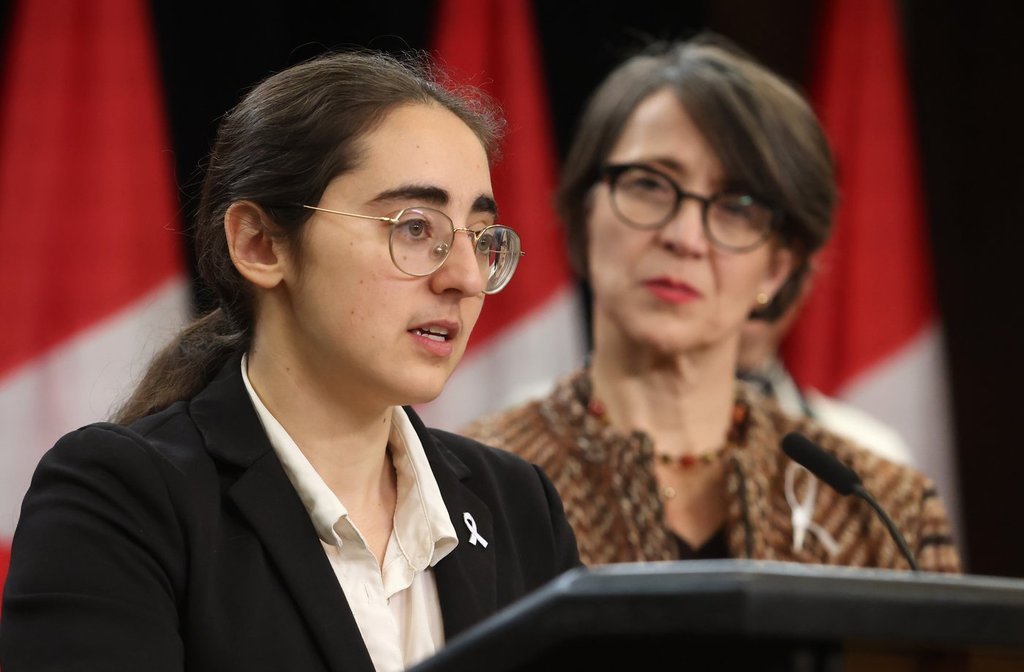
Gun Control Groups Urge Faster Protection Order Ineligibility Change A coalition of women's advocacy and gun control organisations is urging Prime Minister Mark Carney to fully implement a key measure from firearms legislation passed in December 2023 — a provision that would automatically render individuals subject to protection orders ineligible to hold firearms licences. The
Gun Control Groups Urge Faster Protection Order Ineligibility Change
A coalition of women's advocacy and gun control organisations is urging Prime Minister Mark Carney to fully implement a key measure from firearms legislation passed in December 2023 — a provision that would automatically render individuals subject to protection orders ineligible to hold firearms licences. The measure, designed to remove firearms from abusers in intimate partner violence cases, remains unenforced more than two and a half years after the bill received royal assent, as the federal government continues to develop the necessary regulations.
Tags: gun control, protection orders, intimate partner violence, Public Safety Canada, Mark Carney, Gary Anandasangaree, firearms legislation
The Legislative Background
Ottawa, Ontario – June 18, 2026 — The firearms legislation passed in December 2023 included a provision that would make individuals subject to a protection order ineligible to hold a firearms licence while the order remains in effect. This measure targets situations involving intimate partner violence, where the presence of firearms can escalate risks to survivors and children. The bill aimed to ensure automatic revocation of licences upon the issuance of such orders, reflecting Parliament's intent to close gaps in existing licensing processes.
Under the legislation, the term "protection order" requires definition through regulation before full implementation can occur. Record-keeping and reporting requirements must also be established to allow authorities to track and enforce the ineligibility provisions effectively. Public Safety Canada completed a public consultation on the proposed regulations in early March, gathering input on how broadly the definition should apply across civil and criminal contexts.
The government has acknowledged the need for additional regulatory work. Public Safety Minister Gary Anandasangaree noted in a recent interview that substantial effort has gone into preparing the regulations, with a target of having them in place by late September. This cautious timeline reflects the complexity of aligning federal licensing systems with provincial and territorial court processes.
The Urgent Call to Action
A coalition of organisations, including the National Association of Women and the Law, PolySeSouvient, Danforth Families for Safe Communities, Canadian Doctors for Protection from Guns, the Canadian Femicide Observatory for Justice and Accountability, and the Quebec Mosque, has issued a joint statement urging the Liberal government to move the measure forward "without further delay." The groups emphasise that the provision was designed to remove firearms from abusers during periods of heightened danger, and that delays in implementation leave survivors exposed.
In an analysis endorsed by the coalition, the National Association of Women and the Law highlights Parliament's deliberate choice of a broad definition of protection order in the 2023 bill. This approach was intended to capture any binding civil or criminal order aimed at protecting an individual's safety or security. The organisations argue that narrowing the scope would undermine the legislation's protective purpose and contradict the clear direction set by Parliament.
"The department is reviewing how this occurred and is taking steps to ensure applications are assessed fairly and lawfully," the statement notes. The call to action comes as the government finalises regulatory language that will determine the scope and effectiveness of the protection order provisions.
Canadian Context on Gun Violence and Intimate Partner Violence
Intimate partner violence remains a persistent challenge across Canada, with firearms often playing a lethal role in domestic incidents. Federal efforts to strengthen gun control intersect with provincial responsibilities for family courts and victim services, creating a need for coordinated implementation. The 2023 legislation sought to address these intersections by linking protection orders directly to firearms licensing administered through the Canada Firearms Program.
Canadian values of public safety and gender equality underpin the push for faster regulatory action. Rural and remote communities, where firearm ownership rates tend to be higher, stand to benefit from clearer rules that prevent prohibited individuals from retaining access to weapons. Federal-provincial relations play a key role here, as court orders issued in one jurisdiction must be recognised consistently nationwide.
Immigration and Indigenous relations also factor into the broader picture, as protection orders can involve diverse populations with varying access to legal supports. Ensuring equitable application of the new ineligibility rules supports the federal government's commitments to reducing gender-based violence in all regions. The Canadian Femicide Observatory for Justice and Accountability has documented cases where firearms in domestic settings contributed to lethal outcomes, underscoring the urgency of closing regulatory gaps.
Reactions and Analysis
Suzanne Zaccour, director of legal affairs at the National Association of Women and the Law, stated that it "makes no sense that some survivors would receive protections while others would not, based not on the level of danger they face, but on procedural technicalities." She added that "violence does not become less lethal because it is dealt with in a different stage of the legal system."
The coalition's analysis points to specific concerns about the government's proposed narrower approach. This would exclude certain criminal protection orders, such as bail release orders and probation orders, from triggering automatic licence revocation. The result, they argue, creates an "arbitrary and dangerous distinction" where a survivor who has obtained a peace bond where no charges were laid receives protection, while a survivor whose abuser has been charged and released on bail with similar no-contact conditions may not.
"Excluding these orders creates an arbitrary and dangerous distinction," the analysis says. Advocacy groups stress that such gaps contradict the clear legislative direction set by Parliament in 2023. They argue that a broad definition aligns with the original intent to safeguard women and children from intimate partner gun violence through consistent licence revocation mechanisms.
Implementation Challenges and Regulatory Delays
Bringing the protection order provisions into force requires careful coordination between Public Safety Canada and the Canada Firearms Program. Record-keeping systems must be updated to receive and act upon notifications from courts across the country. Reporting requirements will help monitor compliance and identify any enforcement shortfalls once the regulations take effect.
The consultation process concluded in early March, allowing time for refinements before the hoped-for September timeline. Officials have indicated that defining "protection order" in regulation demands precision to avoid unintended exclusions while maintaining legal clarity for licensing officers. These steps illustrate the measured pace often required when federal legislation intersects with provincial justice systems.
Public Safety Minister Gary Anandasangaree acknowledged the complexity of the regulatory process, noting in a recent interview that "quite a bit of work" had gone into preparing the regulations. The government has stated it hopes to have the regulations in place by late September of this year, though advocates have expressed frustration with the pace given the risks to survivors.
What Happens Next
With the public consultation complete, attention now turns to finalising the regulatory text. Minister Anandasangaree has indicated that the government aims to have the regulations ready by late September, allowing the ineligibility provisions to begin applying once the necessary systems are operational. Advocacy organisations will continue pressing for a broad definition that covers the full range of protection orders contemplated by Parliament.
Their ongoing engagement reflects the importance of aligning regulatory details with the protective goals established in the 2023 legislation. Observers in Ottawa will watch for updates from Public Safety Canada on the progress of these regulations. Successful implementation would mark a concrete step toward reducing the risks posed by firearms in intimate partner violence cases across Canada.
The coalition's statement serves as a reminder that legislative intent alone does not ensure safety — it is the regulatory follow-through that determines whether survivors are genuinely protected. With the September deadline approaching, the pressure is now on the government to deliver on its commitments and ensure that protection orders, regardless of the legal proceeding in which they are issued, trigger the automatic removal of firearms from potentially dangerous situations.
By Alex Thompson, Staff Writer
This article was produced with AI-assisted research and editorial support. Reporting is based on sources cited in the article.
What's Your Reaction?
 Like
0
Like
0
 Dislike
0
Dislike
0
 Love
0
Love
0
 Funny
0
Funny
0
 Wow
0
Wow
0
 Sad
0
Sad
0
 Angry
0
Angry
0

Canada Correspondent at Global1.News. Based in Toronto, covering Canadian politics, energy, trade, and US-Canada relations. Provides the Canadian perspective on North American and global affairs.












Comments (0)