
US Sends Second Carrier to Middle East as Trump Warns Iran
As the US-Iran war grinds into its sixth month with no clear end in sight, Washington has dramatically escalated its naval presence in the region. The arrival of a second carrier strike group signals that diplomacy may soon give way to renewed force if fragile talks collapse. This move places the world’s largest warship alongside existing assets, raising the stakes for Tehran and its neighbors alike. US Carrier Buildup Raises Stakes in Iran Conflict Beirut, Lebanon — Artic...
US Carrier Buildup Raises Stakes in Iran Conflict
Beirut, Lebanon — Article continues...
Carrier Deployment Signals US Leverage in Prolonged US-Iran Conflict
The US-Iran war that erupted on February 28, 2026, after US-Israeli strikes killed Iranian officials including Supreme Leader Khamenei has entered a volatile new phase. President Trump ordered the USS Gerald R. Ford, the world's largest aircraft carrier at 100,000 tons and nuclear-powered, to the Middle East to join the USS Abraham Lincoln already operating in the Arabian Sea. A third carrier, the USS George H.W. Bush, was ultimately deployed to the eastern Mediterranean. This concentration of naval power serves as explicit leverage while diplomatic channels remain open but fragile.
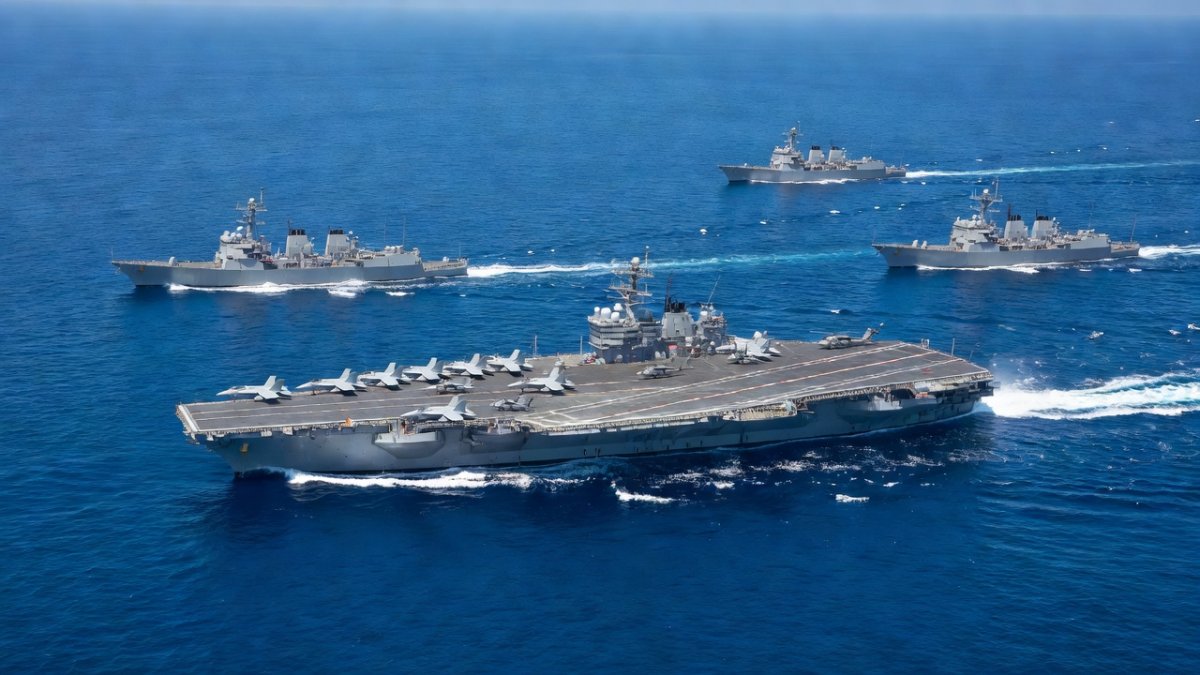
Trump's Direct Warning Ties Naval Assets to Negotiation Outcomes
Trump stated that the second carrier was needed because "In case we don't make a deal, we'll need it." The deployment underscores Washington's readiness to resume strikes if current talks collapse. Admiral Brad Cooper recommended pausing operations after concluding that daily strikes had reached their limit of effectiveness. The pause, now in its third night as of July 28, 2026, reflects this assessment while preserving the option for rapid resumption.
Timeline from Initial Strikes to Collapsed June Agreement
US-Israeli strikes on February 28, 2026, triggered open conflict. A 14-point Memorandum of Understanding signed on June 17 offered a temporary framework but collapsed within weeks. Fighting resumed in mid-July with sustained US strikes on Iranian targets. The current three-night pause represents the first sustained break since that resumption, driven by both operational limits and external mediation efforts.
The February 28, 2026, trigger event unfolded when US-Israeli airstrikes targeted Iranian leadership, killing Supreme Leader Ayatollah Ali Khamenei along with several IRGC commanders including Major General Hossein Salami and Brigadier General Mohammad Reza Zahedi. This operation, conducted from bases in the region and involving F-35s and B-2 bombers, marked a dramatic escalation in the long-simmering US-Iran conflict. Iran's immediate response involved launching over 200 ballistic missiles at US installations in Iraq, such as Al-Asad Airbase, and Gulf state facilities including those in Saudi Arabia and the UAE, resulting in dozens of casualties and significant infrastructure damage. These strikes set the stage for a cycle of retaliation that would define the subsequent months of conflict.
The June 17 Memorandum of Understanding attempted to de-escalate tensions through 14 detailed points, encompassing phased sanctions relief tied to nuclear restrictions and the reopening of the Strait of Hormuz to commercial traffic. However, the agreement collapsed amid irreconcilable disputes over verification mechanisms for Iran's nuclear sites, limits on its ballistic missile program, and continued funding for proxy forces like Hezbollah and the Houthis. By mid-July, the US resumed military operations with 13 consecutive nights of strikes on Iranian energy infrastructure, including power plants in Tehran and Bushehr, oil refineries at Abadan and Isfahan, IRGC command centers, and missile batteries in western Iran. These targeted actions aimed to degrade Tehran's capacity for sustained warfare while highlighting the fragility of diplomatic efforts in the face of deep strategic mistrust.
Mediation Efforts by Qatar and Pakistan Amid Ongoing Risks
Qatar and Pakistan are actively mediating ceasefire talks. These efforts occur against the backdrop of Israel's insistence that any agreement must constrain Iran's missile program and proxy funding. Netanyahu has pressed for these provisions, viewing them as essential to long-term Israeli security. The mediators face the challenge of bridging gaps between Washington's maximum-pressure posture and Tehran's demands for sanctions relief and recognition of its regional role.
Gulf States, Iraq, and Turkey Navigate Heightened Regional Tensions
Gulf Arab states are watching nervously as oil prices have surged past $100 per barrel. Iraq's oil exports have fallen sharply from 4.2 million to 1.5 million barrels per day due to disruptions in the Strait of Hormuz. Turkey maintains a cautious stance, balancing NATO ties with economic interests in energy transit and avoiding direct entanglement. These dynamics illustrate how the conflict amplifies existing Sunni-Shia competition and strains Gulf diversification plans away from hydrocarbon dependence.
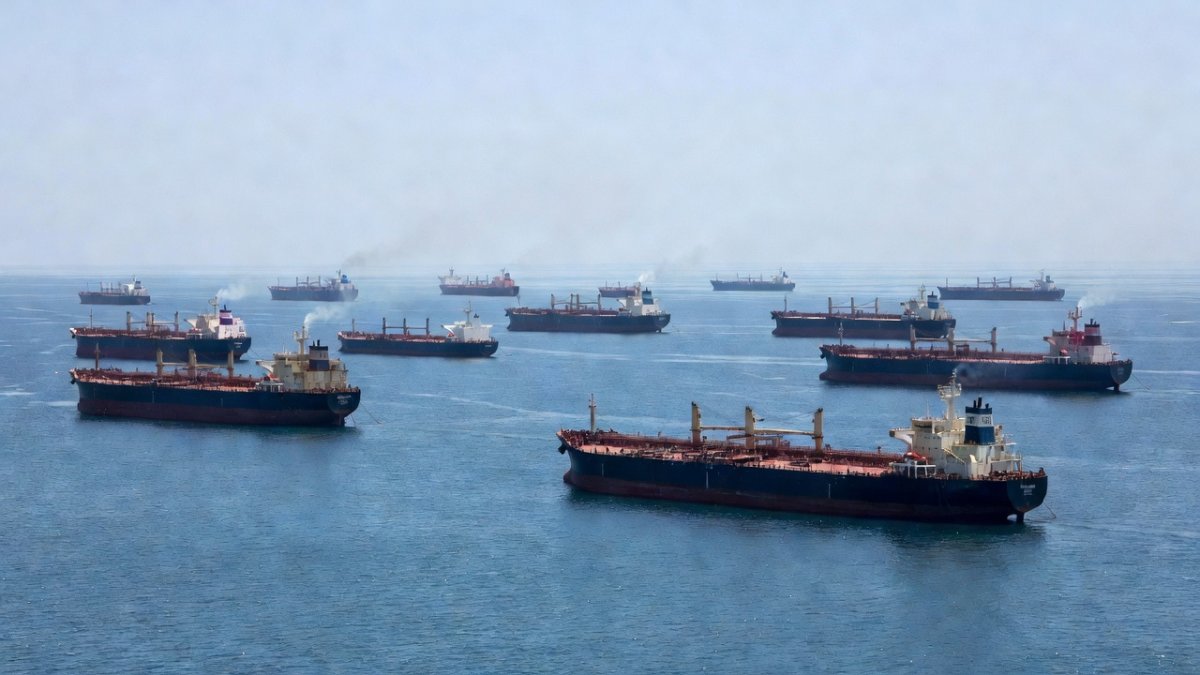
Energy Market Volatility and Hormuz Chokepoint Disruptions
Shipping through the Strait of Hormuz has been heavily disrupted, driving price volatility and prompting discussions of pipeline bypass routes. Iraq's reduced output highlights the vulnerability of Gulf producers. If implemented, alternative export corridors could mitigate some risks, but current conditions favor short-term price spikes over long-term infrastructure shifts. Great-power competition adds another layer, as China and Russia monitor US naval movements for signs of sustained commitment or overextension.
The Strait of Hormuz, through which 15 million barrels per day normally transit, has seen traffic reduced by approximately 60 percent due to ongoing hostilities and insurance concerns, severely constraining global oil flows. Iraq's oil exports plummeted from 4.2 million barrels per day in February to just 1.5 million barrels per day by May, representing a 64 percent collapse that has strained Baghdad's economy and regional supply chains. Brent crude prices surged past the $100 per barrel mark, peaking at $115 on days of intense escalation, prompting fears of broader inflationary pressures worldwide. Alternative pipeline routes, such as the Iraq-Syria Mediterranean pipeline to Baniyas, the Iraq-Turkey pipeline, and Saudi Arabia's East-West pipeline across the Arabian Peninsula, have been fast-tracked but face logistical and security hurdles that limit their immediate effectiveness.
On July 27, 2026, Lebanon proposed offering Iraq a transit route via its Tripoli terminal to bypass Hormuz disruptions, a move that underscores the shifting alliances amid the crisis. Gulf sovereign wealth funds, holding over $3 trillion in assets, stand at significant risk from prolonged instability that could erode investment returns and regional stability. Meanwhile, OPEC+ has maintained steady production levels to prevent additional price spikes, though this strategy risks depleting spare capacity if the conflict drags on. These disruptions not only affect energy markets but also amplify geopolitical tensions, as nations scramble to secure alternative supplies and mitigate the economic fallout from the chokepoint's effective closure.
Strategic Calculus of Each Actor and Their Available Leverage
The United States seeks to degrade Iranian capabilities while avoiding a wider regional war. Its leverage rests on carrier strike groups and the ability to sustain operations. Iran aims to preserve regime survival and proxy networks, using asymmetric tactics and the threat of Hormuz closure. Israel prioritizes limits on missiles and proxies, leveraging its intelligence and strike capabilities. Gulf states want stability to protect energy revenues but lack direct military leverage. Qatar and Pakistan gain diplomatic influence as mediators. Second-order effects include accelerated Arab-Israeli normalization talks if Iran is weakened, or renewed Turkish assertiveness if the conflict drags on.
Outlook for Regional Stability and Potential Escalation Paths
The current pause offers a narrow window for agreement, yet Trump's carrier deployment keeps escalation credible. If talks fail, renewed strikes could further disrupt energy flows and draw in additional actors. Conversely, a deal addressing missiles and proxies might stabilize markets and ease pressure on Iraq. The coming weeks will test whether naval presence translates into diplomatic gains or merely prolongs a costly stalemate across the Middle East.
By Malik Hassan, Staff WriterThis article was produced with AI-assisted research and editorial support. Reporting is based on sources cited in the article.
What's Your Reaction?
 Like
0
Like
0
 Dislike
0
Dislike
0
 Love
0
Love
0
 Funny
0
Funny
0
 Wow
0
Wow
0
 Sad
0
Sad
0
 Angry
0
Angry
0

Middle East Correspondent at Global1.News. Based in Beirut, covering politics, conflict, energy, and society across the Middle East. Brings context and depth to a region often reduced to headlines.










Comments (0)