
Iran-US Deal Strains Netanyahu's Alliance with Trump
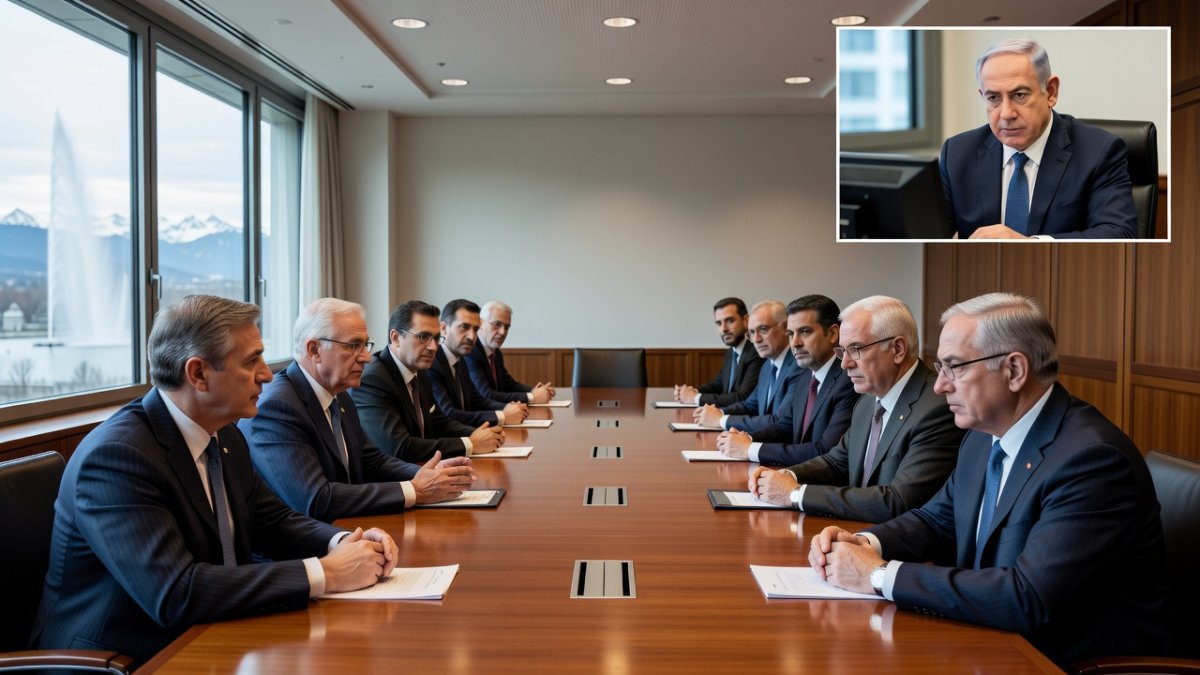
In a recent CGTN report examining the latest round of U.S.-Iran negotiations, analysts probe whether Israeli Prime Minister Benjamin Netanyahu genuinely seeks success for the emerging agreement. The video highlights the paradox facing Netanyahu: his closest international ally, U.S. President Donald Trump, has advanced a memorandum of understanding that many Israelis regard as a
The Contours of the U.S.-Iran Memorandum
The June 2026 memorandum represents a limited but concrete step toward de-escalation. It establishes monitoring mechanisms for Iran's nuclear activities while preserving Tehran's stated right to uranium enrichment under President Masoud Pezeshkian. Iran's chief negotiator Mohammad Ghalibaf has reiterated that the country's armed forces remain prepared to respond to any renewed threats. The agreement does not dismantle Iran's regional proxy relationships, nor does it impose immediate caps on ballistic-missile development. For Washington, the document offers a pathway to reduce direct military exposure in the Persian Gulf while maintaining leverage through sanctions relief tied to verifiable compliance steps. For Tehran, it secures breathing room to stabilize an economy battered by years of confrontation without conceding core strategic assets.
Netanyahu's Strategic Dilemma
Netanyahu confronts the unusual position of opposing an accord brokered by President Trump, the leader whose support has long insulated him from international isolation. The memorandum undercuts Israel's preferred maximum-pressure posture by opening channels for indirect economic engagement between Washington and Tehran. Netanyahu's government had anticipated that sustained U.S. military action would force deeper Iranian concessions; instead, the deal freezes the immediate conflict without resolving the underlying nuclear threshold issue. This outcome exposes the limits of Israeli influence over U.S. decision-making once American casualties and regional escalation risks enter the equation. Netanyahu must now calibrate criticism of the memorandum without fracturing the bilateral security relationship that supplies Israel with advanced munitions and intelligence cooperation.
Israeli Security Calculations on Iran's Nuclear and Proxy Networks
Israeli officials across parties view the memorandum as insufficient to neutralize Iran's nuclear breakout capacity or its network of regional partners. Enrichment activities continue under the framework, and Hezbollah's launch of more than fifty rockets in mid-June underscores the persistence of forward-deployed threats. Israeli strategists argue that any agreement leaving Iran's enrichment infrastructure intact merely postpones a future confrontation under less favorable conditions. The proxy dimension compounds the concern: reduced direct U.S.-Iran friction could free Iranian resources for support to groups operating along Israel's northern and southern borders. These assessments reflect a long-standing Israeli doctrine that prioritizes prevention over containment when facing a nuclear-threshold adversary.
Domestic Political Repercussions for Netanyahu
The memorandum has triggered unusually broad domestic criticism inside Israel. Public anger spans the political spectrum, with opposition figures and coalition partners alike labeling the outcome a diplomatic failure. Netanyahu enters the fall 2026 election cycle without the unambiguous backing of a sitting U.S. president, a departure from previous campaigns in which alignment with Washington provided electoral ballast. The erosion of this prop forces Netanyahu to emphasize alternative security credentials, including ongoing operations against Hezbollah and assertions of independent Israeli deterrence. Yet sustained public discontent over the perceived weakening of Israel's strategic position risks accelerating coalition defections and narrowing his governing margin ahead of the vote.
China's Interest in Regional De-escalation
Beijing approaches the memorandum through the lens of energy security and the Belt and Road Initiative. Stable Persian Gulf shipping lanes and predictable Iranian oil exports directly support China's import requirements, while infrastructure projects in Iran remain vulnerable to renewed sanctions or conflict. The deal also offers China an opportunity to position itself as a stabilizing external actor alongside Russia, contrasting with U.S. military engagement. By encouraging adherence to the memorandum, Beijing can limit American freedom of action in a region where it seeks expanded commercial and diplomatic influence without assuming direct security burdens. This posture aligns with China's broader doctrine of multipolar engagement that privileges economic connectivity over ideological confrontation.
Regional Ripple Effects and Global South Implications
Gulf Arab states watch the memorandum with measured caution, balancing relief at reduced immediate conflict risk against concern that Iranian regional influence may consolidate. For ASEAN and African nations, the episode illustrates the uneven reach of great-power agreements: secondary sanctions relief could ease pressure on third-country traders, yet enforcement inconsistencies may still disrupt supply chains. The Global South's stake lies in avoiding renewed energy-price volatility and in preserving space for non-aligned diplomacy. Should the Swiss talks produce further confidence-building measures, secondary effects could include incremental reopening of Iranian financial channels that benefit developing-economy importers. Conversely, any collapse risks drawing additional regional actors into proxy competition, raising costs for neutral states seeking stable commodity markets.
The memorandum therefore functions less as a conclusive settlement than as a new arena for competitive positioning. Netanyahu's challenge is to preserve Israeli security margins while managing alliance friction; Washington must weigh domestic political capital against the costs of renewed confrontation; and Beijing seeks to translate de-escalation into durable commercial advantage. The coming months will reveal whether this limited framework can constrain escalation dynamics or merely postpones a wider reckoning whose consequences will extend well beyond the Middle East. By Prof. Marcus Chen, Staff WriterThis article was produced with AI-assisted research and editorial support. Reporting is based on sources cited in the article.
What's Your Reaction?
 Like
0
Like
0
 Dislike
0
Dislike
0
 Love
0
Love
0
 Funny
0
Funny
0
 Wow
0
Wow
0
 Sad
0
Sad
0
 Angry
0
Angry
0

World Politics Analyst at Global1.News. Based in Beijing, covering US-China relations, global trade, and geopolitical strategy. Brings deep analytical perspective to the power dynamics shaping international affairs.









Comments (0)