
US and Iran Trade Heavy Blows as Strait of Hormuz Crisis Deepens
In a recent BBC News report, the widening confrontation between Washington and Tehran entered a dangerous new phase as the United States launched fresh strikes against what it described as "dozens" of Iranian military targets overnight Sunday into Monday. The strikes — targeting air defence systems, coastal radar sites, missile and drone capabilities, and small boats — came in
In a recent BBC News report, the widening confrontation between Washington and Tehran entered a dangerous new phase as the United States launched fresh strikes against what it described as "dozens" of Iranian military targets overnight Sunday into Monday. The strikes — targeting air defence systems, coastal radar sites, missile and drone capabilities, and small boats — came in direct response to an Iranian attack on a Cypriot-flagged container ship in the Strait of Hormuz that set the vessel ablaze and left one crew member missing. As both sides trade increasingly heavy blows, the fragile architecture of last month's interim peace deal continues to crumble, with potentially far-reaching consequences for global energy markets and the broader Middle East.
Escalation in the Strait: US and Iran Trade Heavy Blows as Ceasefire Collapses
Dubai – 13 July 2026 — The Strait of Hormuz, a narrow waterway through which roughly one-fifth of the world's oil and gas supply normally passes, has become the epicentre of a rapidly escalating military confrontation between the United States and Iran. Over the weekend and into Monday, both sides exchanged increasingly heavy fire, with the Pentagon describing its operations as hitting "dozens" of targets inside Iran — the most extensive wave of US strikes since the war began.
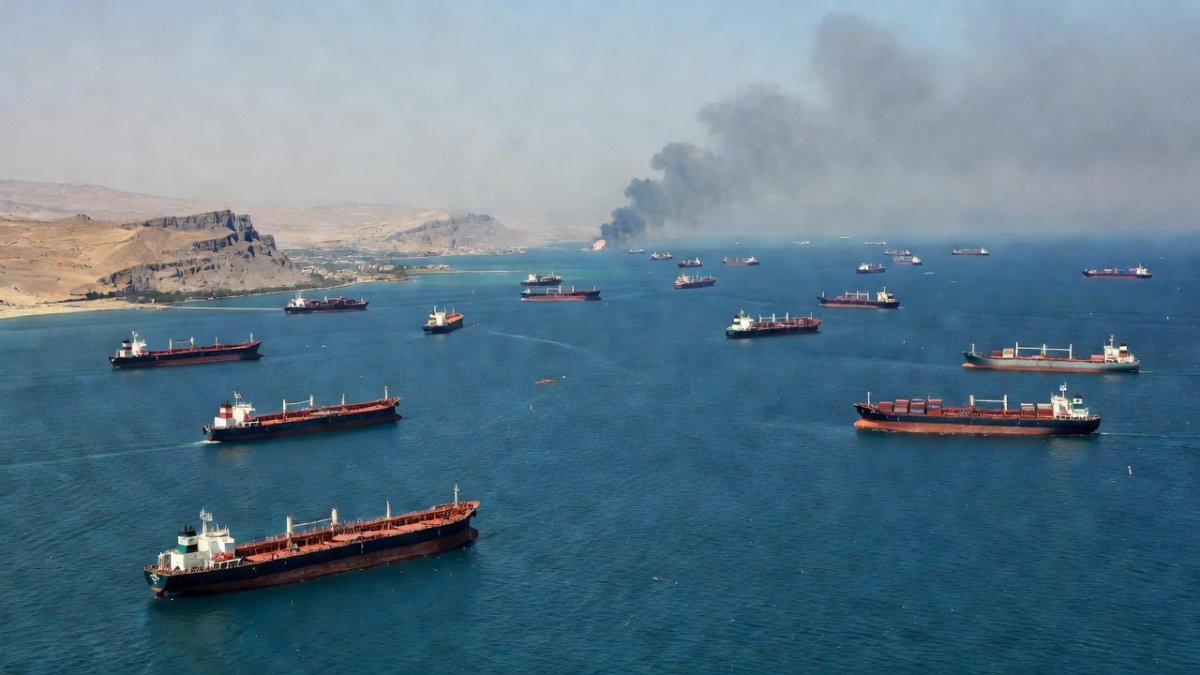
The Trigger: An Attack on a Container Ship
The immediate catalyst for the latest escalation was an Iranian strike on a Cypriot-flagged container ship in the Strait of Hormuz on Sunday. The attack set the vessel ablaze and left one crew member missing, according to shipping sources. It was the latest in a series of Iranian operations against commercial vessels using a southern route through the strait — a route established by the US military as an alternative to waters Iran claims the right to control.
Iran's Islamic Revolutionary Guard Corps (IRGC) has repeatedly warned that ships using this southern corridor are doing so without authorisation. Tehran maintains that, under the terms of the June 17 interim deal, it has the right to manage traffic through the strait and potentially charge fees — a position Washington rejects outright, citing international law governing freedom of navigation.
The Sunday attack followed a pattern of escalating incidents in the waterway. On 5 July, a cargo vessel reported being attacked by unknown armed assailants off the coast of Yemen. A tanker was hit by an unknown projectile off Oman on 6 July, causing a fire on board. More strikes followed on 7 July and again on 12 July, when a container ship was damaged and its crew forced to abandon the vessel. According to BBC Verify, no commercial vessels have crossed the strait since Sunday evening, and only two ships were tracked moving through the waterway on Monday — both heading east into the Gulf of Oman.
US Military Response: "Dozens" of Targets Hit
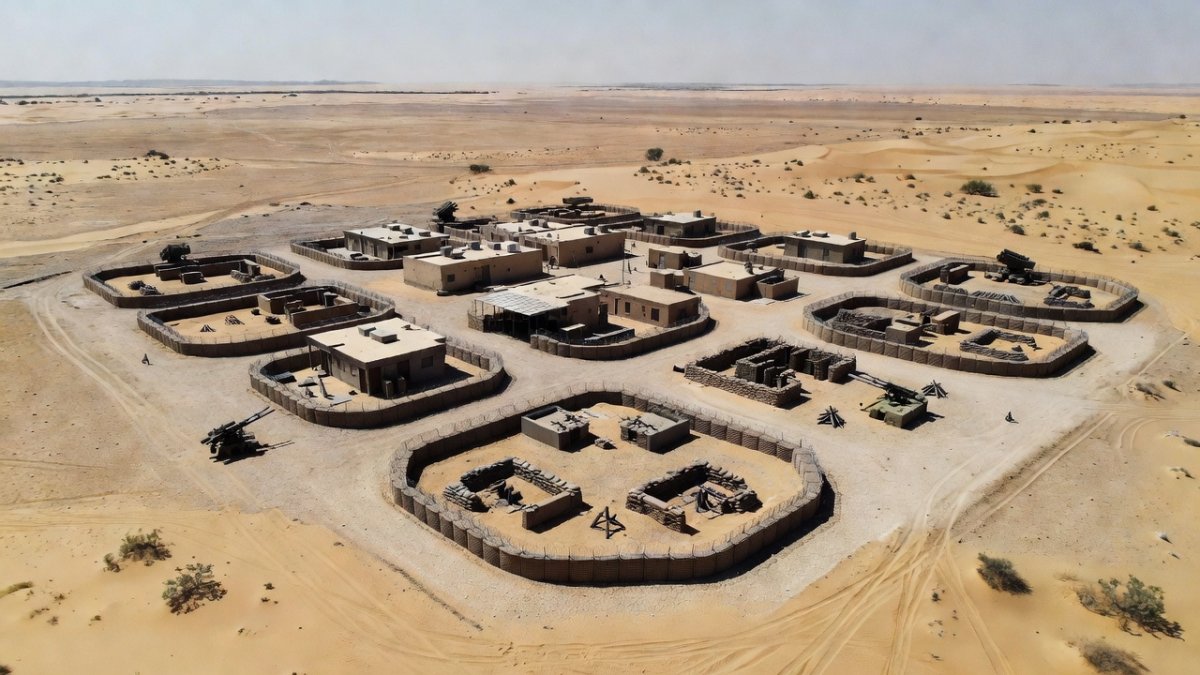
The US military's Central Command (Centcom) announced on Monday that its forces had struck "dozens" of Iranian military installations in a coordinated wave of strikes. The targets included air defence systems, coastal radar sites, missile and drone capabilities, and small fast boats — assets that Centcom said were being used to attack commercial shipping in the international waterway.
The US military's stated objective is to degrade Iran's ability to attack international shipping and reassert freedom of navigation. Centcom emphasised that the Strait of Hormuz remains a vital maritime corridor for global trade and that Iran does not control it under international law. Officials described the operation as necessary to protect the free flow of energy supplies and commercial traffic that passes through the narrow chokepoint each day. This latest round of strikes marks a significant intensification compared with last week's operations, which hit approximately 80 targets. Monday's wave is described as even more extensive in both scope and precision, reflecting Washington's determination to neutralise threats to shipping lanes.
European Union top diplomat Kaja Kallas reinforced the position, stating that freedom of navigation has to be respected. Her remarks aligned with broader international calls for the waterway to remain open and secure. The United States has made clear that any attempt by Tehran to impose fees or restrict passage violates long-standing norms and will be met with further action. Centcom officials noted that the strikes were calibrated to limit broader escalation while sending a firm message that attacks on commercial vessels will not be tolerated. Analysts observe that the scale of the response signals a shift toward sustained pressure on Iranian military assets in the region.
Iran Retaliates: A Multi-Front Response
Iran's response was swift and geographically broad. The IRGC announced it had targeted US military bases in Jordan, Bahrain, and Kuwait, as well as radar systems in Oman. Jordan's military confirmed it had shot down four Iranian missiles, reporting zero casualties or material damage. Kuwait said its forces were intercepting hostile aerial targets. Bahrain's army accused Iran of targeting civilians, stating its air defences intercepted and destroyed several Iranian attacks.
Overnight, Iran also targeted radar systems in Oman — a striking development given Oman's traditional role as a mediator between Tehran and the West. The Omani government summoned an Iranian diplomat to protest the violation of its sovereignty. Inside Iran, state media reported attacks in Hormozgan, Khuzestan, and Markazi provinces. The deputy governor of Isfahan province confirmed one killed and seven injured at a military base in Nain. In Abadan, southwest Iran, two people were reportedly killed and three injured, according to IRNA. A separate drone attack struck an Iranian Kurdish opposition group base in Iraq's Kurdistan region, though no group claimed responsibility.
Tehran framed the multi-front retaliation as a direct response to US aggression on its soil. Iranian officials stressed that the strikes demonstrated the reach of their forces despite the pressure on their military infrastructure. The involvement of Omani territory highlighted how the conflict is drawing in previously neutral actors. Regional governments expressed alarm at the widening scope, with several urging immediate de-escalation to prevent further spillover. The pattern of strikes and counter-strikes has left civilian populations in affected areas on edge.
Oil Markets and the Global Economic Fallout
The escalating confrontation sent immediate shockwaves through global energy markets. Brent crude, the international benchmark, surged nearly 5% on Monday to more than $79 a barrel, reflecting growing fears about the security of supply routes through the Strait of Hormuz. While prices remain well below the near-$120 peak reached during the height of the war in late February, the trajectory is cause for concern among import-dependent economies.
The EU's energy task force has stated there is no immediate security of supply concern over oil and gas this winter, and jet fuel supply remains overall stable. Yet gas prices remain above pre-conflict levels. The UK's RAC reported petrol prices creeping up again as traders factor in the risk of prolonged disruption. This situation benefits Russia as an alternative energy supplier to Europe and Asia. Moscow has increased oil exports to China and India throughout the conflict, capitalising on reduced Iranian volumes reaching global markets.
Sustained disruption in the Strait of Hormuz strengthens Russia's hand as an energy competitor while simultaneously driving up costs for European consumers already facing high inflation. European governments have accelerated efforts to diversify supplies, but higher benchmark prices continue to feed through to household energy bills. Asian importers are also monitoring developments closely, given their heavy reliance on Gulf crude. The economic ripple effects extend beyond immediate price spikes to longer-term questions about energy security and strategic stockpiles.
Diplomatic Fallout: Ceasefire in Name Only
The collapse of the June 17 memorandum of understanding has become increasingly undeniable. US President Donald Trump declared last week that the ceasefire was over, calling Iran's leadership scum during an interview with NBC. Over the weekend, Trump claimed Iran had agreed to a new deal during talks in Oman — No nuclear, no this, no that, no nothing. They gave up everything, he told NBC. Iran's foreign ministry spokesman Esmail Baghaei immediately dismissed this as absolutely untrue, insisting that only the Strait of Hormuz was discussed during the Saturday talks.
Iran's parliamentary speaker Mohammad Bagher Ghalibaf, who has served as the country's chief negotiator, wrote on Sunday that the era of one-sided deals is over and that reality is knocking. Iran says the 14-point MoU has been violated by US strikes on Iranian soil, revocation of oil sanctions waivers, and the attempt to establish an alternative shipping route. The UN Secretary-General Antonio Guterres warned that a return to full-scale hostilities would have catastrophic consequences. The E3 condemned Iran's reckless attacks in a joint statement. UK Home Secretary Shabana Mahmood announced emergency legislation to outlaw the IRGC, making support for the group punishable by up to 14 years in prison. Pakistan, Qatar and Egypt continue mediation efforts, with Pakistan urging both sides to pursue de-escalation.
Nuclear Dimensions and Regional Security
Iran's Foreign Ministry spokesman Esmail Baghaei stated on Monday that Tehran would not agree to visits by the International Atomic Energy Agency to Iranian nuclear sites that were bombed by the US and Israel in 2025. This stance directly undermines a key provision of the June 17 MoU, which had included IAEA inspections as part of the broader negotiation framework. The new supreme leader, Ayatollah Mojtaba Khamenei, has vowed to avenge the killing of his father and predecessor, Ayatollah Ali Khamenei, who was killed in the US-Israeli strikes that began the war on February 28.
While neither side appears to want a return to full-scale war, as BBC correspondent Barbara Plett Usher notes from Jerusalem, the pattern of controlled escalation is becoming increasingly dangerous. The risk of a miscalculation that triggers a broader regional war remains the gravest concern for analysts watching this conflict. Regional security arrangements have been further strained by the involvement of multiple Gulf states in intercepting Iranian projectiles. International observers continue to stress the importance of maintaining open channels for dialogue even as military exchanges intensify.
Analysis — What the Strait of Hormuz Crisis Means for Global Power Dynamics
The battle over the Strait of Hormuz has transcended its immediate tactical dimensions. For Iran, control of the waterway has been described by senior officials as more important than dozens of atomic bombs — a strategic asset that compensates for conventional military inferiority. For the US, reasserting freedom of navigation is not just a legal principle but a practical necessity: the Trump administration needs stable oil prices ahead of November midterm elections. For Russia and China, the crisis presents both opportunity and risk. Moscow benefits from higher energy prices and reduced competition from Iranian oil exports, while Beijing worries about disruption to its largest energy supply route.
The 60-day negotiation window established by the June 17 MoU is nearly half over, and there is little sign that the two sides are closer to a permanent agreement. Instead, the waterway at the heart of the dispute has become a shooting gallery — and the rest of the world is watching, and paying, for the consequences. Continued mediation by Pakistan, Qatar and Egypt offers one of the few remaining avenues to prevent further deterioration, though success remains uncertain amid the ongoing exchanges of fire.
By Irina Volkov, Staff Writer
This article was produced with AI-assisted research and editorial support. Reporting is based on sources cited in the article.
What's Your Reaction?
 Like
0
Like
0
 Dislike
0
Dislike
0
 Love
0
Love
0
 Funny
0
Funny
0
 Wow
0
Wow
0
 Sad
0
Sad
0
 Angry
0
Angry
0

Russia/Eastern Europe Correspondent at Global1.News. Covering Russian politics, energy, security, and the shifting dynamics of the post-Soviet space. Provides clear-eyed analysis on one of the world's most opaque regions.









Comments (0)