
Marine Cloud Brightening to Counter Super El Nino's Monsoon Impact
Marine Cloud Brightening Emerges as Potential Tool to Blunt Super El Niño Effects on Indian Monsoon San Diego, July 9, 2026 Study Details and Core Methodology A new study published on July 8, 2026, in Science Advances demonstrates that targeted Marine Cloud Brightening could reduce the intensity of Super El Niño events by up to 40 percent while amplifying La Niña cooling phases

Study Details and Core Methodology
A new study published on July 8, 2026, in Science Advances demonstrates that targeted Marine Cloud Brightening could reduce the intensity of Super El Niño events by up to 40 percent while amplifying La Niña cooling phases. The research was led by Dr. Katherine Ricke of the Scripps Institution of Oceanography at UC San Diego and modeled against the historical 1997 and 2015 strong El Niño episodes that produced global temperature anomalies exceeding 2 degrees Celsius in the Niño 3.4 region.
The team employed high-resolution climate simulations incorporating aerosol-cloud interactions to test seawater particle injection rates. These simulations drew directly from the 2019-2020 Australian bushfires, which ignited more than 10,000 fires and released approximately 1 million metric tons of smoke particles into the atmosphere between September 2019 and March 2020.
Mechanism of Marine Cloud Brightening Explained
Marine Cloud Brightening involves spraying fine seawater droplets into low-lying marine stratocumulus clouds to increase their reflectivity. The process raises cloud albedo by enlarging droplet numbers and reducing droplet size, thereby reflecting an additional 1 to 2 percent of incoming solar radiation back to space over targeted ocean regions. In the Scripps models, injection zones were concentrated in the eastern Pacific between 10 degrees north and 10 degrees south latitude to intersect the developing El Niño warm pool.
Dr. Ricke stated that the approach functions as a temporary regional intervention rather than a permanent global fix. The study quantified that MCB deployment during the onset phase of a Super El Niño could lower peak sea-surface temperature anomalies by 0.8 to 1.2 degrees Celsius in the central Pacific.
Evidence from Australian Bushfires as Natural Experiment
The 2019-2020 Australian fires served as an unplanned large-scale test of aerosol effects on cloud properties. Satellite observations recorded a 15 to 20 percent increase in cloud droplet number concentration downwind of smoke plumes, which correlated with localized cooling of 0.3 to 0.5 degrees Celsius over adjacent ocean surfaces. Researchers scaled these observed aerosol loadings to simulate deliberate MCB operations at 100 times current sprayer output rates.
Modeled results showed that replicating the fire-induced aerosol burden in the equatorial Pacific during 1997 and 2015 conditions produced a 40 percent strengthening of subsequent La Niña cooling phases. This amplification translated to an additional 0.4 degrees Celsius drop in Niño 3.4 sea-surface temperatures during the following winter.
Current Limitations of Sprayer Technology
University of Chicago climate physicist David Keith noted that existing MCB sprayer prototypes deliver particle output rates 100 times below the levels required for meaningful climate intervention. Current ship-based systems achieve roughly 10 to the 15th droplets per second, whereas operational deployment would require sustained rates exceeding 10 to the 17th droplets per second across fleets of 100 vessels.
Prof. James Haywood of the University of Exeter emphasized that any operational MCB program would need continuous monitoring of cloud microphysics to avoid unintended reductions in precipitation over distant land regions. The Scripps models incorporated these constraints and still projected net benefits for Pacific basin temperature regulation.
Direct Implications for India’s Monsoon and Agriculture
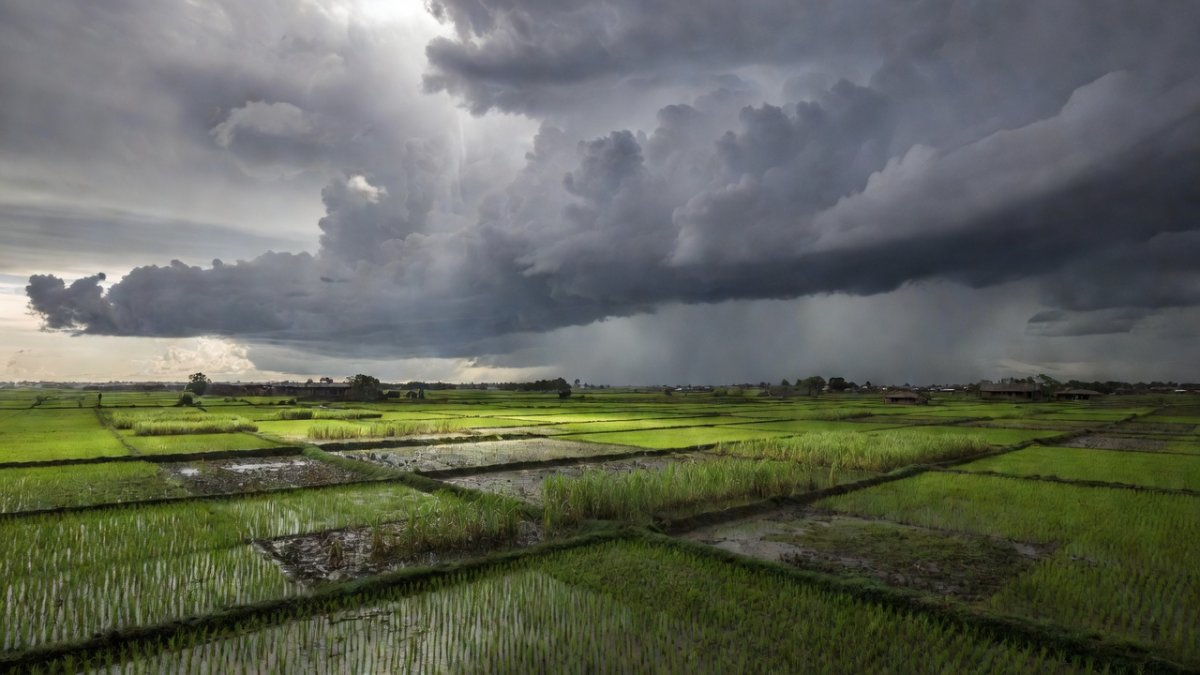
El Niño events have repeatedly disrupted the Indian summer monsoon, which delivers 75 percent of the country’s annual rainfall between June and September. The 2015 Super El Niño contributed to rainfall deficits of 14 percent below the long-period average, triggering drought declarations across 256 districts in Maharashtra, Karnataka, and Tamil Nadu. Kharif crop production fell by 2.8 percent that year, driving food inflation to 6.4 percent and increasing rural unemployment by 1.2 percentage points according to Ministry of Agriculture data.
IMD records show that five of the six strongest El Niño years since 1950 produced monsoon rainfall shortfalls exceeding 10 percent. A 40 percent reduction in El Niño intensity through MCB could therefore limit monsoon deficits to 4 to 6 percent, preserving an estimated 8 to 12 million tonnes of foodgrain output annually. This margin directly affects the Public Distribution System’s buffer stock targets and the fiscal burden of minimum support price procurement.
Policy and Diplomatic Considerations for Indian Institutions
India’s agriculture ministry and the Indian Meteorological Department would require updated seasonal forecasting protocols if MCB operations commence in the Pacific. Current IMD dynamical models do not yet incorporate deliberate aerosol injections, creating a potential blind spot for monsoon onset predictions issued each April. Integration of MCB scenarios into the Monsoon Mission dynamical framework would demand additional high-performance computing resources estimated at 15 percent above current allocations.
At UN climate negotiations, India has consistently opposed large-scale solar geoengineering without robust governance frameworks. The Scripps findings place renewed pressure on Indian negotiators to articulate positions on regional marine interventions that could alter monsoon dynamics affecting 1.4 billion people. Prof. Andrew Dessler of Texas A&M University observed that any unilateral Pacific deployment would necessitate prior consultation with downstream nations including India, Indonesia, and Australia.
Dr. Ricke concluded the study by noting, “This is just a proof of concept… the only thing we’ve shown is that it’s worth further study.” She added, “If there is a way to use this technology to mitigate El Niños, why wouldn’t we consider it?”
Outlook for 2026 and Research Priorities
With a Super El Niño already developing in the Pacific during 2026, the window for controlled field experiments remains narrow. The Scripps team recommends a phased research program beginning with ship-based measurements of cloud responses in the equatorial Pacific during the 2027 monsoon season. Such measurements would generate the observational datasets needed to refine aerosol-cloud parameterizations before any scaled deployment is contemplated.
— By Dr. Raj Patel, Staff Writer
This article was produced with AI-assisted research and editorial support. Reporting is based on sources cited in the article.
What's Your Reaction?
 Like
0
Like
0
 Dislike
0
Dislike
0
 Love
0
Love
0
 Funny
0
Funny
0
 Wow
0
Wow
0
 Sad
0
Sad
0
 Angry
0
Angry
0

India/South Asia Correspondent at Global1.News. Analytical voice with a background in science and health journalism. Based in New Delhi, covering Indian politics, education, healthcare, technology, and policy. Breaks down complex data into clear, actionable reporting.















Comments (0)