
Cuba's Nationwide Blackout Sparks Protests and Renews US Tensions
Cuba's Nationwide Blackout Sparks Protests and Renews US Tensions What happened — Monday's blackout, Tuesday's protests, pot-banging On Monday, Cuba experienced its third nationwide power outage of the year, plunging the island into darkness without warning. The state electricity company offered no explanation for the unplanned incident, which followed ongoing rolling blackouts
Cuba's Nationwide Blackout Sparks Protests and Renews US Tensions
What happened — Monday's blackout, Tuesday's protests, pot-banging
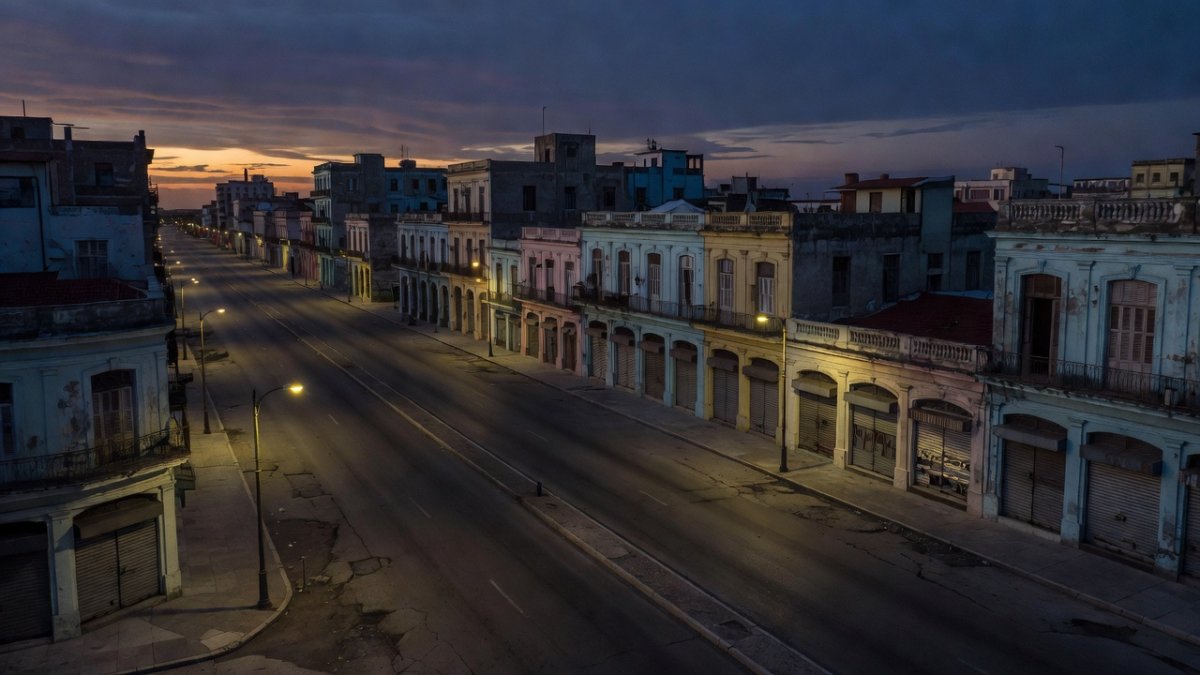
On Monday, Cuba experienced its third nationwide power outage of the year, plunging the island into darkness without warning. The state electricity company offered no explanation for the unplanned incident, which followed ongoing rolling blackouts designed to ration scarce fuel supplies. This latest failure compounded existing hardships, leaving residents without electricity across multiple provinces.
By Tuesday evening, Cubans in several locations took to the streets and their balconies, banging pots to voice their frustration over the prolonged darkness. Such public expressions of dissent are rare in the Communist-run country, where they often lead to lengthy prison sentences. Yet spontaneous protests emerged in the hardest-hit areas, with locals shouting "turn on the lights!" in places still without power.
Cuban officials announced on Tuesday that most of the country had regained electricity, but this claim did little to calm tensions in affected zones. The pot-banging demonstrations highlighted deep dissatisfaction, as residents directed their anger at the persistent energy shortages. These events underscored the immediate fallout from Monday's blackout and the state's inability to stabilize the grid.
The protests remained localized but reflected broader unrest fueled by repeated outages. In the absence of official details on the cause, speculation grew among citizens about infrastructure failures tied to fuel scarcity. Tuesday's actions marked a visible, if risky, outlet for public discontent in a tightly controlled society.
The human impact — rural 70h outages, urban 30h, Santiago de Cuba still dark
Rural communities across Cuba have endured up to 70 hours of continuous darkness during recent outages, far exceeding the planned rolling cuts. These extended periods without power disrupt daily life, affecting access to basic services and forcing residents to adapt to prolonged isolation from modern conveniences. Urban centers, by contrast, have faced scheduled blackouts lasting as long as 30 hours, though even these structured interruptions strain household resources.
Santiago de Cuba, the country's second-largest city, remained without electricity well into Tuesday evening despite official reports of restorations elsewhere. This persistent darkness in a major population center amplified local hardships, leaving businesses and homes in limbo. Residents there joined the chorus of voices demanding immediate action from authorities.
The disparity between rural and urban outage durations reveals uneven distribution of the crisis, with remote areas bearing the brunt of fuel conservation measures. Families in these regions report severe challenges maintaining food storage and medical needs without reliable power. Such conditions have intensified calls for accountability from the state electricity provider.
Overall, the human toll extends beyond inconvenience to affect health, safety, and economic stability in both countryside and city settings. With no clear timeline for full recovery in places like Santiago de Cuba, uncertainty continues to weigh heavily on affected populations.
Fuel blockade and sanctions — US oil blockade, fresh sanctions, fuel scarcity even for generators
Tight US sanctions have worsened Cuba's fuel shortages, creating an effective blockade on oil shipments to the island. This policy restricts imports and threatens tariffs on nations supplying fuel, leaving even basic energy resources scarce. As a result, many households and facilities equipped with generators find themselves unable to operate them due to the lack of available diesel or other fuels.
The sanctions regime, intensified in recent months, directly limits the country's capacity to maintain its power infrastructure. Cuban officials have linked these external pressures to the recurring blackouts, noting that conservation efforts alone cannot offset the blockade's impact. Generators sit idle across the island, underscoring how sanctions compound the energy deficit.
Even before Monday's nationwide failure, state-imposed rolling cuts aimed to stretch remaining fuel supplies amid this scarcity. The blockade's reach means that alternative power sources offer little relief, trapping communities in cycles of darkness. This situation has persisted despite attempts to secure alternative supplies from international partners.
The fuel crisis highlights the broader effects of US policy on everyday Cuban life, where sanctions limit not only electricity but also transportation and other essentials. Without easing these restrictions, the potential for further outages remains high.
Political blame game — Díaz-Canel's remarks, Waltz at UN, Rodríguez's response
Cuban President Miguel Díaz-Canel acknowledged widespread discontent, citing shortages of transport, food, and medicines alongside power cuts exceeding 20 hours. In remarks to reporters from Claridad, he noted that such conditions cause dissatisfaction and suffering among the people. He urged citizens to channel their pot-banging protests toward the US government rather than his administration.
US Ambassador to the United Nations Michael Waltz countered by placing responsibility on Cuban authorities during a UN General Assembly meeting on Tuesday. He called on the government to change its ways and restore power, claiming there always seems to be enough electricity for the Cuban leadership itself. This statement framed the crisis as a domestic governance failure.
Cuba's foreign minister Bruno Rodríguez responded by accusing the US of multi-dimensional, non-conventional warfare that has grown more severe over the past seven months. He described these actions as increasingly cruel and tied directly to the energy shortages. The exchange highlighted sharp divisions in how each side interprets the root causes.
The back-and-forth between officials on both sides has done little to resolve immediate issues on the ground. Díaz-Canel's appeal to redirect anger externally contrasts with US insistence on internal reforms, leaving Cuban citizens caught in the middle of the rhetoric.
US-Cuba relations under Trump — January Maduro seizure, "ready to fall", Raúl Castro charges
Relations between the US and Cuba deteriorated sharply at the start of the year when President Donald Trump accused the Cuban government of threatening US national security. This marked a shift toward more confrontational policies, including fresh sanctions and the oil blockade. The rhetoric escalated following US forces' seizure of former Venezuelan President Nicolás Maduro in January.
Trump publicly suggested at that time that Cuba was ready to fall, signaling potential further intervention. Shortly afterward, the administration imposed additional measures targeting the island's economy and energy supplies. These steps built on existing tensions and contributed to the current fuel scarcity.
The US also filed murder charges against former Cuban president Raúl Castro, adding legal pressure to the diplomatic standoff. Such actions have hardened positions on both sides, with Cuba viewing them as part of a broader campaign against its sovereignty. The sequence of events since January has left little room for immediate de-escalation.
This rapid decline in relations has directly influenced the energy situation, as sanctions limit fuel access and heighten the risk of future blackouts. The political climate remains charged, with each new measure reinforcing mutual distrust.
Private talks but no progress — recent diplomatic negotiations
Despite public exchanges of blame, the US and Cuba have conducted private talks in recent weeks aimed at addressing bilateral issues. These discussions occurred away from media attention but yielded limited results according to Cuban officials. The foreign minister noted on Tuesday that the negotiations show no progress to date.
Rodríguez emphasized that any future dialogue must rest on mutual respect and non-interference in Cuba's internal affairs. This stance reflects Cuba's longstanding position amid the sanctions and blockade. The private channel remains open, though concrete outcomes have yet to materialize.
The lack of advancement in these talks coincides with ongoing energy shortages and public protests. Cuban authorities continue to signal willingness for engagement while criticizing US policies as the primary obstacle. Observers note that bridging the gap will require addressing core disagreements over sanctions.
Without breakthroughs, the private discussions risk becoming another stalled effort in a long history of strained relations. The current impasse leaves the immediate crisis unresolved as both sides maintain their positions.
Latin American context — how Cuba's crisis connects to Venezuela, Brazil, regional energy justice
Cuba's energy struggles echo challenges faced by Venezuela following the January seizure of its former president, highlighting interconnected regional dynamics. US policies targeting both nations have disrupted fuel flows across the Caribbean and beyond, affecting shared supply chains. This pattern raises questions about equitable access to energy resources in Latin America.
In Brazil and neighboring countries, similar concerns over energy justice emerge as sanctions ripple through trade networks. Cuba's reliance on external fuel imports makes it particularly vulnerable, mirroring vulnerabilities seen elsewhere in the region. The blockade's effects extend beyond one island to influence broader stability.
Regional observers point to the need for cooperative approaches that prioritize access to energy without political preconditions. Cuba's protests and outages serve as a stark example of how external pressures can destabilize national grids. Connections to Venezuela underscore the wider implications for hemispheric relations.
Addressing these issues collectively could foster more resilient energy systems across Latin America. The current crisis in Cuba illustrates the human costs when such cooperation remains elusive amid geopolitical tensions.
Outlook — what comes next, need for solutions
With private talks stalled and public blame continuing, Cuba faces an uncertain path forward in restoring reliable electricity. Officials have left the door open to further dialogue, yet the fuel blockade persists as a central barrier. Residents in rural and urban areas alike await clearer indications of when normal service might resume.
The need for practical solutions grows more urgent as protests signal mounting pressure on the government. Directing attention to external factors, as Díaz-Canel suggested, may not address immediate generator fuel shortages or grid vulnerabilities. Sustainable fixes will likely require easing sanctions alongside domestic reforms.
Regional energy justice discussions could provide a framework for longer-term stability, linking Cuba's situation to wider Latin American challenges. Without progress, additional blackouts remain possible, prolonging the suffering acknowledged by Cuban leaders. The coming weeks will test whether private channels can yield tangible relief.
Ultimately, resolving the crisis demands balancing political demands with humanitarian needs on the ground. Both US and Cuban authorities hold keys to de-escalation, though current trajectories suggest continued hardship ahead.
By Elena Vasquez, Staff WriterThis article was produced with AI-assisted research and editorial support. Reporting is based on sources cited in the article.
What's Your Reaction?
 Like
0
Like
0
 Dislike
0
Dislike
0
 Love
0
Love
0
 Funny
0
Funny
0
 Wow
0
Wow
0
 Sad
0
Sad
0
 Angry
0
Angry
0

Latin America Correspondent at Global1.News. Based in Mexico City, covering politics, economics, energy, and culture across the region. Brings an on-the-ground perspective to stories spanning from the Rio Grande to Patagonia.









Comments (0)