
Super Typhoon Bavi Tests Regional Disaster Preparedness Across East Asia
Super Typhoon Bavi Tests Regional Disaster Preparedness Across East Asia The Storm's Scale and Immediate Threat Super Typhoon Bavi presents an extraordinary physical challenge to East Asia, spanning 1,000 kilometres at its widest point, comparable to the breadth of France. This immense size distinguishes it from typical tropical cyclones and amplifies its capacity to disrupt mu
Super Typhoon Bavi Tests Regional Disaster Preparedness Across East Asia
The Storm's Scale and Immediate Threat
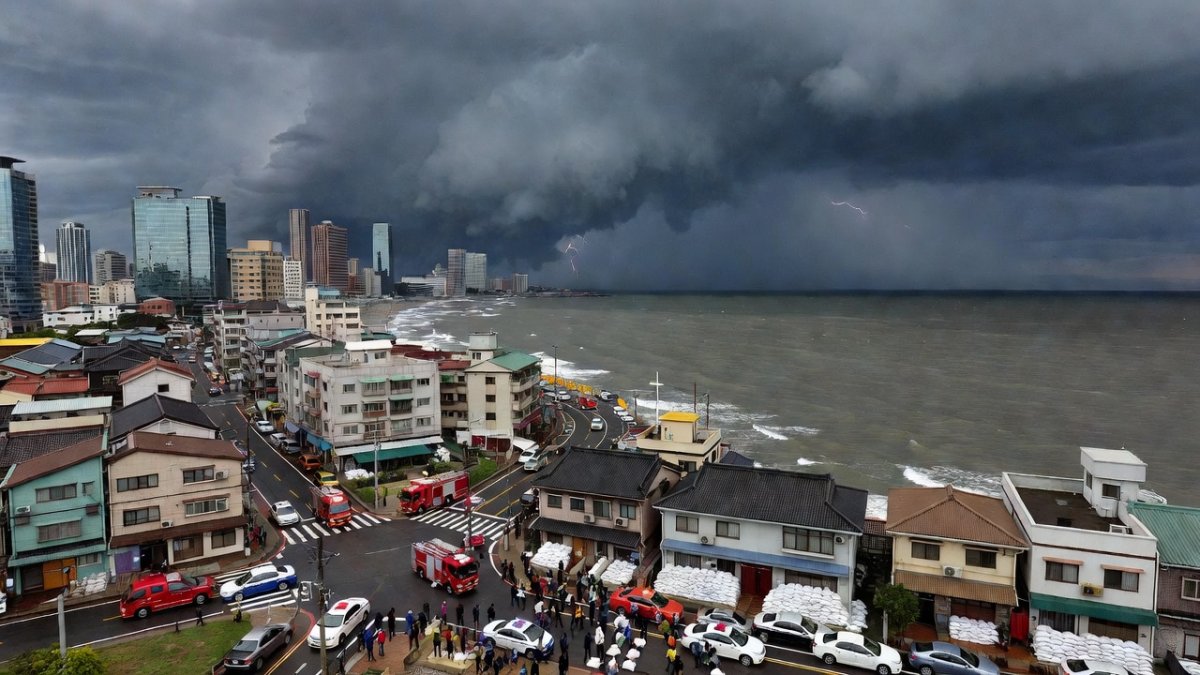
Super Typhoon Bavi presents an extraordinary physical challenge to East Asia, spanning 1,000 kilometres at its widest point, comparable to the breadth of France. This immense size distinguishes it from typical tropical cyclones and amplifies its capacity to disrupt multiple jurisdictions simultaneously. Already, the storm has claimed at least 15 lives through landslides in Mindanao in the southern Philippines, underscoring the lethal reach of its outer bands even before core landfall.
The trajectory places Taiwan and south-eastern China directly in its path, with expected landfall in the latter on Saturday, 11 July. Taiwanese authorities have issued stark warnings of up to one metre of rainfall, a volume that could overwhelm drainage systems and trigger widespread flooding. Such dimensions test not only immediate emergency protocols but also the underlying resilience of infrastructure across the western Pacific rim.
From a strategic standpoint, Bavi’s scale highlights vulnerabilities in regional early-warning architectures. While southern China possesses greater historical exposure to typhoons, the storm’s northward progression may expose gaps in coordinated response mechanisms. Neighbouring states must therefore weigh the costs of under-preparation against the political ramifications of visible shortcomings in protecting populations and economic assets.
China's Dual-Phase Preparedness
Chinese authorities anticipate significant impact on Fujian province as Bavi makes landfall, prompting heightened alerts across coastal districts. Ma Jun, director of China’s Institute of Public and Environmental Affairs, has specifically urged northern provinces to strengthen preparations, noting that the storm’s remnants could advance toward the Bohai Sea. This dual-phase outlook—immediate southern threat followed by potential northern effects—reflects Beijing’s recognition that typhoon tracks are becoming less predictable.
Lessons from Typhoon Maysak remain fresh. That earlier system left 39 dead and forced the evacuation of 130,000 people, predominantly in Guangxi, while also generating two rare tornadoes in Hubei province. These cascading hazards illustrate how one cyclone can spawn secondary meteorological events far inland. Northern provinces, possessing comparatively less experience with such phenomena, face steeper learning curves in mobilising resources and public awareness.
Strategically, effective management of Bavi serves broader Chinese objectives of technological self-sufficiency in disaster mitigation. Investments in meteorological modelling and rapid-response logistics align with national priorities of safeguarding economic corridors under the Dual Circulation strategy. Shortfalls here could reverberate beyond immediate humanitarian costs, affecting perceptions of governance capacity in an era of intensifying climate variability.
Taiwan's Response
Taiwan has mobilised 29,000 soldiers to stand by for relief operations, a substantial deployment that signals the gravity with which authorities view the approaching threat. Officials have characterised Bavi as the largest storm by size to strike the island since 1987, a benchmark that places current preparations in historical context. Forecasts of up to one metre of rainfall necessitate pre-emptive evacuations and reinforcement of flood defences in vulnerable low-lying areas.
The cross-strait dimension adds complexity. While disaster response remains a functional domain where practical cooperation sometimes occurs despite political tensions, Bavi tests the limits of information sharing and mutual assistance protocols. Taiwan’s military-centric approach contrasts with mainland emphasis on civilian evacuation, yet both sides confront identical meteorological realities.
Geopolitically, successful management could bolster domestic legitimacy for Taiwan’s leadership, whereas any perceived inadequacy might invite criticism from Beijing. Neighbouring ASEAN states watch closely, recognising that Taiwan’s experience offers transferable lessons for their own archipelagic vulnerabilities. The scale of the military standby underscores how extreme weather events increasingly intersect with questions of national security and regional stability.
Japan and the Regional Air Travel Disruption
Japan’s Sakishima Islands have been placed on high alert as Bavi’s outer circulation threatens to brush the archipelago. Airlines have responded with sweeping cancellations: Japan Airlines has grounded more than 100 flights, while ANA has suspended approximately 160 services. Carriers from Thailand and Malaysia have similarly curtailed operations, illustrating how a single Pacific storm can fracture connectivity across the broader East Asian and Southeast Asian air networks.
These disruptions extend beyond passenger inconvenience to affect cargo flows and just-in-time supply chains. Regional hubs such as Tokyo, Taipei and Hong Kong face cascading delays that may persist for days after the storm passes. The economic calculus for carriers involves balancing safety imperatives against revenue losses, a trade-off rendered more acute by the storm’s unusually wide footprint.
From a strategic perspective, such interruptions expose the fragility of regional integration projects. ASEAN economies reliant on tourism and electronics exports feel secondary effects, while Japan’s response demonstrates the value of redundant routing and flexible scheduling. Multilateral aviation coordination mechanisms, though tested, remain essential for mitigating second-order economic shocks that could otherwise strain diplomatic relations among affected states.
Agricultural and Economic Vulnerability
Farmers across the projected path are racing to harvest or protect crops before Bavi arrives, aware that prolonged inundation could destroy entire seasons’ output. Fisherman Chen Ming-hui captured the deceptive calm preceding the storm, observing that “Don’t be fooled by the nice and calm weather now. A storm like this could be the most terrifying.” His words encapsulate the psychological dimension of preparedness, where visible serenity belies latent destructive power.
Supermarket shelves have been stripped bare as residents stockpile essentials, while thousands of sandbags have been distributed in flood-prone zones. Ports face potential closures that would interrupt both exports of manufactured goods and imports of energy and raw materials. These immediate economic pressures compound existing strains from earlier typhoons.
Strategically, agricultural resilience forms a pillar of food-security policy for both China and Taiwan. Disruptions here can fuel inflationary pressures and social discontent, particularly in rural constituencies. Regional supply-chain managers must therefore incorporate climate contingencies into long-term planning, recognising that repeated shocks accelerate the shift toward diversified sourcing and domestic stockpiling strategies.
Climate Context and the Succession of Superstorms
Bavi follows closely on the heels of Typhoon Maysak, whose devastation included not only direct fatalities but also the unusual generation of tornadoes in Hubei. Climate experts increasingly attribute such clustered extreme events to warming ocean temperatures that provide additional energy for storm intensification. The succession raises questions about whether historical return periods for super-typhoons remain valid benchmarks for infrastructure design.
Northern Chinese provinces, historically less exposed, now confront the possibility that shifting atmospheric patterns will bring more frequent encounters with tropical systems. This transition demands accelerated investment in drainage, early-warning networks and public-education campaigns tailored to populations unaccustomed to cyclone impacts.
Geopolitically, the pattern strengthens arguments for regional climate-adaptation financing. China’s participation in multilateral environmental forums gains added relevance when domestic vulnerabilities intersect with transboundary weather systems. Demonstrating leadership in resilience-building can enhance soft-power projection, particularly among Global South nations facing analogous threats.
Strategic Implications for East Asian Disaster Resilience
The simultaneous activation of military, civilian and commercial assets across Taiwan, China, Japan and ASEAN members reveals both strengths and gaps in existing multilateral mechanisms. Early-warning systems have functioned adequately thus far, yet the storm’s size tests the interoperability of data-sharing platforms and evacuation coordination. Infrastructure investment priorities must now account for compound hazards, including secondary tornadoes and prolonged flooding.
Each actor pursues distinct objectives: China emphasises technological self-reliance and northern capacity-building; Taiwan seeks to project administrative competence; Japan prioritises aviation continuity and island protection. Second-order effects for the Global South include potential lessons on scalable community-based preparedness, while the EU observes implications for its own supply-chain security.
Ultimately, Bavi serves as a stress test for East Asia’s collective ability to convert meteorological warnings into effective action. Success will hinge on sustained political commitment to joint exercises, shared satellite resources and adaptive infrastructure standards. Failure risks amplifying existing geopolitical frictions and eroding public trust in institutions charged with safeguarding populations amid an increasingly volatile climate regime.
By Prof. Marcus Chen, Staff WriterThis article was produced with AI-assisted research and editorial support. Reporting is based on sources cited in the article.
What's Your Reaction?
 Like
0
Like
0
 Dislike
0
Dislike
0
 Love
0
Love
0
 Funny
0
Funny
0
 Wow
0
Wow
0
 Sad
0
Sad
0
 Angry
0
Angry
0

World Politics Analyst at Global1.News. Based in Beijing, covering US-China relations, global trade, and geopolitical strategy. Brings deep analytical perspective to the power dynamics shaping international affairs.











Comments (0)