
'The World Is More Fragmented Than at Any Point in My Lifetime': Outgoing UK Envoy Reflects on Six Years in Thailand
Mark Gooding's Arrival Amid COVID-19 Lockdowns in Bangkok When Mark Gooding arrived in Thailand in 2020, the country was locked down by COVID-19 with tourist arrivals collapsed and diplomatic exchanges slowed to a trickle. Much of his first year was spent studying Thai instead of attending official functions at the British Embassy in Bangkok. Six years later, as the British amb
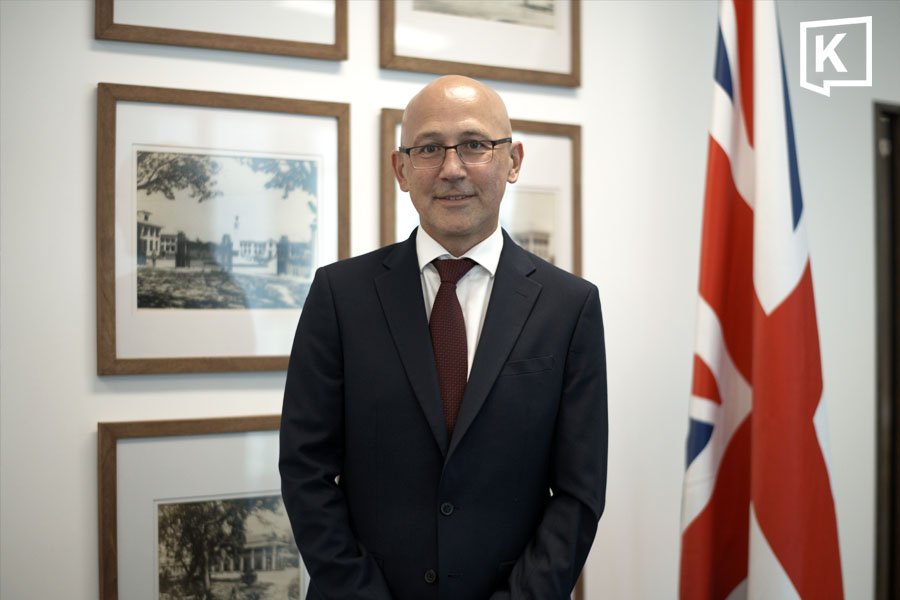
Mark Gooding's Arrival Amid COVID-19 Lockdowns in Bangkok
When Mark Gooding arrived in Thailand in 2020, the country was locked down by COVID-19 with tourist arrivals collapsed and diplomatic exchanges slowed to a trickle. Much of his first year was spent studying Thai instead of attending official functions at the British Embassy in Bangkok. Six years later, as the British ambassador prepares to leave Bangkok at the end of July, the relationship between the United Kingdom and Thailand has grown stronger than at any point during his tenure. Trade has surged by around 60 percent to £8 billion, Britain and Thailand have upgraded ties to a Strategic Partnership, and British tourist arrivals have reached record levels. The Embassy in Bangkok now runs the UK's largest consular operation anywhere in the world. For Thai readers in Bangkok and beyond, these changes mean more opportunities for local businesses along Sukhumvit Road and in the markets of Chiang Mai, where British visitors now spend on Thai silk, street food, and temple visits that support family-run enterprises in the Isaan region.
Gooding's time in Thailand coincided with the pandemic's impact on Thai communities from Phuket to Pattaya. Tourism operators who once relied on British holidaymakers saw empty beaches and hotels in 2020, yet the recovery has brought renewed income to fishing villages and hospitality workers. The ambassador's focus on learning Thai allowed deeper engagement with local officials at the Thai Ministry of Foreign Affairs, fostering trust that now supports joint projects in education and health. This personal approach reflects Thailand's cultural emphasis on relationships, helping British diplomats understand Buddhist traditions that shape community responses to crises like the pandemic.
Geopolitical Fragmentation and Its Meaning for ASEAN Partners
In an hour-long interview before taking up his next post as Director for Asia at the Foreign, Commonwealth & Development Office, Gooding reflected on the biggest change during his six years. "The world is more fragmented than at any point in my lifetime," he said, pointing to Russia's invasion of Ukraine, growing geopolitical competition, and increasing pressure on the rules-based international order. Those developments make cooperation between countries like Britain and Thailand more important than ever. "We have shared interests in international law, multilateral institutions and free trade. These are all under pressure, so it's important that countries like ours work together." For Thai readers, this fragmentation affects ASEAN's role in maintaining stability across Southeast Asia, where Thailand serves as a hub for trade routes linking Singapore, Vietnam, and Malaysia.
Thai businesses exporting rice and electronics to Europe now face supply chain uncertainties from global tensions, yet the UK-Thailand partnership offers a buffer through shared commitments to multilateral forums. Communities in the Isaan region, dependent on agricultural exports, benefit when Thailand strengthens ties with partners outside the European Union. Gooding's observations highlight why Thailand's position in ASEAN matters: it allows the kingdom to mediate between larger powers while protecting local economies from sudden shifts in international rules. The emphasis on cooperation encourages Thai diplomats to pursue similar dialogues with neighbors, ensuring that regional tourism and trade continue to support daily life in places like Ayutthaya and Hua Hin.
Political Turnover in Bangkok and London Strengthens Ties
Gooding also noted that both countries have experienced significant political turnover during his posting, with several prime ministers and governments taking office in both Bangkok and London. Despite these changes, the bilateral relationship advanced steadily through consistent engagement at the Royal Thai Government and the UK Foreign, Commonwealth & Development Office. Thai readers in Bangkok understand how frequent leadership shifts can affect policy, yet the continuity in UK-Thailand talks on security and education has protected investments in joint university programs that train Thai students for careers in technology and hospitality.
This stability matters for local communities because political consistency supports long-term projects such as climate resilience efforts in flood-prone areas of central Thailand. When governments change, Thai farmers and small business owners in Phuket rely on predictable international partnerships to maintain export markets. Gooding's reflections show that personal diplomacy across administrations builds resilience, allowing Thailand to navigate ASEAN challenges while preserving cultural exchanges that bring British scholars to study Thai Buddhism and history. Such connections enrich daily life for families who host visitors or send children abroad for study.
The Strategic Partnership as a New Framework for Cooperation
One of the biggest diplomatic achievements during Gooding's tenure was elevating UK-Thailand relations to a Strategic Partnership, making Britain Thailand's first such partner in Europe. While the term may sound like diplomatic jargon, Gooding insisted it has practical significance. "It's symbolic, because it reflects the importance of the relationship. But much more importantly, it's about what sits underneath it." That includes closer cooperation on security, cyber issues, science, technology, education, climate change and trade. Rather than representing the culmination of bilateral relations, he described the agreement as "the beginning" of a framework designed to deepen cooperation for years to come. Thai communities benefit directly as this partnership opens doors for Thai tech startups in Bangkok to collaborate with British firms on digital security, protecting local data and supporting jobs in the growing tech sector.
For tourism operators in Chiang Mai and Phuket, the partnership signals sustained British interest that encourages more visitors to explore northern temples and southern beaches. The agreement also addresses climate change, helping Thai coastal villages prepare for rising seas through shared expertise. ASEAN readers see Thailand leading the way in Europe-Asia ties, positioning the kingdom as a reliable partner that balances economic growth with cultural preservation. This framework ensures that Thai businesses gain from technology transfers while maintaining the gentle hospitality that defines the kingdom's appeal to long-term visitors.
Trade Growth and the Enhanced Trade Partnership After Brexit
Asked whether Brexit fundamentally altered Britain's relationship with Thailand, Gooding said the answer was no. The UK's friendship with Thailand stretches back 170 years diplomatically and more than four centuries between the two royal families. "Fundamentally, the relationship remains one of partnership and ambition," he said. Where Brexit has made a difference is trade policy. Outside the European Union, Britain can negotiate its own commercial arrangements. That enabled London and Bangkok to establish an Enhanced Trade Partnership, which Gooding described as a possible stepping stone toward a future free trade agreement, although no timetable has been agreed. Trade between the two countries has already grown from around £5 billion to £8 billion in goods and services over the past five years, despite the absence of an FTA. Thai exporters of textiles and processed foods now reach British supermarkets more easily, boosting incomes for workers in factories around Ayutthaya.
This growth supports families in the Isaan region who produce agricultural goods for international markets. The Enhanced Trade Partnership reduces barriers that once routed Thai products through European Union channels, allowing direct benefits to local economies. For ASEAN, Thailand's success demonstrates how middle powers can secure favorable terms outside larger blocs, encouraging similar strategies among neighbors. British demand for Thai products strengthens tourism infrastructure as well, since returning visitors often promote Thai goods back home. The absence of an FTA timeline keeps focus on practical steps that deliver results for Thai small businesses today.
Consular Services, Tourism Records, and the Cannabis Smuggling Challenge
Britain's busiest overseas operation in Thailand is not political or commercial — it is consular. The Embassy's consular section is the largest of any British embassy worldwide. Last year alone, staff handled more than 2,000 consular cases, equivalent to around seven new cases every day. The workload included more than 700 deaths of British nationals in Thailand, over 300 hospitalisations, road accidents, vulnerable travellers, crime victims and Britons imprisoned in the country. Gooding stressed that most deaths involved elderly residents or visitors who died from natural causes rather than suspicious circumstances. He also praised Thai authorities for their cooperation. "It's a partnership that really works," he said. British arrivals exceeded 1.2 million last year, making the UK one of Thailand's largest long-haul tourism markets. Gooding joked that the weather probably deserves some of the credit. More seriously, he said Thailand enjoys an excellent reputation among British travellers because of its hospitality, food, cultural attractions and well-developed tourism infrastructure. He does not expect Thailand's decision to reduce visa-free stays from 60 days to 30 days to have much impact, since most British tourists stay only two or three weeks anyway.
The issue that has most dramatically altered the Embassy's workload, however, is cannabis. Since Thailand decriminalised cannabis, British authorities have witnessed an explosion in attempts to smuggle the drug into the UK. According to Gooding, British airports arrested nearly 1,000 people a year for attempting to smuggle cannabis from Thailand. Thai tourism operators in Bangkok and Phuket must now educate visitors about strict UK import rules to protect Thailand's reputation. Local communities gain when British tourists return safely, spending on cultural experiences that sustain temples and markets. The consular partnership with Royal Thai Police ensures smooth handling of cases, reinforcing trust that supports broader ASEAN cooperation on traveler safety. These realities remind Thai readers that strong bilateral ties protect both economies and the welcoming image that draws visitors year after year.
By Ann Srisawat, Staff WriterThis article was produced with AI-assisted research and editorial support. Reporting is based on sources cited in the article.
What's Your Reaction?
 Like
0
Like
0
 Dislike
0
Dislike
0
 Love
0
Love
0
 Funny
0
Funny
0
 Wow
0
Wow
0
 Sad
0
Sad
0
 Angry
0
Angry
0

Southeast Asia Correspondent at Global1.News. Based in Bangkok, covering Thai and Southeast Asian politics, economy, technology, and culture. Deep regional perspective on one of the world's most dynamic regions.













Comments (0)