
Europe Wildfires Signal Latin America Danger Under Super...
Europe is burning. France has issued its highest red-level heat alert across 26 to 37 departments as temperatures soar past 45°C and a wildfire tears through the iconic Fontainebleau forest south of Paris — but the same atmospheric engine driving this inferno is already turning its gaze toward Latin America. The Super El Niño intensifying in the Pacific is the common thread con
Europe is burning. France has issued its highest red-level heat alert across 26 to 37 departments as temperatures soar past 45°C and a wildfire tears through the iconic Fontainebleau forest south of Paris — but the same atmospheric engine driving this inferno is already turning its gaze toward Latin America. The Super El Niño intensifying in the Pacific is the common thread connecting France's worst fire season on record to the approaching fire danger in the Amazon, Pantanal, and beyond.
Europe's Wildfire Inferno Sends a Warning to Latin America Under the Super El Niño
Brasília and Paris — July 14, 2026 —
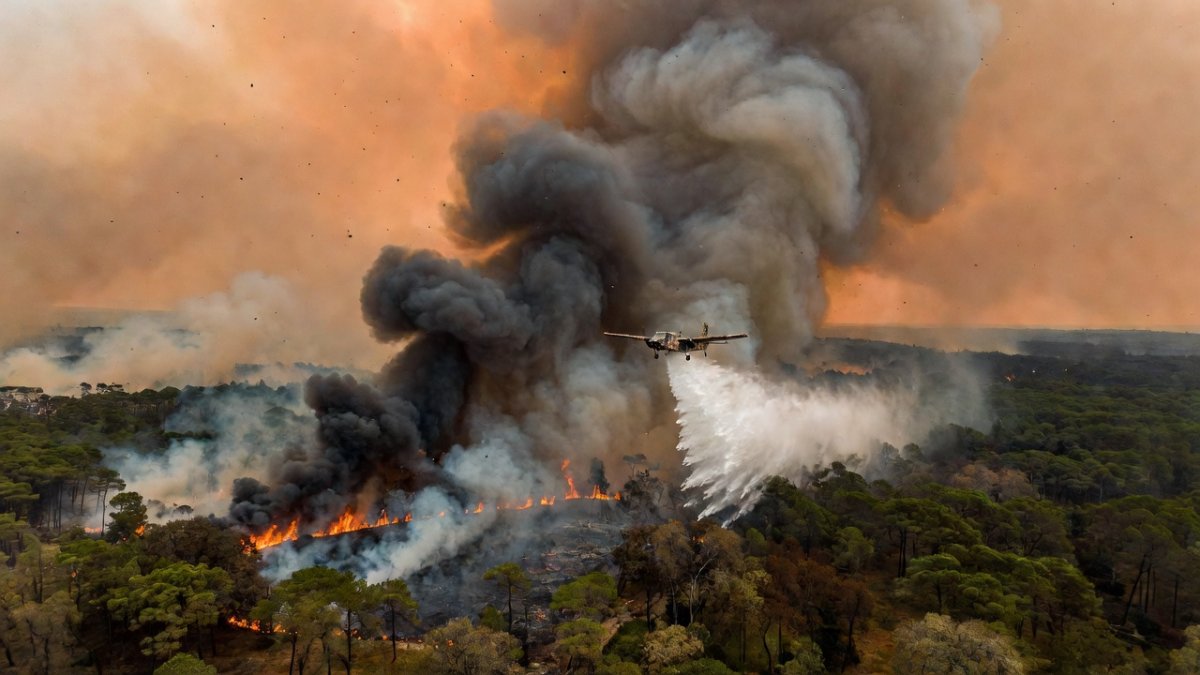
Europe on Fire — Fontainebleau in Flames
Météo-France issued vigilance rouge across 26-37 departments as temperatures surged past 40°C with peaks exceeding 45°C and Paris nighttime lows stuck at 31°C. The Fontainebleau forest 60 km south of Paris saw more than 800 hectares incinerated in a single iconic woodland. Nine hundred homes required evacuation while 32,000 hectares burned across France in 2026, already eclipsing the entire previous year. Firefighters deployed water-bombing aircraft against multiple ignition points now under arson investigation. Spain recorded fatalities, Greece and the United Kingdom also burned, rail services slowed, schools closed, and nuclear output was curtailed. These European scenes mirror the same atmospheric stress now gripping Latin America under the intensifying Super El Niño, where reduced rainfall and extreme heat threaten the Amazon basin and Pantanal wetlands with equal ferocity. The shared driver demands coordinated hemispheric response rather than isolated national firefighting.
The Heat Within — How Red Alert Became Europe's New Normal
France’s red-alert declarations and sustained 40-plus-degree readings have become recurring summer features, yet 2026 marks an escalation that Latin American observers cannot ignore. Nighttime temperatures remaining above 31°C in Paris eliminate recovery windows for both ecosystems and human populations. Fontainebleau’s 800-hectare loss and the national total of 32,000 hectares already burned illustrate how quickly iconic landscapes ignite when drought and heat coincide. Multiple arson investigations point to human ignition sources that parallel escaped agricultural burns in the Amazon. Water-bombing aircraft and mass evacuations of 900 homes reveal the scale of resources required. For Latin America, these European precedents forecast what awaits the Amazon and Pantanal when the same El Niño-driven drought peaks between July and October. The data underscore that red alerts are no longer anomalies but predictable outcomes of a warming, El Niño-amplified climate system affecting both hemispheres simultaneously.
The Super El Niño — Same Driver, Two Hemispheres
A strong Super El Niño is intensifying with sea-surface temperatures in the Niño 3.4 region far above average, amplifying global extremes of heatwaves, drought, and wildfire. This single oceanic-atmospheric driver links the Fontainebleau inferno to fire risks now building across the Amazon basin and Pantanal. Reduced rainfall already affects the Amazon, North, and Northeast Brazil, lowering river levels and stressing ecosystems. The same pattern that produced France’s 45°C peaks and 32,000 burned hectares is forecast to worsen drought and fire in Latin America during the July-October season. While Chile may see partial hydrological recovery in central regions, the overarching signal remains one of synchronized extremes. Latin American governments tracking INPE data must treat the European crisis not as distant news but as an early warning of conditions already materializing in their own territories under identical El Niño forcing. The Copernicus and ECMWF models projecting wetter conditions for the second half of 2026 offer faint hope, yet the damage from a dry early season may already be locked in.
Amazon at a Crossroads — Deforestation Down, Fire Risk Up
INPE DETER recorded only 1,295 km² of deforestation in the Brazilian Amazon from January to June 2026, a 38 percent drop from 2025 and the lowest figure since records began in 2016. Government targets aim for zero deforestation by 2030. Yet the fire season is just beginning, and reduced clearing does not eliminate ignition sources. Pasture maintenance, agricultural expansion, and escaped burns continue to threaten standing forest. The Super El Niño is expected to intensify drought across the basin, drying vegetation and elevating fire foci detected by INPE satellites. An AI fire-prediction tool developed in Amazonas state now offers 14-day advance warnings, yet its effectiveness depends on rapid response capacity. Latin America’s progress on deforestation must be paired with aggressive fire-prevention measures if the Amazon is to avoid the scale of destruction already witnessed in Fontainebleau and across France’s 32,000 burned hectares.
Pantanal's Tinderbox — Drought and the Coming Fire Season
The Pantanal wetlands face acute vulnerability as drought converts normally moist vegetation into flammable fuel. Cattle-ranching practices and deliberate dry-season burns frequently escape control, spreading across desiccated landscapes. The same Super El Niño driving European heatwaves is reducing rainfall throughout southern South America, extending the window of extreme fire danger. Lower river levels compound ecosystem stress, leaving wildlife and ranchers alike exposed. INPE satellite monitoring already registers severe fire foci peaks, while the Amazonas-developed AI tool provides critical lead time for intervention. Without scaled-up resources, the Pantanal risks repeating the rapid 800-hectare losses seen at Fontainebleau. Latin American policymakers must recognize that wetland fire regimes are shifting under El Niño amplification, demanding integrated monitoring, rancher education, and rapid aerial response comparable to the water-bombing operations mobilized in France. Without proactive fire bans and early aerial intervention, the Pantanal risks a repeat of the 2020 mega-fires that consumed 30 percent of the biome.
Latin America's Climate Paradox — Cold Outbursts and Heatwaves
Southern South America including Argentina, Uruguay, and southern Brazil endured a cold outbreak in June 2026 even as the Super El Niño intensified. Mexico simultaneously faces elevated heatwave probability and reduced rainfall chances. This paradox—cold snaps amid an overall warming signal—reflects the complex teleconnections of a strong El Niño that can produce both extremes. Central Chile may experience temporary relief from hydrological deficits, yet the Amazon basin, North, and Northeast Brazil confront sharply lower rainfall and heightened fire risk. The European experience of 26-37 departments under red alert and 45°C peaks demonstrates how quickly conditions can flip from manageable to catastrophic. Latin America’s patchwork of cold and heat underscores the need for flexible preparedness rather than reliance on historical seasonal norms. The shared El Niño driver makes isolated national strategies insufficient.
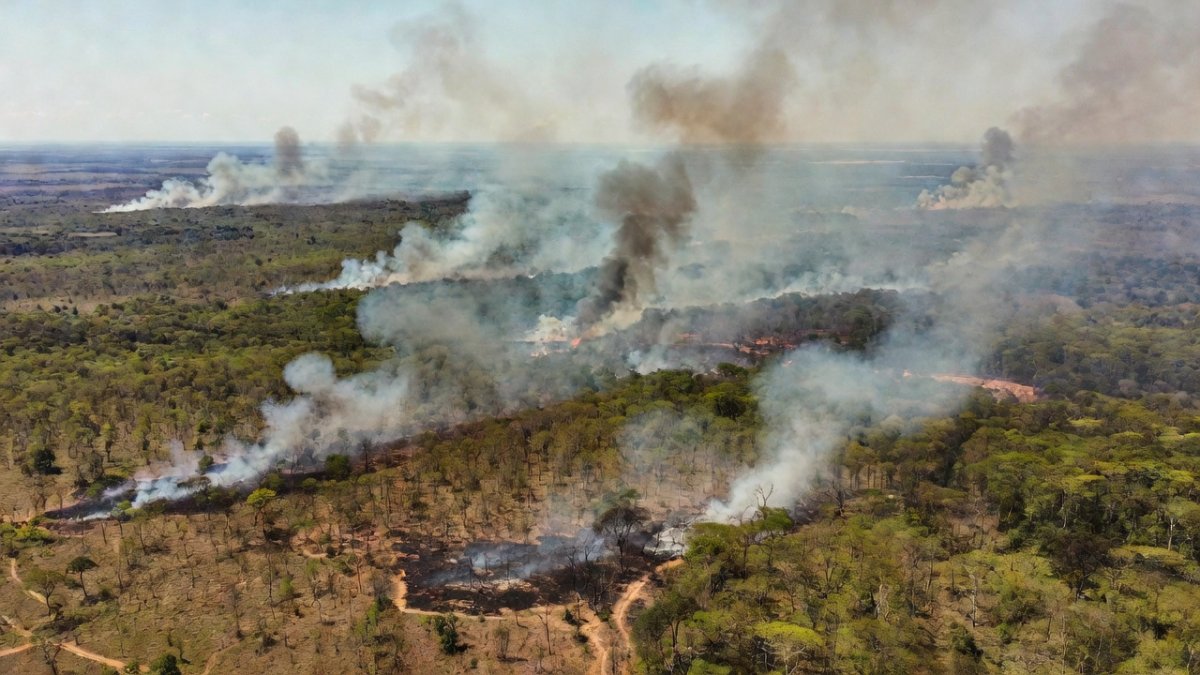
What This Means for Latin America — A Warning Ignored
Europe’s 32,000 hectares burned, Fontainebleau’s 800-hectare scar, and France’s red-alert regime constitute a direct preview for Latin America under the same Super El Niño. Amazon deforestation at a decade-low offers false comfort when fire risk remains driven by drought and escaped burns. The Pantanal’s flammable wetlands and Mexico’s heatwave outlook further illustrate regional exposure. AI prediction tools and INPE monitoring provide technological advantages, yet political will and cross-border coordination lag. Chile’s potential hydrological gains cannot offset basin-wide threats to the Amazon and Pantanal. Latin American nations must treat the European crisis as an urgent template, scaling aerial firefighting, enforcing pasture-burn restrictions, and integrating 14-day AI forecasts into national emergency plans before the July-October peak produces its own 32,000-hectare totals. Brazil's IBAMA and ICMBio must coordinate with state-level civil defense agencies to pre-position firefighting brigades in the most vulnerable Amazon and Pantanal municipalities, mirroring France's multi-department red-alert structure.
The Bottom Line — Shared Atmosphere, Shared Responsibility
The Super El Niño connects Fontainebleau’s flames to the Amazon’s drying canopy and the Pantanal’s tinderbox. France’s 26-37 red-alert departments, 45°C peaks, and 900 evacuated homes are not isolated events but symptoms of the same oceanic driver now stressing Latin American ecosystems. With Amazon deforestation at 1,295 km² through June and fire season imminent, the region possesses both data and technology—the INPE satellites and Amazonas AI tool—to act. Yet action requires acknowledging that reduced deforestation alone cannot neutralize El Niño-amplified drought. Latin America must match Europe’s mobilization of water-bombing aircraft and multi-department coordination with equivalent regional mechanisms. The atmosphere is shared; responsibility for preventing synchronized continental fire disasters must be shared as well.
By Elena Vasquez, Staff WriterThis article was produced with AI-assisted research and editorial support. Reporting is based on sources cited in the article.
What's Your Reaction?
 Like
0
Like
0
 Dislike
0
Dislike
0
 Love
0
Love
0
 Funny
0
Funny
0
 Wow
0
Wow
0
 Sad
0
Sad
0
 Angry
0
Angry
0

Latin America Correspondent at Global1.News. Based in Mexico City, covering politics, economics, energy, and culture across the region. Brings an on-the-ground perspective to stories spanning from the Rio Grande to Patagonia.










Comments (0)