
Kabardino-Balkaria Reform: Russia's Centralization Push
Rising Tensions Over Constitutional Changes Tensions between the authorities and civil society are rising in Russia's North Caucasus republic of Kabardino-Balkaria after the regional parliament agreed last month to consider amendments to the republic's constitution. Proposed by Kremlin-appointed regional prosecutor Nikolai Khabarov, the amendments would remove guarantees of Kab
Rising Tensions Over Constitutional Changes
Tensions between the authorities and civil society are rising in Russia's North Caucasus republic of Kabardino-Balkaria after the regional parliament agreed last month to consider amendments to the republic's constitution. Proposed by Kremlin-appointed regional prosecutor Nikolai Khabarov, the amendments would remove guarantees of Kabardino-Balkaria's "statehood" and "territorial integrity and inviolability" from the republic's supreme legal document.
These developments have drawn attention from local actors and external observers focused on federal dynamics in the North Caucasus. The proposed revisions target core provisions that have defined the republic's legal standing since the early post-Soviet period.
Scope of the Amendments Presented by Nikolai Khabarov
If adopted, the changes would also strip the republic's head of the formal status of "head of state" and remove their mandate to ensure Kabardino-Balkaria's "security and territorial integrity." Nikolai Khabarov presented these measures to lawmakers last month, framing them within Russia's broader legal framework.
The amendments focus on aligning regional documents with federal structures. No operational details beyond the stated removals have been outlined in the proposal.
Official Position from Kremlin-Appointed Authorities
"The powers of Russia's federal subjects are not sovereign powers, but part of a unified system of state power," Khabarov told lawmakers when presenting the amendments last month. This statement reflects the position of the regional prosecutor's office under federal oversight.
Kazbek Kokov, as regional head, has been called upon alongside the local parliament to address the proposals. Perspectives from Moscow emphasize centralized authority over regional provisions.
Responses from Civil Society and the Circassian Diaspora
Prominent civil society actors in Kabardino-Balkaria and members of the Circassian diaspora believe the changes would further erode the republic's autonomy. Opponents fear that if adopted, the amendments could equip the federal government in Moscow with the legal basis to redraw the small, mountainous republic's borders, transfer parts of its territory to neighboring regions or merge it with one of them.
Last month, more than 40 organizations from across the North Caucasus and the Circassian diaspora appealed for regional head Kazbek Kokov and the local parliament to preserve the constitutional provisions. Faruk Arslandok, chairman of Turkey's Pluralist Democracy Party, called on President Vladimir Putin to consider the "social and psychological" impacts of the changes.
Historical Context of Kabardino-Balkaria's Legal Framework
When the constitution of the Kabardino-Balkarian Republic was initially adopted in 1992, Kabardino-Balkaria was declared a state with its own constitutional court, its own president, its own parliament. The powers of the republic have been taken away year after year, according to Martin Kochesoko, head of the Circassian political alliance Khabze.
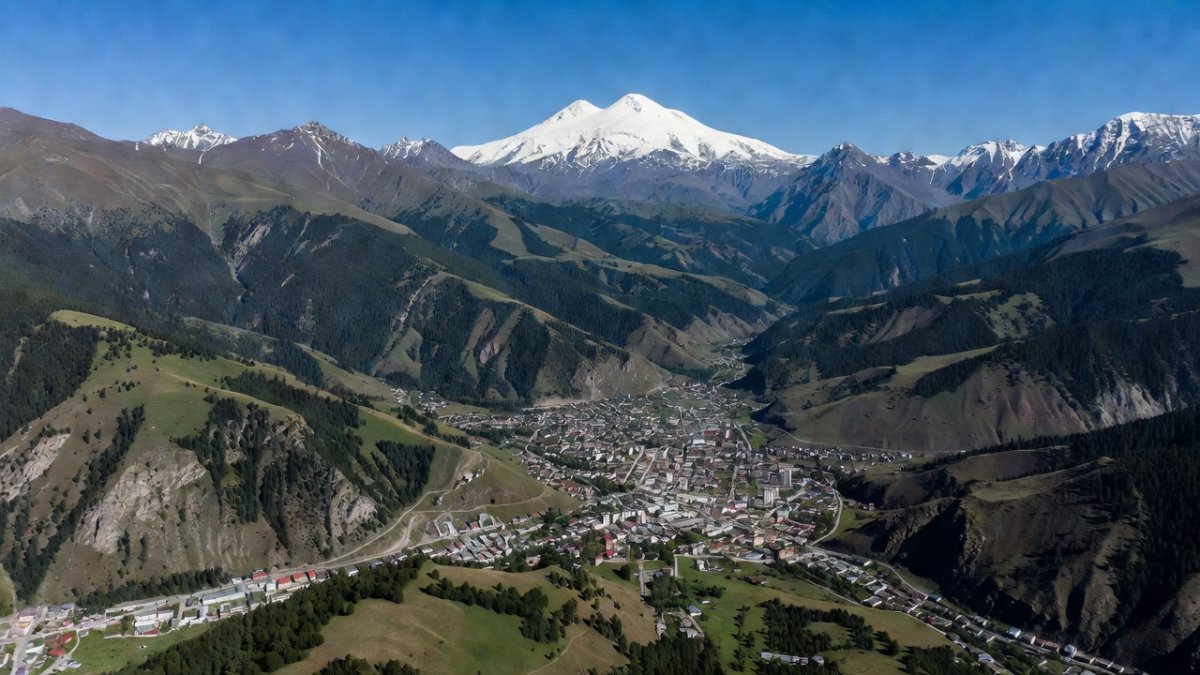
"It is obvious that everything is being prepared for the complete elimination of the republics [of Russia] and unitarization of the state," Kochesoko stated. A mountainous republic roughly the size of Montenegro with a population of fewer than 1 million, Kabardino-Balkaria is home to Mount Elbrus, Europe's highest peak.
Demographic and Ethnic Composition
The republic's name is derived from its two largest ethnic groups: the Kabardians (nearly 60% of the population) and the Turkic-speaking Balkars (around 13%). The Kabardians consider themselves part of the larger Circassian ethnic group. Indigenous to the northwest Caucasus, the Circassians were conquered by the Russian Empire in 1864 after the century-long Russo-Circassian War.
Historians estimate up to 2 million Circassians were killed, while the Russian Empire deported millions of survivors to the Ottoman Empire. Today, fewer than 1 million of the more than 5 million Circassians worldwide live in Russia.
Expert Analysis on Broader Centralization Trends
Comparative federalism expert Irina Busygina of Harvard University's Davis Center said revising the constitutions of Russia's 21 ethnic republics is a routine part of a long-running centralization drive. "We know that Kabardino-Balkaria is not the first republic in the queue. It's just that the Kremlin has now got round to the republic," Busygina noted.
Last year, lawmakers in the Siberian republic of Altai removed references to the region's "territorial integrity" from its constitution. Analysts suggest this signals ongoing adjustments across federal subjects without implying immediate border alterations in any specific case.
By Irina Volkov, Staff WriterThis article was produced with AI-assisted research and editorial support. Reporting is based on sources cited in the article.
What's Your Reaction?
 Like
0
Like
0
 Dislike
0
Dislike
0
 Love
0
Love
0
 Funny
0
Funny
0
 Wow
0
Wow
0
 Sad
0
Sad
0
 Angry
0
Angry
0

Russia/Eastern Europe Correspondent at Global1.News. Covering Russian politics, energy, security, and the shifting dynamics of the post-Soviet space. Provides clear-eyed analysis on one of the world's most opaque regions.










Comments (0)