
Iran Begins Public Mourning for Ayatollah Khamenei as Millions Gather in Tehran
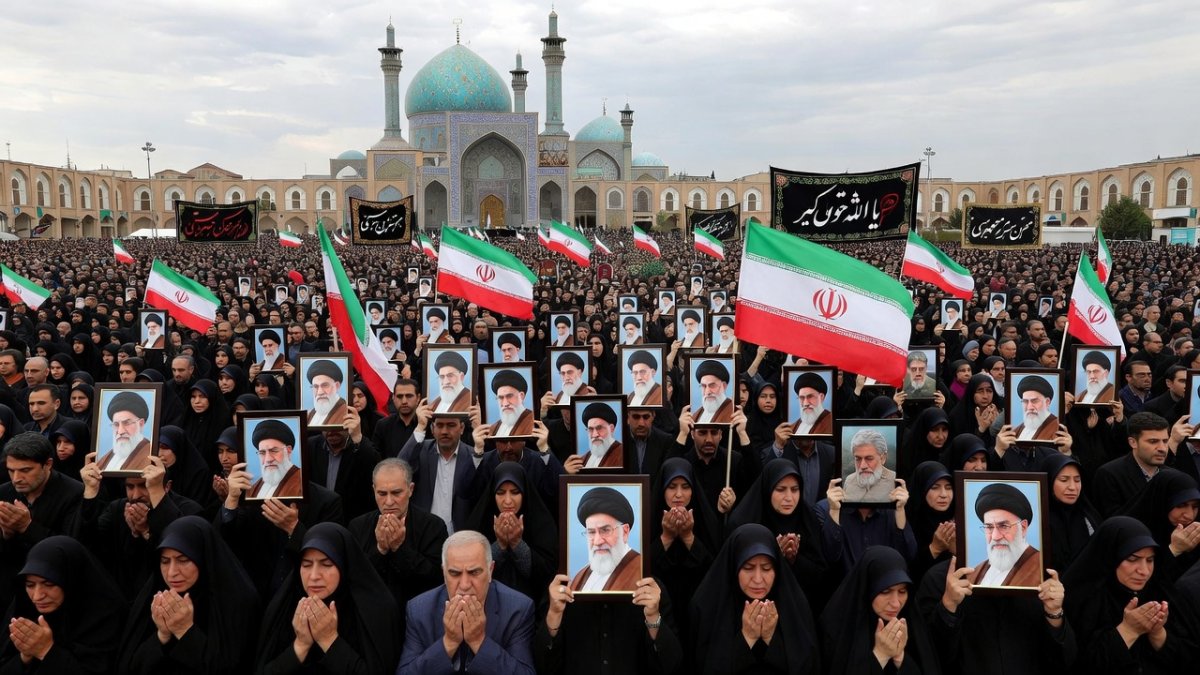
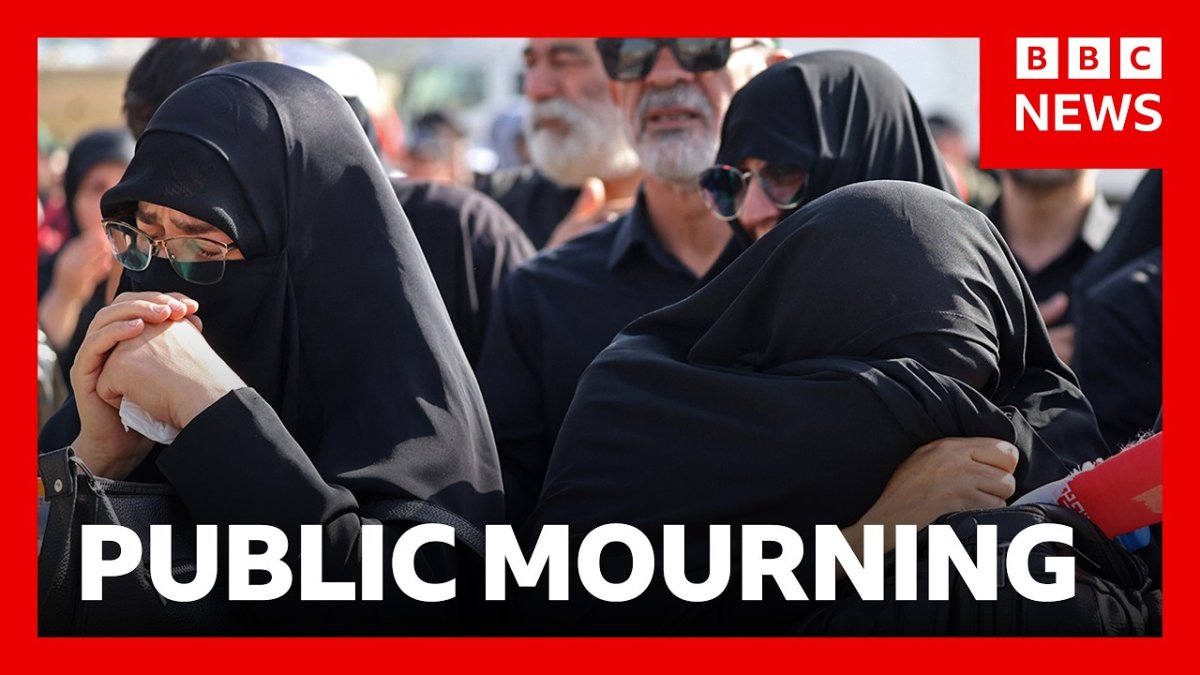
In a recent BBC News report, large crowds of black-clad mourners gathered outside Tehran's Grand Mosalla on Saturday as Iran began several days of public mourning for its former Supreme Leader, Ayatollah Ali Khamenei, who was killed in US and Israeli air strikes four months ago. Iran Begins Days of Public Mourning for Ayatollah Khamenei as Millions Gather in Tehran Tehran, Iran
In a recent BBC News report, large crowds of black-clad mourners gathered outside Tehran's Grand Mosalla on Saturday as Iran began several days of public mourning for its former Supreme Leader, Ayatollah Ali Khamenei, who was killed in US and Israeli air strikes four months ago.
Iran Begins Days of Public Mourning for Ayatollah Khamenei as Millions Gather in Tehran
Tehran, Iran — 4 July 2026 — Iran has commenced a week of funeral ceremonies for Ayatollah Ali Khamenei, the country's supreme leader who was assassinated in US and Israeli strikes on 28 February 2026. Authorities expect 15 to 20 million people to attend the events across Iran and Iraq over the coming days. The funeral procession, the largest in Iran's modern history, began on Saturday — coinciding with the 250th anniversary of the United States' founding — as crowds estimated in the hundreds of thousands filled the streets around Tehran's Grand Mosalla mosque.
A State Funeral on a Historic Scale
The scale of the funeral for Ayatollah Ali Khamenei is unprecedented in Iran's modern history. His body lies in state at the Grand Mosalla in Tehran for three days, accompanied by the remains of family members also killed in the February strikes. Central Tehran has been placed under strict lockdown, with security forces controlling access to the main procession routes. Organizers anticipate that the total attendance across all events could represent the largest turnout relative to national population ever recorded for such a ceremony. Mourners have chanted slogans denouncing the United States and demanding revenge for the killing of the former supreme leader, reflecting widespread public anger four months after the conflict.
Direct quotes from participants underscore the intensity of feeling. "We have a blood feud with the United States," said Arash Rahimi, 40, to Reuters. "Our relations with the United States will never be good." Professor Reza, 37, told AFP: "We came because we promised the supreme leader we would stand by him to the very end." These statements illustrate the depth of anti-American sentiment that persists four months after the strikes, with many viewing the funeral as both a tribute and a political statement.
The Procession Route: From Tehran to Mashhad
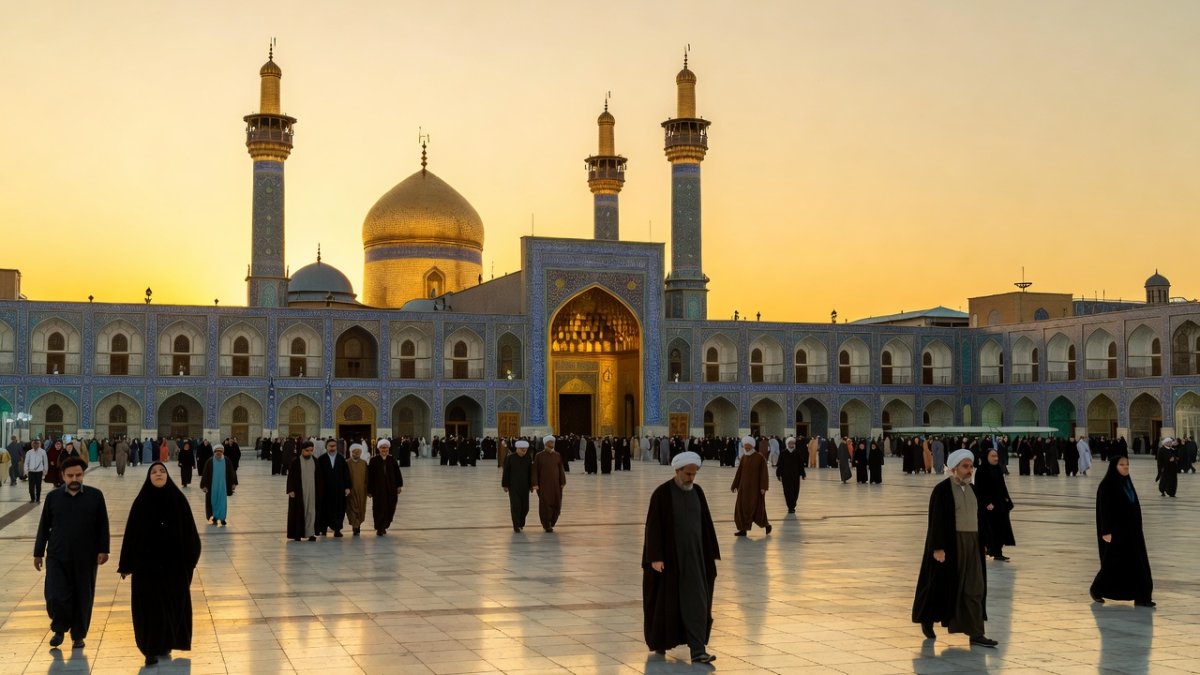
The six-day funeral route has been meticulously planned to honor Ayatollah Ali Khamenei across key religious sites. After three days at the Grand Mosalla, the body will move to Qom on Tuesday for funeral prayers at the Jamkaran mosque. On Wednesday it proceeds to Najaf in Iraq for a procession at the shrine of Imam Ali, followed by ceremonies in Karbala. Burial is scheduled for Thursday at the Imam Reza Shrine in Mashhad, Iran's most important pilgrimage site. The ceremonies will continue for 40 days beyond the main procession, with additional events planned until the first anniversary of the burial.
Security implications are significant. Central Tehran remains locked down throughout the initial phase. Iranian authorities have warned the United States and Israel against any attacks during the funeral period. The operation involves both the Islamic Revolutionary Guard Corps and regular military forces in a massive logistical effort for a country still recovering from the February-March war. Coordination with Iraqi authorities for the Najaf and Karbala segments adds further complexity to the arrangements.
Mojtaba Khamenei: The Invisible Successor
Mojtaba Khamenei was elected by the Assembly of Experts on 9 March 2026, days after his father's assassination. He served in the Iran-Iraq war in the 1980s and maintains close ties to the IRGC. However, he has not been seen in public since assuming the role, prompting speculation about his health and the stability of the succession. Whether he will appear at the funeral remains a key question for observers tracking the transition of power.
His continued absence raises questions about whether the succession has been smooth. Some analysts suggest internal power struggles within the Iranian establishment may be at play. Others point to security concerns, noting that Mojtaba is now the highest-value target for any potential further strikes. His first public appearance will be a major political event with implications for the regime's cohesion. The prolonged invisibility of Mojtaba signals deeper fractures in internal succession politics, where competing factions within the clerical elite and IRGC vie for influence in ways that echo the opaque maneuvering after Khomeini's 1989 death yet diverge sharply from that earlier transition's relatively swift public consolidation; this opacity risks eroding regime cohesion if the new leader cannot project authority soon.
Regional and International Reactions
US President Donald Trump stated that Iran's government was "dying to settle" a peace deal, adding that "We gave them a week off for a funeral because we're nice." Iran has been engaged in preliminary peace negotiations with the United States since the ceasefire. Regional powers are watching closely, as the attendance of foreign dignitaries at the funeral will signal positioning in the post-war Middle East order. Russia's position is particularly significant given Moscow's growing ties with Tehran since the Ukraine war.
From the Russian perspective, Moscow has maintained diplomatic relations with Tehran and condemned the US-Israeli strikes. Russian officials are expected to attend the funeral. The Kremlin views Iran as a key partner in challenging US hegemony in the Middle East. How Russia engages with Mojtaba Khamenei's leadership will be closely watched by analysts monitoring shifts in regional alliances.
Analysis and Geopolitical Implications
The mass turnout at the funeral demonstrates the regime's continued mobilisation capacity, yet it comes at enormous economic cost. Iran's economy remains strained after the war. The decision to begin the funeral on July 4, America's 250th birthday, is viewed as a deliberate political statement. The regime is framing Ayatollah Ali Khamenei as a martyr and using the events to consolidate support for Mojtaba's succession and the continuation of the Islamic Republic's anti-American stance.
After the 40 days of mourning, Iran must address economic reconstruction, ongoing peace negotiations with the United States, and the long-term question of Mojtaba Khamenei's leadership. The funeral demonstrates the regime's resilience, but the challenges ahead are enormous. How the international community, particularly Russia and China, engages with the new leadership will shape Iran's path forward in the coming months. These negotiations face delays amid reconstruction costs that could exceed tens of billions, while sustaining IRGC morale requires careful resource allocation; the succession question looms as a potential flashpoint that could compress the timeline for any durable US-Iran agreement.
Russian-Iranian Strategic Ties in the Post-War Period
Russia's involvement in the funeral proceedings highlights deepening bilateral cooperation. Kremlin sources have indicated that Moscow sees the current transition as an opportunity to expand military and economic partnerships. Iranian Foreign Ministry statements have welcomed Russian participation, emphasizing shared interests in countering Western influence. This alignment affects the broader Middle East balance of power, with implications for energy markets and security arrangements involving multiple regional actors.
Analysts suggest this signals a more assertive Russian role in Iranian affairs. The Kremlin power dynamics under President Putin favor pragmatic engagement with the new Iranian leadership. Such cooperation could influence negotiations with the US State Department and shape outcomes in Iraq and Syria, where both nations maintain interests. Expanded ties now encompass joint military technology transfers, energy partnerships in oil and gas infrastructure, and coordinated diplomatic maneuvers at the UN Security Council, allowing the Kremlin to leverage Iran's transitional uncertainty for greater leverage against Western sanctions and to secure long-term footholds in regional energy corridors.
Impact on Domestic Iranian Politics
Inside Iran, the funeral serves to reinforce loyalty to the Islamic Republic amid economic hardship. The Iranian government stated that the large attendance reflects popular support for the late Ayatollah Ali Khamenei. However, underlying tensions remain, particularly regarding the visibility of Mojtaba Khamenei. The Assembly of Experts' decision on 9 March 2026 continues to be debated in private circles, with questions about long-term stability.
Regional actors including Israel continue to monitor developments closely. The US State Department has issued statements urging restraint during the mourning period. These dynamics illustrate the complex interplay between internal Iranian politics and external pressures following the February strikes.
By Irina Volkov, Staff Writer
This article was produced with AI-assisted research and editorial support. Reporting is based on sources cited in the article.
What's Your Reaction?
 Like
0
Like
0
 Dislike
0
Dislike
0
 Love
0
Love
0
 Funny
0
Funny
0
 Wow
0
Wow
0
 Sad
0
Sad
0
 Angry
0
Angry
0

Russia/Eastern Europe Correspondent at Global1.News. Covering Russian politics, energy, security, and the shifting dynamics of the post-Soviet space. Provides clear-eyed analysis on one of the world's most opaque regions.











Comments (0)