
Music and Poetry for the King's Cattle: Inside Rwanda's Living Heritage at the King's Palace Museum
In the rolling hills of southern Rwanda, a herd of extraordinary cattle is living a life most animals could only dream of — serenaded with poetry, brushed to perfection, and celebrated as living symbols of a kingdom that no longer sits on a throne. At the King's Palace Museum in Nyanza, the Inyambo breed of Ankole cattle has become a powerful bridge between Rwanda's royal past
In the rolling hills of southern Rwanda, a herd of extraordinary cattle is living a life most animals could only dream of — serenaded with poetry, brushed to perfection, and celebrated as living symbols of a kingdom that no longer sits on a throne. At the King's Palace Museum in Nyanza, the Inyambo breed of Ankole cattle has become a powerful bridge between Rwanda's royal past and its cultural future.
Music and Poetry for the King's Cattle: Inside Rwanda's Living Heritage at the King's Palace Museum
Nyanza, Rwanda — Seventy kilometres south of Kigali, on the grounds of what was once the seat of Rwanda's monarchy, a tradition as old as the kingdom itself continues to thrive. The Inyambo cattle — descendants of the prized Ankole breed of East Africa — are not raised for milk or meat. They are kept for beauty, for ceremony, and for the deep cultural reverence that has defined Rwandan royalty for centuries.
The Inyambo: Royal Cattle with a Sacred Purpose
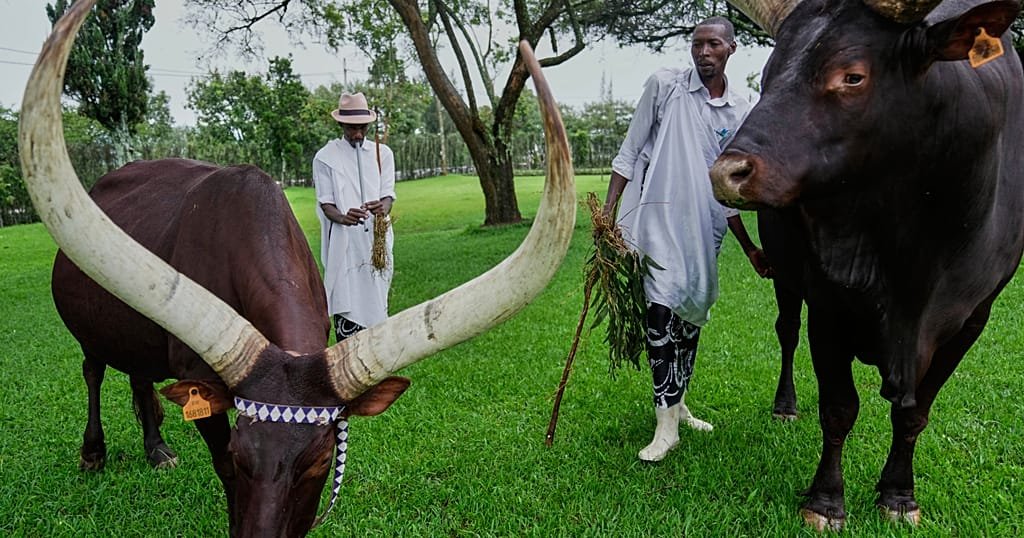
The Inyambo possess distinctive long crescent-shaped horns that can reach several feet in length, setting them apart as a prized strain of the Ankole breed also found in Uganda and Burundi. These majestic animals trace their lineage directly to the Ankole cattle of East Africa, where their symmetrical white horns have long marked them as symbols of prestige across borders.
In the Rwandan royal court, the Inyambo served as living embodiments of wealth and prestige rather than sources of everyday sustenance. They were not for milk, not for meat. They were just used as decorations around the palaces, as museum curator Bigira Junior explains with quiet pride during guided tours at the King's Palace Museum, also known as Rukari Palace.
Historically, these cattle stood as living decorations around the palaces of the Rwandan monarchy, their presence signalling the power and refinement of the ruling class. Their reintroduction to the King's Palace Museum in the early 2010s revived this ancient practice after years of absence, restoring a vital thread of pre-colonial heritage.
Today, some Inyambo continue to be kept by wealthy Rwandans, including President Paul Kagame, who maintains private herds that echo the royal traditions of old. This practice extends into what a local newspaper described as Inyambo diplomacy, where Kagame gifts cows to fellow heads of state as gestures of goodwill and cultural exchange.
The Inyambo are a strain of the Ankole breed, prized for their large symmetrical white horns that command attention in any setting. Their return to Nyanza has allowed visitors to witness how these animals once moved through royal compounds, their elegant forms enhancing the dignity of the court.
Bigira Junior notes that the cattle's role has always been ceremonial, their beauty serving as a constant reminder of Rwanda's pastoralist roots and the monarchy's deep connection to the land. This sacred purpose distinguishes them from ordinary livestock across the region.
Poetry and Song: The Art of Caring for the King's Herd
Caretakers at the King's Palace Museum sing melodious poetry to the Inyambo, describing their beauty in verses passed down through generations. These songs form part of Rwanda's living oral traditions, where every note reinforces the bond between human and animal in a way that echoes across East Africa.
One specific caretaker song captures this reverence perfectly: "You have beautiful horns. Move your head so that we can see your beautiful neck and body. You are the most beautiful cow among others." The lyrics calm the cows before major events and traditional ceremonies, encouraging them to sway or dance in response to the gentle melodies.
The singing draws directly from Rwandan oral traditions including Ibisigo, the dynastic poetry praising kings and herds, and Ibyivugo, the heroic self-praise poetry that celebrates strength and lineage. These forms keep the cultural memory alive each time a caretaker approaches the herd.
Brushing the cows' coats serves as another calming technique, allowing caretakers to work closely with each animal. Bigira Junior emphasises this intimacy with his words: "Remember, they would be loved and cherished and you can't love something from afar. You have to get close to it."
Through daily poetry and song, the Inyambo remain connected to the rhythms of Rwandan life, their presence at the museum ensuring that these traditions do not fade. The cows respond visibly to the music, their movements becoming part of the performance itself.
This practice of serenading the herd reflects a broader African respect for animals as companions in cultural expression, much like the griot traditions of West Africa that honour livestock through verse. At Nyanza, the songs continue to shape the daily stewardship of this living heritage.
When Cattle Shape Culture: The Inyambo Influence on Rwandan Dance
The beauty of the Inyambo breed has directly shaped traditional dances performed by Rwandan women, who raise their arms wide to mimic the crescent shapes of the cows' horns. This movement transforms the animals' physical grace into human expression during festivals and ceremonies.
Bigira Junior explains the connection clearly: "You will notice that the women tend to raise their arms a little bit wide. So, they are more or less mimicking the different shapes of the royal cows." The dance thus carries forward the visual legacy of the Inyambo into contemporary cultural life.
Traditional Rwandan instruments accompany these performances, including the inanga trough zither, the ikembe thumb piano, and various drums that provide rhythmic foundation. Poetry and music integrate seamlessly into the daily stewardship of the herd, turning routine care into artistic ritual.
The Inyambo's influence extends beyond the palace grounds, inspiring movements that celebrate symmetry and elegance in Rwandan choreography. Visitors to the King's Palace Museum often witness how these dances honour the cattle's role in shaping national identity.
By linking animal form to human movement, the dances preserve a visual language rooted in the royal court. The crescent horns become a motif that travels from pasture to performance stage, keeping the memory of the monarchy vibrant.
This cultural transmission demonstrates how Rwanda's pastoral heritage continues to inform artistic expression long after the throne itself has passed into history.
Conservation and National Significance
The Rwanda Agriculture and Animal Resources Development Board maintains breeding stock at Karama Farm to protect the genetic line of the Inyambo. This careful management ensures the breed's distinctive traits survive for future generations at the King's Palace Museum.
A conservation initiative brought the cows back to the palace museum in the early 2010s, restoring their historic presence after a period of disruption. The effort reflects Rwanda's commitment to safeguarding its royal heritage through active preservation.
The museum has reconstructed traditional beehive-shaped royal residences using thatched materials, creating an authentic setting where the Inyambo can be presented during traditional ceremonies. These structures help visitors understand the environment in which the cattle once lived.
Rwanda no longer has a monarchy, yet the cultural preservation at Nyanza continues without interruption. The Inyambo embody the connection between living heritage and national identity in post-monarchy Rwanda, standing as quiet witnesses to a transformed nation.
The broader context shows Rwanda investing heavily in cultural tourism, with the King's Palace Museum serving as a key site. The Inyambo symbolise continuity with Rwanda's pastoralist roots and pre-colonial monarchy, offering tangible links to the past.
Traditional ceremonies still feature the Inyambo presented to visitors in their historic setting, reinforcing their role as ambassadors of Rwandan history. This ongoing work highlights how conservation supports both cultural memory and economic development.
Tourism and Cultural Diplomacy in Modern Rwanda
The Inyambo stand as the main attraction at the King's Palace Museum, drawing visitors eager to witness their graceful presence. Rwanda's strategy of investing in cultural heritage sites has positioned Nyanza as an essential stop for those exploring the country's rich traditions.
The Associated Press featured the Inyambo tradition in June 2026, bringing international attention to the caretakers' poetic practices. An Africanews video published June 28, 2026 further highlighted how the cows continue to thrive under attentive care.
The cows embody Rwanda's blend of tradition and modernity, their ancient lineage thriving alongside contemporary tourism initiatives. The museum functions as a living cultural centre rather than a static display, where poetry and song remain active elements of daily life.
Inyambo diplomacy serves as a unique form of soft power, with cattle gifted to fellow heads of state strengthening regional ties. These exchanges echo the historical prestige once reserved for royalty, now extended through modern diplomacy.
The Inyambo symbolise national pride and continuity with pastoralist roots, reminding Rwandans and visitors alike of the kingdom's enduring influence. Their presence at the museum reinforces a sense of identity that bridges past and present.
As Rwanda develops its tourism sector, the King's Palace Museum remains central to showcasing how living heritage can coexist with national progress. The cattle's story resonates far beyond Nyanza, illustrating the power of cultural symbols in a changing world.
What to Watch For
The future of Rwanda's cultural heritage preservation efforts centres on sites like the King's Palace Museum, where the Inyambo continue to anchor public understanding of royal traditions. Ongoing investment ensures these practices remain vibrant for decades ahead.
The museum's role in Rwanda's tourism development strategy grows each year, with the cattle serving as ambassadors that attract visitors from across the continent and beyond. Similar conservation and cultural tourism initiatives hold potential across East Africa, where other nations might adapt the model to their own royal legacies.
The Inyambo offer a compelling example of how African nations can preserve royal traditions in post-monarchy contexts, maintaining dignity without restoring political structures. Their story encourages thoughtful approaches to heritage that honour both history and contemporary realities.
Growing interest from international media in Rwanda's cultural heritage signals wider recognition of these efforts. Features like the 2026 coverage demonstrate how the Inyambo capture global imagination while remaining deeply rooted in local soil.
Across Africa, communities continue to find ways to celebrate living traditions while embracing modernity, and the Inyambo at Nyanza stand as a shining example of this balance. Their horns catch the southern Rwandan light each day, reminding all who visit that culture thrives when tended with song, care, and respect.
From my Senegalese perspective, seeing such dedication in Rwanda echoes the ways our own griots and herders keep cattle central to identity and ceremony, proving that the continent's pastoral wisdom remains a shared strength worth protecting.
This article was produced with AI-assisted research and editorial support. Reporting is based on sources cited in the article.
What's Your Reaction?
 Like
0
Like
0
 Dislike
0
Dislike
0
 Love
0
Love
0
 Funny
0
Funny
0
 Wow
0
Wow
0
 Sad
0
Sad
0
 Angry
0
Angry
0

West Africa/Sahel Correspondent at Global1.News. Dakar-based journalist covering politics, security, climate, and development across Francophone and Anglophone West Africa. Tells the stories of a region undergoing profound transformation.









Comments (0)