
Met Museum's Divine Egypt: Ancient African Gods Exhibition
When the Metropolitan Museum of Art in New York unveiled "Divine Egypt" in October 2025, it marked the first major ancient Egyptian exhibition at the institution in over thirteen years — a cultural moment that brought more than 250 artifacts spanning three millennia of African civilization to an international audience, with the works exploring how ancient Egyptians used images to connect with their gods, blending art, ritual, and daily life.
When the Metropolitan Museum of Art in New York unveiled "Divine Egypt" in October 2025, it marked the first major ancient Egyptian exhibition at the institution in over thirteen years — a cultural moment that brought more than 250 artifacts spanning three millennia of African civilization to an international audience, with the works exploring how ancient Egyptians used images to connect with their gods, blending art, ritual, and daily life.
Met Museum's 'Divine Egypt': An African Civilization's Gods Take Center Stage in New York
Dakar, Senegal — For thirteen years, the Metropolitan Museum of Art had not mounted a large-scale exhibition of its renowned Egyptian collection. When "Divine Egypt" finally opened its doors on October 12, 2025, it did not merely display artifacts — it invited visitors into the spiritual universe of an African civilization whose relationship with the divine shaped architecture, governance, art, and daily life for over three thousand years. The exhibition ran through January 19, 2026, and in those three months, it became one of the most talked-about cultural events in New York, drawing visitors from across the globe into Gallery 899 at the Met's Fifth Avenue location.
A Pantheon of 1,500 Gods, Distilled to Twenty-Five
Curated by Diana Craig Patch with research associate Brendan Hainline, the exhibition focused on 25 principal deities out of approximately 1,500 known Egyptian gods. The team selected objects that revealed how these divine figures evolved across dynasties rather than following a strict timeline.
The non-chronological arrangement allowed visitors to see how iconographies were remixed and deities fused together over centuries. A single statue might combine attributes from multiple periods, showing the fluid nature of belief in the Nile Valley.
ARTnews critic Alex Greenberger described the show as the first Ancient Egypt blockbuster in over a decade, noting the strangeness of ancient Egyptian divine imagery that appeared surprisingly surreal to contemporary eyes. The falcon heads, crocodile bodies, and composite forms challenged modern expectations of realism.
The curators deliberately avoided the monumental scale of the 1978 King Tut exhibition at the Met, which drew over one million visitors according to former director Thomas Hoving. Instead they emphasized intimate encounters with smaller, hand-held objects that ordinary people once carried.
Over 500,000 visitors saw Divine Egypt during its three-month run. The Met's permanent Egyptian collection spans Predynastic through Roman periods, providing the deep reservoir from which the 250-plus artifacts were drawn.
The seated Anubis statue dating to approximately 1390-1352 BCE stood as one quiet centerpiece, its jackal form inviting close inspection rather than distant awe.
From Pharaohs Only to Public Devotion
The opening section presented artifacts once accessible only to pharaohs inside restricted temple spaces. These objects illustrated the exclusive relationship between rulers and gods before divine imagery reached wider audiences.
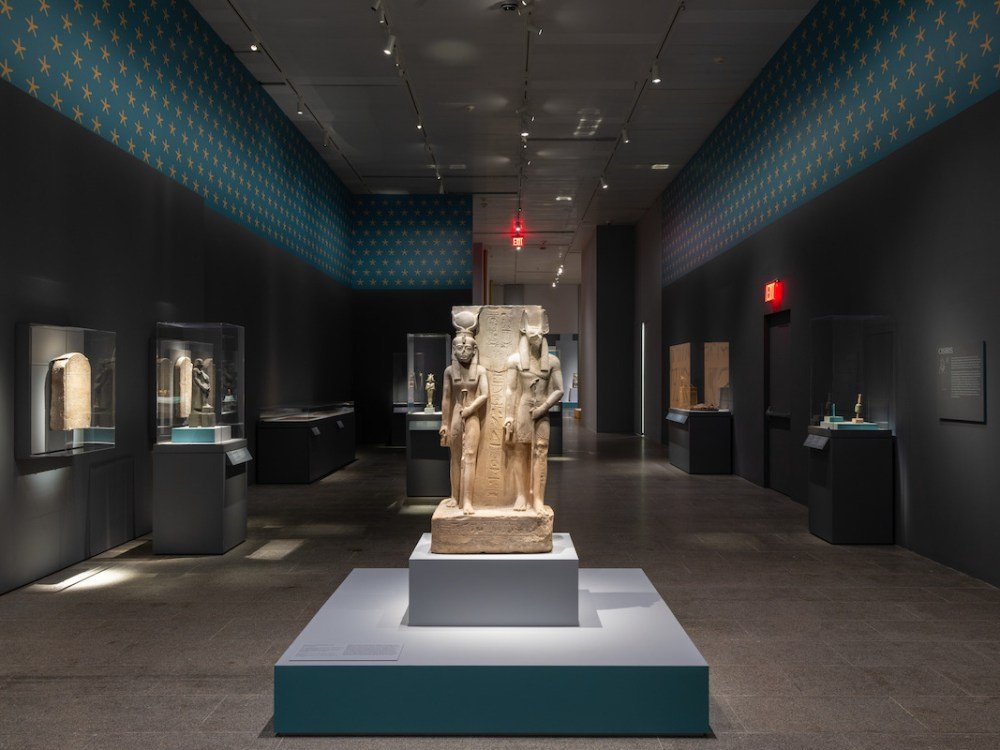
The statue group of Horus and King Haremhab from ca. 1323-1295 BCE showed the falcon god protecting the pharaoh, his wings spread in guardianship. The metagraywacke sculpture of King Nectanebo II standing between Horus's splayed talons further emphasized this royal bond.
As gods transcended temple walls they reached the public through shrines and processions. Deities changed form as they became more accessible, demonstrating the shapeshifting nature of divine representation across Egyptian history.
The falcon-headed crocodile amulet from the 7th-1st centuries BCE fused Horus with Sobek, god of the Nile. A blue-glazed faience amulet represented Soknopaios, a version of Sobek worshipped specifically in the Fayum region.
These transformations revealed how ancient Egyptians adapted sacred imagery to daily needs. The same gods who guarded pharaohs also appeared on personal amulets carried by farmers and artisans.
The Met's Egyptian wing acknowledged Cheikh Anta Diop's The African Origin of Civilization in its gallery labels, grounding these objects within a broader continental story.
Hathor, Bastet, and the Goddesses Who Shaped Egyptian Spirituality
A dedicated section traced Hathor, goddess of motherhood, dance, and joy. Her face transformed across centuries from a human visage with cow's ears to fully bovine forms featuring rock crystal eyes.
At times Hathor merged with or transformed into Bat, an entirely different cow goddess, showing how divine identities overlapped and shifted. These changes reflected regional variations and evolving spiritual needs.
The goddess Bastet's feline attributes generated cat-shaped coffins and a mummified cat displayed in the exhibition. These objects highlighted the protective role goddesses played in Egyptian households.
Hathor represented joy and celebration while Bastet safeguarded homes and families. The exhibition demonstrated that ancient Egyptian spirituality was not exclusively male-dominated, giving equal space to powerful female deities.
Visitors encountered how these goddesses appeared in both temple rituals and personal devotion. Their presence in everyday objects underscored the integration of the divine into ordinary African life along the Nile.
The Met holds over 26,000 Egyptian objects, many of which illustrate these female divine figures across three millennia of continuous cultural development.
Sacred Objects of Daily Life: Board Games and Beetle Gods
The gargantuan quartz diorite scarab representing Khepri, god of the morning sun, stood out as alien and not entirely of this world to many reviewers. Its polished surface caught light in ways that evoked the rising sun itself.
The Mehen game board, a serpent-shaped board game linked to the god who protects Ra, was loaned by the Institute for the Study of Ancient Cultures. Players moved pieces along the serpent's coils in a ritualized form of play.
The gods' enigmatic presence appeared not only in temples and sarcophagi but in easily transportable objects. Board games served as a medium for religious education, teaching children and adults about divine protection through entertainment.
The irony of a civilization's most profound spiritual concepts being expressed through play struck many visitors. These objects showed that spirituality permeated every aspect of life, including leisure.
Additional loans from the Museum of Fine Arts, Boston and the Brooklyn Museum enriched this section. No artifacts were loaned directly from Egypt, with approximately 140 works coming from the Met's own collection.
The exhibition made clear that even the most sacred ideas traveled in small, personal forms across the African continent's ancient trade and pilgrimage routes.
An African Exhibition: Egypt's Place in the Continent's Cultural Legacy
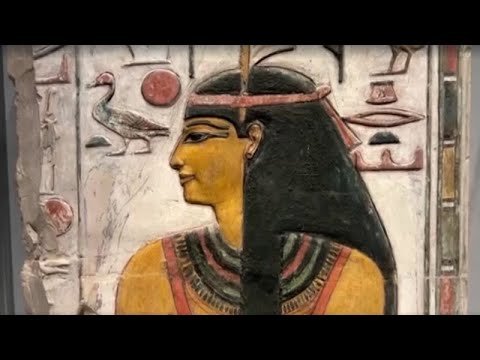
Ancient Egypt, known as Kemet, developed as an African civilization in the Nile Valley of Northeast Africa. The exhibition placed this heritage firmly within continental traditions rather than isolating it as separate from the rest of Africa.
Continuity of cultural elements such as divine kingship, cattle symbolism, and a Nile-centric worldview links Egypt with broader African traditions in Nubia, Sudan, and Ethiopia. The Temple of Dendur, a complete sandstone temple from ca. 15 BCE originating in Nubia, remains a permanent fixture in the Met's collection.
The absence of loans from Egypt itself meant the show relied entirely on American institutional holdings. This reality highlighted both the depth of diaspora collections and the ongoing conversation about where African heritage is best experienced.
Several visitors expressed discomfort on social media about Egyptian artifacts displayed outside Africa. These reactions echoed similar discussions surrounding other continental treasures held abroad.
The Met's Department of Egyptian Art continues to steward more than 26,000 objects that document Predynastic through Roman periods. This vast archive offers scholars and the public alike a window into one of humanity's earliest complex societies.
For Senegalese audiences, the exhibition resonated with our own Museum of Black Civilizations in Dakar, opened in 2018, which similarly seeks to present African achievements on their own terms.
Repatriation, Museums, and the Future of African Artifacts
The broader debate around African artifacts in Western museums includes the repatriation of Benin Bronzes to Nigeria and more than 2,000 items returned to Ghana from the Netherlands and Germany. Ethiopia has also received objects linked to the 1868 Battle of Magdala.
Egypt continues to invest in the Grand Egyptian Museum near the pyramids of Giza, one of the largest museums in the world. This new institution aims to house and interpret the nation's heritage on African soil.
The Met has repatriated pieces when credible evidence shows post-1970 looting. Such actions reflect evolving museum ethics while still allowing millions to encounter African heritage through universal access in major institutions.
The tension between global visibility and cultural patrimony remains real. Digital technology and joint exhibitions offer pathways forward that respect both access and ownership.
Training partnerships between Western institutions and African museums are expanding. These collaborations help build local capacity for conservation and interpretation across the continent.
Visitor conversations at the Met often turned to these questions, revealing how exhibitions like Divine Egypt spark deeper reflection on where Africa's stories belong.
What This Means for Africa's Cultural Renaissance
The growing African cultural infrastructure includes the Grand Egyptian Museum, Senegal's Museum of Black Civilizations, and Nigeria's proposed museum for the Benin Bronzes. These institutions signal a new era of self-representation.
Exhibitions like Divine Egypt spark renewed interest in Africa's ancient heritage among the diaspora. Young people in Dakar and beyond are rediscovering connections to Kemet through such international presentations.
The role of Pan-African institutions in reclaiming narrative ownership grows stronger each year. The Temple of Dendur at the Met serves as a permanent reminder of Nubian civilization's contributions.
A younger generation of African curators, archaeologists, and museum professionals is shaping how the continent's heritage is presented. Their voices bring fresh perspectives to objects once interpreted solely through external lenses.
Divine Egypt ultimately served as a powerful reminder that long before Europe's Renaissance or Asia's golden ages, Africa produced one of humanity's most profound civilizations. Its gods continue to fascinate the world.
The concurrent Flight into Egypt exhibition at the Met, focusing on Black artists' engagement with ancient Egypt, further enriched this dialogue during the same period.
What to Watch For
The Grand Egyptian Museum's phased openings promise to become a major destination for Egyptians and the diaspora to reconnect with heritage. Its scale and location near the pyramids will transform cultural tourism in the region.
Upcoming repatriation debates will intensify as more African nations submit formal restitution claims. Western museums are increasingly forming partnership agreements rather than resisting these requests.
The Met's upcoming programming related to its permanent Egyptian galleries will build on the momentum of Divine Egypt. Digital technology will play a central role in making artifacts accessible regardless of physical location.
African governments can leverage cultural tourism to fund museum development at home. Senegal's own cultural institutions stand ready to participate in these growing networks of exchange.
The path forward favors collaboration, loans, and shared stewardship. These approaches honor both the universal appeal of African heritage and the rightful claims of source communities.
By Amara Diop, Staff Writer
This article was produced with AI-assisted research and editorial support. Reporting is based on sources cited in the article.
What's Your Reaction?
 Like
0
Like
0
 Dislike
0
Dislike
0
 Love
0
Love
0
 Funny
0
Funny
0
 Wow
0
Wow
0
 Sad
0
Sad
0
 Angry
0
Angry
0

West Africa/Sahel Correspondent at Global1.News. Dakar-based journalist covering politics, security, climate, and development across Francophone and Anglophone West Africa. Tells the stories of a region undergoing profound transformation.














Comments (0)