
India's 2026 Monsoon Deficit Hits 40% Kharif Sowing at Risk
India enters the critical Kharif season under severe meteorological stress, with the southwest monsoon registering a 40% national rainfall deficit as of June 17-18, 2026. Between June 4 and 15 the country recorded a 64% shortfall, while cumulative figures for June 4-17 stand at 39.7 mm against the long-period average of 65.9 mm, according to India Meteorological Department reco
India enters the critical Kharif season under severe meteorological stress, with the southwest monsoon registering a 40% national rainfall deficit as of June 17-18, 2026. Between June 4 and 15 the country recorded a 64% shortfall, while cumulative figures for June 4-17 stand at 39.7 mm against the long-period average of 65.9 mm, according to India Meteorological Department records. These deficits coincide with delayed onset over Kerala on June 4 and emerging El Niño conditions that threaten to further suppress rainfall through July.
India Faces Severe Monsoon Deficit Threatening 2026 Kharif Harvest and Water Security
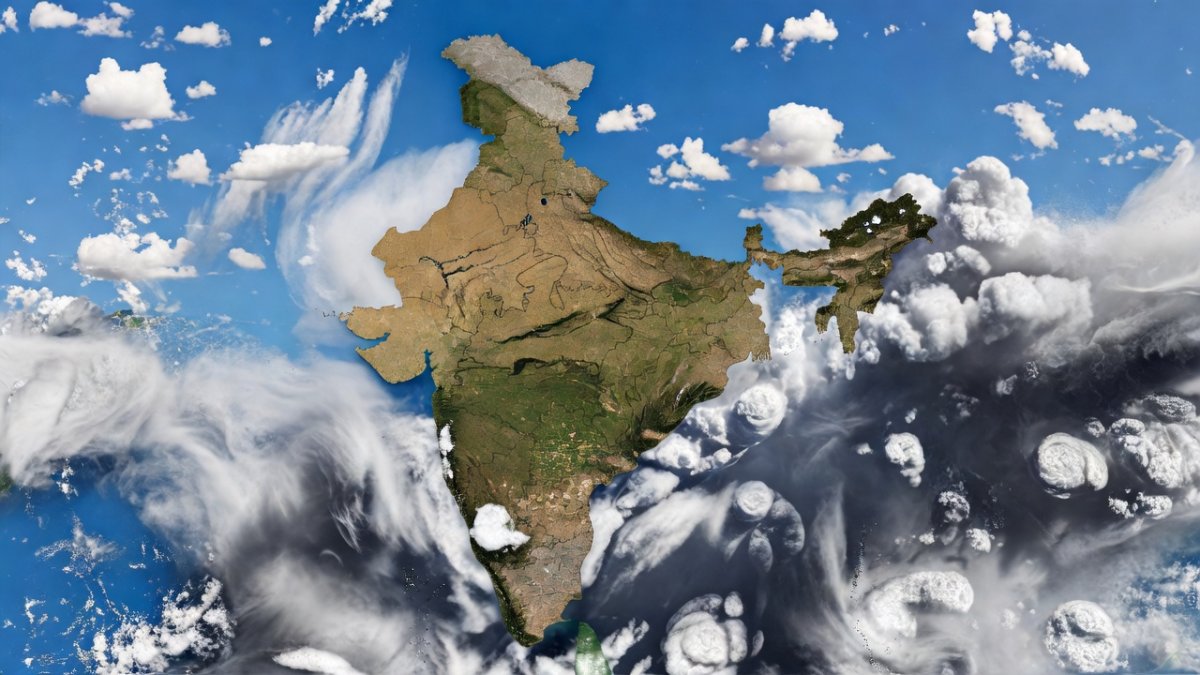
New Delhi, India – June 18, 2026 — The southwest monsoon has arrived three days late and progressed far more slowly than normal, leaving large parts of central and western India without meaningful precipitation during the first fortnight of June. Satellite imagery reveals persistent cloud-free conditions over Madhya Pradesh, Maharashtra, and Rajasthan, while the national deficit has already reached 40%. The situation directly imperils sowing of soybean, cotton, and pulses across the Malwa plateau and Vidarbha region, where farmers normally begin operations by mid-June.
Rainfall Crisis Deepens Across India
The India Meteorological Department’s daily rainfall analysis shows that the country received only 39.7 mm between June 4 and 17 against the normal 65.9 mm, translating into a 40% deficit. This shortfall follows an already weak start after the monsoon crossed Kerala on June 4, three days behind the climatological mean. Central India has recorded a 63% deficit while the northeast stands at 46% below normal, creating a pronounced east-west gradient in moisture availability.
These numbers matter acutely for rain-fed agriculture. In Vidarbha and the Malwa plateau, where soybean and cotton planting windows close by late June, each additional dry day increases the probability of crop failure or costly delayed sowing. The Ministry of Agriculture has begun daily monitoring of reservoir levels in the Godavari and Narmada basins precisely because these deficits threaten both surface irrigation and groundwater recharge in the coming weeks.
Historical analogues indicate that a deficit exceeding 35% in the first three weeks of June rarely recovers fully without exceptional July rainfall. With the current forecast pegged at only 90% of the long-period average, the window for recovery is narrowing rapidly for millions of smallholders in Maharashtra and Madhya Pradesh.
IMD's Downgraded Forecast: What 90% LPA Really Means
The IMD revised its seasonal outlook downward from 92% of the long-period average in April to 90% by mid-June, citing developing El Niño conditions and anomalous upper-level winds. A 10% reduction in seasonal rainfall typically translates into a 0.3 to 0.5 percentage point drag on GDP through higher food inflation and reduced rural demand, according to internal government assessments.
At 90% LPA the national rainfall total would still fall within the “below normal” category, but the spatial distribution is more concerning. Models indicate that central and western India may receive even lower percentages while the southern peninsula and parts of the northeast could see near-normal or slightly above-normal totals. This uneven pattern would exacerbate existing regional disparities in water availability.
For policy planners the downgrade signals the need to accelerate contingency measures already embedded in the Pradhan Mantri Krishi Sinchayee Yojana. Micro-irrigation coverage targets for 2026-27 are being fast-tracked in drought-prone districts of Maharashtra and Rajasthan to offset the expected shortfall in surface water supplies.
Regional Divide: Central India Worst Hit, Ladakh An Anomaly
Central India’s 63% deficit stands in stark contrast to Ladakh’s 96% excess rainfall. While Ladakh’s high-altitude stations recorded unusually frequent western disturbances, the core monsoon zone stretching from Gujarat through Madhya Pradesh to Chhattisgarh has remained largely dry. This spatial contrast underscores how circulation anomalies can produce both floods and droughts within the same season.
In Madhya Pradesh, Maharashtra, and Rajasthan the absence of rain has left major reservoirs at critically low levels. District collectors in these states have been directed by the National Disaster Management Authority to activate drought monitoring cells and begin weekly reporting on soil moisture and sowing progress. The contrast with Ladakh also highlights the importance of region-specific water management rather than uniform national policies.
Farmers in the Malwa plateau are particularly exposed. Soybean acreage in the region normally exceeds 6 million hectares; any significant reduction in planted area will directly affect edible oil supply chains and rural incomes in western Madhya Pradesh.
El Niño and Atmospheric Factors Driving the Deficit
Developing El Niño conditions in the Pacific have begun to influence Indian Ocean circulation, weakening the cross-equatorial flow that sustains monsoon rainfall. In addition, persistent upper atmospheric winds have displaced the monsoon trough northward, leaving central and western India under subsiding air. These dynamical factors explain why satellite images continue to show clear skies over the worst-affected states.
The combination of El Niño and the upper-level anomaly has produced a rainfall pattern reminiscent of 2009 and 2015, both El Niño years that recorded seasonal deficits exceeding 15%. Current sea-surface temperature anomalies suggest the Pacific event may intensify through August, raising the probability of a prolonged dry spell in July.
Indian agricultural meteorologists note that while El Niño does not guarantee drought, it statistically increases the likelihood of below-normal rainfall by 60-70% during the core monsoon months. Contingency planning therefore assumes a high probability of continued stress on rain-fed crops through at least mid-July.
Mumbai's Water Emergency and Maharashtra's Manufacturing Impact
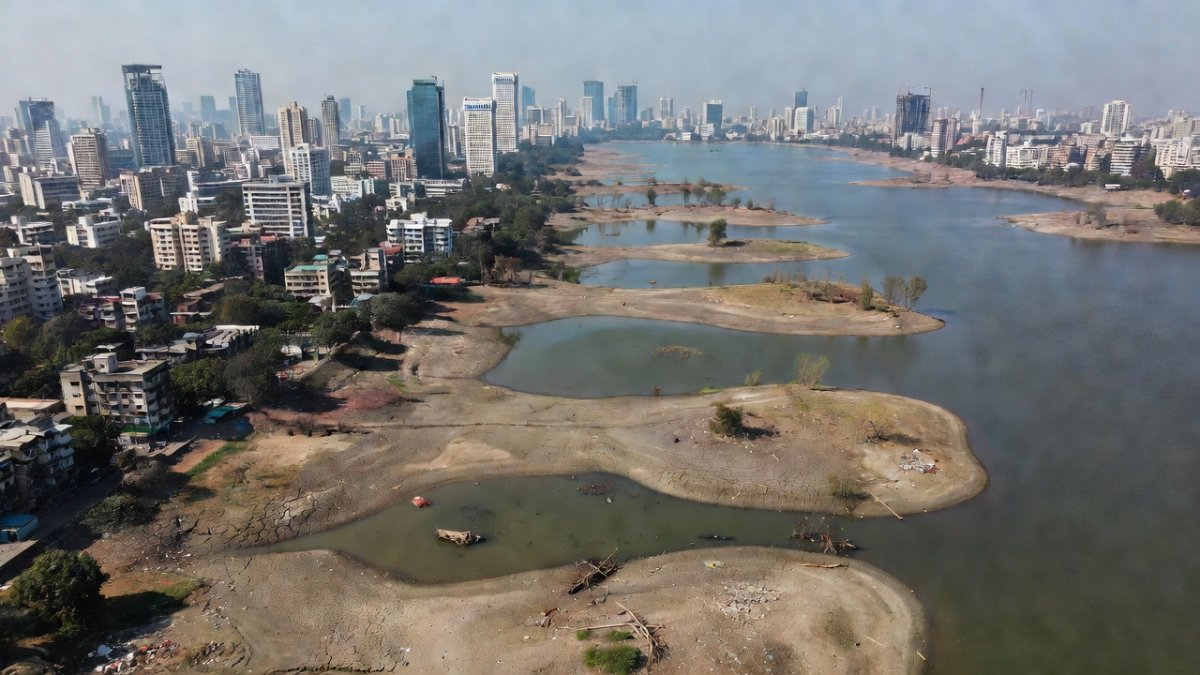
Mumbai’s seven lakes stood at only 10.35% of storage capacity on June 17, prompting the Brihanmumbai Municipal Corporation to impose 20% water cuts on industrial units and construction projects while suspending supply to swimming pools. These measures reflect the city’s heavy dependence on monsoon inflows that normally replenish reservoirs between June and September.
The industrial cuts directly affect manufacturing clusters in the Mumbai Metropolitan Region and Pune, where water-intensive sectors such as textiles, pharmaceuticals, and automobiles operate. A prolonged deficit could force production slowdowns and raise input costs, with ripple effects on employment in Maharashtra’s formal manufacturing sector.
State authorities have also restricted non-essential water use in Pune and Nashik, underscoring how urban and industrial demand now competes directly with agricultural needs during deficit years. The situation illustrates the growing pressure on inter-sectoral water allocation in western India.
Threat to Kharif Sowing and Rural Livelihoods
Kharif sowing of soybean, cotton, and pulses in the Malwa plateau and Vidarbha remains at high risk. With soil moisture levels well below the threshold required for germination, many farmers are delaying planting in anticipation of the next rain spell. Each week of delay reduces yield potential and increases pest pressure later in the season.
The Ministry of Agriculture’s weekly sowing reports show that as of June 17 only 12% of the normal area under soybean had been covered in Madhya Pradesh, compared with 38% at the same date last year. Similar shortfalls are reported for cotton in Vidarbha. These gaps will require compensatory increases in rabi production or higher imports to maintain supply balances.
Rural households dependent on agricultural wage labour face immediate income losses. In districts where sowing is postponed, daily wage rates have already declined by 15-20% according to local reports, reducing purchasing power for food and other essentials during the lean season.
Government Response: Drought Monitoring and Policy Levers
The National Disaster Management Authority has instructed district collectors in 124 drought-prone districts to activate monitoring cells and submit weekly reports on reservoir levels, soil moisture, and sowing progress. These cells coordinate with state agriculture departments to trigger contingency plans under the Pradhan Mantri Krishi Sinchayee Yojana.
The Ministry of Agriculture is prioritising micro-irrigation expansion in the Godavari and Narmada basins, where reservoir levels are being tracked daily. Officials aim to bring an additional 1.2 million hectares under drip and sprinkler systems by October 2026 to reduce dependence on monsoon rainfall for the rabi crop.
State governments in Maharashtra and Madhya Pradesh have also begun preparing alternative livelihood programmes, including MGNREGA works focused on water conservation structures, to cushion rural households if the monsoon fails to recover in July.
The Bottom Line: Economic Risks and What Comes Next
A 10% rainfall shortfall carries an estimated 0.3-0.5 percentage point impact on GDP through elevated food inflation and weaker rural consumption. With the current deficit already at 40% in mid-June, the risk of a larger economic drag has increased unless July rainfall compensates substantially.
Policy attention is now focused on July, when roughly 60% of seasonal rainfall normally occurs. If the monsoon trough shifts southward and El Niño-related suppression eases, a partial recovery remains possible. However, current dynamical models suggest continued below-normal rainfall through at least the first half of July.
Indian farmers, water managers, and policymakers face a narrow window to implement adaptive measures. Accelerated micro-irrigation, targeted drought relief, and prudent reservoir management will determine whether the 2026 monsoon deficit translates into a manageable stress or a broader agricultural and economic crisis.
— By Dr. Raj Patel, Staff WriterThis article was produced with AI-assisted research and editorial support. Reporting is based on sources cited in the article.
What's Your Reaction?
 Like
0
Like
0
 Dislike
0
Dislike
0
 Love
0
Love
0
 Funny
0
Funny
0
 Wow
0
Wow
0
 Sad
0
Sad
0
 Angry
0
Angry
0

India/South Asia Correspondent at Global1.News. Analytical voice with a background in science and health journalism. Based in New Delhi, covering Indian politics, education, healthcare, technology, and policy. Breaks down complex data into clear, actionable reporting.














Comments (0)