
IAF Deploys Mi-17 Helicopters and C-17 Globemasters for NEET-UG 2026 Re-Exam Security
For the first time in Indian examination history, the Indian Air Force has deployed Mi-17 helicopters and C-17 Globemaster strategic airlift aircraft to transport confidential NEET-UG 2026 re-examination question papers from 18 designated locations to distribution centres nationwide. This unprecedented military operation, confirmed by NTA Director General Abhishek Singh, secure
For the first time in Indian examination history, the Indian Air Force has deployed Mi-17 helicopters and C-17 Globemaster strategic airlift aircraft to transport confidential NEET-UG 2026 re-examination question papers from 18 designated locations to distribution centres nationwide. This unprecedented military operation, confirmed by NTA Director General Abhishek Singh, secures examination materials for 2.27 million registered candidates ahead of the June 21 re-test, following the cancellation of the original May 3 examination over confirmed paper leak allegations that prompted a CBI probe and the arrest of key masterminds by Rajasthan SOG.
Operation NEET Shield: IAF Deploys Mi-17 Helicopters and C-17 Globemasters for Unprecedented Medical Entrance Exam Security Operation
New Delhi, Delhi – June 16, 2026 — The Indian Air Force has activated a multi-aircraft logistics operation — the first of its kind for any national-level entrance examination in India — to transport sealed NEET-UG 2026 re-examination question paper packets from 18 designated locations to examination distribution hubs across the country. The June 21 re-examination, scheduled from 2:00 PM to 5:15 PM in offline pen-and-paper mode, will be conducted across more than 5,000 centres spanning 551 Indian cities and 14 cities abroad.
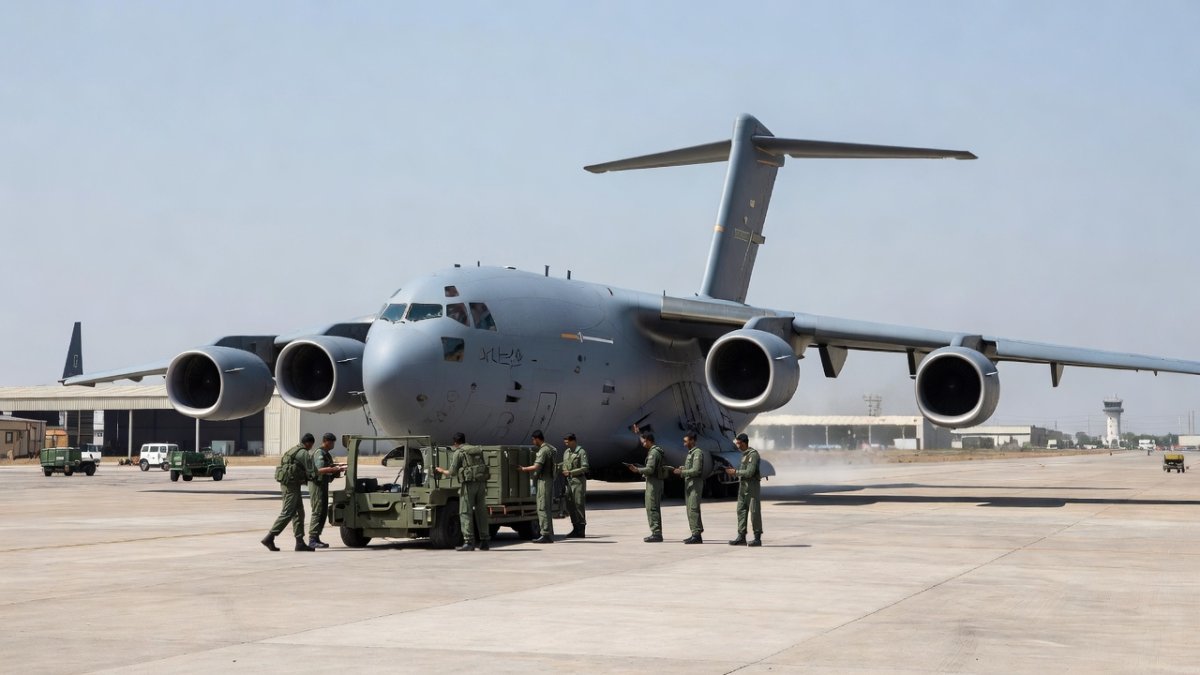
Military Aircraft Deployment: Mi-17 for Short-Haul, C-17 for Strategic Lift
The Indian Air Force has deployed Mi-17 helicopters for short-haul segments to remote distribution points in states such as Rajasthan, Uttar Pradesh, and Bihar, where road infrastructure is less reliable and rapid transportation is critical to maintaining the examination schedule. C-17 Globemaster III strategic airlift aircraft — among the largest transport planes in the IAF fleet — will manage long-distance transfers to southern and northeastern states, including Tamil Nadu, Kerala, Karnataka, Andhra Pradesh, Assam, and Nagaland. Each aircraft carries tamper-proof containers holding question papers for multiple examination centres, with chain-of-custody protocols monitored by NTA officials and central security agencies at every handoff point. The IAF has stationed additional air assets on standby to provide backup support if any primary delivery route encounters disruption.
The Scale: 2.27 Million Candidates, 1.08 Lakh MBBS Seats at Stake
The NEET-UG 2026 re-examination directly affects 22.75 lakh registered candidates who first appeared on May 3, 2026. Of these, 22.05 lakh students actually took the original test across more than 5,000 centres spread over 552 Indian cities and 14 cities abroad. At stake are 1,08,000 undergraduate MBBS seats — including coveted positions at AIIMS institutions in New Delhi, Jodhpur, Patna, Bhubaneswar, Raipur, Rishikesh, and across 22 other AIIMS campuses nationwide — as well as BDS, Ayurveda, Homeopathy, and other medical course seats at government and private colleges. For context, the NEET-UG is India's sole gateway to undergraduate medical education, and any disruption to the re-examination would cascade through the entire medical education calendar, delaying the 2026-27 academic year for aspiring doctors across the country.
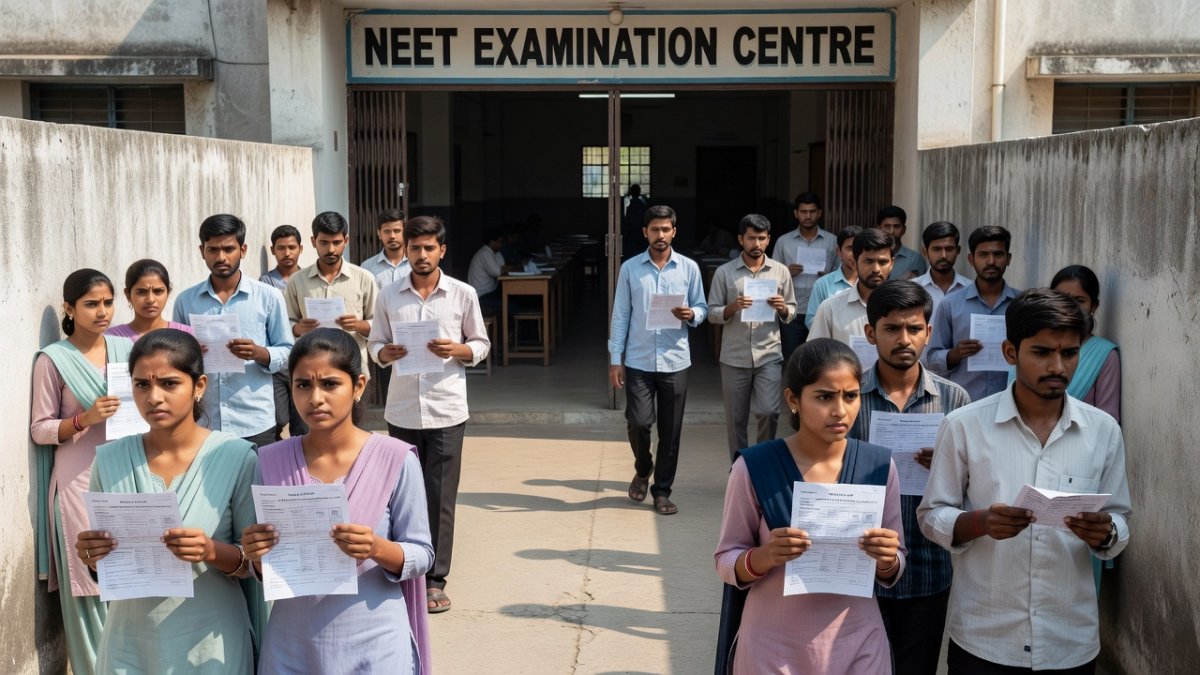
Total Lockdown: Paper Setters in Secure Isolation Until June 21
In a measure unprecedented for any Indian entrance examination, question paper setters, moderators, and translators have been moved to a secure undisclosed facility where they remain under total lockdown — no phones, no internet access, and no outside contact of any kind is permitted until after the June 21 examination concludes. Sources within the NTA confirmed to India Today that this isolation protocol exceeds all previous security arrangements for national-level tests and was implemented based on direct recommendations from central security agencies investigating the original paper leak. The CBI probe into the May 3 breach revealed that 140 questions worth 600 marks out of the total 720 matched a pre-circulated guess paper exactly, with the Chemistry section showing complete 100 percent overlap — indicating the breach originated at the printing-press stage, which is why the focus on lockdown of paper setters and secure handling of physical materials has become the cornerstone of the new security framework.
Multi-Agency Security Framework: IAF, Department of Posts, Central Agencies
The government has assembled a multi-agency task force to oversee every stage of the examination process, from question paper preparation and printing to storage, transportation, and distribution at examination centres. The framework includes the Indian Air Force (handling air transport), the Department of Posts (managing last-mile delivery to individual centres), central security agencies (providing real-time monitoring and armed escort), and local authorities at the district level (managing centre-level security and candidate verification). Military and security officials have been instructed to remain on standby, with armed forces prepared to provide any additional logistical or operational support required for the smooth conduct of the re-examination. NTA Director General Abhishek Singh has personally confirmed the IAF deployment, describing it as part of "the most extensive security plan ever put in place for a national-level entrance examination."
Digital Leak Prevention: Telegram Blockade and Broader Cyber Security
Complementing the physical security operation, the central government has directed Apple and Google to temporarily remove Telegram from their app stores in India — effectively blocking the messaging platform nationwide until June 22, one day after the re-examination concludes. This measure directly addresses the original breach vector, as the 410-question guess paper in the May 3 leak was distributed through WhatsApp and Telegram channels. The government's action targets the same digital distribution networks that facilitated the original leak, closing off the primary channel through which compromised question papers were circulated. The digital blockade covers all domestic access to Telegram, while the NTA has also implemented enhanced cyber security monitoring of exam-related communications across other platforms.
Political and Policy Implications: Opposition Scrutiny and Trust Restoration
The NEET-UG 2026 crisis has escalated from an examination integrity issue to a full-blown political controversy, with opposition parties in Parliament — including the Congress party in Tamil Nadu and the Aam Aadmi Party in Delhi — demanding a Joint Parliamentary Committee probe into the paper leak. The government has positioned the June 21 re-examination as a trust-restoration exercise, with Union Education Ministry officials emphasising that every stage of the process — from paper preparation through transportation to distribution — has been redesigned to be secure, transparent, and tamper-proof. However, opposition leaders have questioned the unprecedented cost of deploying IAF assets for what they describe as "a failure of the NTA's basic responsibility," pointing out that taxpayers will bear the expense of military logistics previously reserved for national security operations. The episode has accelerated calls for structural reforms in national-level examination administration, with several parliamentary committees scheduled to take up the matter once the re-examination cycle concludes.
Financial Cost and Long-Term Budgetary Implications
While the Ministry of Education has not released a specific cost estimate for the IAF deployment, independent estimates from defence analysts suggest that operating C-17 Globemaster aircraft costs approximately Rs 8-10 lakh per flight hour, while Mi-17 helicopter operations run at roughly Rs 1.5-2 lakh per hour. With the operation spanning 18 locations and requiring multiple sorties across a country stretching 3,200 kilometres from east to west and 2,900 kilometres from north to south, the total logistics cost could run into several crores of rupees for this single examination cycle. The precedent of military logistics support may establish IAF deployment as a standard component for future national examinations — including JEE Main and Advanced, CTET, and UGC-NET — raising substantive questions about long-term budgetary allocation and whether the education ministry has the resources to sustain such operations on a recurring basis.
Historical Context: From Road Escort to Military Airlift
Previous NEET cycles relied entirely on road and rail transport under state police escort. Question papers were typically stored at district treasury offices and transported to examination centres by designated government vehicles with two-person escort teams. The shift to military-grade logistics in 2026 reflects the scale and sophistication of the paper leak — the 410-question guess paper that circulated 2-3 days before the original examination represented one of the most extensive breaches in Indian examination history. The Rajasthan Special Operations Group arrested masterminds Manish Yadav and associates in connection with the leak, but the breach exposed fundamental vulnerabilities in a system that handles confidential materials for over 2 million candidates. The IAF deployment signals that the government now treats examination security as a matter comparable to national security — a shift with profound implications for how India administers its high-stakes educational assessments.
What This Means for India's Medical Education Pipeline
The NEET-UG examination serves as the sole admission gateway for undergraduate medical education in India, feeding into a healthcare system that faces a doctor-to-population ratio of 1:834 — significantly below the World Health Organisation's recommended ratio of 1:1,000 but still inadequate for a population exceeding 140 crore. Any further disruption to the examination cycle would delay the entry of new medical professionals into the system by at least one academic year, exacerbating existing healthcare workforce shortages in rural and underserved regions. States with significant coaching hubs — Rajasthan, Uttar Pradesh, Bihar, Delhi, Maharashtra, and Telangana — are most affected, as thousands of aspirants and their families have already invested substantial sums in tuition, accommodation, and preparation materials over the past 12-18 months. The success of the June 21 re-examination under military-grade security will determine whether the current academic year can proceed without further delays, with direct consequences for patient care and healthcare delivery across India.
The Bottom Line
The deployment of IAF Mi-17 helicopters and C-17 Globemaster aircraft for NEET-UG 2026 question paper transport marks a watershed moment in Indian educational administration — transforming what was once a routine logistics operation into a national security priority. For 2.27 million medical aspirants and their families, the June 21 re-examination represents a test not just of subject knowledge but of the system's ability to protect the integrity of their aspirations. The precedent set by this operation will likely reshape how India secures all future national-level entrance examinations, carrying implications for students, taxpayers, and the healthcare workforce that extend far beyond a single examination cycle. Whether this military-level investment restores public confidence in the NTA and the broader examination framework — or whether it merely papers over systemic weaknesses in a centralised testing system that handles 20 million candidates annually — will become clear only after the results are declared in the weeks following June 21.
— By Dr. Raj Patel, Staff Writer
This article was produced with AI-assisted research and editorial support. Reporting is based on sources cited in the article.
What's Your Reaction?
 Like
0
Like
0
 Dislike
0
Dislike
0
 Love
0
Love
0
 Funny
0
Funny
0
 Wow
0
Wow
0
 Sad
0
Sad
0
 Angry
0
Angry
0

India/South Asia Correspondent at Global1.News. Analytical voice with a background in science and health journalism. Based in New Delhi, covering Indian politics, education, healthcare, technology, and policy. Breaks down complex data into clear, actionable reporting.














Comments (0)