
How Ancient Himalayan Ice Stupas Are Saving Chile's Drought-Stricken Andes
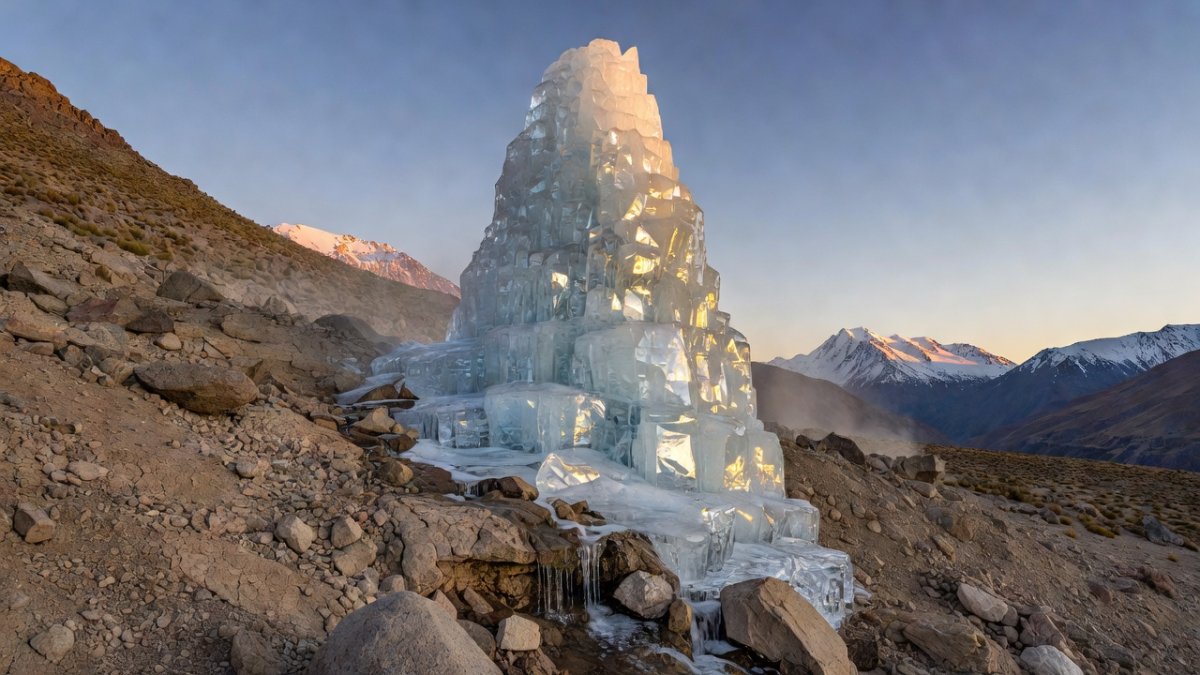
Cone-shaped ice towers now rise from the arid slopes of the Chilean Andes, their white forms catching the high-altitude light like monuments to survival. These structures carry knowledge from the Himalayas into one of the driest regions on Earth, where Chile’s megadrought has already lasted more than fifteen years. The technique offers a direct response to a crisis that threate
Chile Adopts Himalayan Ice Stupas to Beat the Megadrought Santiago, Metropolitan Region – Chile, July 2026 — In the high valleys above Santiago and farther north, communities are testing a method first developed in Ladakh to capture winter water and release it slowly when it is most needed. The arrival of this Himalayan technique marks a concrete step in Chile’s fight against the longest and most intense megadrought the region has seen in the last millennium.
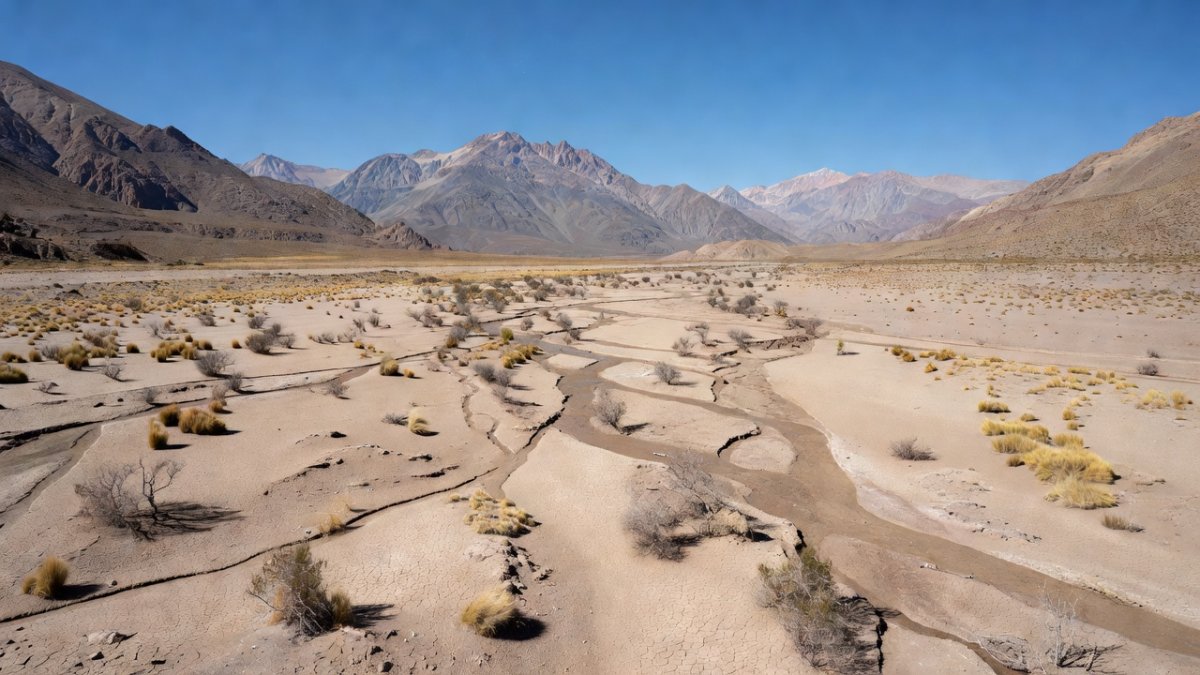
Chile's Millennial Megadrought
Chile’s megadrought has continued without relief since 2010, making it the longest and most intense in the region in the last millennium. Central Chile has recorded 25-45% less rainfall than usual since 2010, a deficit that has dried rivers, reduced snowpack, and stressed every sector that depends on water. The country holds 24,000 glaciers covering roughly 20,000 km², representing 80% of South America’s glaciers, yet even these vast reserves are shrinking under sustained warming and reduced precipitation. Chile’s water crisis now affects agriculture, including fruit, wine, and avocado production, as well as energy generation and daily life for millions of residents. The country also holds roughly 49.6% of its wealth concentrated in the top 1%, a distribution that deepens water-access inequality between urban elites and rural communities. Southern Chile remains comparatively water-rich, creating persistent north-south tensions over allocation and infrastructure. These overlapping pressures have forced authorities and local groups to look beyond conventional reservoirs and consider unconventional storage methods that can function without large capital investments or complex maintenance.
The Himalayan Innovation
Ice stupas were pioneered by engineer Sonam Wangchuk in Ladakh, India, around 2013-2015 as a low-cost way to store winter streamflow for spring and summer use. The first Ladakh prototype was a 6-meter tall cone built in 2014. The cone shape gives the structures a low surface-area-to-volume ratio, so the ice melts slowly through spring and summer rather than disappearing quickly under direct sun. A single 40-meter-high stupa with a 20-meter radius can store roughly 16 million liters of water. The technique requires no electricity; it uses gravity to move water from higher-altitude streams through pipes and then sprays the water into sub-zero night air so it freezes into conical towers. Because the system relies only on elevation differences and winter temperatures, it can operate in remote mountain locations where power lines do not reach. These characteristics made the method attractive to Chilean engineers and farmers facing similar high-altitude conditions and limited resources.
From Ladakh to the Andes: A Cross-Continental Collaboration
Wangchuk visited Chile in 2022 to collaborate with the Nilus Ice Project. He traveled to El Morado glacial valley in the Andes and gave a conference in Santiago, sharing construction details and lessons from Ladakh. By 2025, 7-8 ice stupas had been built across suitable Andean sites. The exchange represents a clear case of south-south knowledge transfer, with Himalayan innovation adapted for the Southern Andes. Local teams adjusted pipe lengths, spray angles, and site selection to match Chilean topography and wind patterns while preserving the core principle of gravity-fed freezing. Early results show that the towers can supplement traditional water sources during the critical spring months when snowmelt alone is insufficient. The collaboration has also drawn attention from other Andean nations facing glacier retreat and prolonged dry spells, suggesting the method could spread beyond Chile’s borders.
How Ice Stupas Work
The technique pipes water downhill under gravity from higher-altitude streams, spraying it into sub-zero night air to freeze into conical towers. Once formed, the ice melts gradually, feeding ancestral irrigation systems called bofedales, or high-altitude wetlands, that support pasture and small-scale farming. Projects are already active in places like General Lagos in the far north of Chile, where communities have long relied on seasonal meltwater. Because the stupas are built each winter and melt by late summer, they do not require permanent infrastructure or large reservoirs. The slow-release pattern matches the agricultural calendar, delivering water when crops and livestock need it most. Field observations indicate that even modest numbers of towers can stabilize streamflow in micro-basins that previously ran dry by November. This predictability reduces conflict over water timing and helps maintain the ecological functions of bofedales that have sustained Andean livelihoods for generations.
Adapting to Local Conditions
Chilean teams have paired ice stupas with fog capture projects also underway under FAO-supported programs. These complementary measures collect moisture from coastal fog in the north while the stupas store winter streamflow higher in the mountains. The combination addresses both spatial and seasonal gaps in water availability. Adaptation has required careful attention to local wind, slope angle, and nighttime temperature inversions that differ from Ladakh conditions. Communities have tested smaller prototype towers before scaling to the 40-meter structures, learning how pipe insulation and spray-nozzle design affect ice quality. The work remains grounded in existing social structures, with decisions about site selection and water distribution made through local water-user associations rather than top-down mandates. This approach helps ensure that the stored water reaches the farmers and herders who need it rather than being diverted to distant commercial operations.
What This Means for Latin America
The Chilean experience demonstrates that techniques developed in one mountain region can be transferred to another when basic physical conditions align. Broader solutions remain necessary, including improved governance, better groundwater management, desalination as seen in Peru’s Ica Valley, reforestation, and protection of high-altitude páramos. Ice stupas do not replace these larger efforts, but they provide an immediate, low-cost option that communities can implement while governance reforms proceed. The method’s reliance on gravity and cold nights makes it suitable for many Andean valleys where electricity and heavy machinery are scarce. If scaled, the approach could help stabilize water supplies for smallholders across Peru, Bolivia, and Argentina, regions that share similar glacier-dependent hydrology and growing drought pressure. The south-south exchange also challenges the usual flow of climate technology from wealthy nations to the Global South, showing that practical solutions can travel between countries facing comparable environmental constraints.
The Bottom Line — What Comes Next
Chile’s megadrought since 2010 has exposed the limits of conventional water infrastructure. The introduction of ice stupas offers one practical tool among many that are required. Continued monitoring will show how many towers are needed to make a measurable difference in basin-scale water budgets and how the structures perform under successive years of low snowfall. Expansion will depend on sustained collaboration between engineers, local governments, and water-user groups, as well as on securing modest funding for pipes, nozzles, and training. The 7-8 stupas already standing prove the concept can work in Chilean conditions. Whether the technique reaches dozens or hundreds of sites will depend on political will and the willingness to treat traditional knowledge from the Himalayas as a legitimate part of the climate-adaptation toolkit. For now, the white cones stand as visible evidence that solutions exist when communities are willing to adapt knowledge across continents. By Elena Vasquez, Staff Writer
This article was produced with AI-assisted research and editorial support. Reporting is based on sources cited in the article.
What's Your Reaction?
 Like
0
Like
0
 Dislike
0
Dislike
0
 Love
0
Love
0
 Funny
0
Funny
0
 Wow
0
Wow
0
 Sad
0
Sad
0
 Angry
0
Angry
0

Latin America Correspondent at Global1.News. Based in Mexico City, covering politics, economics, energy, and culture across the region. Brings an on-the-ground perspective to stories spanning from the Rio Grande to Patagonia.













Comments (0)