
Have Israel and Iran Avoided Escalation
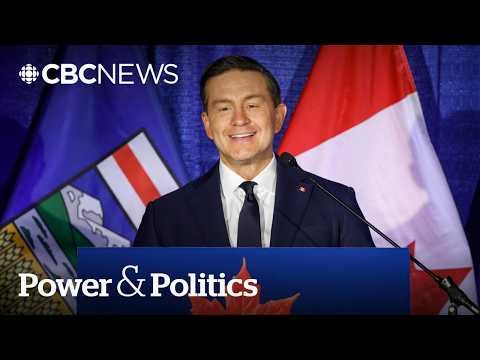
In a recent Power & Politics segment on CBC News, Conservative Leader Pierre Poilievre's national unity speech in Calgary took centre stage as panellists dissected his message to Albertans ahead of the province's historic October referendum. Alberta Conservative MP Mike Lake joined the discussion to share his impressions of the speech and weigh in on what he described as Canada
In a recent Power & Politics segment on CBC News, Conservative Leader Pierre Poilievre's national unity speech in Calgary took centre stage as panellists dissected his message to Albertans ahead of the province's historic October referendum. Alberta Conservative MP Mike Lake joined the discussion to share his impressions of the speech and weigh in on what he described as Canada's growing "unity issue." The segment, featuring analysis from multiple voices, underscored the high stakes of Poilievre's campaign to keep Alberta within Confederation — a campaign that officially launched Monday at the Royal Canadian Legion Branch No. 1 in downtown Calgary.
Poilievre Urges Federalist Reform, Not Separation, in Pivotal Calgary Address
Calgary, Alberta – June 9, 2026 — Pierre Poilievre stood before veterans and supporters at the Royal Canadian Legion Branch No. 1 in downtown Calgary on Monday, delivering a 25-minute national unity speech that launched his Alberta-wide tour focused on keeping the province inside Canada. The Conservative Leader chose the historic legion hall, located steps from the Bow River, to emphasise shared Canadian values while acknowledging regional frustrations over federal policies that have targeted the oil and gas sector.
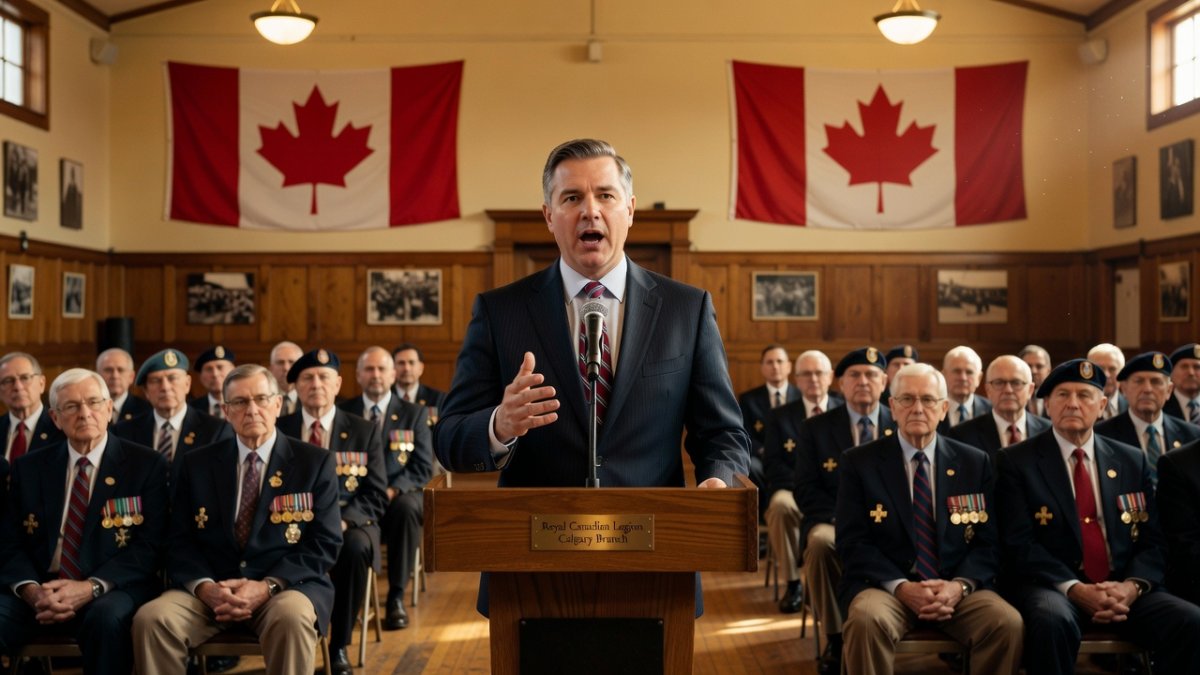
The event drew local residents, business owners from the energy corridor, and members of the Battle River-Crowfoot riding Poilievre represents. Organisers arranged seating for 300 people inside the main hall, with additional attendees listening from the adjoining lounge where Canadian flags hung alongside portraits of past legion presidents. Poilievre began by noting Alberta's estimated $120-billion annual contribution to federal revenues through resource royalties and taxes.
Campaign staff confirmed the speech formed the opening salvo of a month-long series of town halls stretching from Medicine Hat to Grande Prairie. Volunteers distributed pamphlets outlining eight specific policy reversals the Conservatives would pursue if elected, each tied directly to reducing the cost of living and restoring provincial control over resources.
Core Message Stresses Respect for Albertans' Legitimate Concerns
Poilievre stated that those considering separation are not enemies but fellow citizens, family members, business partners, neighbours and friends. He argued that dismissing their grievances would only deepen the divide, insisting the federal government must first address the concrete harms caused by anti-development legislation still on the books in Ottawa.
The leader pointed to the Liberal party's publicly stated plan to phase out Alberta's largest industry through successive regulatory barriers. He noted that these measures have already delayed multiple pipeline projects and reduced investment by an estimated $40 billion since 2015, according to figures from the Canadian Association of Petroleum Producers.
Poilievre urged listeners to focus on building a stronger, more respectful federation rather than simply warning about the economic costs of separation. He described the choice as locking arms with Canadians in other provinces to achieve affordability, safety and self-reliance across the country.
Eight Concrete Policy Measures Presented to Restore Trust
The Conservative platform outlined eight targeted measures, beginning with immediate steps to improve housing and food affordability through faster permitting and reduced regulatory costs. Poilievre tied these proposals to Alberta's specific situation, where rapid population growth in Calgary and Edmonton has driven average home prices above $550,000.
Further measures include unlocking natural resource extraction and export, accelerating new pipeline construction, and respecting firearm owners' rights by reversing recent federal restrictions that disproportionately affect rural Alberta hunters and farmers. Poilievre also pledged to keep serious criminals behind bars through mandatory minimum sentences and to reduce the overall taxpayer burden by cutting federal spending growth.
The final two measures focus on enabling free enterprise and respecting provincial autonomy under the constitution. Poilievre cited the National Energy Program of 1980 as a historical precedent that still colours Alberta's relationship with Ottawa, promising that his government would never again impose similar centralised controls on provincial resources.
October 19 Referendum Poses Direct Question on Secession
Alberta will hold a referendum on October 19, 2026, asking voters whether the province should remain in Canada or begin a binding process toward secession. Premier Danielle Smith has framed her position as supporting a sovereign Alberta within a united Canada, a stance that aligns with Poilievre's emphasis on policy change rather than constitutional rupture.
The referendum question will appear on the ballot alongside municipal elections in several communities, increasing expected turnout. Election Alberta has already begun printing materials and training poll workers for the additional question, with advance voting scheduled to begin October 5 at 147 locations across the province.
Legal experts note that any Yes result would trigger the Clarity Act requirements established after the 1995 Quebec referendum, where the No side prevailed by a narrow 50.58 percent margin. The federal government would then need to negotiate terms, a process Poilievre described as unnecessary if Ottawa simply reversed the policies driving current discontent.
Recent Polls Indicate Separatist Sentiment Has Declined
An Angus Reid Institute survey released in late May 2026 found that three in five Albertans would vote to remain in Canada if the referendum were held today. Support for separation has fallen from peaks recorded during the height of federal carbon tax disputes in 2022 and 2023.
An Ipsos poll conducted in the same period showed even lower backing for outright independence, with only 28 percent of respondents favouring the secession option. Pollsters attributed the drop to renewed focus on economic recovery and the absence of a clear provincial alternative to federal transfer payments that currently total more than $5 billion annually for Alberta.
These figures contrast with earlier periods of Western alienation, when the Reform Party emerged in the late 1980s and the Bloc Québécois briefly held the balance of power in Ottawa. Poilievre referenced both movements as cautionary examples of how federal policies can fracture national unity when regional concerns are ignored.
Expert and Political Reactions Range from Supportive to Critical
Alberta MP Mike Lake appeared on CBC's Power & Politics to describe the speech as a direct response to voter frustration in rural ridings. Lake noted that Poilievre grew up in Calgary and understands the daily impact of federal regulations on energy workers and small business owners.
Jeffrey Rath of the Alberta Prosperity Project dismissed the address as hollow rhetoric that fails to confront the structural imbalances in Confederation. Duane Bratt, a political scientist at Mount Royal University, said Poilievre struck the right tone on grievances but delivered an overtly partisan message that may limit its reach beyond core Conservative supporters.
Poilievre declined media questions after the speech, instead directing reporters to campaign materials that detail each of the eight policy measures. Staff indicated he would hold open forums in Red Deer and Lethbridge later in the week to answer questions from residents directly.
Prime Minister Carney and Former Leaders Weigh In on Referendum
Prime Minister Mark Carney labelled the referendum a dangerous bluff designed to extract concessions rather than a genuine expression of popular will. Carney pointed to a recent memorandum of understanding between Ottawa and British Columbia on a new pipeline corridor as evidence that federal policy can still deliver results for Western producers.
Former prime minister Jean Chrétien stated he was not overly worried about the outcome but warned against complacency. Chrétien recalled the intense national effort required in 1995 to secure the narrow victory in Quebec and urged federalist voices in Alberta to organise early.
Both leaders referenced the Clarity Act as the legal framework that would govern any future negotiations, underscoring that a simple majority would not automatically trigger separation. Carney's office confirmed that federal officials are monitoring polling trends but have no immediate plans to alter the current legislative agenda.
Historical Patterns of Western Alienation Inform Current Debate
Alberta's current tensions echo earlier conflicts, including the 1980 National Energy Program that redirected resource revenues to central Canada and sparked the rise of the Reform Party. Those episodes reduced the Progressive Conservative presence in the West and contributed to the temporary strength of regional protest movements.
Today the Parti Conservateur du Québec is polling first in that province, illustrating how dissatisfaction with federal policies can reshape party systems across regions. Poilievre has drawn explicit parallels between these trends, arguing that restoring provincial autonomy offers the best defence against further fragmentation.
Equalization payments and federal carbon pricing continue to feature prominently in Alberta political discourse. Poilievre pledged to review both programs as part of his eight-point plan, promising legislation that would prevent Ottawa from using fiscal tools to disadvantage resource-producing provinces.
Poilievre's Strategy Aims to Channel Frustration into Federal Change
By framing the Alberta referendum as an opportunity to demand better federal policies rather than separation, Poilievre seeks to position the Conservatives as the party that can restore national unity through concrete action. His speech avoided apocalyptic warnings about economic collapse and instead highlighted the benefits of a truly united Canada that respects regional differences.
Campaign organisers report strong volunteer turnout in Calgary and Edmonton, with door-knocking teams already distributing literature that contrasts the eight policy measures against current Liberal legislation. The tour will conclude in Fort McMurray, where Poilievre plans to visit an oilsands site to underscore the industry's national importance.
Whether this approach can shift the referendum outcome remains uncertain, but the speech has clearly set the terms of debate for the months ahead. Alberta voters will decide in October whether policy change inside Confederation is sufficient or whether the province should pursue a different constitutional path.
By Alex Thompson, Staff Writer
This article was produced with AI-assisted research and editorial support. Reporting is based on sources cited in the article.
What's Your Reaction?
 Like
0
Like
0
 Dislike
0
Dislike
0
 Love
0
Love
0
 Funny
0
Funny
0
 Wow
0
Wow
0
 Sad
0
Sad
0
 Angry
0
Angry
0

Middle East Correspondent at Global1.News. Based in Beirut, covering politics, conflict, energy, and society across the Middle East. Brings context and depth to a region often reduced to headlines.













Comments (0)