
Gaza Surgeon: "She Will Haunt Me to the Day I Die"
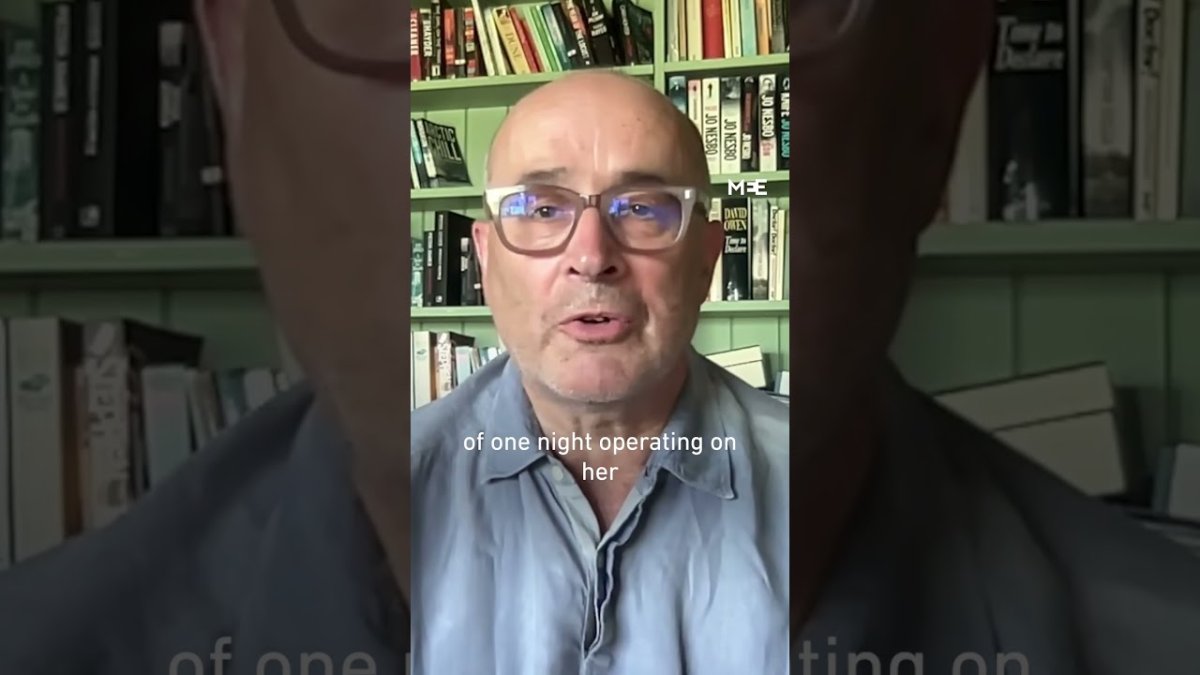
In a Middle East Eye video titled "She will haunt me to the days I die," a surgeon who served in Gaza describes the unrelenting trauma of treating wounded civilians during Israel's military campaign, including the faces of children who could not be saved amid constant bombardment and collapsing medical infrastructure. The account highlights specific cases where young patients a
In a Middle East Eye video titled "She will haunt me to the days I die," a surgeon who served in Gaza describes the unrelenting trauma of treating wounded civilians during Israel's military campaign, including the faces of children who could not be saved amid constant bombardment and collapsing medical infrastructure. The account highlights specific cases where young patients arrived with severe injuries from airstrikes, only for surgeons to watch them succumb due to a lack of essential supplies and power. This testimony underscores the human cost borne by medical staff working in facilities across the enclave since the escalation began in October 2023, offering a window into the ethical dilemmas that arise when medical ethics collide with the realities of sustained urban warfare and restricted humanitarian access.
Gaza surgeon's firsthand testimony from Middle East Eye
The surgeon recounted arriving at a hospital in northern Gaza shortly after major strikes intensified in late 2023, where the influx of casualties quickly overwhelmed the limited staff. One young patient, a girl brought in with critical wounds from debris, remained conscious long enough to ask about her family before her condition deteriorated beyond intervention. The surgeon noted that such moments, repeated daily, left an indelible mark, with the child's expression returning in moments of quiet reflection even after returning home.
Throughout the deployment, the medical team faced a steady stream of pediatric cases, many involving multiple family members injured in the same incident. Working without reliable electricity meant relying on manual techniques and scarce medications, often deciding who received the final doses of pain relief. The surgeon emphasized that the volume of arrivals from areas like Jabalia and Beit Hanoun made triage decisions agonizing, as resources dwindled by the hour.
Despite the exhaustion, the surgeon continued operating through nights illuminated only by phone flashlights, documenting each loss in makeshift records. The particular case of the young girl stood out because her injuries were survivable under normal conditions, yet the absence of ventilators and blood products sealed the outcome. Colleagues shared similar stories of patients who lingered in pain, their final words echoing in the corridors long after the shifts ended.
These experiences also revealed the broader strain on decision-making protocols, as surgeons had to weigh immediate life-saving interventions against the likelihood of long-term survival in an environment where follow-up care was virtually nonexistent. The surgeon described how the emotional weight compounded when entire wards filled with relatives seeking updates, forcing staff to balance clinical duties with the need to convey devastating news under time pressure. Such dynamics illustrate how individual testimonies capture not only personal trauma but also systemic breakdowns in care delivery during prolonged crises.
The conditions inside Gaza's remaining hospitals during the war
Hospitals such as Al-Shifa in Gaza City and Al-Aqsa Martyrs Hospital in Deir al-Balah operated under extreme constraints following repeated power outages that began in November 2023. Generators ran on dwindling fuel supplies, forcing staff to prioritize emergency procedures while basic diagnostics like X-rays became unavailable. The surgeon described wards where patients lay on floors due to bed shortages, with intravenous lines managed by hand in the absence of pumps.
Medical teams rotated through facilities in Khan Younis and Rafah, where bombardment nearby created constant vibrations that disrupted delicate operations. Supplies of antibiotics and anesthetics ran critically low by early 2024, compelling doctors to reuse materials when possible under strict sterilization attempts. International observers noted that water shortages compounded infection risks, turning treatable wounds into life-threatening complications within days.
Staff at these sites coordinated with local health authorities to transfer patients between remaining functional units, though movement restrictions often delayed care. The surgeon recalled nights when entire teams worked by candlelight to stabilize children arriving from strikes in central Gaza, their efforts hampered by the lack of imaging equipment to assess internal injuries accurately. These conditions persisted across multiple facilities as the conflict extended into subsequent months.
The cumulative effect of these constraints extended to basic hygiene and waste management, where overflowing facilities increased the spread of secondary infections among already vulnerable populations. Surgeons adapted by improvising with available materials, yet the absence of consistent sterilization protocols heightened risks for both patients and staff. This environment forced a reevaluation of standard medical training, as practitioners relied on experiential knowledge passed between colleagues amid the chaos.
Attacks on healthcare: documented by WHO and UN agencies
The World Health Organization has recorded hundreds of incidents affecting health infrastructure in Gaza since October 2023, including direct strikes on hospitals and ambulance convoys. UN agencies such as the Office for the Coordination of Humanitarian Affairs have verified damage to facilities in northern and southern regions, with Al-Shifa Hospital experiencing multiple disruptions that halted services for extended periods. Officials including WHO Director-General Tedros Adhanom Ghebreyesus have publicly called for protection of medical sites under international humanitarian law.
Reports from the UN Human Rights Office detail patterns of attacks near healthcare centers in areas like Jabalia refugee camp, where civilian casualties mounted alongside damage to operating theaters. The surgeon's account aligns with these findings, noting how nearby explosions repeatedly forced evacuations mid-procedure. Figures on exact casualty numbers among medical personnel were not immediately available from all agencies, though partial tallies from the Gaza Health Ministry indicated significant losses.
Coordination between WHO field teams and local authorities attempted to deliver emergency medical kits, yet access routes remained contested throughout 2024. Documentation by UN monitors highlighted repeated warnings issued to parties involved, emphasizing the need to safeguard remaining hospitals in Rafah and central Gaza. These records provide context for the depleted environments described by returning medical volunteers.
These documented incidents also underscore the challenges of enforcing protections outlined in the Geneva Conventions, as repeated disruptions to medical sites hinder the ability of neutral observers to conduct thorough assessments. The alignment between the surgeon's narrative and agency reports highlights how firsthand accounts serve as critical corroboration for broader patterns of infrastructure targeting, informing ongoing diplomatic efforts to establish protected zones.
The psychological toll on Gaza's medical workers
Medical personnel in Gaza have faced sustained mental strain from continuous exposure to mass casualties, with many reporting symptoms consistent with acute stress following shifts at overwhelmed facilities. The surgeon in the Middle East Eye account spoke of persistent memories that intrude during daily routines, particularly the inability to comfort families waiting outside operating rooms. Colleagues at hospitals in Khan Younis described similar experiences, where decisions made under duress lingered as sources of guilt long after the immediate crisis passed.
Support networks among Gaza's health workers have attempted to provide peer counseling, though formal psychological services remain limited due to the destruction of clinics. Staff who rotated through multiple sites noted increased isolation, as communication with family members outside the enclave became sporadic. The relentless nature of pediatric cases amplified the emotional burden, with surgeons recounting how young patients' resilience in the face of pain contrasted sharply with the final outcomes.
International guidelines from organizations like the International Committee of the Red Cross recommend structured debriefings for such teams, yet implementation in active conflict zones has proven challenging. The surgeon highlighted that returning to routine practice elsewhere did not erase the cumulative effect, with certain sounds or sights triggering vivid recollections of the Gaza wards. These impacts extend to nurses and support staff who managed the flow of incoming wounded without respite.
The toll manifests in altered professional outlooks, as many medical workers question their capacity to return to high-stakes environments after witnessing such concentrated suffering. Peer support initiatives, though informal, foster a sense of shared endurance that helps mitigate isolation, yet the absence of sustained external mental health resources leaves long-term recovery uncertain for those who remain in the field.
International medical missions and the global response
Teams from organizations including Médecins Sans Frontières and the Palestinian Red Crescent Society have supplemented local efforts by deploying surgeons and nurses to Gaza since late 2023. These missions focused on trauma care in remaining hospitals, bringing specialized equipment where possible despite logistical hurdles. The surgeon's testimony reflects interactions with such volunteers, who assisted in managing the overwhelming caseload during peak periods of arrivals from strike zones.
Global statements from medical associations in Europe and North America have urged greater access for humanitarian corridors, with some governments facilitating limited evacuations of critical patients to facilities abroad. Dates of key missions align with escalations in early 2024, when additional personnel arrived to relieve exhausted local teams at sites like Nasser Hospital. Coordination with UN agencies helped prioritize deliveries of surgical supplies, though volumes remained insufficient for the scale of need.
Volunteer surgeons from various countries have shared parallel accounts upon return, describing similar challenges with power and resources that mirror the Middle East Eye video. These efforts continue through rotating deployments, supported by fundraising from international health networks. The response has included training sessions for remaining Gaza staff on improvised techniques to extend care amid shortages.
Such missions also facilitate knowledge exchange that strengthens local capacities, even as they highlight disparities in global health equity during conflicts. The collective voice of returning volunteers amplifies calls for policy changes, influencing advocacy campaigns that seek to prioritize medical neutrality in international forums and media coverage.
The long-term impact on Gaza's health system
Reconstruction of Gaza's health infrastructure faces extensive challenges following widespread damage documented across multiple facilities since October 2023. The loss of specialized equipment and trained personnel has created gaps in services that local authorities estimate will require years to address, with pediatric and trauma care particularly affected. The surgeon noted that even basic follow-up for survivors remains uncertain due to ongoing disruptions in supply chains.
Health officials in Gaza have appealed for sustained international support to rebuild operating theaters and restore electricity reliability at key sites like Al-Shifa and Al-Aqsa. Without immediate interventions, chronic conditions previously managed through regular treatment now risk escalation into emergencies. Data on precise long-term morbidity rates were not immediately available, yet preliminary assessments from WHO indicate elevated needs for rehabilitation services among the wounded.
Training programs initiated by global partners aim to prepare new cohorts of medical workers, though the departure of experienced staff has slowed progress. The cumulative effect on the system extends beyond physical structures to the erosion of institutional knowledge, as recounted in accounts from returning surgeons. Future recovery will depend on stable access and resources to prevent further deterioration in care quality for the population.
These systemic vulnerabilities point to the necessity of integrated recovery frameworks that combine physical rebuilding with mental health support for remaining personnel. Without coordinated international commitment, the health system's ability to address both immediate emergencies and preventive care will remain compromised, perpetuating cycles of vulnerability in the affected communities.
By Fatima Al-Rashid, Staff WriterThis article was produced with AI-assisted research and editorial support. Reporting is based on sources cited in the article.
What's Your Reaction?
 Like
0
Like
0
 Dislike
0
Dislike
0
 Love
0
Love
0
 Funny
0
Funny
0
 Wow
0
Wow
0
 Sad
0
Sad
0
 Angry
0
Angry
0

Gulf/MENA Correspondent at Global1.News. Based in Doha, covering Gulf politics, energy markets, diplomacy, and development across the Middle East and North Africa. Tracks the economic transformation of the Gulf states.











Comments (0)