
Gaza Heatwave Turns Deadly as Israeli Blockade Blocks Vital Aid, Displaced Families Say
A recent Middle East Eye video from al-Nuseirat camp captures the suffocating conditions faced by displaced families in Gaza, where tents offer little protection from the intensifying summer heat. Nadia Salama, a resident featured in the footage, states plainly that "the situation is exactly the same; it hasn't improved at all." Her words underscore the persistent humanitarian
A recent Middle East Eye video from al-Nuseirat camp captures the suffocating conditions faced by displaced families in Gaza, where tents offer little protection from the intensifying summer heat. Nadia Salama, a resident featured in the footage, states plainly that "the situation is exactly the same; it hasn't improved at all." Her words underscore the persistent humanitarian emergency that continues to claim lives even months after the ceasefire.
Gaza Heatwave Turns Deadly as Israeli Blockade Blocks Vital Aid, Displaced Families Say
Gaza City, Palestine – June 14, 2026 — Extreme summer temperatures have compounded an already catastrophic humanitarian situation in Gaza, where the Israeli blockade continues to prevent the entry of essential aid supplies despite the ceasefire that began in December 2025. Families living in makeshift shelters report rising cases of heatstroke, dehydration, and preventable illnesses as water and medical resources remain critically scarce. International organizations have documented how the six-month-old truce has not translated into eased restrictions on humanitarian access, leaving more than 272,151 displaced persons dependent on limited UNRWA support since October 2023.
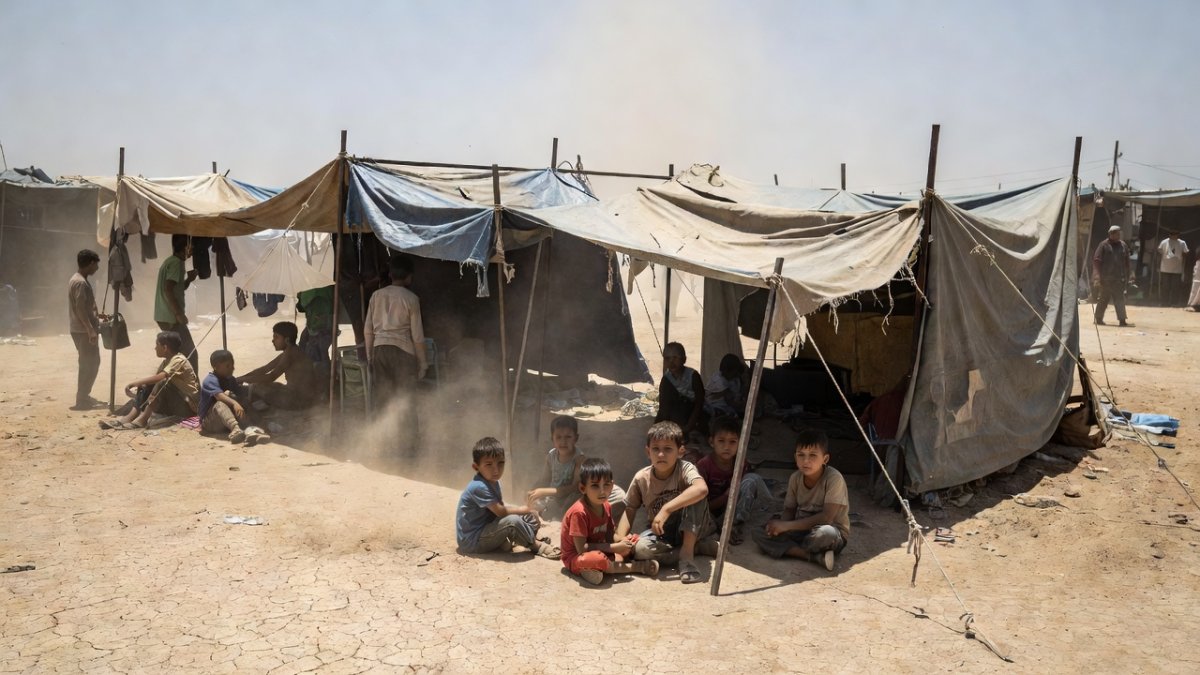
The Deadly Impact of Summer Heat on Displaced Communities
Displaced residents across Gaza are enduring temperatures that regularly exceed 35 degrees Celsius inside overcrowded tents, where ventilation is almost nonexistent. Children and elderly individuals suffer the most, with many families reporting daily episodes of fainting and severe dehydration. The lack of electricity for fans or cooling devices turns each day into a struggle for survival that compounds the trauma of displacement.
Medical workers describe how heat-related illnesses quickly escalate without access to intravenous fluids or basic rehydration supplies. Hospitals already overwhelmed by earlier conflict injuries now face additional cases that could have been prevented with timely aid deliveries. The blockade's restrictions mean that even simple items like oral rehydration salts remain unavailable in sufficient quantities.
Community leaders emphasize that the heatwave is not an isolated event but part of a broader pattern of neglect that has persisted through the ceasefire period. Families who fled their homes during earlier violence continue to live in conditions that violate basic standards of dignity and safety. The absence of meaningful improvement six months after the truce has deepened despair among those most affected.
Continued Blockade Despite Six Months of Ceasefire
The ceasefire agreement reached in December 2025 was intended to bring relief to Gaza's population, yet the Israeli blockade on vital goods has remained firmly in place. Aid organizations report that trucks carrying water, medicine, and shelter materials are still routinely denied entry or subjected to lengthy delays. This policy directly contradicts repeated international appeals for unimpeded humanitarian access.
Residents note that the promised easing of restrictions never materialized, leaving economic activity at a standstill. Work permits for laborers were canceled months ago, eliminating the primary source of income for thousands of households. Without wages or the ability to import raw materials, local markets have collapsed, further isolating communities already cut off from external support.
Human rights monitors document how the blockade functions as a collective punishment that affects every aspect of daily life. Even basic construction materials needed to repair damaged homes remain prohibited, forcing families to remain in flimsy tents through the summer months. The six-month duration of the ceasefire without policy change has made clear that military restrictions continue to override humanitarian needs.
Water Scarcity and Its Consequences for Public Health
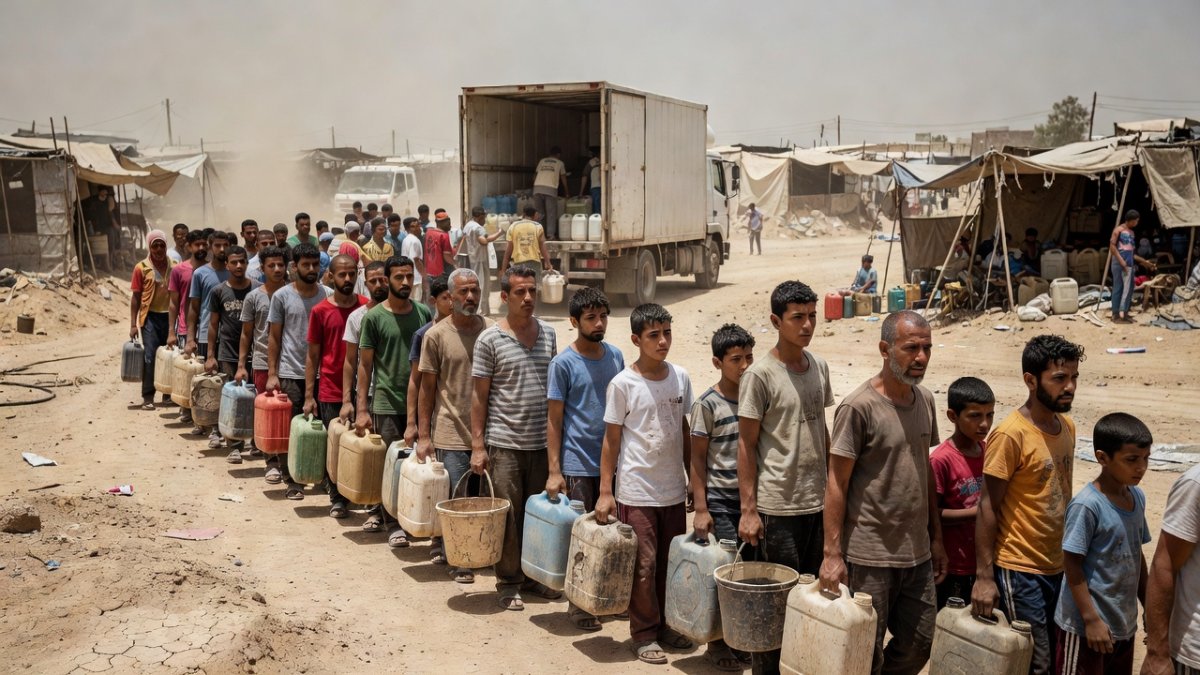
More than 70 percent of Gaza's population now depends entirely on water delivered by truck, according to OCHA figures released on June 12, 2026. This reliance stems from the destruction of local water and sanitation infrastructure, which has left municipal systems inoperable. The limited quantities delivered each week are insufficient for drinking, cooking, and hygiene combined.
Health authorities warn that contaminated or insufficient water supplies are driving outbreaks of waterborne diseases at a time when medical treatment capacity is already strained. Families must ration every liter, often choosing between drinking water and maintaining basic cleanliness that could prevent further illness. The situation has created a cycle where dehydration weakens immune systems already compromised by malnutrition.
International observers have noted that the blockade prevents the entry of spare parts and fuel needed to operate water treatment facilities. Even when partial repairs are attempted, the lack of consistent resources renders them ineffective. This manufactured scarcity turns a natural resource into a daily battleground for survival.
Warnings from Global Health Organizations
The World Health Organization has stated that people in Gaza are "starving, sick and dying as aid blockade continues," highlighting the lethal combination of food shortages and medical access barriers. This assessment reflects conditions observed across multiple displacement sites where malnutrition rates continue to climb. The organization's reports emphasize that preventable deaths are rising as essential supplies remain blocked at borders.
Medical teams on the ground describe patients arriving in advanced stages of illness because earlier intervention was impossible due to aid restrictions. Children suffering from acute malnutrition require specialized therapeutic foods that have not reached distribution points in adequate volumes. The ongoing blockade directly contributes to these deteriorating health indicators.
Public health experts stress that the current trajectory will lead to further loss of life unless the flow of humanitarian goods is restored immediately. The six months since the ceasefire have demonstrated that without concrete policy changes, the health crisis will only deepen as summer temperatures rise.
Infrastructure Collapse and Resulting Sanitation Failures
B'Tselem has documented widespread rodent infestation resulting directly from the destruction of water and sanitation infrastructure across Gaza. Destroyed sewage systems and water networks have created breeding grounds for disease vectors that now threaten entire communities living in close quarters. The infestations compound existing health risks in an environment already lacking basic hygiene resources.
Residents report that rats and other pests invade tents at night, spreading contamination and adding psychological stress to physical hardships. Attempts to control the problem are hampered by the absence of cleaning supplies and pest management materials that remain prohibited under current blockade rules. This secondary crisis illustrates how interconnected systems of survival have been dismantled.
The long-term consequences of infrastructure damage extend beyond immediate discomfort to generational health impacts. Without reconstruction materials and technical support, communities face years of elevated disease risk even if the blockade were lifted tomorrow. The current policy ensures that these conditions persist through another summer.
Economic Paralysis and Its Human Cost
The cancellation of work permits has eliminated the main livelihood source for many Gaza families, halting all meaningful economic activity inside the territory. Workers who previously crossed into Israel for daily employment now have no alternative income, leaving households without money for food or medicine. This economic strangulation affects every sector from small businesses to informal markets.
Families describe how savings accumulated before the conflict have been exhausted, forcing difficult choices between feeding children and purchasing scarce water. The absence of economic recovery six months into the ceasefire has created a generation of young people with no prospects for employment or education. This stagnation deepens the sense of hopelessness reported by community members.
Local economists note that the blockade prevents the import of goods necessary for any productive activity, creating a total dependency on external aid that is itself restricted. The policy ensures that Gaza remains unable to rebuild its economy or provide for its population through internal means.
Repeated International Appeals for Unimpeded Access
The United Nations and the International Committee of the Red Cross have issued multiple joint statements calling for immediate and unrestricted humanitarian access to Gaza. These organizations have documented specific instances where aid convoys were turned back despite prior coordination, highlighting the gap between diplomatic rhetoric and operational reality. Their appeals emphasize that current restrictions violate international humanitarian law.
Diplomatic efforts to negotiate increased aid flows have produced no tangible results in the six months since the ceasefire. Member states have expressed concern that the blockade continues to undermine the very stability the truce was meant to achieve. The consistent pattern of denial suggests that political considerations continue to override humanitarian imperatives.
Field staff from these organizations describe the frustration of watching preventable suffering continue while supplies sit idle at checkpoints. The repeated calls for access reflect a recognition that without policy change, the humanitarian crisis will remain entrenched regardless of seasonal weather patterns.
Resilience and the Demand for Dignity
Despite the overwhelming challenges, community networks in Gaza continue to organize mutual aid and share limited resources among neighbors. These grassroots efforts provide a measure of support where formal systems have collapsed, demonstrating remarkable resilience in the face of systemic deprivation. Residents emphasize that their demands center on basic human dignity rather than political concessions.
Displaced families express a clear desire for the blockade to end so they can begin rebuilding their lives and communities. The six months of ceasefire without meaningful change have tested this resilience to its limits, yet the determination to survive remains evident in daily acts of solidarity. International solidarity movements have amplified these voices, calling for accountability from those enforcing the restrictions.
The path forward requires concrete action to restore aid flows and allow reconstruction to begin. Without such steps, the deadly combination of heat, blockade, and infrastructure collapse will continue to exact an unacceptable human toll on Gaza's population.
By Fatima Al-Rashid, Staff Writer
This article was produced with AI-assisted research and editorial support. Reporting is based on sources cited in the article.
What's Your Reaction?
 Like
0
Like
0
 Dislike
0
Dislike
0
 Love
0
Love
0
 Funny
0
Funny
0
 Wow
0
Wow
0
 Sad
0
Sad
0
 Angry
0
Angry
0
Gulf/MENA Correspondent at Global1.News. Based in Doha, covering Gulf politics, energy markets, diplomacy, and development across the Middle East and North Africa. Tracks the economic transformation of the Gulf states.













Comments (0)