
Proteas Lose 65 Runs to Australia in T20 WC Opener
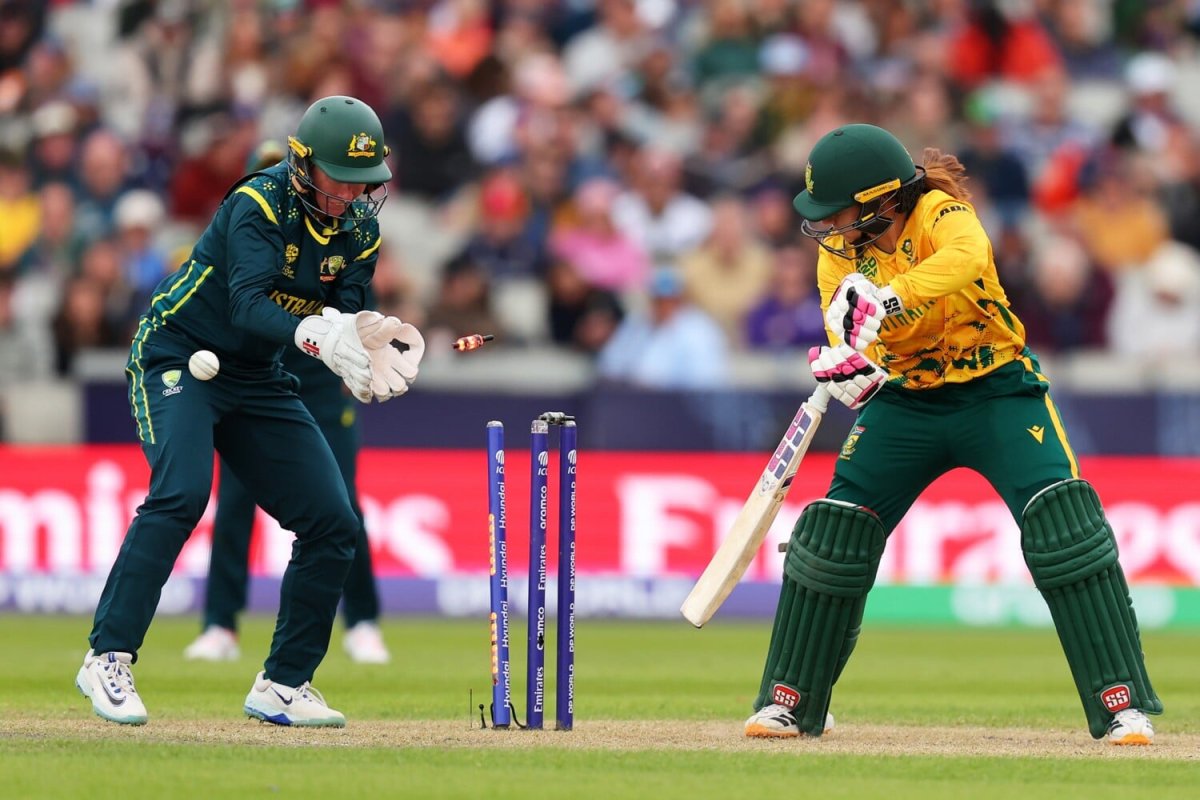
Proteas Women Crash to Devastating Defeat at Old Trafford The Proteas women endured a bruising 65-run defeat on Saturday 13 June 2026 at Old Trafford in Manchester, bowled out for 107 while chasing Australia's 172 for 8 in their opening Group 1 clash of the ICC Women's T20 World Cup. Australia won the toss and batted first, setting a total that proved well beyond South Africa's
Proteas Women Crash to Devastating Defeat at Old Trafford
The Proteas women endured a bruising 65-run defeat on Saturday 13 June 2026 at Old Trafford in Manchester, bowled out for 107 while chasing Australia's 172 for 8 in their opening Group 1 clash of the ICC Women's T20 World Cup. Australia won the toss and batted first, setting a total that proved well beyond South Africa's reach on the day despite some early promise with the ball. The margin underlined just how clinical the defending champions can be when they find rhythm after a shaky start.
This loss carries extra weight because the Proteas have reached the final or semi-final of the last three ICC women's tournaments without lifting a trophy. Fans back home remember the 2023 T20 World Cup final heartbreak, the 2024 semi-final exit and the 2025 ODI World Cup campaign that ended one step short. Each near-miss has built a hunger that coach Mandla Mashimbyi has tried to channel into belief rather than burden.
The irony of facing Australia again adds extra spice. South Africa famously knocked the same side out of the 2024 T20 World Cup semi-final, ending a long-standing dominance. Australia arrived in Manchester without Meg Lanning and Alyssa Healy yet still looked formidable, and the Proteas knew they would face a side determined to settle old scores on English soil.
The result leaves South Africa in a precarious position inside the so-called group of death that also contains India, Pakistan and Bangladesh. Only the top two advance to the semi-finals, so every remaining match now carries must-win pressure in a tournament where history shows that early slips can prove fatal.
Litchfield's Brilliance and Australia's Recovery From Early Chaos
Australia's innings began in chaos. Georgia Voll fell for a first-ball duck in the opening over, and Beth Mooney departed soon after for 7, leaving the score at 24 for 2 inside the first four overs. The early breakthroughs gave the Proteas genuine hope that they could restrict a powerful batting line-up on a surface that offered some assistance to the seamers.
Phoebe Litchfield then took charge with an innings that confirmed her status as arguably the most innovative batter in the women's game. Her 50 came off just 24 balls, featuring nine fours and a six, as she dominated the powerplay and pushed Australia to 52 for 2 by the end of the sixth over. The way she manipulated the field and found gaps at will left the Proteas bowlers searching for answers.
Once Litchfield was caught off Ayabonga Khaka in the seventh over, Ellyse Perry and Georgia Wareham combined for a crucial 58-run stand off 38 balls. Perry contributed 36 from 26 deliveries with four fours, while Wareham added 32 from 22 balls including six boundaries. Their partnership steadied the innings and took the total beyond what many had expected after the early losses.
Late cameos from Annabel Sutherland with 21 and a brisk 13 not out from Carey pushed Australia to 172 for 8. Sophie Molineux and Alana King each claimed two wickets, but the total still looked imposing on a ground where chasing sides have historically struggled in women's T20 World Cup matches.
The Proteas Batting Collapse — A Story of What Might Have Been
The Proteas reply began in nightmare fashion. Sune Luus was trapped LBW in the first over, and Annerie Dercksen followed in the second, leaving South Africa at 7 for 2. The early damage meant captain Laura Wolvaardt had to rebuild almost from scratch while facing quality spin and seam in tandem.
Wolvaardt fought hard for her 44 off 39 balls, striking two fours and one six, yet she was repeatedly starved of strike during the middle overs. The frustration showed as Australia rotated their bowlers cleverly, denying her the chance to build momentum. Her eventual dismissal, caught in the covers off Molineux, effectively ended any realistic hopes of a successful chase.
Nadine de Klerk provided the most meaningful resistance with 25 off 22 balls that included one four and two sixes. She and Wolvaardt added 41 for the third wicket, but Wareham struck again to bowl de Klerk and break the stand. Marizanne Kapp's run-out for 12 then triggered another collapse that saw the lower order fold quickly.
Nonkululeko Mlaba finished with the best figures for South Africa, taking 2 for 22 from her four overs, while Khaka claimed 2 for 33. Yet the batting effort never recovered from the early blows, and the Proteas were all out in 16.4 overs, well short of the target and well short of the standards they have set in recent ICC campaigns.
Coach Mashimbyi's Vision — Creating Legacy, Not Protecting History
Coach Mandla Mashimbyi spoke before the tournament about the difference between protecting history and creating it. He noted that teams like Australia, England and West Indies are trying to protect their legacy, while South Africa still want to write their own chapter. The message was clear: the Proteas are not content with near-misses and are determined to change the narrative that has followed them through three consecutive ICC finals appearances.
Mashimbyi acknowledged that few outside South Africa view the Proteas as favourites, given the titles won by other nations. He stressed that the only way to shift that perception is to go all the way in this tournament. His words carried the passion of a coach who has lived through the pain of previous near-misses and believes this group has the talent to finally break through.
To help the side adapt to English conditions, Mashimbyi brought in Johann Myburgh, his former Titans teammate and current coach of Surrey women. The move showed attention to detail and a willingness to use every available resource to give the Proteas an edge in a tournament where small margins often decide outcomes.
Laura Wolvaardt's Honest Assessment
Captain Laura Wolvaardt was candid after the match, describing it as a tough day at the office. She felt that restricting Australia to 172 had not been a bad effort with the ball, but the batting unit lost its way completely once the early wickets fell. Her assessment captured the frustration of a side that knew it had let a contest slip away.
Wolvaardt admitted she found it hard to get going and grew frustrated with the lack of strike during the middle phase. Australia bowled well to her later in the innings, and she paid the price when she tried to force the issue. The honesty in her post-match comments reflected the leadership that has carried the Proteas through recent campaigns.
Despite the disappointment, Wolvaardt remained forward-looking. She insisted the team would fight back and put the result behind them, underlining that it remains a long tournament with plenty of cricket still to be played. The message was one of resilience rather than resignation.
The Must-Win Showdown Against Pakistan
The Proteas now turn their attention to a must-win fixture against Pakistan on Wednesday 17 June 2026. Anything less than victory will leave their semi-final hopes hanging by a thread in a group where every point matters. The players know the importance of bouncing back quickly in a tournament that offers little room for error.
The group of death features Australia, India, South Africa, Pakistan and Bangladesh, with only two sides progressing. Pakistan and Bangladesh have both shown they can cause upsets on their day, making the remaining matches anything but straightforward. South Africa will need to show improved execution with both bat and ball to secure the necessary results.
There is simply no more wiggle room. The Australia defeat has placed the Proteas in a position where every training session and every tactical discussion now carries heightened importance. The next match against Pakistan represents the pivotal moment of their campaign.
What This Means for South African Women's Cricket
Beyond the immediate result lies a bigger story about the growth of women's cricket in South Africa. The investment in grassroots programmes, the rise of domestic structures and the emergence of world-class talent have all contributed to a side capable of reaching the business end of major tournaments. The current generation carries the hopes of a nation that has waited too long for an ICC title.
Three consecutive appearances in ICC finals without a trophy creates a heavy weight, yet it also demonstrates consistency that few other nations have matched. The talent pool is deeper than ever, with players like Nonkululeko Mlaba and Nadine de Klerk showing they can compete at the highest level. The challenge now is converting that talent into silverware.
South African fans have every reason to keep believing. The skill and determination are evident, and the coaching staff have shown they are willing to adapt and learn. Execution on the field remains the missing piece, but the foundation for future success is firmly in place. The Proteas will return to the field against Pakistan with renewed purpose and the full backing of a nation that refuses to give up on its dreams.
Tags: Proteas women, T20 World Cup 2026, Australia vs South Africa, Laura Wolvaardt, Nadine de Klerk, Phoebe Litchfield, Mandla Mashimbyi, Georgia Wareham, Old Trafford, Nonkululeko Mlaba, women's cricket SA, ICC Women's T20 World Cup
By Dante Williams, Staff Writer
This article was produced with AI-assisted research and editorial support. Reporting is based on sources cited in the article.
What's Your Reaction?
 Like
0
Like
0
 Dislike
0
Dislike
0
 Love
0
Love
0
 Funny
0
Funny
0
 Wow
0
Wow
0
 Sad
0
Sad
0
 Angry
0
Angry
0

Breaking News and Investigations Correspondent at Global1.News. Based in London, covering global breaking news, security, and investigative stories. Known for digging deeper and connecting the dots across continents.














Comments (0)