
End of an Era: ULA's Final Atlas V 551 Launch Carries 29 Amazon Leo Satellites Into Orbit
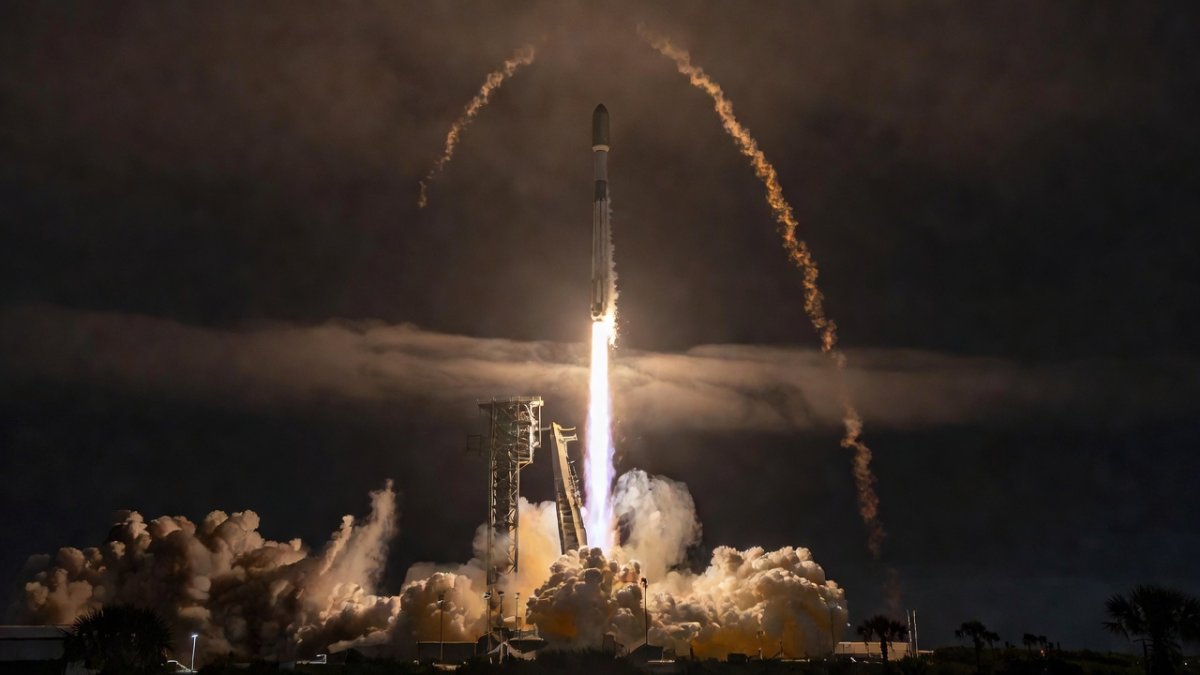
The Launch Listen up, people — it was 12:07 a.m. Eastern on July 2, 2026, when the final Atlas V 551 roared off Pad 41 at Cape Canaveral. Five solid rocket boosters lit in sequence, each packing 2.2 million pounds of thrust, and the ground shook like a freight train hitting the rails. The 191-foot stack climbed through a clear Florida sky, orange flame cutting the dark while th
The Launch
Listen up, people — it was 12:07 a.m. Eastern on July 2, 2026, when the final Atlas V 551 roared off Pad 41 at Cape Canaveral. Five solid rocket boosters lit in sequence, each packing 2.2 million pounds of thrust, and the ground shook like a freight train hitting the rails. The 191-foot stack climbed through a clear Florida sky, orange flame cutting the dark while the Centaur upper stage waited for its cue. You could feel the rumble in your chest from three miles away.
The trajectory took the rocket southeast over the Atlantic, dropping the boosters at T+2 minutes before the RD-180 main engine pushed the stack to 17,500 mph. At T+4 minutes the payload fairing split and fell away, revealing 29 Amazon Kuiper satellites riding in a stacked dispenser. The crowd at the causeway — engineers, families, and space fans — erupted when the plume turned into a thin white line against the stars. No one wanted to blink.
Sensory overload hit hard: the crackle of the public address system, the smell of burned kerosene drifting on the breeze, and the collective gasp when the first stage shut down exactly on time. This was not just another launch. This was the last time that exact configuration would ever fly, and every person there knew it.
By T+12 minutes the Centaur had placed the satellites into a 450-mile low-Earth orbit. Telemetry confirmed all 29 birds were alive and talking to the ground. The clock on Atlas V 551 had run out, but the night still felt electric.
End of an Era: The 551 Configuration
The Atlas V 551 was the muscle car of the fleet — five solid rocket boosters strapped to a single RD-180 core, a stretched 5-meter fairing, and the Centaur upper stage on top. Only eight missions ever flew this exact setup because it was built for heavy lifts that nothing else in the ULA stable could match at the time. Its 110-plus total Atlas V missions across all variants delivered everything from classified spy satellites to Mars rovers, but the 551 stood apart for raw payload capacity.
Technically it could haul 8,900 kilograms to geostationary transfer orbit or more than 20,000 kilograms to low-Earth orbit when fully loaded. The five Aerojet Rocketdyne AJ-60A boosters gave it that unmistakable kick at liftoff, each one burning for 94 seconds before separation. Lockheed Martin and later ULA flew the design from 2002 onward, racking up a 100 percent success rate on every 551 flight.
What made the 551 special was its role as a bridge. It handled the biggest commercial and national-security payloads while ULA prepared the next rocket. Tonight's 29 Kuiper satellites pushed the vehicle right to its design limit, proving the configuration still had teeth even on its final outing.
Engineers at the Atlas factory in Decatur, Alabama, had already begun dismantling the 551 production line. The tooling is being repurposed or retired. When the last Centaur separation signal reached the ground, an entire chapter of American rocketry closed for good.
Amazon Leo: Building a 3,276-Satellite Constellation
Amazon's Project Kuiper aims for 3,276 satellites in low-Earth orbit, and tonight's 29 birds brought the total launched to 1,184. The company received FCC approval in 2020 for the full constellation, promising broadband coverage to every corner of the planet by 2029. Each satellite weighs roughly 650 kilograms and uses electric propulsion to reach its final 590-kilometer shell.
Unlike Starlink's 12,000-plus planned satellites, Kuiper is targeting a smaller but still massive fleet optimized for enterprise and government customers first. Amazon has already signed deals with Verizon and Vodafone to extend 5G coverage into remote regions. The July 2 launch used the Atlas V 551's extra lift capacity to deploy the satellites in a single plane, speeding up the build-out schedule by two months.
Competition is fierce. SpaceX has the head start, but Amazon is leveraging its own logistics network and cloud infrastructure to sell turnkey connectivity packages. Ground stations in 12 countries are already online, and the company plans 24 more by year-end. The strategy is clear: own the customer experience from orbit to living room.
With 29 more satellites now circling at 17,500 mph, Kuiper's coverage footprint just grew by another 4 percent. Amazon is not waiting for anyone. The race is on, and tonight's launch proved they can keep pace.
How We Got Here: The Atlas Rocket Legacy
The Atlas story starts in 1957 as the SM-65 ICBM, built to deliver nuclear warheads. That same airframe, stripped of weapons, became the Mercury-Atlas launcher that put John Glenn into orbit in 1962. Fast-forward to 2006 when Lockheed Martin and Boeing formed United Launch Alliance, and the modern Atlas V was born from that Cold War DNA.
Over 24 years the Atlas V family flew 100 missions before tonight, carrying NASA's New Horizons to Pluto, the Perseverance rover to Mars, and dozens of national-security payloads. The 551 variant alone handled nine of the heaviest commercial missions, including tonight's record 29-satellite stack. Reliability became the brand: zero failures across every configuration.
ULA's joint-venture structure gave the rocket steady government contracts while commercial customers paid the bills. The RD-180 engine, built in Russia until sanctions forced a switch, powered every flight until the final shutdown tonight. That engine's deep-throttling capability is what let the 551 thread the needle on precise orbital insertions.
Now the tooling is being boxed up. The same engineers who stacked this rocket will soon stack Vulcan Centaur instead. The legacy is not disappearing — it is evolving into the next American launcher.
ULA's Transition to Vulcan Centaur
Vulcan Centaur replaces both Atlas V and Delta IV with a single vehicle powered by two Blue Origin BE-4 engines burning liquefied natural gas. The first flight is scheduled for late 2026, carrying the Peregrine lunar lander. ULA already holds $2.3 billion in national-security launch contracts that require Vulcan's higher performance and American-made engines.
The transition has not been smooth. Delays pushed the first BE-4 hot-fire tests from 2023 into 2024, but the engines are now firing regularly at Marshall Space Flight Center. Each BE-4 produces 550,000 pounds of thrust, giving Vulcan the muscle to lift 27,000 kilograms to low-Earth orbit — more than the Atlas V 551 ever managed.
SpaceX's reusable Falcon 9 undercuts ULA on price, so Vulcan's selling point is reliability plus the ability to carry the heaviest national-security payloads without waivers. The Air Force and Space Force have already booked 26 Vulcan missions through 2030. Tonight's Atlas finale clears the factory floor for that future.
ULA's workforce of 3,800 people is being retrained on the new rocket. The company's survival depends on proving Vulcan can fly on schedule and on budget. The clock is ticking, and the first paying customer is already waiting.
The Satellite Broadband Race Heats Up
Starlink currently operates more than 6,000 satellites and serves 3.2 million customers. OneWeb, now merged with Eutelsat, has 634 satellites and focuses on aviation and maritime markets. Amazon's Kuiper is the third major player, and tonight's launch narrowed the gap. The FCC has authorized all three operators to occupy distinct orbital shells to avoid collisions.
Price competition is brutal. Starlink charges $120 a month in the U.S.; Kuiper is expected to launch at $89. Amazon's vertical integration — building satellites in its own factory and selling service through existing Prime accounts — could squeeze margins fast. Rural customers are already comparing coverage maps and signing up for waitlists.
Orbital real estate is finite. The International Telecommunication Union has granted Kuiper 7,000 additional slots if the company meets deployment milestones by 2028. Starlink is fighting for more spectrum at higher altitudes. Every successful launch like tonight's Atlas mission tightens the timeline for everyone else.
Consumers win when choices multiply. Faster speeds, lower latency, and global reach are no longer science fiction. The companies that execute on schedule will own the next decade of connectivity.
What This Launch Means for Everyday Americans
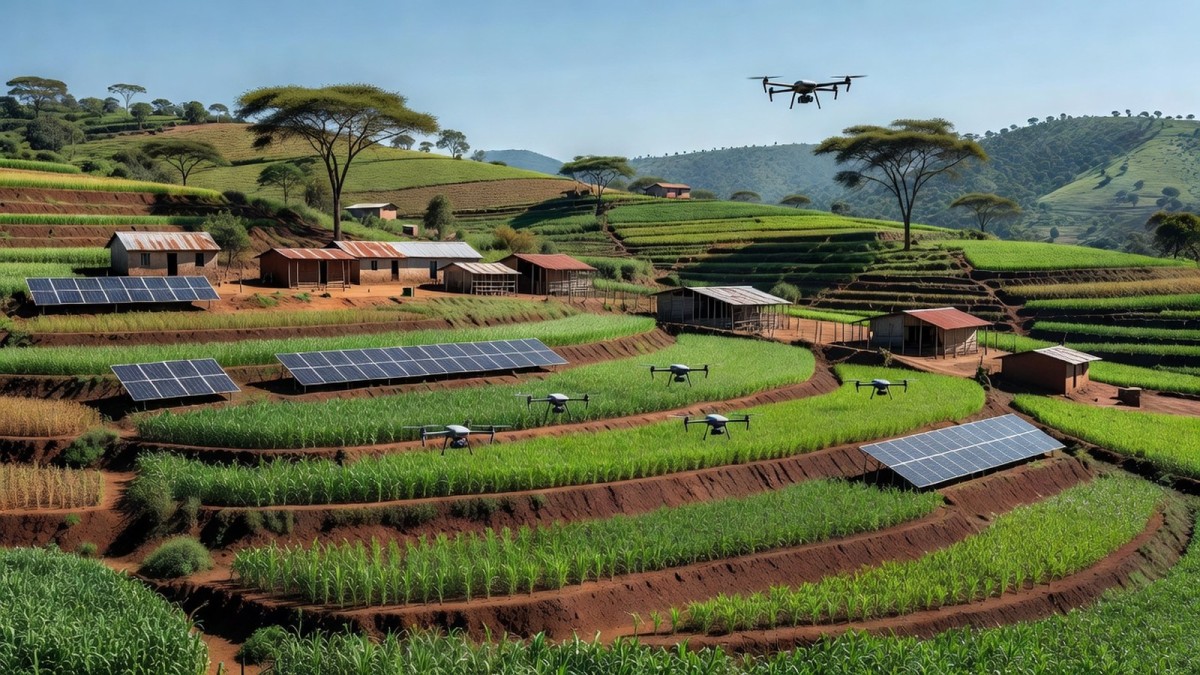
Rural broadband deserts are shrinking. A single Kuiper satellite can deliver 100 megabits per second to a 12-inch user terminal, enough for telemedicine appointments and remote learning. In places like West Virginia and Alaska where fiber will never reach, tonight's 29 satellites just added another slice of coverage.
Disaster response improves when first responders have always-on internet. During Hurricane Helene last year, Starlink terminals kept hospitals online. Kuiper's lower price point means more counties can afford backup terminals before the next storm hits. Education departments are already budgeting for classroom kits that connect students who still lack home internet.
Small businesses in farm country can now process credit-card payments and manage inventory in real time. Trucking companies are testing terminals that track loads across dead zones. The economic multiplier is real: every new satellite launched multiplies opportunities for people who have been left behind by terrestrial networks.
This is not abstract space news. It is the difference between a clinic that can consult a specialist 200 miles away and one that cannot. Tonight's launch moved that line forward by another 29 satellites.
What You Can Do Right Now
Check the Project Kuiper waitlist at amazon.com/kuiper and enter your ZIP code. If service is coming to your area in 2027, you will get priority notification and a discounted terminal when it arrives. Do it tonight before the next wave of sign-ups fills the queue.
Contact your county commissioners and ask whether they have applied for the FCC's Rural Digital Opportunity Fund grants that can subsidize satellite terminals for libraries and schools. Many counties have unspent money because they did not know satellite options existed.
Support legislation that keeps orbital slots open for American operators. The ORBITS Act currently moving through Congress funds debris removal and spectrum coordination. Call your representatives and tell them you want U.S. companies leading the next generation of space infrastructure.
Finally, stay engaged. Follow the next Vulcan Centaur launch and the continuing Kuiper deployments. The decisions made in the next 18 months will determine who controls global connectivity for the next 50 years. Your voice and your subscription both count.
By Jessica Ali, Lead Anchor — Global 1 News
This article was produced with AI-assisted research and editorial support. Reporting is based on sources cited in the article.
What's Your Reaction?
 Like
0
Like
0
 Dislike
0
Dislike
0
 Love
0
Love
0
 Funny
0
Funny
0
 Wow
0
Wow
0
 Sad
0
Sad
0
 Angry
0
Angry
0

Editor-in-Chief at Global1.News. Atlanta-based journalist who cuts through the BS and tells it like it is. Lead anchor, host, and the voice you hear when the spin stops and the truth starts.












Comments (0)