
86% of Filipinos Back US, Japan, Australia in West Philippine Sea Defense, Pulse Asia Poll Shows
Survey Reveals Strong Backing for West Philippine Sea Defense The Pulse Asia survey conducted from May 3 to 7 and commissioned by the Stratbase Institute found that 86 percent of respondents agreed the Philippine government should defend the West Philippine Sea with like-minded countries based on the 2016 arbitral award. Only 3 percent disagreed while 11 percent could not say.
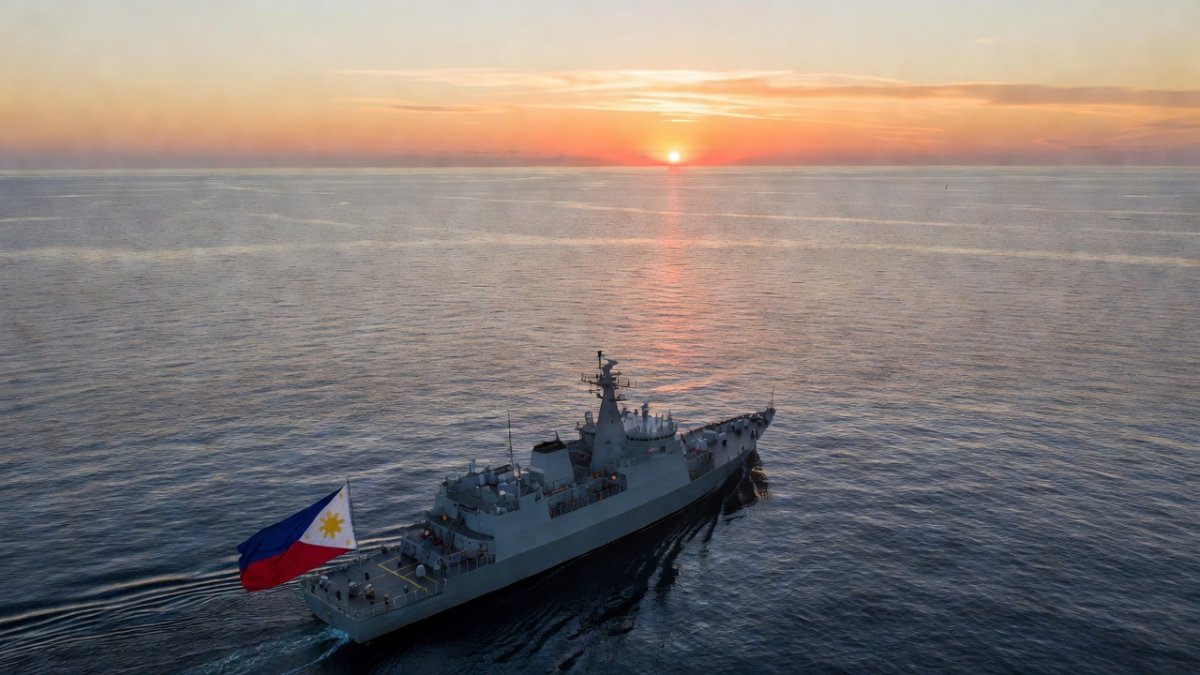
Survey Reveals Strong Backing for West Philippine Sea Defense
The Pulse Asia survey conducted from May 3 to 7 and commissioned by the Stratbase Institute found that 86 percent of respondents agreed the Philippine government should defend the West Philippine Sea with like-minded countries based on the 2016 arbitral award. Only 3 percent disagreed while 11 percent could not say. This level of agreement comes ahead of the 128th anniversary of Philippine independence and one month before the country marks the 10th anniversary of the arbitral ruling that invalidated China's sweeping claims over the South China Sea.
For ordinary Filipinos the 86 percent figure means widespread recognition that protecting maritime rights requires coordinated action rather than unilateral efforts. Residents in coastal communities across multiple regions see daily reports of incidents at sea and view partnerships as a practical way to maintain access to fishing grounds and trade routes. The survey results indicate that this sentiment holds steady nationwide even as tensions persist in the area.
The findings also show that 56 percent of respondents nationwide strongly agreed with the statement while 30 percent somewhat agreed. These breakdowns highlight that more than half the population holds firm convictions on the need for joint defense aligned with the 2016 arbitral award. Such conviction shapes how families and local businesses plan around stable maritime boundaries.
Regional Support Shows Mindanao at Highest Level
Support reached 91 percent in Mindanao compared with 82 percent in Balance Luzon. The National Capital Region recorded 90 percent agreement and the Visayas stood at 86 percent. These regional differences illustrate how proximity to the West Philippine Sea influences the intensity of public views on multilateral defense strategies.
Filipinos in Mindanao experience direct effects from maritime disputes through supply chain disruptions and fishing restrictions that can alter household incomes. In contrast residents in Balance Luzon areas farther from the immediate zone still register 82 percent support showing that national awareness extends beyond frontline regions. The 9 percentage point gap between Mindanao and Balance Luzon underscores varying daily encounters with the issue.
Local leaders and community organizations in high-support regions like Mindanao often reference these numbers when discussing resource allocation for maritime awareness programs. The data from the May 3 to 7 survey provides a concrete measure of how geographic location correlates with preferences for working alongside countries that uphold the 2016 arbitral award.
Socioeconomic Patterns in Agreement Levels
Across socioeconomic classes 88 percent of respondents from Classes ABC agreed with the statement followed by 87 percent from Class D and 75 percent from Class E. The survey captured these differences during the same May 3 to 7 period providing a snapshot of how economic standing intersects with foreign policy views.
Households in Classes ABC and D represent the majority of urban and provincial workers whose livelihoods depend on stable trade and energy routes through the West Philippine Sea. The lower 75 percent figure in Class E suggests that economic pressures may temper the priority given to international partnerships even when the 2016 arbitral award remains central to legal claims.
These class-based variations affect how policy discussions reach different segments of the population. Government outreach on defense cooperation with like-minded nations must account for the 13 percentage point spread between Classes ABC and E to ensure messaging resonates across income levels.
Strong Agreement Outweighs Moderate Views Nationwide
The survey found 56 percent of respondents nationwide strongly agreed that the Philippines should defend the West Philippine Sea with like-minded countries while 30 percent somewhat agreed. This distribution indicates that firm support outnumbers conditional backing by nearly two to one.
Ordinary Filipinos interpret strong agreement as a call for consistent government action that combines the 2016 arbitral award with practical alliances. In regions where fishing and maritime transport form core economic activities the 56 percent strong agreement translates into expectations for visible diplomatic and defense coordination.
The remaining 11 percent who could not say whether they agreed or disagreed represent a segment whose views may shift with clearer information on how partnerships operate. The May 3 to 7 results therefore serve as a baseline for tracking whether strong agreement grows closer to the 10th anniversary of the arbitral ruling.
Stratbase Institute Analyzes Public Message on Partnerships
Stratbase Institute president Victor Andres Manhit stated that the results showed public support for a strategy combining diplomacy defense and partnerships. He noted that the 2016 arbitral award remains a cornerstone of lawful claims in the West Philippine Sea and that Filipinos want the government to pursue principled diplomacy credible defense and strong partnerships with like-minded nations.
Manhit added that Filipinos were sending a clear message that the country should remain firm in defending its rights while working with partners that support international law and a rules-based Indo-Pacific. These comments frame the 86 percent agreement as evidence of sustained public interest in coordinated approaches.
The analysis connects directly to the survey's timing one month before the 10th anniversary of the arbitral ruling. By highlighting the combination of diplomacy defense and partnerships Manhit links the numerical findings to concrete policy directions that affect coastal communities and national security planning.
Preferred Partners Led by United States at 84 Percent
When asked which countries or organizations the Philippines should work with 84 percent of respondents chose the United States. Japan followed at 67 percent Australia at 57 percent Canada at 51 percent and South Korea at 44 percent. Additional selections included the United Kingdom at 32 percent the European Union at 26 percent Taiwan at 23 percent China at 18 percent and India at 9 percent.
These preferences reveal how Filipinos differentiate among potential partners based on perceived alignment with the 2016 arbitral award. The 84 percent support for the United States stands out as the clearest indicator of public sentiment toward established alliances that emphasize rules-based approaches in the West Philippine Sea.
Ordinary citizens in provinces reliant on maritime trade view the ranking of partners as a guide for where diplomatic resources should focus. The gap between the top choice at 84 percent and lower selections such as India at 9 percent shows concentrated expectations around a core group of nations.
Regional Patterns Emerge in Ally Preferences
Support for working with the United States reached 86 percent in Metro Manila 85 percent in Balance Luzon and Mindanao and 79 percent in the Visayas. Japan drew its strongest regional support from Metro Manila at 87 percent while Australia received its highest regional support in the Visayas at 69 percent.
These geographic patterns affect how communities perceive the reliability of specific partners. Residents in the Visayas for example register higher comfort with Australia at 69 percent suggesting regional variations in exposure to different nations' maritime activities.
The May 3 to 7 data allows policymakers to map partner preferences against the overall 86 percent agreement on multilateral defense. Such mapping helps tailor engagement strategies that reflect the 7 percentage point difference in United States support between Metro Manila and the Visayas.
Support for Key Partners Rises Since December 2025
The figures for the United States and Japan exceeded their ratings in a similar Stratbase-commissioned survey conducted from December 12 to 15 2025 where they received 82 percent and 64 percent respectively. The May 3 to 7 results show increases to 84 percent for the United States and 67 percent for Japan.
Victor Andres Manhit observed that these changes suggest Filipinos distinguish between countries that support the Philippines' lawful rights in the West Philippine Sea and those whose actions have contributed to tensions. The 2 percentage point rise for the United States and 3 percentage point rise for Japan occurred over roughly five months.
For Filipino families and businesses the upward movement indicates growing clarity on which partnerships best align with the 2016 arbitral award. The comparison between the two survey periods provides a measurable indicator of evolving public sentiment ahead of the 10th anniversary of the ruling.
Context of 2016 Arbitral Award Shapes Current Sentiment
The survey was released ahead of the 128th anniversary of Philippine independence and one month before the 10th anniversary of the 2016 arbitral award. The ruling invalidated China's sweeping claims over the South China Sea and continues to serve as the legal foundation for Philippine positions in the West Philippine Sea.
Ordinary Filipinos connect the 86 percent agreement figure to the enduring relevance of that 2016 decision in daily maritime activities. The award's 10th anniversary timing amplifies public attention to whether government actions match the survey's call for defense cooperation with like-minded countries.
Regional breakdowns such as 91 percent in Mindanao versus 82 percent in Balance Luzon demonstrate that support for strategies grounded in the arbitral award remains robust even as the country approaches this milestone. The data from May 3 to 7 therefore offers a reference point for assessing continuity in public priorities.
Policy Implications for Sustained Multilateral Engagement
The combination of 86 percent overall agreement 84 percent preference for the United States and rising support since December 2025 points to stable public backing for partnerships aligned with the 2016 arbitral award. Policymakers can use these numbers to calibrate diplomatic initiatives that address both strong and moderate agreement levels.
Communities across Mindanao the Visayas and Luzon experience the effects of these policy choices through continued access to fishing areas and shipping lanes. The survey's socioeconomic and regional details help identify where additional outreach may narrow the 13 percentage point gap between Classes ABC and E.
As the 10th anniversary of the arbitral ruling approaches the May 3 to 7 findings provide a factual baseline for evaluating whether government strategies continue to reflect the clear message identified by Victor Andres Manhit. The results underscore consistent Filipino expectations for defense cooperation grounded in international law.
By Bella Reyes, Staff WriterThis article was produced with AI-assisted research and editorial support. Reporting is based on sources cited in the article.
What's Your Reaction?
 Like
0
Like
0
 Dislike
0
Dislike
0
 Love
0
Love
0
 Funny
0
Funny
0
 Wow
0
Wow
0
 Sad
0
Sad
0
 Angry
0
Angry
0

Philippines/Southeast Asia Correspondent at Global1.News. Manila-based journalist covering Philippine politics, environment, maritime security, and social issues. Passionate about marine conservation and the communities protecting the Philippines' natural heritage.













Comments (0)