
Experimental Molecule Reprograms Brain Defenses Against Alzheimer's
A Fresh Angle on an Old Problem Alzheimer's disease still has no cure, and most current medicines only ease symptoms for a while. That is why researchers keep hunting for ways to strengthen the brain's own defenses instead of just fighting symptoms after they appear. A recent study highlights one experimental molecule, known as OLE, that appears to give the brain's immune cells
A Fresh Angle on an Old Problem
Alzheimer's disease still has no cure, and most current medicines only ease symptoms for a while. That is why researchers keep hunting for ways to strengthen the brain's own defenses instead of just fighting symptoms after they appear. A recent study highlights one experimental molecule, known as OLE, that appears to give the brain's immune cells a helpful nudge.
How Microglia Normally Protect the Brain
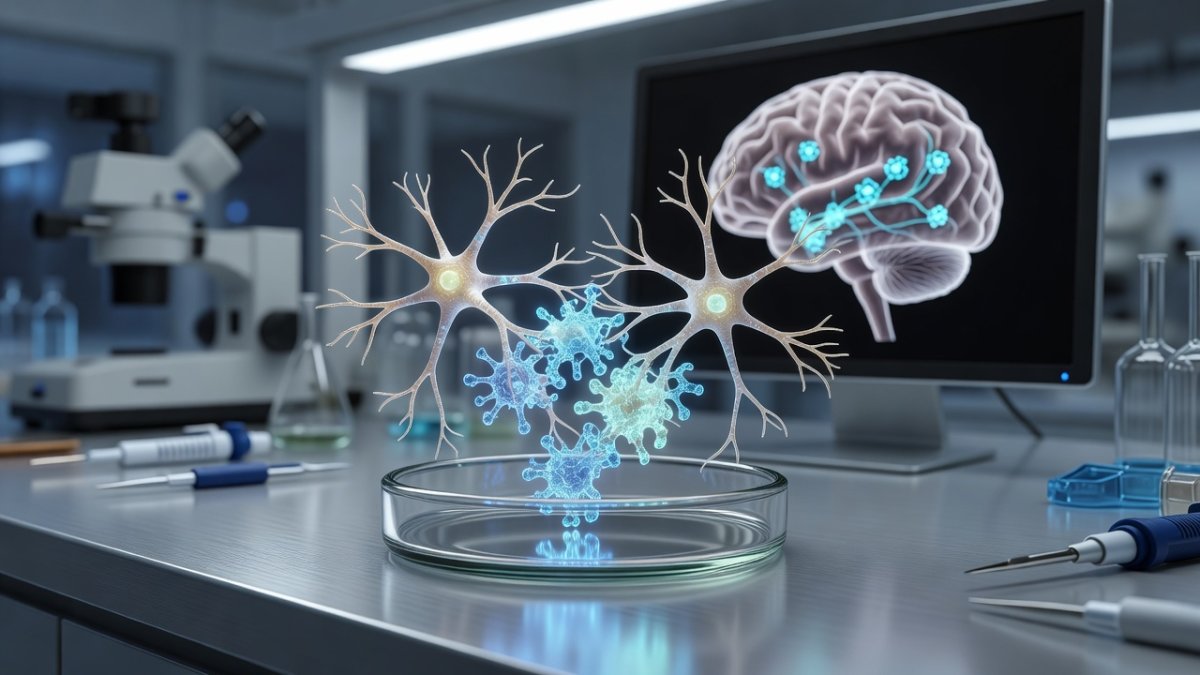
Microglia act as the brain's cleanup crew. In a healthy brain they watch for trouble, remove debris, and keep nerve cells in good shape. When beta-amyloid plaques start to build up, microglia are supposed to surround and break them down. In Alzheimer's, though, these cells often lose that ability. They either ignore the plaques or cause extra inflammation that hurts nearby neurons.
The new work shows that OLE can shift microglia back toward their protective role. Instead of standing by while plaques grow, the treated cells move in, wrap around the clumps, and limit how much damage they can do. The result is smaller, less toxic plaques in the models studied.
What the Experiments Revealed
Scientists tested OLE in cell and animal systems designed to mimic Alzheimer's changes. They watched the microglia closely and saw clear differences after treatment. The cells formed tighter barriers around the plaques and appeared less likely to release the inflammatory signals that can speed up nerve-cell death. The journal Cell Death and Disease published these observations, giving other labs a clear starting point for follow-up work.
Because the study focused on restoring a natural function rather than adding an outside drug to clear plaques, the approach feels different from many earlier attempts. It is more like reminding the immune system how to do its usual job than forcing an entirely new process.
Why Containing Plaques Matters for Daily Life
Plaque size and toxicity directly affect how quickly memory and thinking skills slip away. When microglia keep plaques smaller and more contained, fewer toxic fragments leak into surrounding tissue. That can translate into slower loss of everyday abilities such as remembering appointments, managing medications, or recognizing family members.
For caregivers, any delay in decline can mean more years of meaningful interaction and less need for full-time supervision. Families often say the hardest part is watching a loved one fade; treatments that preserve function longer could ease that emotional load even if they do not reverse the disease.
Next Steps and Realistic Expectations
Turning a promising molecule into a usable medicine takes years of safety testing and larger trials. OLE still needs to prove it works in people, reaches the right parts of the brain, and does not cause unwanted side effects. Researchers will also want to learn whether the same reprogramming effect appears in other forms of dementia.
Still, the idea of boosting the brain's existing cleanup system has caught attention because it could complement other strategies already in development, such as antibody treatments that target amyloid. Combining approaches might give patients more options down the road.
Why This Kind of Research Gives Families Hope
Alzheimer's touches millions of households, and progress often feels slow. Discoveries like OLE remind us that the brain's immune cells are not powerless; they simply need the right signals. Each new clue about how to restore those signals brings us a step closer to therapies that protect the parts of life people value most: conversation, independence, and time with the people they love.
By Allan Ali, PublisherThis article was produced with AI-assisted research and editorial support. Reporting is based on sources cited in the article.
What's Your Reaction?
 Like
0
Like
0
 Dislike
0
Dislike
0
 Love
0
Love
0
 Funny
0
Funny
0
 Wow
0
Wow
0
 Sad
0
Sad
0
 Angry
0
Angry
0

Publisher of Global1.News. Automation architect, systems builder, and the guy making sure the truth gets published.















Comments (0)