
Trump Invokes Defense Production Act as Iran War Drains US Stockpiles
President Trump invoked the Defense Production Act to accelerate weapons manufacturing after the Iran war depleted US stockpiles. (Global 1 News) Breaking: Trump Invokes Defense Production Act as Iran War Drains US Stockpiles Folks, President Trump just dropped a bombshell that should rattle every American paying attention to our national security. On June 16, 2026, he invoked
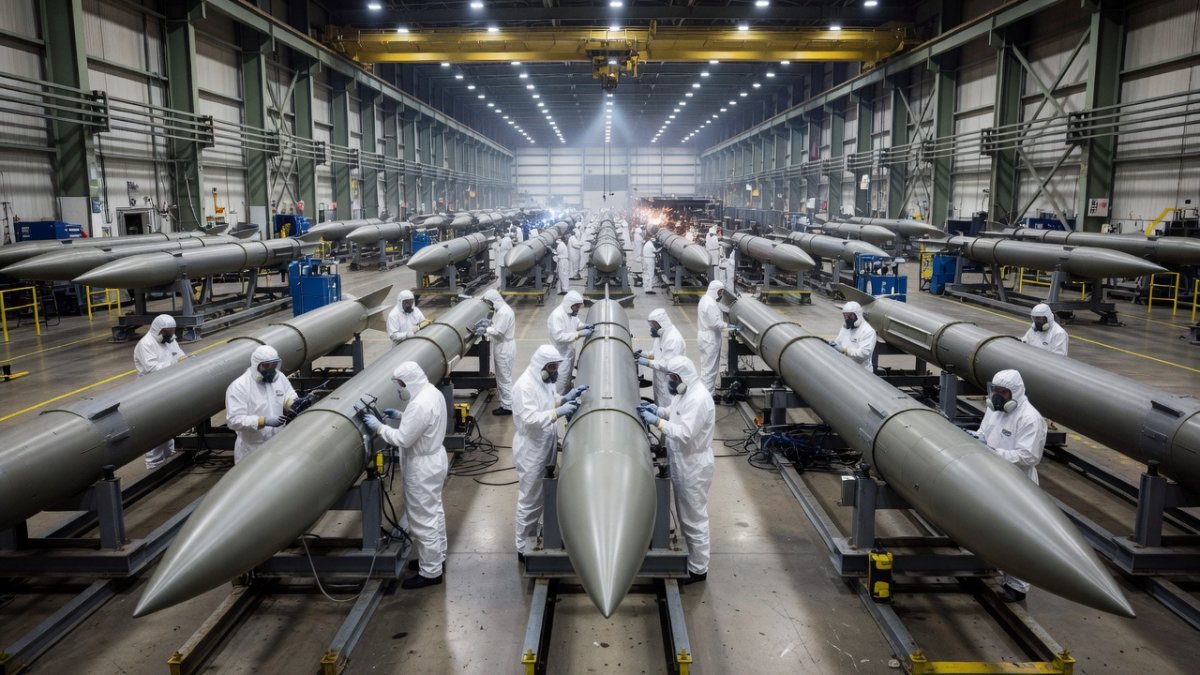
President Trump invoked the Defense Production Act to accelerate weapons manufacturing after the Iran war depleted US stockpiles. (Global 1 News)
Breaking: Trump Invokes Defense Production Act as Iran War Drains US Stockpiles
Folks, President Trump just dropped a bombshell that should rattle every American paying attention to our national security. On June 16, 2026, he invoked the Defense Production Act to force a massive ramp-up in weapons manufacturing because the Iran war has left U.S. munitions stockpiles critically low. Let's be real: Trump admitted the cupboard is nearly bare after burning through roughly 30 percent of our Tomahawk cruise missile inventory in just months of conflict. This is not some routine policy tweak. It is a direct signal that America's ability to sustain a fight is stretched thinner than officials want to say out loud.
The move, signed into action on June 11 and announced five days later, targets what the White House calls "systemic constraints in the munitions industrial base." Defense Secretary Pete Hegseth is already on Capitol Hill pushing a $350 billion ask to fix the damage. China and Russia are watching every depleted warehouse and every delayed production line. If you thought the post-Iran war period would be a victory lap, think again. We are staring at years of rebuilding before we return to pre-war readiness levels.
What the Defense Production Act Actually Means for America
The Defense Production Act is a Cold War-era law from 1950 that gives the president sweeping powers to prioritize and expand industrial output for national security needs. Originally crafted during the Korean War, it lets the government enter voluntary agreements and create plans of action with private companies to speed up production of critical materials. Past presidents have dusted it off for everything from pandemic supplies to clean energy projects, proving its flexibility across decades. Right now the statute is being pointed squarely at missiles, artillery shells, and precision-guided munitions that vanished at alarming rates during the Iran fighting.
Under the DPA the administration can direct factories to shift lines, secure raw materials, and even set prices in extreme cases, though officials stress they are starting with cooperative deals rather than outright mandates. Bloomberg reporting shows the law's strength lies in its ability to cut through normal contracting delays that normally stretch 18 to 24 months. The June 16 White House fact sheet makes clear the goal is to eliminate bottlenecks in everything from propellant chemicals to guidance systems. This is not theoretical; the same tool helped produce ventilators in 2020 and now must restock weapons that took years to build in the first place.
Critics worry the broad language could lead to rushed contracts with limited competition, yet supporters point to the urgent timeline CSIS analysts have laid out. Without DPA authorities, experts say it would take well over two years just to replace what was fired at Iran. The statute's history shows both impressive speed and occasional waste, so oversight will be essential from day one. Congress has already signaled it wants monthly production reports tied to any new funding.
The Iran War's Heavy Toll on American Weapons Stockpiles
The Iran conflict consumed approximately 30 percent of the entire U.S. Tomahawk stockpile in a matter of months, according to multiple outlets including The New York Times and NBC News. That single statistic hides a broader crisis: Javelin anti-tank missiles, Stinger surface-to-air missiles, and a range of precision-guided munitions also dropped to historic lows. These are not widgets that roll off assembly lines overnight. Each Tomahawk requires specialized components sourced from a handful of suppliers already running at capacity before the war even started.
CSIS analysis released in the wake of the fighting estimates it will take at least two full years to restore inventories to pre-war levels even with maximum effort. During that window any new contingency in the Indo-Pacific or Eastern Europe would force commanders to ration shots in ways that could limit operational options. The Pentagon's own internal assessments reportedly show similar shortfalls in 155-millimeter artillery shells and long-range strike munitions that proved decisive against Iranian air defenses. Rebuilding is not simply a matter of money; it is a question of skilled labor, secure supply chains, and factory floor space that does not currently exist at scale.
Defense officials have been reluctant to release exact remaining quantities, citing operational security, but the decision to invoke the DPA itself speaks louder than any classified briefing. When a president reaches for 1950s authorities to fix 2026 problems, the public deserves straight talk about how close we came to running dry. The Iran war may be over on paper, yet its impact on American magazine depth will linger for years. That reality is now driving every subsequent policy choice out of the Pentagon.
Hegseth's $350 Billion Pitch to Congress
Defense Secretary Pete Hegseth has taken a $350 billion supplemental request to Congress that pairs DPA authorities with new procurement reforms aimed at cutting red tape. Lawmakers on both sides of the aisle are asking hard questions about where the money will actually land and how quickly factories can scale. Some Republicans want strict production milestones written into the bill, while Democrats are pushing for stronger auditing requirements to avoid the cost overruns that plagued earlier emergency spending. The debate is no longer theoretical; every week of delay means another month before depleted stockpiles are refilled.
Hegseth's pitch includes incentives for companies to stand up new production lines within 12 months rather than the usual multi-year timelines. Congressional staffers have already circulated draft language that would tie funding tranches to verified output numbers reported monthly to the Armed Services Committees. Oversight hearings are expected within weeks, with GAO auditors slated to review the first wave of contracts. The administration argues that speed is non-negotiable given the two-year rebuild clock CSIS identified, yet fiscal conservatives are wary of blank-check authorities that bypass normal competition rules.
Procurement reform proposals inside the package would allow greater use of existing commercial technologies and faster qualification of new suppliers. Whether Congress ultimately approves the full amount or pares it back will shape how quickly the industrial base recovers. Early signals suggest the supplemental will pass, but with strings attached that could slow implementation if reporting requirements become too burdensome. The tension between urgency and accountability is now the central drama on Capitol Hill.
What This Reveals About US Military Readiness
China and Russia are not ignoring the fact that the United States just admitted it needs emergency powers to refill its magazines. Both nations have watched U.S. munitions consumption rates closely since the Iran campaign and are drawing their own conclusions about American staying power in a prolonged fight. A brittle posture today invites probing actions tomorrow, whether in the Taiwan Strait or along NATO's eastern flank. The DPA invocation is therefore as much a message to adversaries as it is an industrial policy.
Military planners have long warned that current stockpiles were sized for short, high-intensity conflicts rather than the sustained campaigns that peer competitors could force. The 30 percent Tomahawk burn rate exposed how quickly those assumptions break down once real combat begins. Rebuilding to pre-war levels in two years is the optimistic scenario; any supply-chain hiccup could stretch that timeline further. Allies who rely on U.S. replenishment promises are also taking note, potentially accelerating their own domestic production programs.
The larger strategic risk is that perceived weakness in conventional munitions could lower the threshold for miscalculation by revisionist powers. When stockpiles are thin, deterrence calculations shift in dangerous ways. The White House fact sheet tries to project resolve, yet the underlying numbers tell a story of an arsenal that was never built for the pace of modern conflict. Restoring depth is therefore not just about replacing missiles; it is about restoring credibility that competitors are actively testing right now.
The Taxpayer Tab and the Oversight Challenge
History shows that DPA contracts often default to cost-plus arrangements that shift risk onto taxpayers when production targets slip. Past audits by the Government Accountability Office have documented cases where companies billed for overhead and profit margins even as delivery schedules slipped by years. The current push to stand up new lines for Tomahawks and Javelins carries the same structural incentives unless Congress writes stricter fixed-price or performance-based terms into the legislation. Without those guardrails, the $350 billion figure could easily grow once factories encounter the inevitable technical and labor challenges.
Oversight mechanisms proposed so far include independent cost estimators embedded with each major contractor and quarterly public reports that break out unit prices versus original projections. Lawmakers remember the ventilator contracts of 2020 that produced expensive equipment never fully used; they are determined not to repeat that pattern with weapons systems. Still, the pressure to move fast creates its own momentum toward looser terms that favor speed over savings. Taxpayers ultimately foot the bill either way, whether through higher taxes or diverted domestic spending.
GAO has already signaled it will launch a standing review of all DPA-related awards beginning this summer. Early findings are expected to focus on whether the administration is repeating the same sole-source habits that drove up costs in previous emergencies. If Congress fails to impose meaningful competition requirements, the industrial base may expand, but at a premium that future budgets will have to absorb for decades. The choice between rapid replenishment and fiscal discipline is now squarely on the table.
What You Need to Do — Demand Accountability
Call your representative this week and ask three direct questions. First, will they support legislation that ties every DPA dollar to verified monthly production numbers rather than promises? Second, will they insist on independent GAO audits before any cost-plus contract exceeds its original ceiling? Third, will they demand public disclosure of remaining munitions inventory levels so taxpayers understand the true scope of the shortfall? These are not partisan gotchas; they are basic accountability measures for an emergency spending package already projected at $350 billion.
Attend the next town hall or virtual briefing your member of Congress schedules on defense supplemental funding. Bring the CSIS timeline and the 30 percent Tomahawk figure and ask how they plan to prevent another drawdown from catching us flat-footed. Demand that any new authorities granted under the Defense Production Act come with sunset clauses and reporting requirements that actually get enforced. The window to shape this package is measured in weeks, not months, and silence now means living with the consequences for years.
By Jessica Ali, Lead Anchor — Global 1 News
This article was produced with AI-assisted research and editorial support. Reporting is based on sources cited in the article.
What's Your Reaction?
 Like
0
Like
0
 Dislike
0
Dislike
0
 Love
0
Love
0
 Funny
0
Funny
0
 Wow
0
Wow
0
 Sad
0
Sad
0
 Angry
0
Angry
0

Editor-in-Chief at Global1.News. Atlanta-based journalist who cuts through the BS and tells it like it is. Lead anchor, host, and the voice you hear when the spin stops and the truth starts.














Comments (0)