
Everland Panda Birth Strengthens China-South Korea Ties
**Meta Title:** Everland Panda Birth Strengthens China-South Korea Ties **Meta Description:** Everland pandas fourth cub born June 2026 highlights decade of China-South Korea conservation cooperation and soft power diplomacy under bilateral loan agreement **Keywords:** Everland panda birth, Ai Bao cub 2026, China South Korea panda diplomacy, giant panda conservation Korea, Pand
Introduction: The Birth Announcement and Its Significance
The birth of a healthy female giant panda cub to Ai Bao at Everland on June 3, 2026, at 10:53 a.m. marks another milestone in Korea-China scientific cooperation. The cub weighed 171 grams and arrived roughly two hours after labor began. This event underscores the effectiveness of sustained bilateral efforts in giant panda breeding outside China.
Everland officials confirmed the delivery through continuous monitoring systems installed under the joint research protocol with the China Conservation and Research Center for the Giant Panda in Sichuan. The timing coincides with the tenth anniversary of Panda World, reinforcing the symbolic weight of the occasion for both nations.
Scholars of East Asian international relations view such births as tangible indicators of enduring cooperation even when political relations experience periodic strain. The cub represents Korea’s third successful natural giant panda birth, demonstrating incremental progress in applied conservation techniques transferred through the 2016 loan agreement.
Public interest in Korea remains high, with live-stream viewership expected to mirror previous births. The announcement immediately prompted renewed discussion of panda diplomacy's role in people-to-people exchanges between Seoul and Beijing.
Everland's Bao Family: Lineage and Milestones
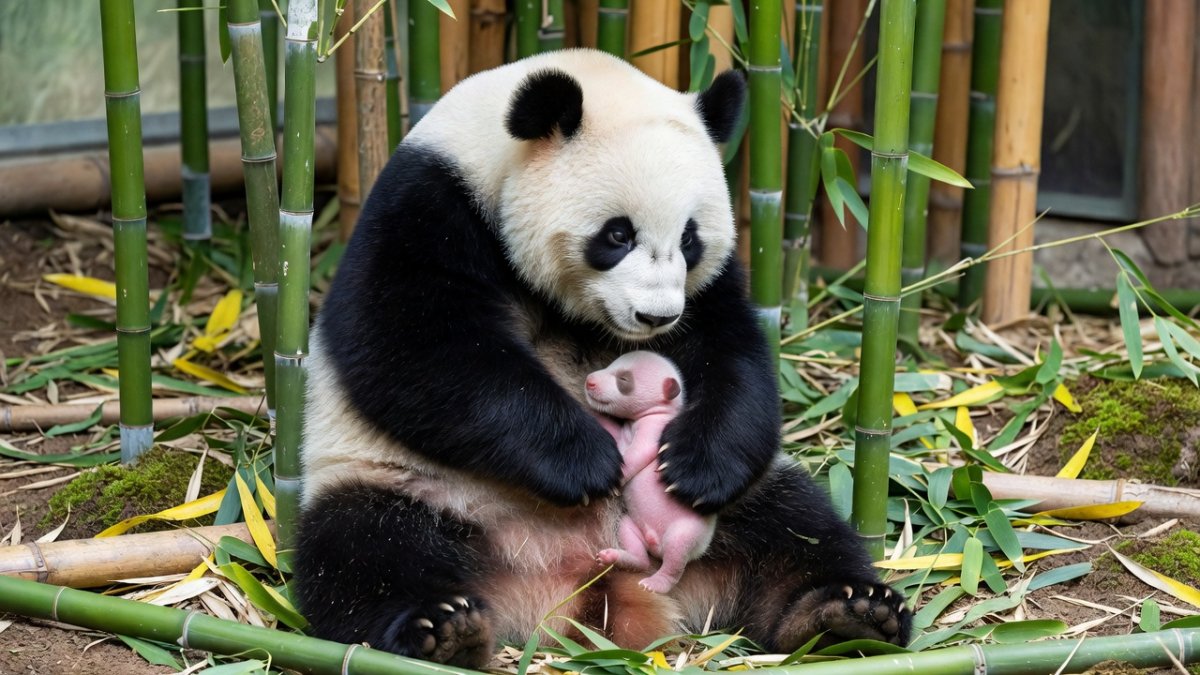
Ai Bao, also referred to as Hua Ni, arrived in Korea at age two in 2016 alongside Le Bao. The pair produced Fu Bao in 2020, Korea’s first panda cub conceived and born domestically. The 2023 birth of twins Rui Bao and Hui Bao further established the couple’s reproductive viability under managed conditions.
The newest cub becomes the fourth offspring of Ai Bao and Le Bao, who are now 12 and 13 years old respectively. Natural mating occurred in February 2026 during the brief annual fertility window of one to three days, a physiological constraint that necessitates precise timing and veterinary oversight.
Keeper Kang Cheol-won, frequently described by Korean media as the pandas’ grandfather, has overseen daily care since the animals’ arrival. His team’s records document incremental improvements in maternal care and cub survival rates across successive births.
The family’s development provides longitudinal data for researchers studying captive giant panda behavior in temperate climates distinct from their native Sichuan habitat. Each birth adds comparative observations that inform both Korean and Chinese breeding programs.
Panda Conservation Science: Technical Achievements
Successful natural conception and birth at Everland reflect advances in hormone monitoring, dietary management, and enclosure design developed through the Sichuan partnership. Korean veterinarians now apply protocols refined over a decade of data exchange.
The 171-gram birth weight falls within the normal range for giant panda neonates, indicating healthy gestation. Continuous camera surveillance and non-invasive ultrasound techniques minimized stress during the final weeks, contributing to the positive outcome.
Joint research teams have focused on optimizing artificial insemination backups while prioritizing natural mating whenever possible. The February 2026 pairing succeeded without intervention, validating the effectiveness of behavioral enrichment programs at Everland.
Postnatal care protocols require the cub to remain with Ai Bao under close observation for at least five months before public debut. This extended period allows researchers to assess bonding and developmental milestones critical for long-term health assessments.
Panda World’s Tenth Anniversary: Facility History
Panda World opened in 2016 as part of a fifteen-year loan agreement extending through 2031. The facility was designed in consultation with Chinese experts to replicate key environmental features of the Wolong and Bifengxia research bases.
Over the past decade, the exhibit has hosted millions of visitors and generated substantial revenue for conservation programs. Educational displays emphasize the ecological role of giant pandas as umbrella species for bamboo forest habitats.
The 2026 anniversary celebrations now incorporate the newest cub, linking institutional history with ongoing reproductive success. Anniversary programming includes retrospective exhibits documenting the transfer of Ai Bao and Le Bao from Chengdu.
Infrastructure upgrades completed in recent years include improved climate control and veterinary laboratories that support the joint research agenda. These investments reflect Korea's commitment to maintaining high standards throughout the remaining loan period.
Panda Diplomacy Framework: Soft Power Dimensions
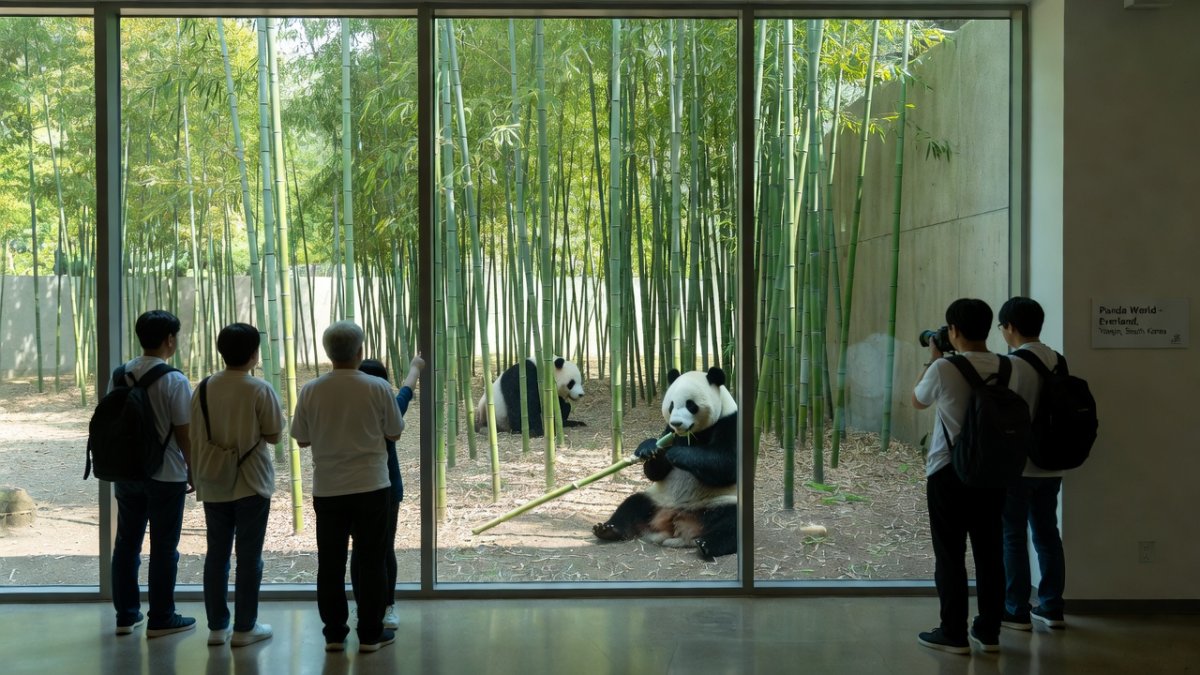
China’s practice of loaning giant pandas to selected foreign institutions constitutes a recognized instrument of soft power diplomacy. The animals serve as living symbols of goodwill and scientific partnership rather than outright gifts.
The Everland arrangement follows the standard fifteen-year model that includes training for local keepers and shared research outputs. Similar programs operate in Japan, Europe, and North America, yet the Korea initiative benefits from geographic proximity and frequent bilateral scientific exchanges.
Each successful birth amplifies positive media coverage in both countries, creating favorable public sentiment that can indirectly support broader diplomatic initiatives. The 2026 cub arrives at a moment when cultural and scientific channels remain important for maintaining stable relations.
Policy analysts note that panda loans typically outlast short-term political frictions, providing institutional continuity. The Sichuan-Everland collaboration has already produced peer-reviewed publications on reproductive physiology and cub development.
Bilateral Relations Context: Strategic Implications
South Korea-China relations encompass economic interdependence alongside periodic security tensions. Panda conservation offers a non-contentious domain where both governments can demonstrate constructive engagement to domestic audiences.
The 2016 loan agreement was negotiated during a period of expanding cultural exchange programs. Its continuation through 2031 provides a predictable framework for cooperation irrespective of fluctuations in trade or security dialogues.
Joint research outputs from the Sichuan center and Everland contribute to global giant panda conservation targets established by the International Union for Conservation of Nature. This shared scientific objective aligns with both nations’ stated environmental policy priorities.
Academic observers in Seoul emphasize that such projects humanize bilateral relations by focusing on charismatic megafauna rather than contentious geopolitical issues. The newest cub may therefore serve as a quiet diplomatic asset in the years ahead.
Looking Ahead: Future Milestones and Policy Outlook
A naming contest will commence after the cub reaches one hundred days, following established Korean practice for previous offspring. Public participation is expected to generate widespread media attention and reinforce domestic support for the conservation program.
The cub’s public debut, anticipated after five months, will coincide with heightened anniversary programming at Panda World. Visitor projections suggest record attendance as Korean families seek direct engagement with the expanding Bao family.
Researchers will continue monitoring the cub’s development in coordination with Sichuan counterparts, adding to the cumulative dataset that informs future breeding decisions. The remaining years of the loan agreement will likely focus on preparing for eventual return protocols.
Longer-term policy discussions may address post-2031 arrangements, including potential extensions or new loan terms. The demonstrated reproductive success at Everland strengthens Korea’s position in any future negotiations concerning giant panda conservation partnerships.
By Prof. David Park, Staff Writer
This article was produced with AI-assisted research and editorial support. Reporting is based on sources cited in the article.
What's Your Reaction?
 Like
0
Like
0
 Dislike
0
Dislike
0
 Love
0
Love
0
 Funny
0
Funny
0
 Wow
0
Wow
0
 Sad
0
Sad
0
 Angry
0
Angry
0
East Asia/Technology Correspondent at Global1.News. Seoul-based voice covering Korean politics, technology, business, and culture. Analyzes how technology and geopolitics intersect across East Asia.














Comments (0)