
EU Sanctions Russia's Prosecutor General Alexander Gutsan
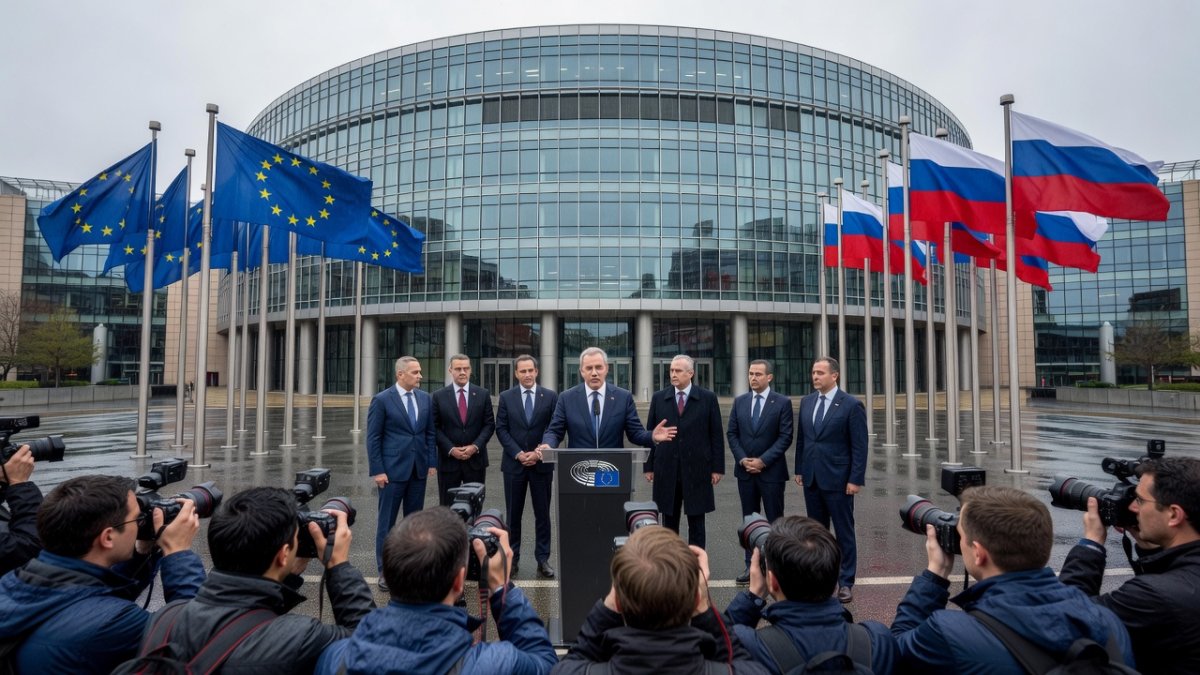
The EU Package The European Union imposed its latest sanctions package targeting Russia's Prosecutor General Alexander Gutsan and dozens of associated individuals and entities. This move directly addresses support for the ongoing military campaign in Ukraine and involvement in the 2024 death of Alexei Navalny. Gutsan heads an institution that coordinates prosecutions across the
The EU Package
The European Union imposed its latest sanctions package targeting Russia's Prosecutor General Alexander Gutsan and dozens of associated individuals and entities. This move directly addresses support for the ongoing military campaign in Ukraine and involvement in the 2024 death of Alexei Navalny. Gutsan heads an institution that coordinates prosecutions across the Russian Federation, ensuring alignment with directives from the presidential administration in the Kremlin. His office maintains oversight of cases involving state security and political dissent, operating within the centralized power structure that consolidates authority under President Vladimir Putin.
Additional designations include Metropolitan Tikhon of Simferopol and Crimea, widely regarded as a close spiritual advisor to Putin, along with Supreme Court Justice Oleg Nefedov and multiple FSB officers. These selections reflect the EU's focus on key nodes in Russia's legal and security apparatus. The Prosecutor General's role extends to supervising regional prosecutors who enforce federal policies, creating direct lines of accountability to Moscow. Institutional ties bind this office to the Security Council and the presidential executive office, where decisions on high-profile cases receive final approval.
By sanctioning these figures, the EU aims to disrupt operational continuity in Russia's domestic repression mechanisms. The package also incorporates entities from multiple jurisdictions involved in broader evasion networks. Official EU statements frame these actions as responses to documented patterns of persecution and wartime facilitation, though Russian authorities consistently reject such characterizations as politically motivated interference in sovereign affairs.
Targeting Navalny Figures
The sanctions specifically address individuals linked to the persecution, poisoning, and death of Alexei Navalny in 2024. FSB officers named in the package have documented histories within Russia's internal security services, where specialized units monitor opposition figures through surveillance and legal proceedings. Navalny's case involved repeated detentions coordinated through the Prosecutor General's office and executed by FSB operatives, illustrating the integrated nature of Russia's law enforcement vertical under Kremlin direction.
Metropolitan Tikhon, positioned as Putin's personal confessor, represents the intersection of state power and the Russian Orthodox Church. His designation highlights how religious institutions in Russia often align with official narratives on national security and foreign policy. Supreme Court Justice Oleg Nefedov participates in judicial reviews that uphold convictions against critics, reinforcing the legal framework that sustains political control. These connections trace back to the presidential administration, where appointments to senior judicial and security posts require direct approval from the Kremlin.
Russian institutional practices place the FSB at the center of operations against perceived threats, with the Prosecutor General providing the necessary legal instruments. The EU's targeting of these networks seeks to impose personal costs on officials embedded in the power structure. Attribution of specific roles in Navalny's case remains based on EU assessments, while Russian state media presents alternative accounts emphasizing legal processes and health-related factors.
Shadow Fleet
The EU expanded restrictions on Russia's shadow fleet by sanctioning two individuals and 24 entities operating across Russia, Turkey, the United Arab Emirates, Hong Kong, Liberia, and Azerbaijan. These designations target operators facilitating the export of crude oil in violation of price caps and maritime tracking requirements. The Lukoil-Western Siberia production branch appears in the listings due to its involvement in supply chains that sustain export revenues despite Western restrictions.
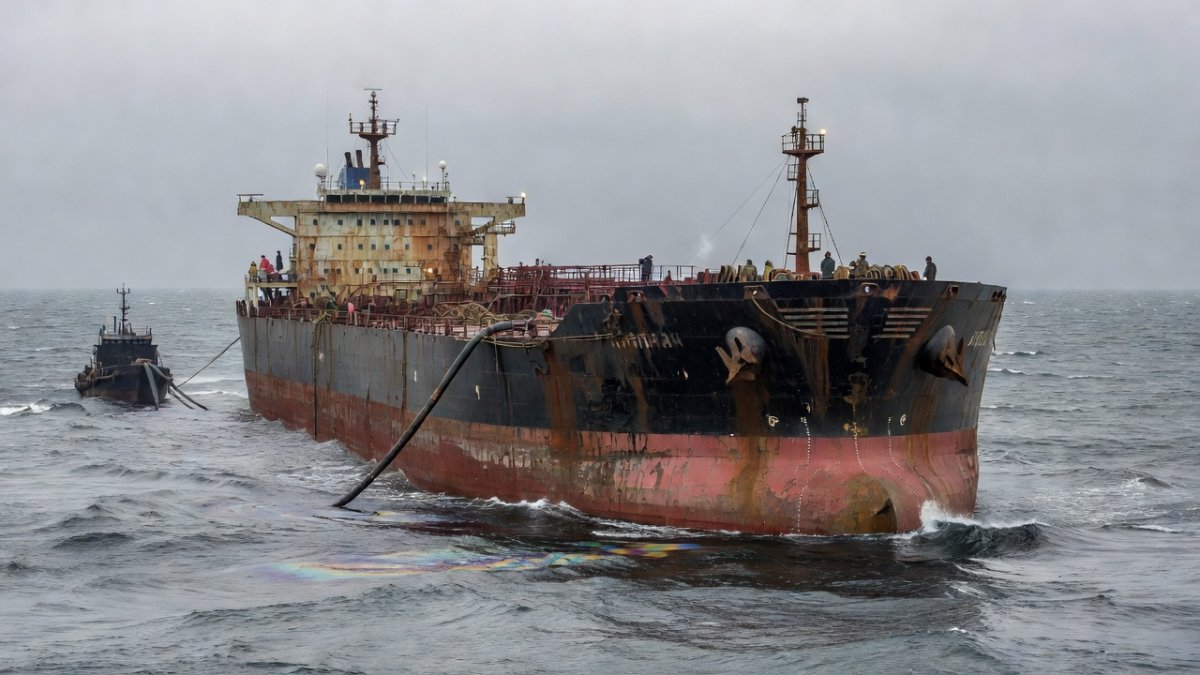
Russia's shadow fleet consists of older tankers often registered under flags of convenience and managed through layered corporate structures. These arrangements connect to state energy companies and intermediaries that maintain financial flows to the federal budget. Kremlin oversight of energy exports involves coordination between the Ministry of Energy and security services to circumvent detection, preserving hard currency earnings essential for military and domestic spending priorities.
By including entities in multiple countries, the sanctions address the transnational character of these operations. Official EU estimates link such networks to sustained oil revenues that fund state activities. Russian authorities describe these measures as attempts to undermine legitimate commercial activities, emphasizing the role of energy exports in the national economy. The package builds on prior efforts to limit fiscal resources available to the central government in Moscow.
Cultural/Surveillance
The EU sanctioned ten individuals and Russia's Presidential Foundation for Cultural Initiatives for activities described as justifying or legitimizing the full-scale invasion of Ukraine. This foundation operates under direct presidential authority, channeling resources to cultural projects that promote state-aligned historical interpretations and public messaging. Its placement within the Kremlin structure ensures alignment with broader information policies managed by the presidential administration.
Separately, the company IPJSC NTK faces restrictions for supplying facial recognition systems deployed by Russian authorities in Moscow. These technologies support monitoring of anti-war activists and Navalny supporters through integration with law enforcement databases. Russian surveillance infrastructure combines private sector capabilities with state security requirements, creating tools that enhance control over public spaces and digital communications.
Institutional links connect these cultural and technological elements to the Security Council and federal agencies responsible for domestic stability. The sanctions target both ideological support mechanisms and practical enforcement tools. EU statements attribute these designations to patterns of repression and narrative control, while Russian perspectives frame such initiatives as standard exercises of sovereignty in information and security domains.
Defense Industry
The package includes sanctions on Russian drone manufacturers, military equipment producers, and a Chinese lubricant additive company among 21 entities and seven individuals. These targets operate within Russia's defense-industrial complex, which coordinates production through state corporations reporting to the Ministry of Defense and the presidential administration. Output from these facilities directly supports ongoing military operations, with supply chains extending to component suppliers abroad.
Russian defense enterprises maintain close integration with federal planning bodies that allocate resources according to strategic priorities set in the Kremlin. Sanctions on lubricant additives highlight dependencies on specialized imports that sustain equipment performance. The inclusion of Chinese entities reflects the international dimensions of these networks, where alternative suppliers help mitigate the effects of earlier restrictions.
By striking at production nodes, the EU seeks to constrain Russia's capacity to sustain military output. Official assessments link these companies to specific weapon systems deployed in Ukraine. Russian institutional responses involve efforts to localize production and develop parallel import channels, preserving operational continuity within the defense sector under centralized direction from Moscow.
Kallas/EU Strategy
EU foreign policy chief Kaja Kallas stated that the measures strike at the heart of Russia's military-industrial complex, its shadow fleet, and networks enabling hybrid activities. She estimated that cumulative Western sanctions have cost Russia up to 1.3 trillion euros, presenting these figures as evidence of progressive erosion of the war economy. Member states are advancing work on a subsequent 21st sanctions package to build on existing restrictions.
The strategy emphasizes coordinated pressure across economic, technological, and personnel dimensions. Kallas's remarks attribute the impact to systematic targeting of revenue sources and support structures. EU institutions coordinate these efforts through working groups that monitor implementation and identify new designations, drawing on intelligence from member states and partner governments.
Russian authorities counter that such estimates overstate effects and ignore adaptive measures taken by the central government. The ongoing development of further packages indicates a sustained approach aimed at maintaining pressure on key sectors. Attribution of specific economic costs remains tied to EU calculations, which Russian sources often dispute in favor of domestic assessments of resilience.
Geopolitical Analysis
The sanctions package illustrates the EU's evolving approach to constraining Russian capabilities through layered economic and personal measures. Designations across legal, security, energy, cultural, and defense domains reflect an understanding of how power consolidates in Russia's presidential system, where institutions like the Prosecutor General and FSB execute directives originating from the Kremlin. This structure enables rapid alignment of state resources with foreign policy objectives.
Connections between sanctioned entities and energy revenues underscore the fiscal foundations of Russia's international posture. Shadow fleet operations sustain export income that supports both military procurement and domestic stability programs. Cultural and surveillance tools reinforce internal cohesion, while defense industry targets aim to limit material sustainment of operations abroad.
Interpretation of long-term effects depends on assessments of Russian adaptation and the durability of international coordination. The progression toward a 21st package suggests continued institutional commitment within the EU to refine pressure points. Russian responses emphasize sovereignty and alternative partnerships, framing external sanctions as external challenges to national interests rather than decisive constraints on state functions.
By Irina Volkov, Staff Writer
This article was produced with AI-assisted research and editorial support. Reporting is based on sources cited in the article.
What's Your Reaction?
 Like
0
Like
0
 Dislike
0
Dislike
0
 Love
0
Love
0
 Funny
0
Funny
0
 Wow
0
Wow
0
 Sad
0
Sad
0
 Angry
0
Angry
0
Russia/Eastern Europe Correspondent at Global1.News. Covering Russian politics, energy, security, and the shifting dynamics of the post-Soviet space. Provides clear-eyed analysis on one of the world's most opaque regions.












Comments (0)