
Smoke in the Cockpit Forces American Eagle Jet Down in Syracuse
Smoke in the Cockpit Forces American Eagle Jet Down in Syracuse Another Sunday evening flight turned into a controlled emergency when American Airlines Flight 5907 smelled trouble right after wheels up. The Embraer ERJ-145LR, tail number N931AE, had barely left Rochester and was headed for Philadelphia when the crew picked up an unmistakable odor of fumes in the cockpit. They d
Smoke in the Cockpit Forces American Eagle Jet Down in Syracuse
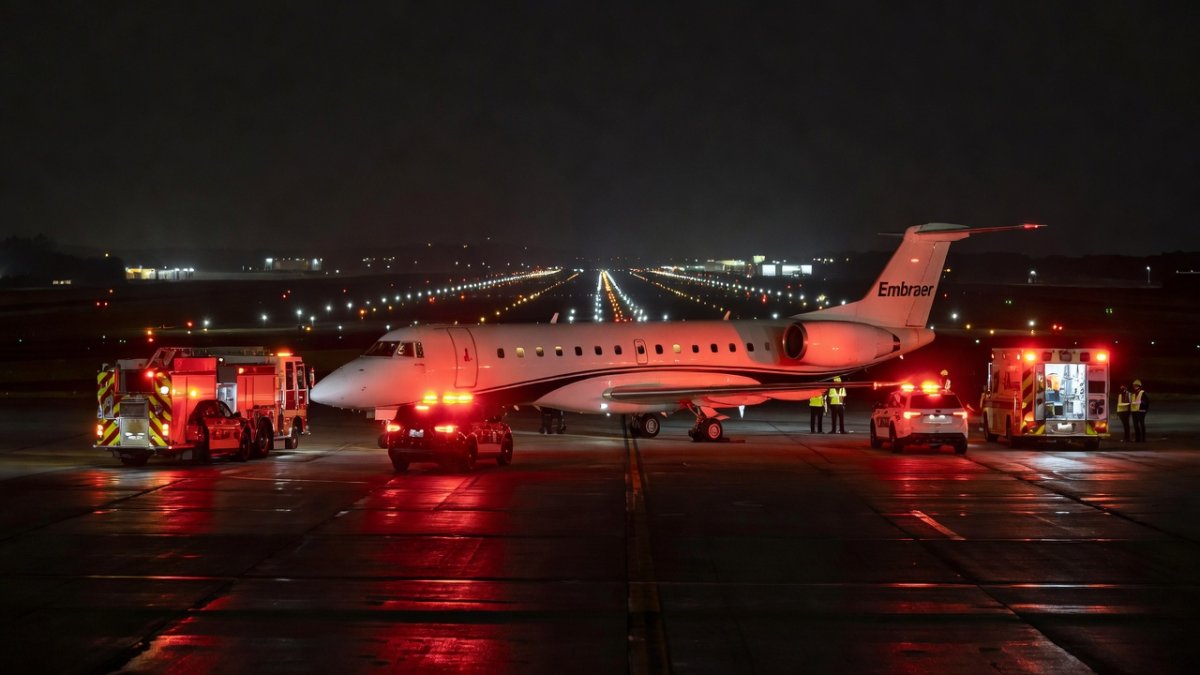
Another Sunday evening flight turned into a controlled emergency when American Airlines Flight 5907 smelled trouble right after wheels up. The Embraer ERJ-145LR, tail number N931AE, had barely left Rochester and was headed for Philadelphia when the crew picked up an unmistakable odor of fumes in the cockpit. They did what professionals do: declared the problem, turned toward Syracuse Hancock International Airport, and put the plane on the ground safe and sound around 8:00 p.m. on June 14, 2026. No one got hurt. That part is good. Everything else about these recurring regional-jet scares is getting old fast.
An Embraer ERJ-145LR similar to the one involved in the emergency landing at Syracuse. (Global 1 News)
What Exactly Happened on AA5907
The flight was operating as a standard American Eagle service from Rochester International (ROC) to Philadelphia (PHL). Shortly after departure the pilots reported the fumes. They didn’t wait for the situation to worsen. They diverted immediately to the nearest suitable airport with a long enough runway and proper emergency services—Syracuse. The aircraft touched down without incident, taxied in, and passengers deplaned normally. The Aviation Safety Network later classified the event as F-NI: Fire/Smoke – Non-Impact. That category exists because these non-crash smoke events happen more often than anyone in the industry likes to admit.
Kieran Coffey, spokesperson for the Syracuse Regional Airport Authority, confirmed the crew had reported an odor of fumes in the cockpit. That single sentence from Coffey is the only official word we have so far, and it lines up with what multiple outlets—syracuse.com, WSYR-TV on localsyr.com, and nny360.com—reported within hours. The plane sat at the gate while crews checked it over. Passengers eventually continued their journeys on other flights or ground transport. The ERJ-145LR itself stayed put for further inspection.
Why These Fume Events Keep Showing Up
Regional jets like the ERJ-145LR have been flying for decades. Many of them are pushing twenty-plus years in service. Airlines love them because they are cheap to operate on short routes, but cheap comes with trade-offs. When you run an older airframe through repeated pressurization cycles, the seals, wiring bundles, and environmental control systems start to age. A faint electrical smell or a leaking hydraulic line can turn into a cockpit full of fumes faster than most passengers realize. Flight 5907 is a textbook example: the crew caught it early, the diversion worked, and everyone walked away. That outcome is not luck; it is training. Still, the pattern is obvious. Smoke or fume events on these aircraft rarely make national headlines because they rarely become disasters, yet they happen with enough regularity that pilots treat the smell as an immediate red flag.
The broader data from the Aviation Safety Network shows F-NI events outnumber actual hull-loss accidents by a wide margin. Most are handled exactly the way this one was—quick decision, divert, land. That does not make them acceptable. It makes them a maintenance and oversight problem the flying public is forced to absorb every time a crew has to choose between continuing to the destination or landing somewhere unexpected.
What Travelers Need to Understand
If you book a regional flight on an ERJ-145 or similar type, you are trusting that the airline’s maintenance program is catching the small issues before they become airborne problems. American Airlines and its regional partners have solid safety records overall, but records are built one flight at a time. When a crew smells fumes at 8:00 p.m. on a Sunday and diverts without hesitation, that is the system working. The question is whether the same level of vigilance exists on the ground between flights. Passengers should pay attention to how carriers respond after these events. Do they treat them as routine paperwork, or do they actually dig into the root cause on that specific airframe? The difference matters the next time you are sitting behind the wing on a short hop.
Another angle worth watching is crew fatigue and decision-making. These pilots made the right call under pressure. They did not try to “press on” to Philadelphia because the destination was only an hour away. That discipline is what keeps F-NI events from becoming something worse. Airlines that reward on-time performance above all else sometimes create subtle pressure to minimize diversions. Sunday night in Syracuse showed the correct priority: get the airplane on the ground when the cockpit starts smelling like trouble.
The Investigation Moving Forward
The National Transportation Safety Board will almost certainly open a case, even though no one was injured and the aircraft landed safely. F-NI events still get reviewed because they reveal systemic issues in aircraft systems or maintenance practices. Expect the NTSB to look at the environmental control system, any recent maintenance on N931AE, and the exact sequence the crew followed once the odor appeared. The FAA will also be involved through its oversight of American’s regional operation. These reviews usually take months, and the final report will likely be quiet unless something unusual turns up. That is how the system is supposed to work—thorough, not sensational.
In the meantime, the Syracuse Regional Airport Authority handled its role without drama. Emergency crews were ready, the runway was available, and the plane parked without further incident. Credit where it is due: the airport did exactly what it is paid to do when a diversion shows up unannounced on a Sunday night.
The Bottom Line on Regional Jet Safety
Flight 5907 is not a catastrophe. It is a reminder that the small stuff—odors, faint smoke, unusual smells—still matters. The crew treated it seriously, the airport stood ready, and the passengers got home late but unharmed. That is the minimum standard we should expect every single time. If regional carriers want the public to keep trusting these older ERJ-145s on short routes, they need to show that maintenance and inspection programs are actually preventing the next fume event instead of just reacting to it after the fact. Until then, every pilot who smells something odd and diverts without apology is doing the job the rest of the system sometimes forgets.
Keep an eye on the final NTSB findings when they drop. They usually tell you more about an airline’s real priorities than any press release ever will.
By Jessica Ali, Global 1 NewsThis article was produced with AI-assisted research and editorial support. Reporting is based on sources cited in the article.
What's Your Reaction?
 Like
0
Like
0
 Dislike
0
Dislike
0
 Love
0
Love
0
 Funny
0
Funny
0
 Wow
0
Wow
0
 Sad
0
Sad
0
 Angry
0
Angry
0

Editor-in-Chief at Global1.News. Atlanta-based journalist who cuts through the BS and tells it like it is. Lead anchor, host, and the voice you hear when the spin stops and the truth starts.














Comments (0)