
Egypt Inaugurates The Octagon: Sisi Unveils Massive Strategic Command Center
Regional Framing The inauguration of Egypt’s new strategic military headquarters on July 4-5, 2026, arrives at a pivotal moment in Middle Eastern geopolitics. President Abdel Fattah al-Sisi, dressed in full military uniform, presided over the ceremony 45 kilometers east of Cairo in the New Administrative Capital. The event featured AH-64 Apache flyovers and an 11-gun salute, un
Regional Framing
The inauguration of Egypt’s new strategic military headquarters on July 4-5, 2026, arrives at a pivotal moment in Middle Eastern geopolitics. President Abdel Fattah al-Sisi, dressed in full military uniform, presided over the ceremony 45 kilometers east of Cairo in the New Administrative Capital. The event featured AH-64 Apache flyovers and an 11-gun salute, underscoring the armed forces’ central role in the country’s “New Republic” project. This development must be viewed against the backdrop of the February-June 2026 Iran war, which ended with Supreme Leader Ali Khamenei’s death on February 28 and a fragile ceasefire in April. The conflict reshaped threat perceptions across the region, prompting states to accelerate command-and-control modernization.
Egypt’s move reflects a broader trend of Gulf and North African states investing in resilient, technology-driven defense infrastructure. With annual military spending of approximately US$5-6 billion and sustained US assistance of US$1.3 billion, Cairo is positioning itself as a pivotal actor capable of managing multiple simultaneous challenges, including the Sinai insurgency, Libyan instability, the Grand Ethiopian Renaissance Dam dispute, Red Sea shipping threats, and Eastern Mediterranean energy competition.
The Octagon: Scale and Capabilities
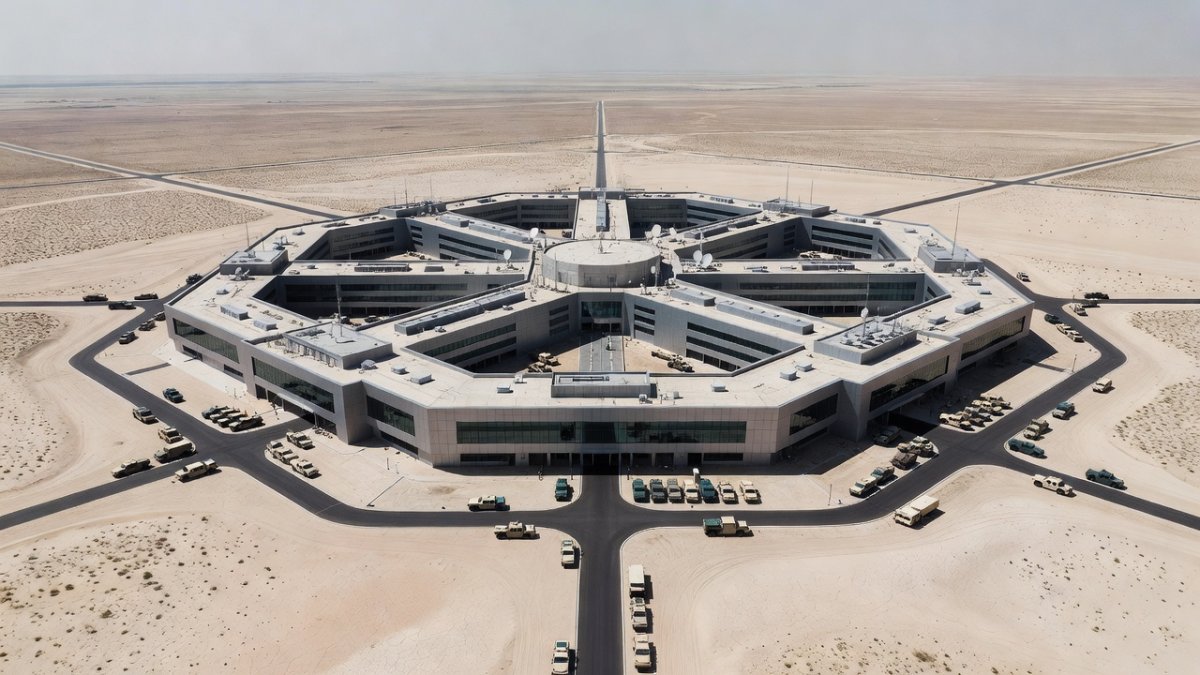
The Octagon, known in Arabic as الأوكتاجون, occupies a sprawling 22,000-acre site equivalent to roughly 89 square kilometers. Its total floor area reaches 4.7 million square meters, surpassing the Pentagon and establishing it as one of the largest integrated military complexes globally. The facility comprises 13 strategic and logistical zones designed to centralize command functions previously dispersed across multiple sites. Central to its architecture is an AI-enabled C4ISR network that fuses real-time intelligence, surveillance, reconnaissance, and kinetic decision-making across air, land, sea, and cyber domains.
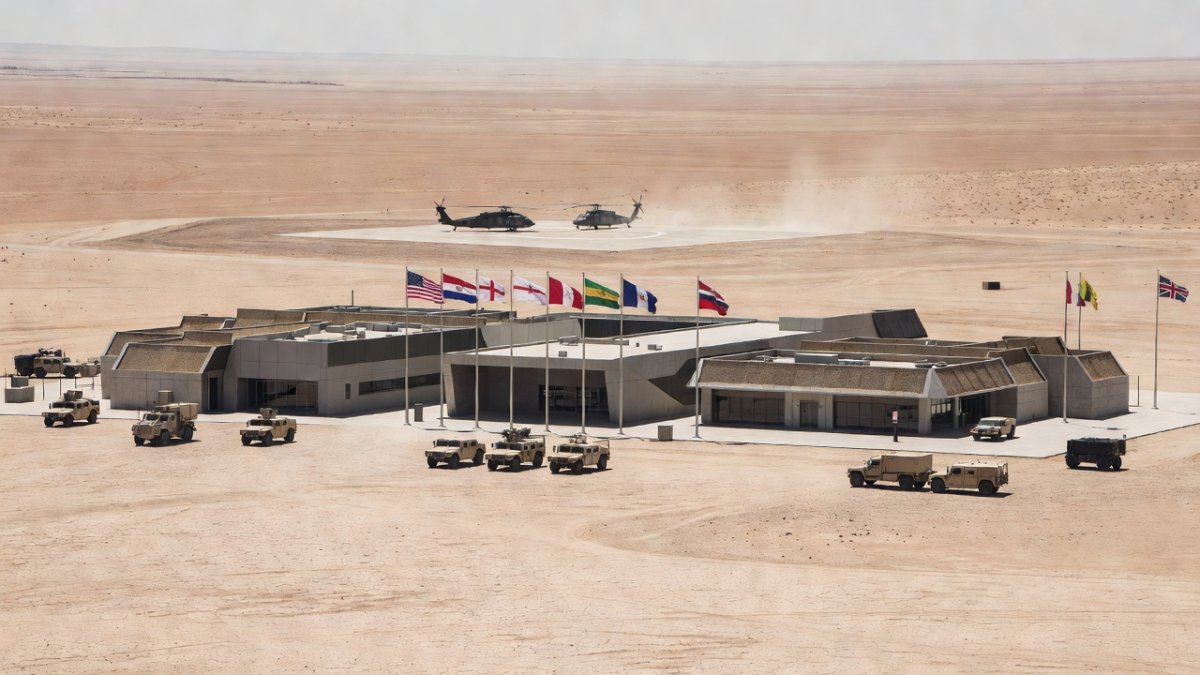
During the inauguration, Egyptian forces publicly displayed the S-300VM long-range air defense system alongside the complex, signaling an intent to create layered protection for critical national infrastructure. The scale allows for simultaneous management of operations ranging from counter-insurgency in Sinai to potential contingencies in the Red Sea and Eastern Mediterranean. This physical concentration of assets is intended to reduce response times and enhance survivability against precision strikes.
Sisi’s Strategic Vision
President Sisi has consistently framed the New Republic as a comprehensive restructuring of state institutions, with the military serving as the backbone of stability and development. The Octagon embodies this vision by merging operational headquarters with advanced logistical hubs, enabling faster mobilization and sustained power projection. Egyptian planners view the complex as essential for deterring both state and non-state actors amid shifting regional alignments following the 2026 Iran war.
The project also serves domestic political purposes. By showcasing technological sophistication and organizational efficiency, the leadership reinforces the narrative that the armed forces remain the guarantor of national sovereignty. Integration of AI-driven C4ISR systems further aligns Egypt with global trends in network-centric warfare, even as Cairo maintains its traditional partnerships with both Western and non-Western suppliers.
Post-Iran War Security Landscape
The 2026 conflict between Iran and a US-Israeli-led coalition fundamentally altered threat calculations from the Levant to the Arabian Peninsula. With Khamenei’s elimination and the subsequent ceasefire, Iranian proxy networks experienced temporary disruption, yet residual capabilities in Iraq, Syria, and Yemen continue to pose risks. Egypt, which maintained a cautious stance during the fighting, now confronts a more fluid environment where rapid command decisions are paramount.
The Octagon’s design directly addresses lessons from that war, particularly the demonstrated vulnerability of legacy command centers to saturation attacks. By consolidating 13 zones under one hardened roof with redundant AI-supported communications, Egyptian planners aim to ensure continuity of operations even under degraded conditions. This posture also prepares Cairo for potential spillover effects in Libya and the Red Sea, where Houthi remnants and other actors remain active.
Egypt’s Evolving Defense Posture
The unveiling of the S-300VM system alongside the Octagon highlights Egypt’s emphasis on integrated air and missile defense. Combined with existing Western platforms, the Russian-origin system creates a diversified sensor and interceptor network capable of addressing both cruise and ballistic threats. The C4ISR backbone allows these assets to operate within a unified battlespace picture shared across services.
Red Sea security has emerged as a priority following attacks on commercial shipping during and after the Iran war. The Octagon’s maritime operations zone is expected to coordinate with naval units at Berenice and other Red Sea bases, improving Egypt’s ability to patrol critical chokepoints. This evolution complements ongoing counter-insurgency efforts in Sinai while preparing for possible contingencies involving Ethiopia’s GERD or Eastern Mediterranean gas fields.
Regional Reactions
Israeli defense analysts responded with measured commentary, noting that the Octagon enhances Egypt’s defensive depth without immediately altering the qualitative military edge maintained under the Camp David framework. Gulf states, particularly the UAE and Saudi Arabia, have welcomed the development as contributing to collective Arab security architecture. Turkey has observed the project with caution, given ongoing differences over Libya and Eastern Mediterranean maritime boundaries.
Iranian media portrayed the inauguration as further evidence of American and Israeli influence in Cairo, though Tehran’s capacity to respond directly remains constrained by post-war recovery. Overall, regional actors appear to interpret the Octagon as a stabilizing rather than destabilizing factor, provided Egypt continues to exercise restraint in its external engagements.
Strategic Calculus
For Egypt, the Octagon delivers tangible gains in operational resilience and decision speed. The concentration of C4ISR functions reduces inter-service friction and supports joint operations across multiple theaters. Second-order effects include strengthened leverage in negotiations over Nile waters and Red Sea security arrangements. US military aid continues to underwrite key capabilities, while diversified procurement from Russia and others provides strategic autonomy.
Neighboring states gain from a more capable Egyptian partner that can share intelligence and potentially contribute to multinational task forces. However, the sheer scale of the facility may prompt hedging behavior, particularly from Ankara and Tehran, as they recalibrate their own force postures in the post-2026 environment.
Regional Implications
Looking ahead, The Octagon is likely to influence the trajectory of Middle Eastern military modernization for years to come. Its successful integration of AI-enabled command systems could accelerate similar investments by other regional powers. At the same time, the facility underscores Egypt’s determination to remain a central pillar of Arab security rather than a peripheral actor.
Whether this infrastructure ultimately contributes to greater stability or fuels new arms dynamics will depend on how Cairo employs its enhanced capabilities. The measured regional reactions thus far suggest cautious acceptance, yet sustained diplomatic engagement remains essential to prevent miscalculation. As the New Republic project advances, Egypt’s military headquarters stands as both symbol and instrument of a state seeking to navigate an increasingly complex strategic landscape.
By Malik Hassan, Staff WriterThis article was produced with AI-assisted research and editorial support. Reporting is based on sources cited in the article.
What's Your Reaction?
 Like
0
Like
0
 Dislike
0
Dislike
0
 Love
0
Love
0
 Funny
0
Funny
0
 Wow
0
Wow
0
 Sad
0
Sad
0
 Angry
0
Angry
0

Middle East Correspondent at Global1.News. Based in Beirut, covering politics, conflict, energy, and society across the Middle East. Brings context and depth to a region often reduced to headlines.














Comments (0)