
A Doctor Restoring Life to Yazidi Women Survivors of Islamic State
Shireen's Capture from Sinjar in August 2014 Shireen was studying for a high school examination at her home in Sinjar on 3 August 2014 when Islamic State group militants broke in and kidnapped her. At the age of 19 she was taken from her family and community during the coordinated assault on the Yazidi population in the Sinjar region. This event formed part of a larger pattern
Shireen's Capture from Sinjar in August 2014
Shireen was studying for a high school examination at her home in Sinjar on 3 August 2014 when Islamic State group militants broke in and kidnapped her. At the age of 19 she was taken from her family and community during the coordinated assault on the Yazidi population in the Sinjar region. This event formed part of a larger pattern of violence that targeted Yazidi civilians without distinction and led to widespread displacement and loss.
The militants seized Shireen along with thousands of others in the initial wave of attacks that began that day. She was removed from her home and transported away from Sinjar under conditions of extreme coercion. The date of 3 August 2014 remains a marker of the systematic campaign against Yazidi families that unfolded across the area.
Following her abduction Shireen was sold as a sex slave to an Islamic State militant in Tal Afar and later resold to Abu Omar in Mosul where she was subjected to forced conversion. These transfers occurred rapidly after her capture and placed her under the control of different captors in succession. The sequence of events illustrates the organized nature of the trafficking that accompanied the Sinjar assault.
Life in Captivity Under Abu Omar in Mosul
Shireen spent more than two years confined to the house of Abu Omar in Mosul and was not permitted to leave at any time. During this period she endured repeated sexual violence including rape that she later described as destroying her life despite any claims of affection from her captor. The conditions of isolation prevented any contact with the outside world or with her remaining family members.
Two other Yazidi girls aged 6 and 10 were also brought to the same house while Shireen was held there. Their presence added to the atmosphere of control and fear that defined daily existence under Abu Omar. Shireen witnessed the impact of captivity on these younger girls who had likewise been separated from their families during the 2014 attacks.
The forced conversion imposed after her resale to Abu Omar formed an additional layer of coercion that compounded the physical and psychological harm. Throughout the more than two years of confinement Shireen had no opportunity to escape or communicate with relatives. The combination of sexual violence and total restriction of movement left lasting effects that required extensive support after her eventual release.
Liberation in 2016 and the Loss of Family Members
In 2016 Iraqi forces freed Shireen during the military campaign to retake Mosul from Islamic State control. The liberation ended her immediate captivity but did not restore the life she had known before 3 August 2014. Upon release she learned that her uncle and many friends had been killed during the original Sinjar attacks and subsequent violence.
Shireen's father and one sister remain missing to this day with no confirmed information about their whereabouts or fate. The uncertainty surrounding their status continues to affect her recovery and daily life. Many other Yazidi families experienced similar losses during the same period of conflict and displacement.
The trauma resulting from more than two years of captivity and the news of family deaths required immediate medical and emotional attention after liberation. Shireen returned to a changed community where survivors faced the challenge of rebuilding amid ongoing uncertainty about missing relatives. The scale of individual and collective loss shaped the needs of those who had been held by Islamic State militants.
Shireen's First Encounter with Dr Nagham Nawzat
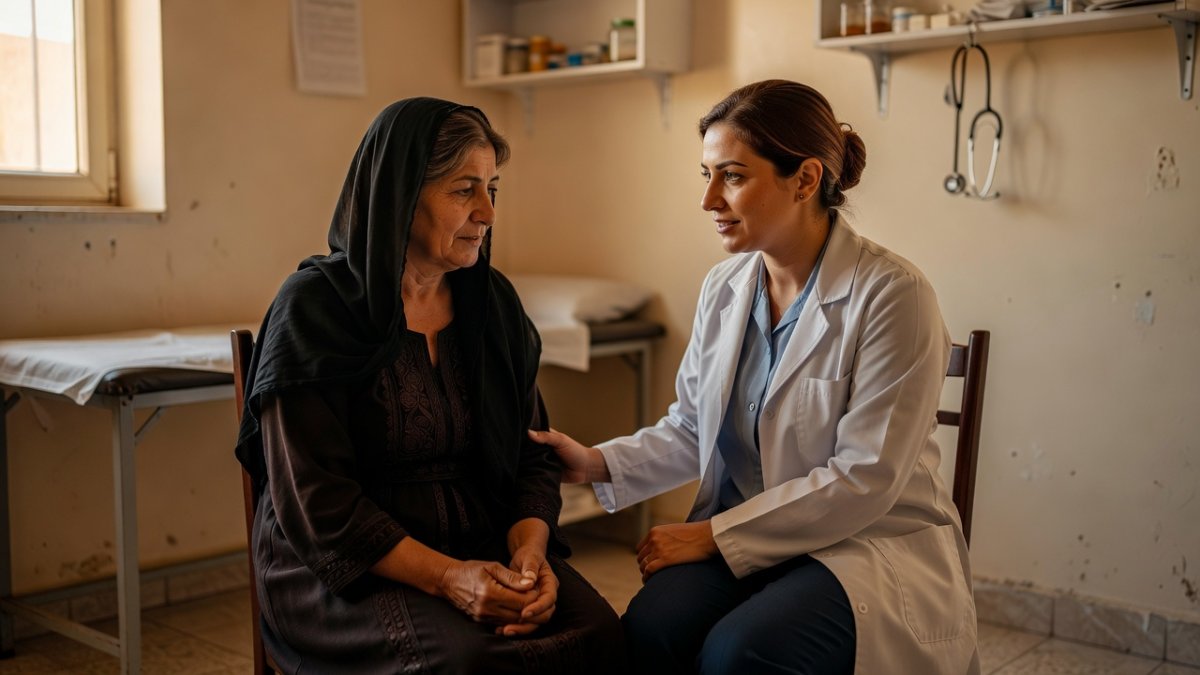
After her release Shireen received treatment from Dr Nagham Nawzat a Yazidi gynaecologist based in Duhok who provided both medical care and emotional support. The initial physical check-up quickly developed into a longer relationship in which Shireen could discuss her experiences without judgment. Shireen has stated that without this help she would not be here today.
Dr Nawzat met Shireen at a time when many survivors were arriving in the Kurdistan Region of Iraq seeking assistance. The gynaecologist combined clinical examination with attentive listening that allowed survivors to share details of their captivity at their own pace. This approach addressed both the physical consequences of sexual violence and the emotional isolation that followed liberation.
Shireen benefited from the consistent presence of Dr Nawzat during the early months after 2016. The support extended beyond a single consultation and helped Shireen navigate the practical and psychological challenges of reintegration. Many other women who had been held in Mosul and other locations received similar care from the same physician.
Background of Dr Nagham Nawzat as a Yazidi Physician
Dr Nagham Nawzat was born in Mosul in 1976 and graduated from Mosul Medical College in 2002. Her medical training equipped her to address the specific health needs of women who had survived sexual violence and captivity. As a Yazidi gynaecologist she brought both professional expertise and community understanding to her work with survivors.
After completing her studies Dr Nawzat practiced medicine in a region that later experienced the 2014 attacks on Yazidi communities. Her decision to focus on gender-based violence emerged directly from the needs that arose following the Sinjar events. By 2015 she had joined the Duhok Survivors' Centre where she began treating women who had been liberated from Islamic State control.
The combination of her Mosul origins and her Yazidi identity allowed Dr Nawzat to connect with survivors on multiple levels. She understood the cultural context of the families affected by the 2014 campaign and the medical requirements that followed prolonged sexual exploitation. This background informed every aspect of her clinical practice at the centre.
The Recognized Scale of Violence Against Yazidis
The United Nations has described the actions of Islamic State against Yazidis as an ongoing genocide. This designation reflects the systematic nature of killings kidnappings and sexual violence that began in August 2014 and continued in subsequent years. International recognition of the genocide has shaped humanitarian responses and legal efforts to document the crimes.
At least 12,000 Yazidis were killed or kidnapped during the 2014 Sinjar attack alone. The figure encompasses both those who died in the initial assault and those who were taken captive and subjected to trafficking. Many of the kidnapped individuals were women and girls who were later sold and resold within Islamic State networks.
The genocide designation and the casualty numbers underscore the breadth of the harm inflicted on the Yazidi population. Survivors such as Shireen represent only a portion of those directly affected by the coordinated campaign. The ongoing status of the genocide classification indicates that accountability and support measures remain necessary long after the military defeat of Islamic State in Iraq.
Establishment of the Duhok Survivors' Centre
The Duhok Survivors' Centre opened in 2015 with funding from the United Nations Population Fund and stands as the only facility in Iraq that specializes in gender-based violence. It was created to meet the medical and psychological needs of women and girls who had been held by Islamic State militants. The centre operates under the Kurdistan Regional Government and provides services that are not available elsewhere in the country.
Director Hussein al-Qaidi of the KRG Kidnapped Affairs office in Duhok has tracked the numbers of liberated women and coordinated aspects of their return. By July 2018 a total of 2,023 Yazidi women had been liberated from Islamic State captivity according to his records. The centre in Duhok became the primary location where these women could receive specialized care upon arrival in the region.
The UNFPA funding ensured that the facility could maintain a focus on sexual and reproductive health alongside trauma support. Staff members including Dr Nagham Nawzat developed protocols tailored to the experiences of survivors who had spent extended periods in captivity. The centre's unique status in Iraq has made it a central point for both treatment and documentation of the violence endured by Yazidi women.
Dr Nawzat's Record of Service and International Recognition
Dr Nagham Nawzat has helped approximately 1,200 of the 2,023 Yazidi women liberated from Islamic State as of July 2018. Her caseload at the Duhok Survivors' Centre reflects the high demand for specialized gynaecological and trauma care among survivors. Each case required attention to both immediate health concerns and longer-term emotional recovery.
In March 2016 Dr Nawzat received the International Women of Courage Award from United States Secretary of State John Kerry. The award acknowledged her work with survivors of sexual violence in the aftermath of the Sinjar attacks. It highlighted the role of local medical professionals in addressing the consequences of the genocide against Yazidis.
The scale of Dr Nawzat's contribution demonstrates the sustained effort required to support women who had been trafficked and held for years. Her consistent presence at the centre allowed her to treat a significant proportion of the liberated women who arrived in Duhok. The international recognition served to draw attention to the ongoing needs of survivors beyond the initial period of liberation.
Dr Nawzat's Post-Traumatic Medical Protocol
Dr Nagham Nawzat follows a post-traumatic medical approach that begins with a physical check-up and then moves to listening. This sequence allows her to address immediate health issues before inviting survivors to share their experiences. The method has been applied consistently to the women who arrive at the Duhok Survivors' Centre.
She offers support in the manner of a big sister the survivors can confide in. This relational style creates an environment in which women feel safe to discuss details of captivity that they might otherwise withhold. The combination of clinical care and personal engagement has proven effective for many patients including Shireen.
The protocol developed at the centre responds directly to the specific forms of violence experienced by Yazidi women between 2014 and 2016. By integrating physical examination with attentive listening Dr Nawzat has been able to identify both visible injuries and hidden psychological effects. The approach continues to guide treatment for new arrivals at the facility.
Addressing Gender-Based Violence in Ongoing Conflict
Gender-based violence in conflict settings requires specialized medical facilities that can respond to both physical and emotional harm. The Duhok Survivors' Centre provides one model for such care by combining gynaecological services with trauma-informed listening. Survivors like Shireen illustrate the necessity of sustained support long after military operations conclude.
What survivors need includes consistent access to physicians who understand the context of captivity and trafficking. Dr Nawzat's work demonstrates that medical treatment alone is insufficient without an accompanying relationship of trust. The centre's status as the only facility of its kind in Iraq highlights gaps that remain in national health systems.
Continued attention to the needs of liberated women must account for missing family members and the uncertainty that persists years after 2016. The experiences of the 2,023 women documented by Hussein al-Qaidi show that recovery involves addressing both individual trauma and collective loss. Facilities such as the Duhok Survivors' Centre remain essential for meeting these requirements in the aftermath of the recognized genocide against Yazidis.
By Fatima Al-Rashid, Staff WriterThis article was produced with AI-assisted research and editorial support. Reporting is based on sources cited in the article.
What's Your Reaction?
 Like
0
Like
0
 Dislike
0
Dislike
0
 Love
0
Love
0
 Funny
0
Funny
0
 Wow
0
Wow
0
 Sad
0
Sad
0
 Angry
0
Angry
0

Middle East Correspondent at Global1.News. Based in Beirut, covering politics, conflict, energy, and society across the Middle East. Brings context and depth to a region often reduced to headlines.









Comments (0)