
Yemen Airstrike Escalates US-Iran Proxy Conflict in 2026
Yemen’s latest airstrike on Sana’a International Airport runway forms part of the widening US-Iran proxy confrontation that now stretches from the Red Sea to the Strait of Hormuz. The operation by the Yemeni Air Force, acting under the Presidential Leadership Council, directly targeted Iranian attempts to resupply Ansar Allah (Houthis) forces controlling the capital since 2014.
Yemeni Airstrike on Sana’a Airport Runway Signals New Phase in US-Iran Shadow War Sana'a, Yemen — July 13, 2026
The Airstrike
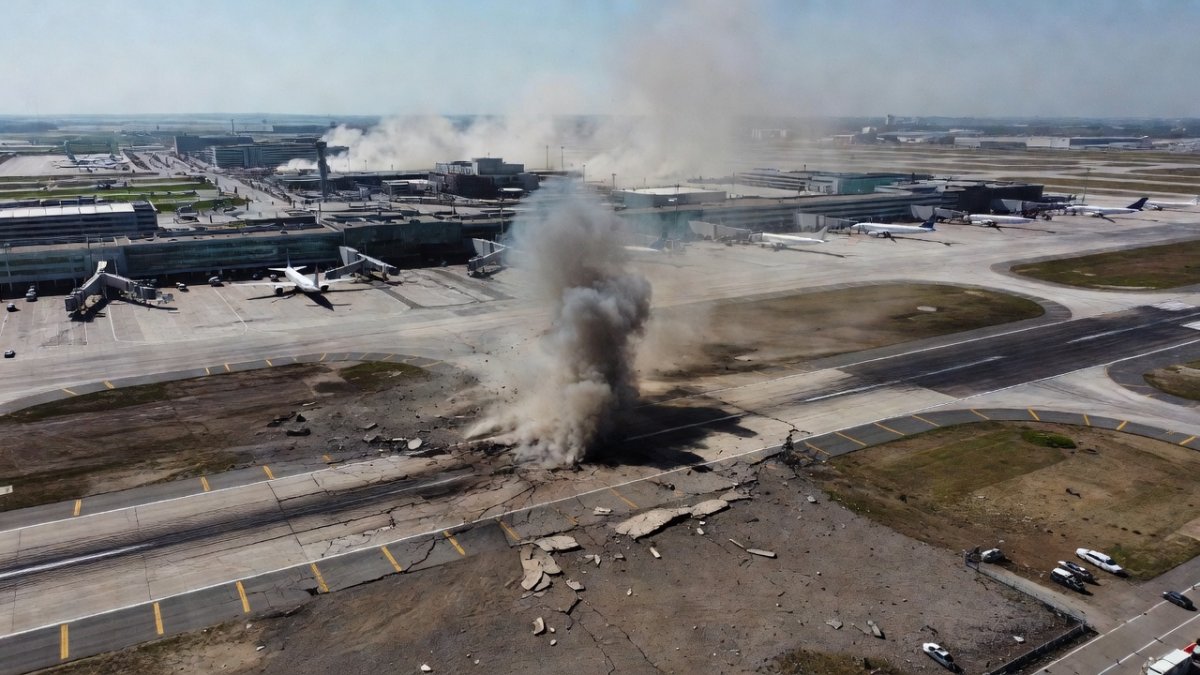
Yemeni Air Force jets conducted a precision strike on the main runway of Sana’a International Airport on July 13, 2026, creating visible columns of smoke and rendering the facility unusable for large aircraft. The timing was deliberate: intelligence indicated an Iranian cargo plane was preparing to land with advanced weapons components for Ansar Allah. The strike cratered the runway surface without reported civilian casualties, demonstrating improved targeting capabilities developed through cooperation with regional partners. Presidential Leadership Council officials confirmed the operation prevented the delivery of drone parts and ballistic missile guidance systems previously traced to Iranian suppliers.
Defense Minister's Warning
Defense Minister Taher al-Aqili issued a blunt statement hours after the strike, declaring that government forces would intercept any further aircraft violating Yemeni airspace. “Our patience has run out,” al-Aqili stated, noting that repeated Iranian and Houthi violations had exhausted all prior diplomatic avenues. He emphasized that the government had pursued legal and diplomatic channels through the United Nations and Arab League partners before resorting to force. Al-Aqili’s remarks positioned the airstrike as a defensive measure rather than an escalation, while signaling readiness for additional intercepts if Iranian flights resume.
Iran's Dual Track
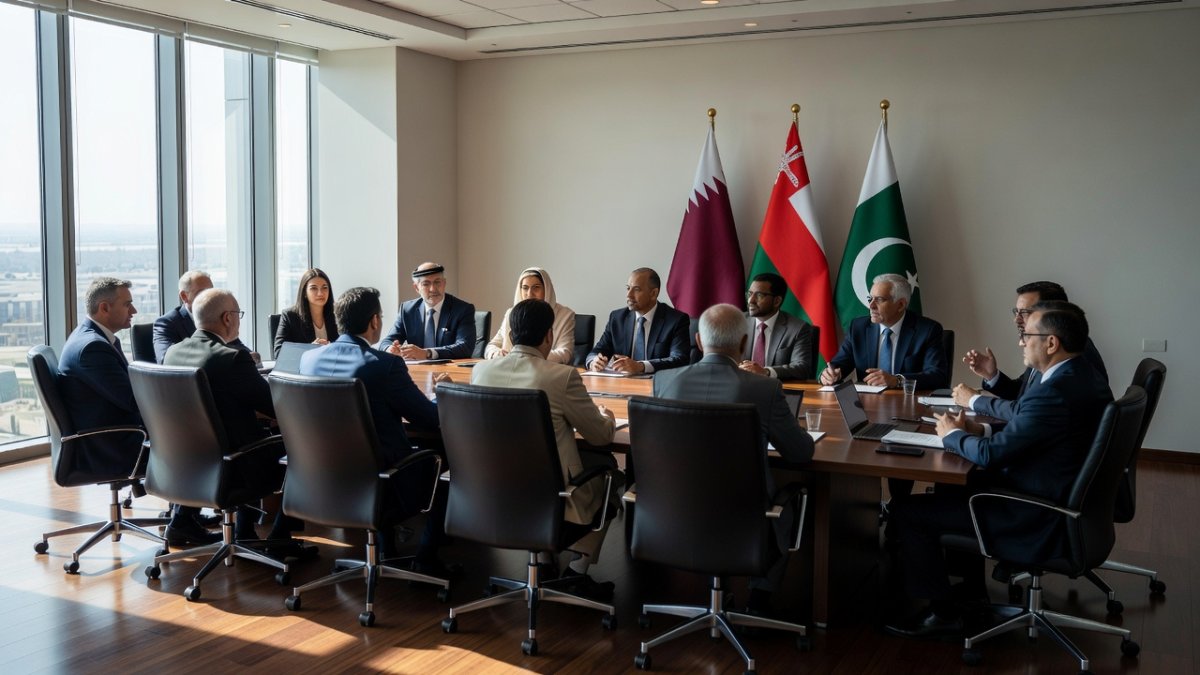
Tehran simultaneously pursued military resupply to the Houthis and diplomatic outreach. Iranian Foreign Ministry spokesperson Esmaeil Baqaei confirmed ongoing contacts with mediators from Qatar, Pakistan, and Oman aimed at de-escalating the broader US-Iran confrontation. At the same time, Iran continued supplying Ansar Allah with drones, ballistic missiles, and advanced technology, sustaining the group’s ability to threaten Red Sea shipping lanes. This dual-track approach allows Iran to maintain leverage through proxies while testing whether mediation can extract concessions from Washington.
The US-Iran War Context
US CENTCOM released footage of its latest wave of strikes inside Iran, employing precision munitions, one-way attack aerial drones, and—for the first time—sea drones targeting coastal and maritime sites. The operation hit dozens of facilities linked to Iranian weapons production and command nodes. These strikes mark a qualitative shift in the conflict, extending US reach into Iranian territorial waters and demonstrating new unmanned systems that complicate Tehran’s defensive calculations. The timing overlapped with the Yemeni runway strike, underscoring the synchronized nature of the proxy confrontation.
Historical Background
Ansar Allah seized Sana’a in 2014, triggering Yemen’s civil war. A Saudi-led coalition intervened in 2015 to restore the internationally recognized government. A UN-brokered truce reached in 2022 has largely held on the battlefield, yet the formal peace process remains stalled. Throughout this period, Iran has provided the Houthis with increasingly sophisticated weapons, enabling attacks on Saudi territory and, more recently, commercial shipping in the Red Sea. The July 13 runway strike represents the first time Yemeni government forces have directly disrupted Iranian aerial logistics inside the capital.
The roots of the current impasse trace back further. The 2011 Gulf Cooperation Council initiative sought to manage the transition from President Ali Abdullah Saleh, yet the 2013-2014 National Dialogue Conference collapsed amid Houthi objections to federal power-sharing formulas. UN Security Council Resolution 2216, adopted in April 2015, imposed an arms embargo on Ansar Allah and demanded withdrawal from seized territory; subsequent resolutions 2451 (2018) and 2452 (2019) endorsed the Stockholm Agreement’s Hodeidah ceasefire and prisoner-exchange mechanisms. Multiple rounds of UN-led talks in Geneva, Kuwait, and Stockholm between 2016 and 2019 produced only partial implementation, while the 2022 nationwide truce—brokered under UN Special Envoy Hans Grundberg—froze front lines without addressing political power distribution or Iranian resupply routes.
Iranian Regional Strategy
Iran’s support for Ansar Allah fits within a broader network that includes Hezbollah in Lebanon, Iraqi Shia militias, and Hamas in Gaza. This “axis of resistance” allows Tehran to project power asymmetrically while avoiding direct conventional confrontation with the United States. By arming the Houthis, Iran gains a foothold on the Bab al-Mandab Strait, threatening energy transit routes that carry roughly 12 percent of global trade. The strategy imposes costs on US allies without requiring Iranian troops on foreign soil.
Additional nodes include the Popular Mobilization Forces in Iraq, which have received Iranian-supplied Fateh-110 and Zolfaghar ballistic missiles, and select Palestinian Islamic Jihad units equipped with Iranian-designed Fajr-5 rockets. In Yemen itself, Ansar Allah now fields Shahed-136 loitering munitions, Quds-1 cruise missiles, and Toophan anti-tank guided missiles—all reverse-engineered or directly transferred from Iranian production lines. These capabilities have enabled sustained attacks on commercial vessels, driving Brent crude prices above $87 per barrel in June 2026 and prompting the International Maritime Bureau to record a 340 percent increase in Red Sea incidents since late 2023. Meanwhile, Gulf sovereign wealth funds—Saudi Arabia’s Public Investment Fund at approximately $925 billion and the UAE’s Mubadala at $330 billion—have redirected portions of their portfolios toward domestic security infrastructure rather than outward diversification.
Mediation and Diplomatic Calculus
Qatar, Oman, and Pakistan have emerged as key intermediaries. Qatar maintains channels with both Tehran and Washington through its role hosting US military assets and facilitating past prisoner exchanges. Oman’s geographic position along the Strait of Hormuz gives it unique leverage in maritime de-escalation talks. Pakistan’s involvement reflects its interest in preventing wider Sunni-Shia confrontation that could destabilize its own borders. Esmaeil Baqaei indicated Iran will no longer honor a memorandum of understanding with the US unless Washington fulfills commitments to end active hostilities. These mediation efforts remain fragile given the kinetic developments on the ground.
Qatar’s mediation pedigree includes the 2020 US-Iran prisoner swap that freed dual nationals and the 2023 facilitation of Houthi-Saudi talks in Muscat; Doha’s $1.8 billion annual budget for Al Udeid Air Base underscores its dual utility as both US partner and Iranian interlocutor. Oman, which hosted the secret 2013-2015 nuclear talks that produced the JCPOA, has repeatedly conveyed messages between Washington and Tehran since 2019, leveraging its 1,200-kilometer coastline and historic neutrality to propose maritime confidence-building measures such as joint search-and-rescue protocols in the Strait of Hormuz. Pakistan, having mediated the 1997-1998 Iran-Saudi rapprochement and maintained intelligence-sharing ties with both Riyadh and Tehran, dispatched Foreign Minister Bilawal Bhutto Zardari to Muscat in May 2026 to explore a limited de-escalation framework tied to verifiable Iranian export controls on drone components. Iranian officials have conditioned any renewal of the 2023 memorandum of understanding on concrete US steps to lift secondary sanctions affecting oil exports, a demand that directly collides with ongoing CENTCOM operations.
Regional Implications
The runway strike and CENTCOM operations carry immediate consequences for Red Sea shipping, Gulf energy markets, and Arab-Israeli normalization. Insurance premiums for vessels transiting near Yemen have risen sharply, adding pressure on global supply chains already strained by prior Houthi attacks. Gulf states pursuing economic diversification under Vision 2030 programs face heightened security costs. Israeli-Saudi normalization talks, already complicated by the Gaza conflict, now confront an additional layer of Iranian proxy activity. Sunni-Shia competition intensifies as Riyadh and Abu Dhabi coordinate more closely with the Presidential Leadership Council.
Forward-Looking Analysis
The events of July 13, 2026, suggest the US-Iran proxy conflict has entered a more kinetic phase in which local actors such as the Yemeni government are willing to enforce red lines previously left to international partners. Continued Iranian weapons flows risk additional airstrikes, while US sea-drone operations may prompt Iranian retaliation through additional proxy fronts. Mediation by Qatar, Oman, and Pakistan offers the only visible off-ramp, yet success depends on verifiable limits on Iranian resupply and credible US assurances regarding the memorandum of understanding. The stability of the 2022 UN truce, Red Sea commerce, and broader Gulf security now hinge on whether these diplomatic tracks can constrain escalation before the next round of strikes occurs.
 By Malik Hassan, Staff Writer
This article was produced with AI-assisted research and editorial support. Reporting is based on sources cited in the article.
What's Your Reaction?
 Like
0
Like
0
 Dislike
0
Dislike
0
 Love
0
Love
0
 Funny
0
Funny
0
 Wow
0
Wow
0
 Sad
0
Sad
0
 Angry
0
Angry
0

Middle East Correspondent at Global1.News. Based in Beirut, covering politics, conflict, energy, and society across the Middle East. Brings context and depth to a region often reduced to headlines.










Comments (0)