
Cuba Solar Surge with China Amid US Sanctions Impacts Mexico
In a recent DW News report titled “An unlikely solar alliance,” the world got a closer look at one of the fastest renewable energy transitions happening anywhere on the planet — and it is unfolding in Cuba, just 90 miles from Mexico’s Yucatán Peninsula. Facing a near-total cutoff of oil supplies under intensified US sanctions, Cuba has turned to a
In a recent DW News report titled “An unlikely solar alliance,” the world got a closer look at one of the fastest renewable energy transitions happening anywhere on the planet — and it is unfolding in Cuba, just 90 miles from Mexico’s Yucatán Peninsula.
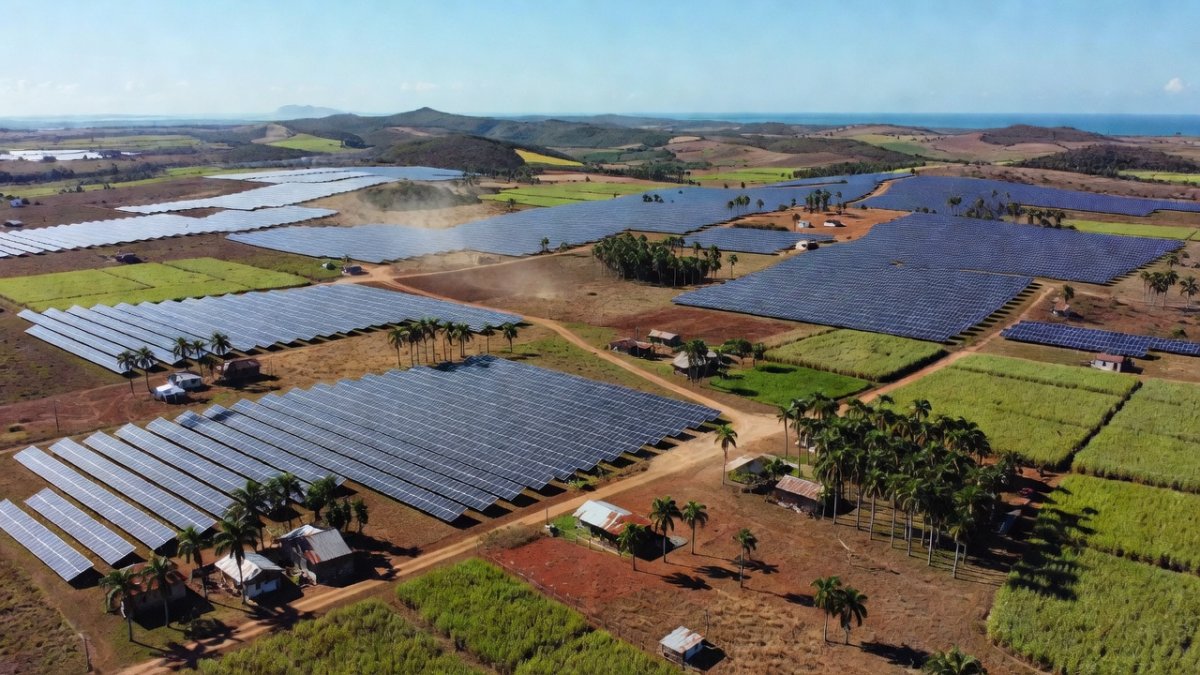
Facing a near-total cutoff of oil supplies under intensified US sanctions, Cuba has turned to an unlikely partner — China — to build 49 new solar parks that have tripled the island’s solar generation from 5.8 percent to over 20 percent in just 12 months, according to data from the energy think tank Ember.
Cuba’s Solar Revolution: How China Is Powering the Island Through the US Oil Blockade
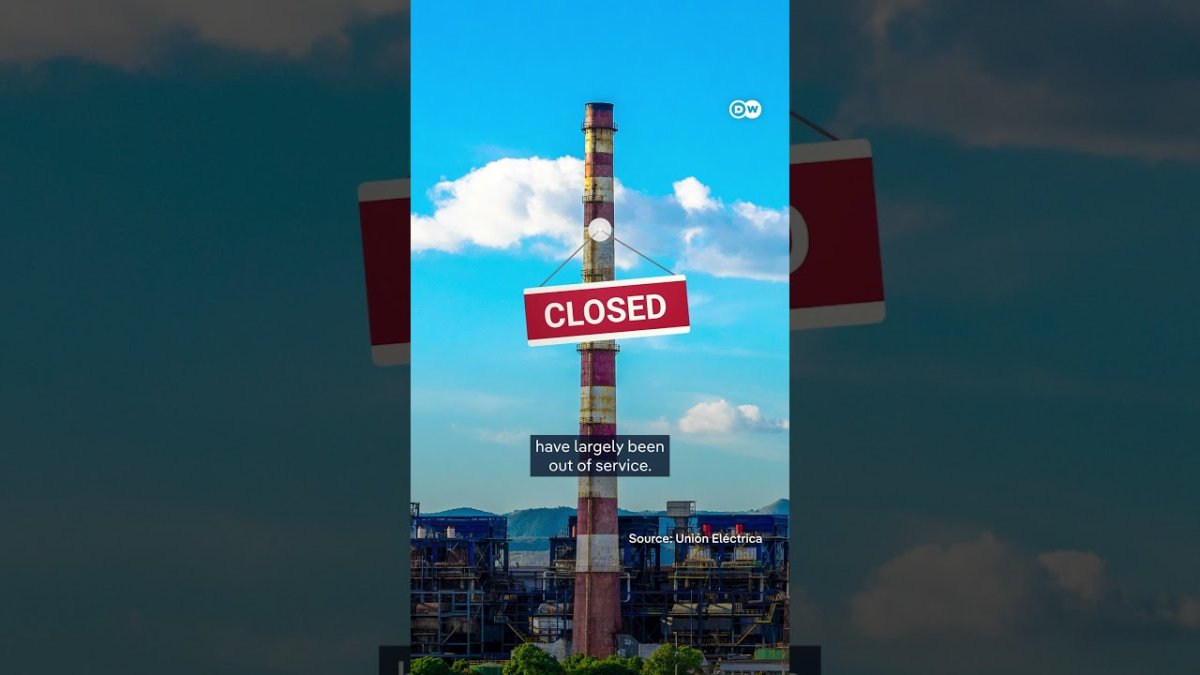
Havana, Cuba — July 2026 — Cuba’s energy crisis deepened dramatically after a January 2026 executive order effectively blocked fuel shipments, cutting supplies by approximately 90 percent. With aging Soviet-era oil plants managed by Unión Eléctrica frequently breaking down, daily blackouts of 8 to 12 hours became the norm. But rather than capitulate, President Miguel Díaz-Canel’s administration accelerated a pivot to solar energy — and China was ready to help.
US Sanctions Cut 90 Percent of Fuel Supplies
The Trump administration’s January 2026 executive order intensified the long-standing US blockade, effectively cutting off Cuba’s access to fuel imports from traditional suppliers. Ships carrying oil simply stopped arriving at the ports of Havana and Santiago de Cuba.
The result was immediate and devastating. Unión Eléctrica, the state power utility, began implementing rotating blackouts that disrupted every aspect of daily life — hospitals running on generators, water pumps failing in apartment buildings, food spoiling in refrigerators across the island. For Cuba’s 11 million residents, the energy crisis became the defining challenge of 2026.
Under the Helms-Burton Act and subsequent executive actions, the US has maintained one of the most comprehensive economic embargoes in modern history. But the Trump administration’s decision to penalize third countries for supplying fuel to Cuba represented a significant escalation, turning the screws on an already struggling economy.
Human Cost Hits Hospitals, Families, and Daily Life in Cuban Colonias
The blackouts have not been an inconvenience — they have been a crisis of survival. In Havana’s Centro Habana colonias, families gather on rooftops at night to escape the heat of apartments without air conditioning or fans. In Santiago de Cuba, mothers struggle to refrigerate insulin and other medicines for children with chronic conditions.
Hospitals have been forced to rely on aging diesel generators, burning precious fuel reserves to keep operating rooms lit and ventilators running. Teachers in eastern provinces report canceled classes when water pumps fail to deliver supply. Campesinos in rural areas watch harvests rot without reliable cooling storage.
The crisis has hit low-income households hardest. Those who can afford it buy solar panels on the black market or install small Chinese inverters to keep a single fan and refrigerator running. For most, however, the blackouts are a daily struggle with no end in sight unless the solar transition accelerates fast enough.
China Supplies 49 Solar Parks as Cuba Eyes 2,000 MW by 2028
China has emerged as Cuba’s energy lifeline. Through a combination of government-backed loans, technical assistance, and direct equipment supply, Chinese companies have installed 49 solar parks across the island since early 2025 — connecting both large utility-scale arrays and small distributed systems for remote communities.
The scale is remarkable. Data from Ember shows Cuba’s solar share jumped from 5.8 percent to over 20 percent in a single year — one of the fastest renewable transitions ever recorded in a developing country. The goal is 92 solar farms by 2028, targeting 2,000 megawatts of capacity under the Unión Eléctrica grid expansion plan.
Chinese panels, inverters, and battery storage systems now dot the Cuban landscape from Pinar del Río in the west to Guantánamo in the east. The partnership carries unmistakable geopolitical weight, extending Beijing’s soft power influence across the Caribbean at a moment when US policy continues to isolate Havana.
Yucatán Families Watch Closely as Mexico Maintains Cuba Ties
Across the 90-mile strait that separates Cuba from Mexico’s Yucatán Peninsula, the solar revolution is being watched with keen interest. Communities in Mérida, Cancún, and Progreso maintain deep family and cultural ties to Cuba — many Yucatecan families have relatives on the island, and trade between the Yucatán and western Cuba has persisted for centuries despite political barriers.
Under President Claudia Sheinbaum’s administration, Mexico has maintained diplomatic and economic cooperation with Cuba despite US pressure to isolate the island. Mexican medical brigades continue to serve in Cuban hospitals, and PEMEX has explored technical cooperation with Cuba’s energy sector. The solar developments in Cuba offer potential lessons for Mexico’s own renewable energy push under the CFE.
For Mexican communities in the Yucatán, the Cuba story is not abstract — it is personal and immediate. The same Caribbean sun that powers Cuba’s new solar parks also beats down on Quintana Roo and Yucatán state, where solar adoption has been slower despite abundant natural resources.
Lessons for Mexico’s Energy Sovereignty and Latin American Autonomy
The Cuban experience raises a provocative question for Mexican policymakers: if a blockaded island with a struggling economy can triple its solar generation in a year, what could Mexico achieve with its vastly greater resources?
Mexico’s CFE has its own renewable energy targets, and states like Oaxaca (home to the Isthmus of Tehuantepec wind corridor) and Sonora (with its world-class solar irradiance) are natural candidates for accelerated deployment. But bureaucratic hurdles, PEMEX’s dominance, and political resistance have slowed progress.
There is also a geopolitical dimension. The Cuba-China solar partnership demonstrates how renewable energy can function as a tool of sovereignty — reducing dependence on imported fossil fuels that can be cut off by political decisions in Washington or elsewhere. For Mexico, which imports significant quantities of refined fuels from the United States, the lesson is clear: energy independence requires renewable investment, not just oil production.
Outlook for Continued Expansion and Cross-Border Cooperation
If current installation rates hold, Cuba’s solar capacity could reach the 2,000 MW goal well before 2028, further easing pressure on its oil-fired plants while deepening technical ties with Chinese firms. Each new panel installed carries direct meaning for families who have endured months of unpredictable blackouts.
For Mexican readers, the broader story is one of resilience, sovereignty, and the changing geopolitics of energy in Latin America and the Caribbean. As China expands its renewable energy footprint across the region, and as US sanctions reshape traditional alliances, Cuba’s unlikely solar revolution serves as both a warning and an inspiration for what neighbors can achieve when necessity meets opportunity.
The DW News report captures this moment with the clarity it deserves — a small island nation, blockaded and battered, finding light through an alliance that the architects of the embargo never anticipated.
By Rosa Martinez, Staff Writer
This article was produced with AI-assisted research and editorial support. Reporting is based on sources cited in the article.
What's Your Reaction?
 Like
0
Like
0
 Dislike
0
Dislike
0
 Love
0
Love
0
 Funny
0
Funny
0
 Wow
0
Wow
0
 Sad
0
Sad
0
 Angry
0
Angry
0
Latin America/Andes Correspondent at Global1.News. Based in Bogota, covering politics, environment, energy, and social movements across the Andean region. Passionate about environmental journalism and communities protecting their land.












Comments (0)