
Ebrard Counters Trump on USMCA as Peru Ties Warm
Trump’s Sharp Words Land in Mexico City Donald Trump told Fox News on July 28 that he does not care about the USMCA and claimed Mexico and Canada need the pact more than the United States. The remark reached Palacio Nacional the next morning and set the tone for the mañanera. Foreign Minister Marcelo Ebrard took the podium and answered directly. He noted that Mexico remains the top buyer of U.S.
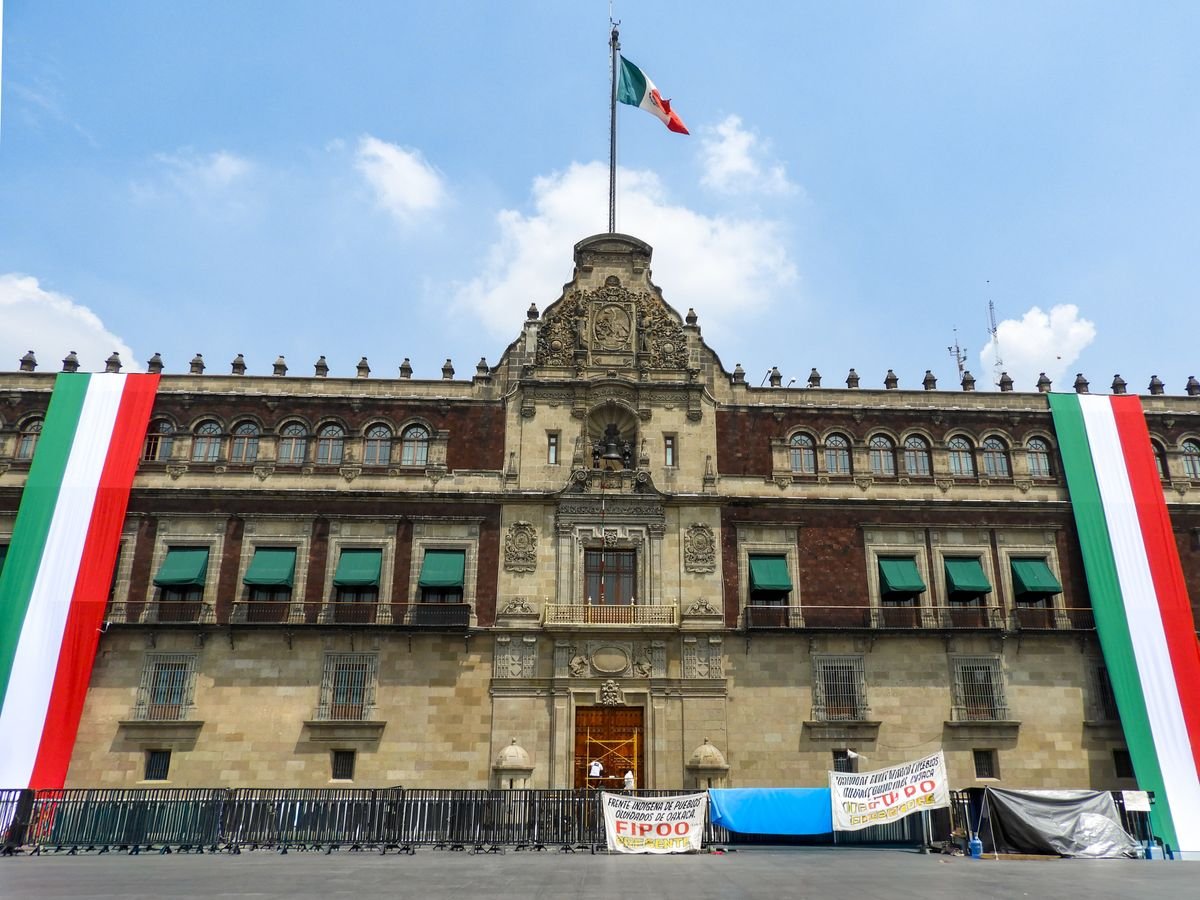
Trump’s Sharp Words Land in Mexico City
Donald Trump told Fox News on July 28 that he does not care about the USMCA and claimed Mexico and Canada need the pact more than the United States. The remark reached Palacio Nacional the next morning and set the tone for the mañanera.
Foreign Minister Marcelo Ebrard took the podium and answered directly. He noted that Mexico remains the top buyer of U.S. goods and that combined purchases from China, Germany, and Japan still fall short of Mexico’s total.
Trump’s comments followed his July 1 decision to replace the USMCA’s scheduled 16-year review with annual checks, shifting the agreement into yearly renegotiation cycles. This change gives Washington fresh leverage each January and forces Mexican negotiators to defend market access on a tighter timetable.
President Claudia Sheinbaum met U.S. Trade Representative Jamieson Greer in Los Pinos the day before the mañanera. She listened to Greer’s list of priorities, then reminded him that Mexico buys more U.S. goods than any other country, a point she repeated privately to her cabinet afterward.
Ebrard Offers Calm Reassurance
“Every week we need to be alert,” Ebrard said, “but today, we’re doing fine.” He stressed that 85 percent of Mexican exports enter the United States duty-free under current USMCA rules of origin and called the agreement the best trade deal any country holds with Washington.
Officials in the room described the tone as measured rather than defensive. Ebrard avoided escalation while listing concrete advantages that protect Mexican exporters and workers.
During the full mañanera exchange, Ebrard walked through the agreement’s tariff-rate quotas on dairy and poultry, noting that Mexican sugar and avocado growers still enjoy open access that competitors in Chile and Peru lack. He framed the pact as a practical shield rather than a political trophy.
Behind the numbers lies a deliberate strategy of strategic patience. Ebrard’s team has prepared side letters on labor and environmental enforcement that can be updated without reopening the entire text, allowing Mexico to absorb annual reviews without constant public confrontation.
Numbers Behind the Trade Balance
The U.S. trade deficit with Mexico passed $81 billion in the first five months of 2026. At the same time, Washington imposed 50 percent tariffs on most Canadian products, a move that has not yet touched Mexico.
These figures give Ebrard’s team leverage in talks. Mexico’s position as the largest single market for U.S. exports provides daily evidence that the relationship remains mutually beneficial despite political noise.
The $81 billion deficit breaks down mainly to vehicles, electronics, and medical devices assembled in Mexican plants with U.S. components. Each dollar of deficit reflects supply chains that employ American engineers and Mexican line workers in the same production sequence.
Canada’s 50 percent tariffs on steel, aluminum, and certain agricultural goods have already diverted some North American trade toward Mexican ports. Mexican exporters note that the 85 percent duty-free share under USMCA keeps their shipments competitive while Canadian competitors absorb extra costs at the border.
Next Round Set for Washington
U.S. Trade Representative Jamieson Greer visited Mexico last week and met Ebrard’s negotiating team. The fourth round of formal talks is scheduled for the first week of September in Washington.
Agenda items include the Section 301 investigation, tighter auto rules of origin, and steel and aluminum quotas. Trump’s July 1 decision to replace the 16-year USMCA review with annual checks adds urgency to each session.
The Section 301 probe targets Chinese-origin components in Mexican factories, particularly electric-vehicle batteries and semiconductors. Mexican officials have offered data showing that 72 percent of those inputs already come from U.S. or Mexican suppliers, a figure they plan to present in Washington.
Auto rules of origin require 75 percent regional content and 40 percent from high-wage facilities. Mexican plants in Aguascalientes and Guanajuato have invested in wage audits and local stamping lines to meet the threshold; failure would raise duties on roughly $42 billion in annual vehicle exports.
Peru’s New President Opens a Door
Keiko Fujimori was sworn in as Peru’s president on July 28 after a narrow June runoff. During the campaign she signaled willingness to restore full diplomatic ties with Mexico, frozen since Peru declared President Claudia Sheinbaum persona non grata in 2025 under former leader Dina Boluarte.
Sheinbaum addressed the change at the same mañanera. She said rapprochement is possible and instructed Ebrard to explore initial contacts. Both governments now see a narrow window to resume cooperation on trade, migration, and regional forums.
The freeze began in late 2025 when Boluarte’s government accused Mexico of interfering in Peruvian internal affairs after Sheinbaum criticized judicial proceedings against opposition figures. Embassies closed, trade missions halted, and joint naval exercises were canceled.
Fujimori’s center-right platform emphasizes Pacific Alliance revival and renewed investment from Mexican firms in mining and agro-industry. Early signals point to restored ambassador-level contacts by October and a possible bilateral trade facilitation agreement by year-end.
Everyday Effects in Mexican Homes
Factory workers in Monterrey and small exporters in Guadalajara watch these talks closely. Duty-free access under USMCA keeps production lines running and paychecks steady for thousands of families who cannot afford sudden tariff shocks.
Stable relations with Peru could also reopen student exchanges and cultural programs that were suspended last year, giving young Mexicans another route to study and work abroad without new barriers.
In border communities such as Tijuana and Ciudad Juárez, daily cross-border trucking supports an estimated 180,000 direct jobs. Any tightening of rules of origin would lengthen customs lines and raise costs for the small logistics firms that move parts between the two countries each morning.
For Mexican families, steady USMCA access translates into predictable overtime at assembly plants and reliable remittances from relatives working in U.S. distribution centers. Trade stability therefore anchors household budgets more directly than distant political statements suggest.
By Rosa Martinez, Staff Writer
Tags: Marcelo Ebrard, Donald Trump, USMCA, Keiko Fujimori, Claudia Sheinbaum, Mexico Peru relations, trade negotiations, Jamieson Greer, Section 301, auto rules of origin
This article was produced with AI-assisted research and editorial support. Reporting is based on sources cited in the article.
What's Your Reaction?
 Like
0
Like
0
 Dislike
0
Dislike
0
 Love
0
Love
0
 Funny
0
Funny
0
 Wow
0
Wow
0
 Sad
0
Sad
0
 Angry
0
Angry
0

Latin America/Andes Correspondent at Global1.News. Based in Bogota, covering politics, environment, energy, and social movements across the Andean region. Passionate about environmental journalism and communities protecting their land.














Comments (0)