
Colombia Mangroves Restoration Fuels Climate Resilience Push
In the humid dawn light along Colombia’s Caribbean shore, artisanal fishermen like those in Bahía de Cispatá push their wooden boats through channels once choked by dead wood and hypersaline mud. Their livelihoods depend on the same mangroves now being revived at unprecedented scale. Colombia has already restored 643,730 hectares of ecosystems nationwide, a 160 percent increase
Colombia’s Mangrove Revival Offers Blueprint for Coastal Climate Defense Bahía de Cispatá, Colombia – June 2026
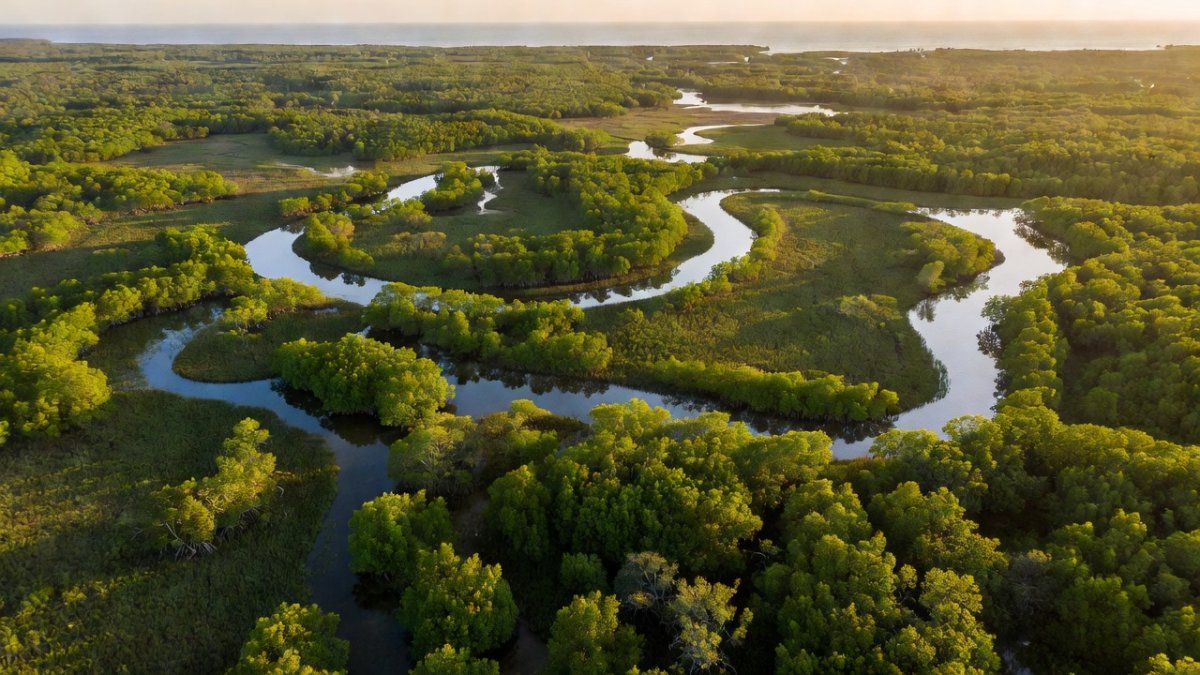
Colombia's Mangroves: A Natural Shield Under Siege
Colombia’s 3,500 kilometers of coastline once supported vast mangrove belts that buffered storms, anchored sediments and sustained generations of fishers. Today those same forests face relentless pressure from development, altered hydrology and rising seas. Forty percent of the shoreline already shows active erosion, turning protective wetlands into open water and exposing villages to flooding. Yet the data reveal a turning point. Environmental investment doubled from 0.92 to 1.9 billion pesos between 2024 and 2025, while 1.5 million hectares gained protection inside the Sierra Nevada de Santa Marta, the Corazón del Mundo. These numbers matter because mangroves sequester carbon at rates that outpace terrestrial forests and simultaneously serve as nurseries for shrimp and finfish that feed artisanal fleets. Without rapid restoration, the loss of these ecosystems would accelerate both emissions and food insecurity for hundreds of thousands of coastal residents. The urgency is not abstract; it is measured in hectares disappearing each year and in the daily catch that sustains families from Córdoba to Buenaventura.
Vida Manglar: Blue Carbon Pioneers in Bahía de Cispatá
The Vida Manglar project in Bahía de Cispatá, Córdoba, stands as Latin America’s first blue carbon initiative on the Caribbean coast. Launched through a partnership among INVEMAR, MinAmbiente, Conservación Internacional Colombia, Fundación Omacha, CVS and Carsucre, the effort restores degraded mangrove stands while generating verified carbon credits. In June and July 2026, fourteen delegates from Ghana, Liberia, Sierra Leone, Guinea and Senegal traveled to Cispatá to study the model for replication across West Africa. Their visit underscores the project’s global relevance. By re-establishing natural tidal flows and replanting native species, Vida Manglar has begun reversing decades of degradation while delivering measurable carbon sequestration. Local fishers participate directly in monitoring and planting, ensuring that restoration strengthens rather than displaces traditional livelihoods. The approach combines rigorous science from INVEMAR with community governance, creating a replicable template that links climate mitigation, biodiversity recovery and economic resilience. As other nations confront similar coastal crises, Cispatá offers concrete proof that blue carbon can move from concept to scalable action.
Ciénaga Grande: From Silence to Regrowth
Colombia’s largest coastal wetland, Ciénaga Grande de Santa Marta, a Ramsar site, once earned the grim nickname “silence” for its dead zones where hypersalinity killed mangroves and fisheries collapsed. INVEMAR-led initiatives under the Conservación y restauración de manglares con comunidades de la CGSM project and the GEF7-CGSM program are reversing that decline. Crews have removed dikes and jarillones that blocked natural water exchange, allowing freshwater pulses to dilute saline soils and revive root systems. Where blackened stumps once dominated, new mangrove shoots now push through the mud. Roughly 200,000 people living around the lagoon depend on the recovering fisheries, and early signs of returning shrimp and fish populations are already visible. Cornell Atkinson Center monitoring devices deployed in 2026 provide real-time salinity and water-level data that guide adaptive management. The transformation demonstrates that hydrological restoration, when paired with sustained institutional support from MinAmbiente and local corporations such as Corpoguajira, can resurrect ecosystems once written off as lost. The work remains unfinished, yet the green shoots signal that even severely degraded wetlands can rebound when water flows are restored.
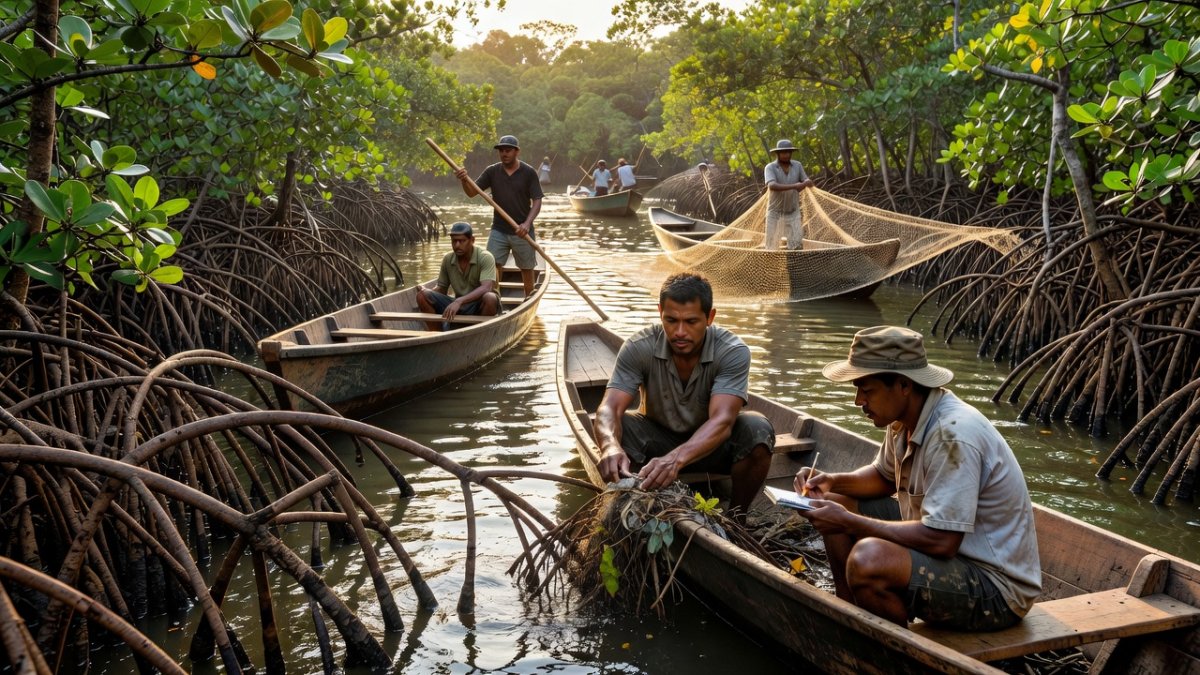
Cartagena and the Pacific: Communities Lead the Way
In Cartagena, court-ordered ecological recovery of Bahía de Cartagena has spurred mangrove planting in La Boquilla and the Zapatero sector. EPA Cartagena coordinates volunteers from Afinia and Fundación Canal de Dique Compas, combining technical planting with legal mandates that hold polluters accountable. On the Pacific coast near Buenaventura, the Defensoría del Pueblo has framed coastal erosion as a human-rights issue, convening inter-institutional dialogues that center Afro-Colombian fishing communities. National mangrove workshops held in Santa Marta have shared lessons from Ciénaga Grande with Pacific leaders, fostering cross-regional learning. These efforts recognize that restoration succeeds only when communities hold decision-making power. Fishers who once watched their landing sites wash away now participate in site selection and long-term stewardship. The Pacific workshops also address the specific vulnerabilities of Afro-Colombian territories, where industrial pressures and climate impacts intersect most acutely. By linking legal accountability in Cartagena with rights-based approaches on the Pacific, Colombia is building a national restoration framework that treats mangroves as both ecological infrastructure and cultural heritage.
Global Significance and What Comes Next
Scientists now describe a global “repunte” or turning point for mangroves after decades of net loss. Colombia’s projects contribute directly to that shift. Ecuador’s shrimp-industry alliance, for example, targets restoration of 250 hectares expected to avoid 112,870 tons of CO₂ emissions by 2030, illustrating how private-sector partnerships can scale impact. Colombia’s own 643,730 hectares of restored ecosystems, achieved with doubled environmental funding, provide a Latin American benchmark. Continued success will require sustained financing, expanded monitoring through INVEMAR and GEF-supported programs, and deeper integration of community governance. The African delegation’s visit to Cispatá signals South-South exchange that can accelerate replication. Yet challenges remain: sea-level rise continues, illegal logging persists in remote areas, and funding must keep pace with the 1.9 billion pesos achieved in 2025. The next phase will test whether Colombia can maintain momentum while expanding protection across its full 3,500-kilometer coastline.
The Bottom Line — Mangroves as Latin America's Climate Solution
Mangroves represent one of Latin America’s most powerful nature-based climate tools. They store carbon faster than rainforests, protect coasts against erosion and storms, and sustain artisanal fisheries that feed millions. Colombia’s experience—from Vida Manglar’s blue-carbon innovation to Ciénaga Grande’s hydrological rebirth and community-led work in Cartagena and Buenaventura—shows that restoration at scale is achievable when science, policy and local knowledge converge. The 160 percent increase in restored hectares and the doubling of environmental investment prove political will can translate into measurable gains. For the fishermen who once faced silent waters, the return of roots and fish offers both livelihood security and hope. As climate impacts intensify across the region, Colombia’s mangrove revival stands as a grounded, data-backed model that other nations can adapt. The work is far from complete, yet the trajectory is clear: protect and restore these coastal forests, and Latin America gains a resilient shield against the rising seas and warming planet.
By Elena Vasquez, Staff WriterThis article was produced with AI-assisted research and editorial support. Reporting is based on sources cited in the article.
What's Your Reaction?
 Like
0
Like
0
 Dislike
0
Dislike
0
 Love
0
Love
0
 Funny
0
Funny
0
 Wow
0
Wow
0
 Sad
0
Sad
0
 Angry
0
Angry
0

Latin America Correspondent at Global1.News. Based in Mexico City, covering politics, economics, energy, and culture across the region. Brings an on-the-ground perspective to stories spanning from the Rio Grande to Patagonia.













Comments (0)