
Oil Crisis Fuels Thailand's Hybrid and EV Boom
The oil crisis gripping global markets has accelerated Thailand's automotive shift, with electric and hybrid vehicles now accounting for over half of all new registrations in the kingdom. Surging fuel prices tied to Middle East tensions have prompted Bangkok commuters and provincial drivers alike to reconsider their choices, favouring vehicles that deliver significantly lower r
The oil crisis gripping global markets has accelerated Thailand's automotive shift, with electric and hybrid vehicles now accounting for over half of all new registrations in the kingdom. Surging fuel prices tied to Middle East tensions have prompted Bangkok commuters and provincial drivers alike to reconsider their choices, favouring vehicles that deliver significantly lower running costs. Mercedes-Benz Thailand's CEO has called plug-in hybrids "the best of both worlds" as the nation navigates its most consequential energy transition in decades.
Thailand's Auto Industry at a Crossroads: Oil Crisis Fuels Hybrid and EV Boom
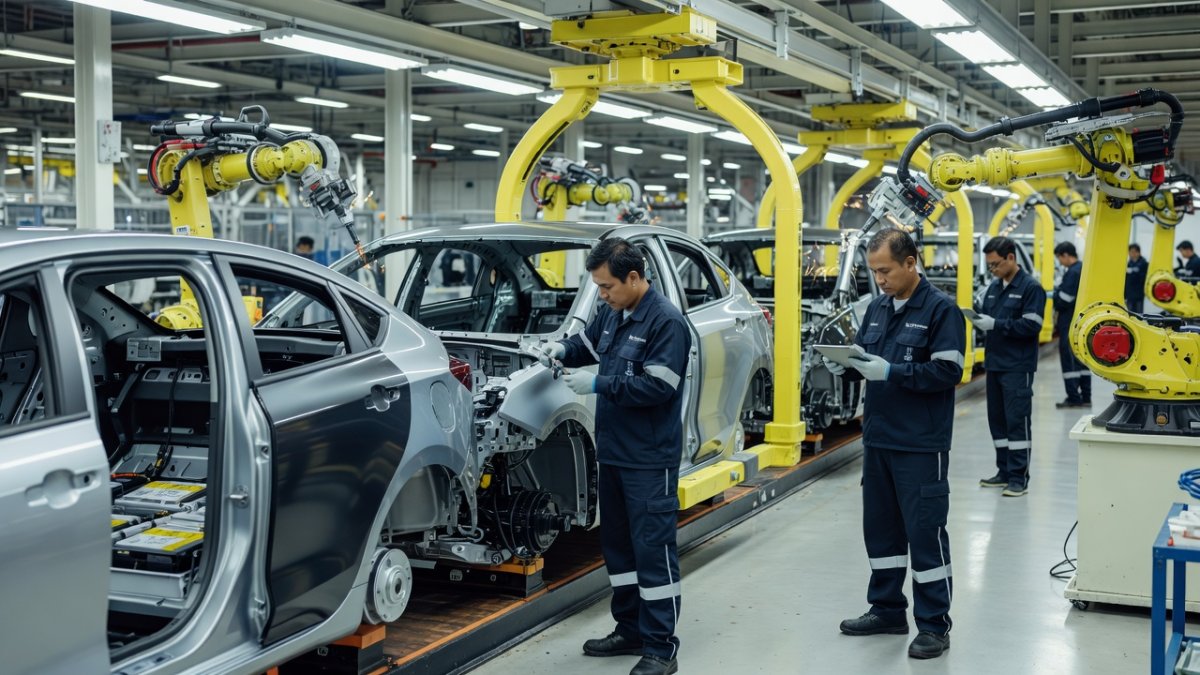
Bangkok, Thailand – This week — Thailand's automotive sector stands at a decisive turning point as the oil crisis pushes consumers toward hybrid and electric vehicles with unprecedented urgency. Honda Automobile (Thailand) announced plans this week to centre its lineup on next-generation hybrid electric vehicles, projecting 40,000 units in sales over the coming year after already moving 31,000 units from January through May 2026. The domestic market is expected to reach 660,000 total units this year, with electrified vehicles — both battery electric and hybrid — now holding a combined 52 percent share of new registrations.
Oil Crisis Reshapes Consumer Choices Across Thailand
Crude oil prices have surged toward 100 dollars per barrel due to escalating Middle East tensions, Red Sea shipping disruptions, and instability around the Strait of Hormuz. Thailand imports approximately 43 percent of its energy needs, leaving households and businesses acutely exposed to rapid price swings that ripple through every sector of the economy.
For Thai drivers, the arithmetic is stark. Running a battery electric vehicle costs roughly 0.58 baht per kilometre compared with 3.42 baht per kilometre for a comparable petrol SUV — a sixfold difference that Bangkok taxi drivers, Chiang Mai delivery fleet operators, and Phuket tourism transport providers now calculate on a daily basis. Families in the Isaan region, where public charging infrastructure remains limited, weigh these savings against the practical challenges of long-distance travel.
The Thai Ministry of Energy has noted a sharp increase in inquiries about EV running costs at provincial energy offices nationwide. Village headmen in Nakhon Ratchasima and Khon Kaen have reported residents asking about government EV subsidy programmes at local administration meetings, reflecting how the oil crisis has made the transition a kitchen-table issue rather than an urban elite concern.
Honda and Toyota Commit Billions to Hybrid Production Lines
Honda Automobile (Thailand) has placed next-generation hybrids at the very core of its strategy for the Thai market. The company targets 76,000 total car sales in Thailand this year, with hybrid models forming the backbone of that push. Honda's e:HEV two-motor hybrid system, which the company describes as bringing "the best out of motors and engine," delivers fuel efficiency that resonates powerfully with cost-conscious Thai buyers.
Toyota has pledged 55 billion baht to retool its Thai manufacturing facilities for hybrid output. Chairman Akio Toyoda personally met then-Prime Minister Paetongtarn Shinawatra in December 2024 to announce the commitment, underscoring the strategic importance of Thailand as Toyota's hybrid production hub for Southeast Asia. The Japanese giant's multi-billion-baht bet signals that hybrids are not a stopgap but a long-term pillar of its regional manufacturing strategy.
These moves align with new hybrid vehicle tax incentives approved by the Thai government, setting excise rates between 6 and 9 percent for HEVs from 2026 through 2032. The policy gives manufacturers clear, multi-year planning horizons and has been welcomed by the Federation of Thai Industries as a pragmatic acknowledgment that the transition cannot happen overnight.
The Japanese pivot to hybrids comes after 18 consecutive months of production decline through early 2025. Subaru closed its Bangkok assembly plant, Suzuki announced the closure of its Rayong facility, Honda halved production capacity at one site, and Nissan shuttered one of its two Thai factories. The hybrid investment represents a strategic recalibration rather than mere expansion.
Mercedes-Benz Positions Plug-in Hybrids as Practical Bridge Technology
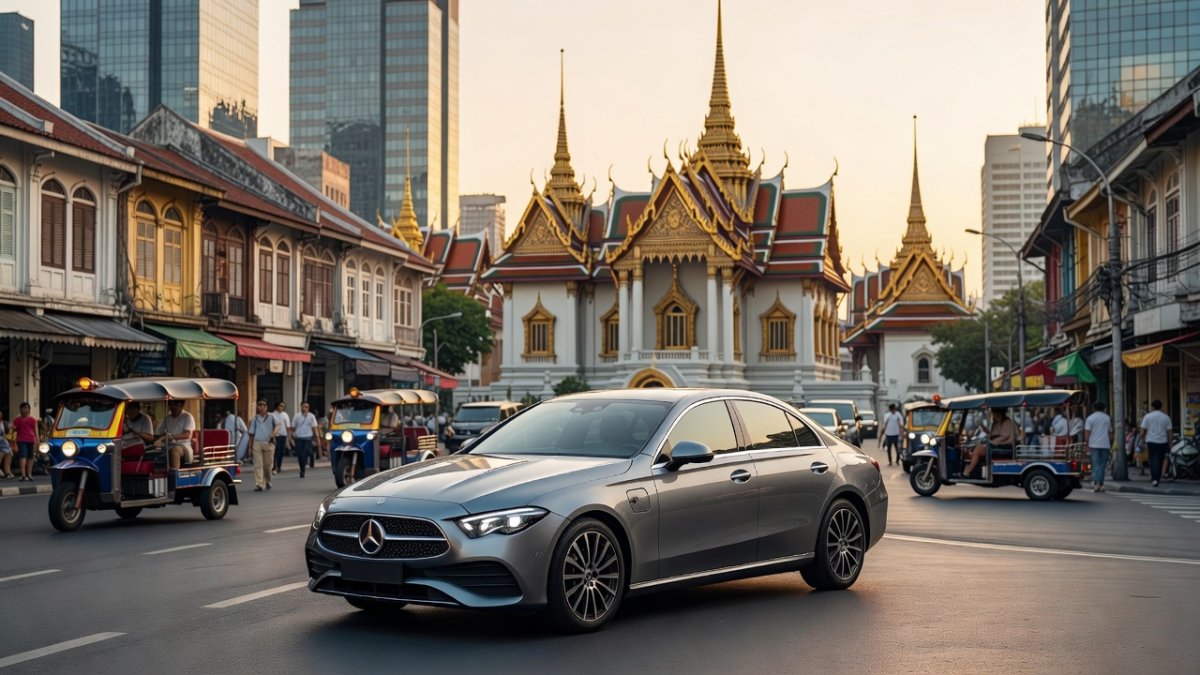
Mercedes-Benz Thailand President and CEO Christian Schell described plug-in hybrids as "the best of both worlds" during a recent Bangkok Post video discussion, articulating a vision that resonates with many Thai consumers caught between the promise of full electrification and the realities of Thailand's developing charging network.
The company's plug-in hybrid models offer electric-only range sufficient for daily city commutes — typically 50 to 100 kilometres — while retaining a combustion engine for long-distance travel across the Isaan region or to resort destinations like Phuket and Koh Samui, where petrol station availability remains more reliable than public charging points. This flexibility addresses what Schell identifies as the core hesitation among Thai buyers: range anxiety paired with infrastructure uncertainty.
Mercedes-Benz dealerships in Bangkok and major provincial centres report growing foot traffic from customers specifically asking about plug-in hybrid options. The models appeal to both environmentally conscious professionals in the capital and provincial business owners who need one vehicle capable of both urban errands and cross-country journeys. The approach mirrors broader industry trends showing plug-in hybrids gaining market share globally as consumers seek transitional solutions.
Chinese Brands Expand Market Dominance Amid Supply Chain Questions
Chinese manufacturers already command more than 70 percent of Thailand's battery electric vehicle market, a dominance built on competitive pricing, government subsidies, and aggressive showroom expansion. BYD's Rayong factory, which began local production in 2024, has become a cornerstone of Thailand's EV manufacturing ambition, producing vehicles for both domestic sale and export to neighbouring ASEAN markets.
Battery electric vehicle registrations surged 120.5 percent year-on-year in the first quarter of 2026, reaching 57,108 units. The EV3.5 incentive scheme, which runs through 2027, continues to subsidise qualifying BEV purchases, though critics note that the benefits have disproportionately flowed to Chinese brands at the expense of Japanese and Korean competitors who face import tariffs of 20 and 40 percent respectively.
Small and medium Chinese auto firms are intensifying their interest in Thailand, according to the Thai-Chinese Chamber of Commerce. The Thailand-China Cooperation Expo 2026, scheduled for July 22-25 at Challenger Hall 2 at Impact Muang Thong Thani, will showcase new investment opportunities and models from emerging Chinese manufacturers. The Board of Trade, the Thai-Chinese Chamber of Commerce, and the Chinese Enterprises Association are jointly organising the event.
However, concerns about after-sales service and parts availability persist. The collapse of Chinese brand Neta in 2025, which left over 220 Thai consumers with broken vehicles and no manufacturer support, remains a cautionary tale. The Ipsos 2025 survey found 60 percent of Thai drivers still cite range and battery anxiety as their top EV concern, while Deloitte's 2025 Global Automotive Consumer Study found internal combustion engine preference among Thai respondents actually rose from 32 to 36 percent between 2024 and 2025.
30@30 Policy, Subsidies, and the Investment Landscape
Thailand's 30@30 policy, targeting 30 percent electric vehicle production by 2030, has remained consistent across three successive prime ministers — Srettha Thavisin, Paetongtarn Shinawatra, and now Anutin Charnvirakul — demonstrating rare bipartisan continuity on industrial policy. Over 137 billion baht in EV supply chain investment has been committed under the EV3 and EV3.5 incentive schemes.
Prime Minister Anutin drove a BYD Sealion 7 electric SUV to Government House in late March, a carefully staged gesture intended to signal official commitment to the EV transition. The Bangkok Post editorial board offered a measured response, noting that "true leadership in a crisis is not defined by the electric vehicle the prime minister drives, but by the tangible options he creates for those who cannot afford to switch gears."
Deputy Finance Minister Paopoom Rojanasakul articulated a core concern: "The worst outcome would be if Thais become major consumers of EVs, but we are not producers. This situation must not happen." His warning reflects anxiety that Thailand risks becoming an assembly platform for Chinese-designed vehicles without developing genuine domestic manufacturing depth.
Workforce Transition and Community Impact
More than 100,000 auto workers face potential redundancy between 2025 and 2026 as production lines transition from internal combustion to electrified powertrains. The Krungthai COMPASS research unit has flagged the workforce transition as one of Thailand's most pressing industrial policy challenges, one that carries significant social and political implications.
Plant closures have already reshaped communities in Rayong, where Suzuki and Nissan shut down facilities, and in Bangkok, where Subaru ended local assembly. Skilled technicians with decades of experience in engine and transmission manufacturing face uncertain prospects as new production lines require different expertise in battery assembly, electric motor winding, and power electronics.
Vocational training centres in the Eastern Economic Corridor are adapting their curricula, introducing courses on battery systems and electric drivetrains. The Labour Ministry has signalled support for retraining programmes, though the scale of the challenge — 100,000 workers across multiple provinces — demands coordination across government agencies, private employers, and educational institutions that remains incomplete.
What This Means for ASEAN and the Region
Thailand's automotive transition carries significance well beyond its borders. As Southeast Asia's largest auto production hub, the kingdom's choices influence supply chain configurations, investment flows, and policy approaches across the entire ASEAN region. Vietnam's VinFast offers a contrasting strategy of national champion vertical integration, while Indonesia pursues nickel-based battery manufacturing to anchor its own EV ambitions.
The shift from combustion to electrified powertrains is reshaping trade patterns within ASEAN. Components for hybrid and electric vehicles increasingly cross borders — Thai-assembled battery packs bound for Malaysian assembly plants, Indonesian nickel processed into Thai cathode materials. The Thailand-China Cooperation Expo this month will feature delegations from several ASEAN countries exploring joint manufacturing possibilities.
Tourism operators in Phuket, Krabi, and Chiang Mai monitor fuel costs closely, knowing that affordable transport supports visitor arrivals from Malaysia, Singapore, and beyond. The broader regional implication is clear: Thailand's success in managing this transition will influence whether ASEAN can position itself as a competitive global hub for next-generation automotive manufacturing, or whether supply chains shift toward lower-cost alternatives in Vietnam and Indonesia.
What to Watch For
Oil price movements in the coming months will continue shaping consumer choices between hybrids and full battery electric vehicles. Sustained prices above 90 dollars per barrel would likely maintain strong hybrid demand, while a significant decline could shift momentum toward full electrification in urban centres where charging infrastructure is expanding.
Production figures from Honda and Toyota over the second half of 2026 will provide early indicators of whether hybrid manufacturing targets are achievable. New model launches at the Thailand-China Cooperation Expo may shift consumer preferences and reveal the next generation of affordable electrified vehicles targeting the mass market.
The government's progress on workforce transition programmes and grid decarbonisation — Thailand's electricity supply remains 85 percent fossil-based — will determine whether the EV shift is environmentally credible and socially sustainable. For Thai families from Bangkok to Buriram, the choices made in boardrooms and government offices this year will shape how they drive, what they pay, and how they live for a generation to come.
By Ann Srisawat, Staff Writer
This article was produced with AI-assisted research and editorial support. Reporting is based on sources cited in the article.
What's Your Reaction?
 Like
0
Like
0
 Dislike
0
Dislike
0
 Love
0
Love
0
 Funny
0
Funny
0
 Wow
0
Wow
0
 Sad
0
Sad
0
 Angry
0
Angry
0

Southeast Asia Correspondent at Global1.News. Based in Bangkok, covering Thai and Southeast Asian politics, economy, technology, and culture. Deep regional perspective on one of the world's most dynamic regions.














Comments (0)