
Closed Pre-Trial Public Questions Inside the Sara Duterte Impeachment Conference
In a recent ANC 24/7 report, the House prosecution panel held a press conference after the closed-door pre-trial conference for Vice President Sara Duterte's impeachment, raising serious concerns about transparency in a trial that the vast majority of Filipinos are watching closely. With newly elected Senate President Sherwin Gatchalian presiding, the June 18 pre-trial marked t
In a recent ANC 24/7 report, the House prosecution panel held a press conference after the closed-door pre-trial conference for Vice President Sara Duterte's impeachment, raising serious concerns about transparency in a trial that the vast majority of Filipinos are watching closely. With newly elected Senate President Sherwin Gatchalian presiding, the June 18 pre-trial marked the first major procedural step in a case that has exposed deep political divisions and tested public trust in the Senate's role as an impeachment court.
Closed Pre-Trial, Public Questions — Inside the Sara Duterte Impeachment Conference
Manila, Philippines – June 18, 2026 —
Closed Pre-Trial Conference Opens Impeachment Proceedings
The Senate Impeachment Court convened its closed-door pre-trial conference at 9 AM on June 18, 2026, under the 1987 Constitution, with the ANC 24/7 YouTube video capturing the House prosecution panel's subsequent press conference where members voiced concerns over the lack of transparency. Presided over by newly elected Senate President Sherwin Gatchalian, the session reviewed procedural matters for the second impeachment of Vice President Sara Duterte without media or public access, prompting immediate questions from prosecutors about accountability in the process.
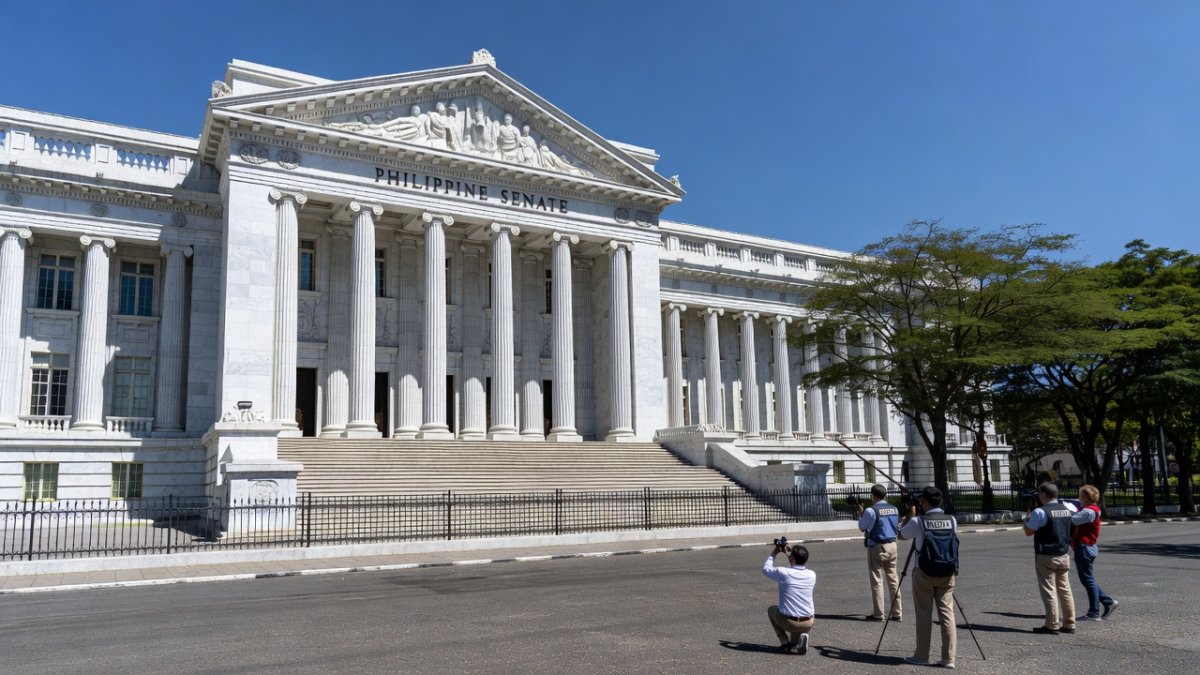
Both the House prosecution panel and the defense team submitted pre-trial briefs ahead of the meeting, including a detailed 57-page document from the prosecution outlining charges tied to the escalating rift between the Marcos and Duterte political camps that originated after their 2022 electoral alliance. The closed format drew direct criticism during the post-conference briefing shown in the ANC 24/7 video, as prosecutors emphasized the need for open proceedings to maintain public trust.
Sherwin Gatchalian Assumes Senate Leadership Role
Senator Sherwin Gatchalian was formally elected Senate President on June 17, 2026, ending months of leadership instability that saw four Senate presidents rotate through the position in less than a year. This transition positioned Gatchalian to oversee the impeachment court as it prepares for the trial proper scheduled to begin on July 6, 2026, at the Philippine Senate building in Manila.
The leadership change occurred amid ongoing political tensions, with Gatchalian now responsible for managing the Senate's role as an impeachment court in a case that directly involves the sitting vice president. Lawmakers from various provinces, including those representing districts in Luzon and Mindanao, participated in the vote that stabilized the chamber ahead of the high-stakes proceedings.
House Prosecution Panel Raises Transparency Concerns
The House prosecution team, led by the Batangas 2nd District representative along with additional members from Congress, held a press conference immediately after the closed pre-trial session, as documented in the ANC 24/7 video. Prosecutors questioned the decision to bar media and the public, arguing that such restrictions could undermine the integrity of the process under Senate rules.
During the briefing, panel members highlighted their 57-page pre-trial brief and stressed the importance of allowing civil society groups, law schools such as those at the University of the Philippines and Ateneo de Manila, and bar associations to observe key stages. They noted that previous impeachment trials had incorporated greater public access to foster national dialogue.
Senator Franklin Drilon Issues Caution on Evidence Handling
Senator Franklin Drilon publicly warned fellow senators against any attempts to conceal facts during the impeachment trial, emphasizing the Senate's constitutional duty to uphold truth in proceedings involving Vice President Sara Duterte. His statements came as the chamber prepared for the July 6 start date following the June 18 pre-trial conference.
Drilon's remarks referenced the need for full disclosure of documents and witness testimonies, drawing parallels to how evidence was managed in earlier cases. This intervention underscored internal Senate dynamics as Gatchalian leads the body through its first major impeachment court session since the leadership shifts.
OCTA Research Survey Reveals Widespread Public Doubt
An OCTA Research survey released in recent days found that 81 percent of Filipinos remain skeptical or are withholding judgment regarding the fairness of senators handling the impeachment trial. This sentiment spans urban centers like Quezon City and rural areas in the Visayas, where residents closely monitor developments through local media and community discussions.
The poll results reflect deep engagement from ordinary citizens who view the trial as a test of institutional trust, particularly given the simultaneous ICC proceedings against former President Rodrigo Duterte in The Hague. Community organizations in provinces such as Cebu and Davao have organized forums to analyze how the outcome could shape governance standards.
Comparisons to Past Impeachment Trials of Estrada, Corona, and Sereno
The current proceedings against Vice President Sara Duterte mark the second impeachment effort in 2026 and invite direct comparisons to the 2001 trial of President Joseph Estrada, the 2012 trial of Chief Justice Renato Corona, and the 2018 quo warranto case involving Chief Justice Maria Lourdes Sereno. Unlike some prior cases that allowed live broadcasts, the June 18 pre-trial remained closed, raising questions about procedural consistency under the Senate's impeachment court authority.
Legal experts from bar associations noted that the 1987 Constitution grants the Senate sole power to try impeachments, yet public access has varied across these historical examples. The involvement of DepEd and DOH officials in related oversight discussions highlights how such trials influence policy implementation across government agencies.
Political Implications for 2028 Presidential Elections
The impeachment trial carries significant weight for the 2028 presidential elections, as the rift between the Marcos and Duterte camps continues to reshape alliances formed during the 2022 polls. Analysts point to potential shifts in voter bases in key regions like Mindanao, where former President Rodrigo Duterte maintains strong support, and Metro Manila districts affected by national policy debates.
Civil society groups and student organizations from universities nationwide have called for transparent handling to prevent perceptions of political maneuvering. The trial's progression under Senate President Gatchalian could influence candidate positioning well before the official campaign period begins.
Human Impact on Filipino Families and Communities
Filipino families across the archipelago, from fishing communities in Palawan to urban households in Makati, feel the direct effects of prolonged political uncertainty stemming from the impeachment process. With 81 percent expressing skepticism per the OCTA survey, many parents report discussing the trial's fairness with children during dinner conversations, linking it to broader concerns about education funding through DepEd and public health services via DOH.
The case also intersects with the ICC proceedings against former President Duterte, prompting diaspora communities abroad to organize virtual town halls that connect back to local barangays. These developments underscore how Senate actions under the 1987 Constitution affect daily life, from economic stability to trust in institutions like the PNP and COMELEC ahead of future elections.
By Bella Reyes, Staff WriterThis article was produced with AI-assisted research and editorial support. Reporting is based on sources cited in the article.
What's Your Reaction?
 Like
0
Like
0
 Dislike
0
Dislike
0
 Love
0
Love
0
 Funny
0
Funny
0
 Wow
0
Wow
0
 Sad
0
Sad
0
 Angry
0
Angry
0

Philippines/Southeast Asia Correspondent at Global1.News. Manila-based journalist covering Philippine politics, environment, maritime security, and social issues. Passionate about marine conservation and the communities protecting the Philippines' natural heritage.












Comments (0)