
AI Song Covers Go Local: The End of the Music Industry As We Know It?
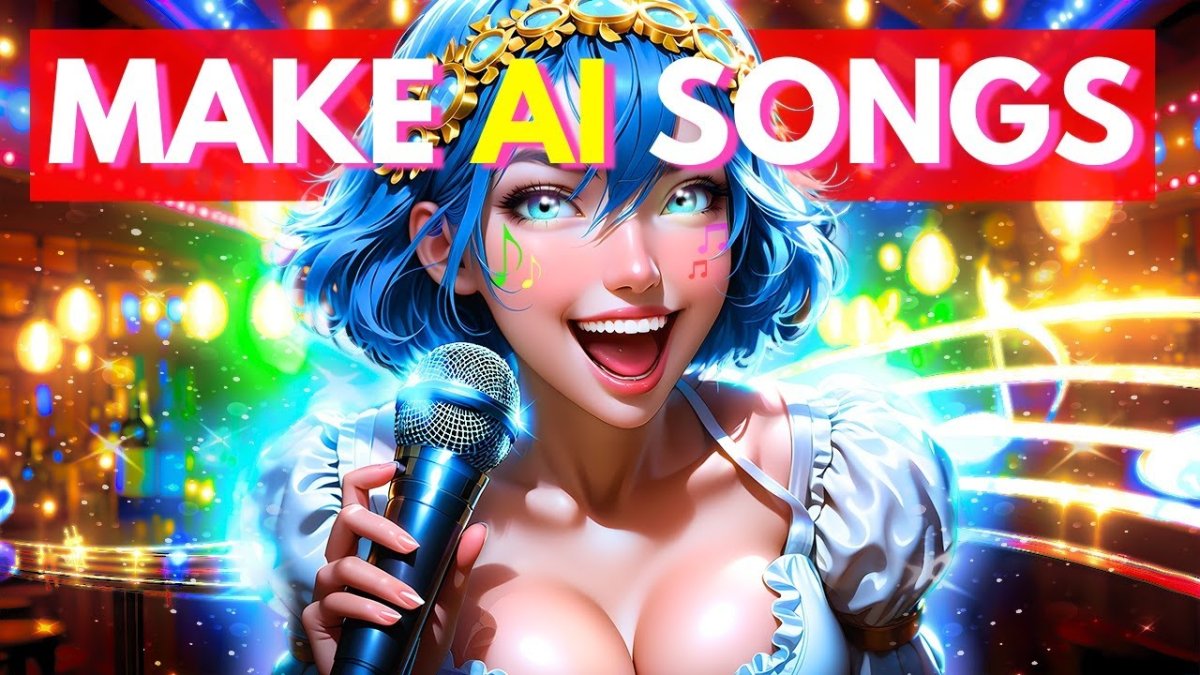
Aitrepreneurs latest video shows how to make AI song covers for free using open-source RVC voice cloning technology running locally on consumer GPUs. This technology lets anyone clone any voice with under 10 minutes of audio and produce studio-quality song covers from their own compute...
Folks, the music industry has been living on borrowed time, and the bill just came due. What was once the exclusive domain of million-dollar recording studios and label-controlled distribution is now sitting on your desktop, completely free, and it's about to turn the entire industry upside down.
AI Song Covers Go Local: The End of the Music Industry As We Know It?
YouTube / Atlanta, GA -- If you haven't heard about RVC yet -- Retrieval-based Voice Conversion -- you're about to. This open-source technology has been quietly evolving in the shadows of the AI boom, and it has now reached a tipping point where any creator with a half-decent GPU can clone any voice and produce studio-quality song covers from their bedroom. No cloud subscription. No per-track fees. No label permission. Just you, an open-source WebUI, and a few minutes of audio samples.
The Technology That Broke the Music Industry
Let me be real with you. RVC isn't new. The project has been on GitHub for a while now, clocking thousands of stars and countless forks. What's changed is the accessibility. The latest iterations of the RVC WebUI have simplified the training process to the point where you can train a voice model with less than 10 minutes of audio data. Ten. Minutes. That's a single interview clip, a few lines from a livestream, or -- and this is where it gets interesting -- existing song vocals ripped from a track.
The process is deceptively simple. You grab the WebUI from GitHub or Hugging Face, point it at your audio samples, and within an hour -- depending on your GPU -- you have a working voice model. Then you feed it any vocal track you want. The AI separates the original vocals from the music, runs them through your trained model, and spits out a brand new vocal performance in the cloned voice. The result? A song cover that sounds like your chosen artist singing a track they never recorded.
Why the Record Labels Are Terrified
Here's the thing the labels don't want you to understand: this isn't Napster 2.0. This is worse -- for them. Napster was about distributing existing music without paying. This is about creating new music using existing artists' voices without paying, without permission, and without any way to stop it.
The Recording Industry Association of America (RIAA) and its global counterparts have been fighting this battle for years through the courts, but they're fighting a hydra. Every time they take down one platform -- remember when they went after Jammable (formerly Voicify.ai) back in 2024? -- three more open-source alternatives pop up. You can't sue an open-source repository into oblivion. The code lives everywhere. The models are distributed through peer-to-peer networks. The cat is not just out of the bag -- it's cloned itself into a thousand identical cats and they're all singing different songs.
Local AI: The Unstoppable Revolution
This is the part that really gets me. The push toward LOCAL AI -- running everything on your own hardware -- is the single most disruptive force in tech right now, and the music industry is ground zero for the collision.
When Aitrepreneur drops a tutorial showing you how to do all of this locally -- no cloud, no subscription, no data leaving your machine -- they're not just teaching a skill. They're arming a revolution. The RVC WebUI runs on consumer GPUs. We're talking 6GB, 8GB of VRAM. If you have a gaming PC from the last three years, you can run this. If you have a used RTX 3060 you picked up for $200, you can run this. The barrier to entry has dropped to the price of dinner out.
The Ethical Minefield Nobody Wants to Navigate
Look, I'm not going to sit here and pretend this is all sunshine and democratization. There are real, valid concerns here. Artists absolutely deserve control over their own voice and likeness. When someone clones Taylor Swift's voice to sing a political rant she never endorsed, that's a problem. When deepfake song covers flood streaming platforms and confuse royalties, that's a problem. When aspiring artists find their original vocals lifted and re-sung by someone else's model, that's absolutely a problem.
But let's call out the hypocrisy while we're at it. The record labels have spent decades screwing artists on royalty rates, owning their masters, and locking down creative freedom. They didn't care about protecting artists -- they cared about protecting their revenue streams. Now that the threat is to their bottom line rather than the artists', suddenly they're championing creator rights? Please. I see right through it.
What This Means
We're witnessing a fundamental shift in the economics of music creation. The gatekeepers are losing their gates. The tools that used to cost millions in studio time, session musicians, and production expenses are now available for the cost of electricity and an internet connection.
This means more music. More voices. More creativity from corners of the world that the industry never bothered to look at. It also means more noise, more confusion, and more legal battles that the courts are completely unequipped to handle. The copyright framework we have was designed for a world where recording a song required a studio. That world is dead, and nobody sent the memo to Congress.
The Bottom Line
Aitrepreneur's latest video on AI song covers isn't just another tech tutorial -- it's a roadmap to the future of creative expression. The question isn't whether this technology should exist. It does. It's here. The question is whether the music industry will adapt and find a new model, or whether it will sue its way into irrelevance like every other legacy industry that tried to fight the internet.
My bet? The industry will scramble, pass some toothless regulations, make a lot of noise about ethics, and ultimately settle into a licensing model where AI voice models become another tool in the creator's arsenal. Because that's what this is -- a tool. A powerful one. But still a tool. And tools don't destroy industries; they force them to evolve. The artists and labels that figure out how to work WITH this technology will thrive. The ones that try to bury it will be buried by it.
How to Get Started
If you want to see what all the fuss is about, the path is clearer than ever. Head over to GitHub and grab the RVC WebUI. You'll need a GPU with at least 6GB of VRAM, some audio samples of the voice you want to clone, and a bit of patience for the training process. The Aitrepreneur channel has step-by-step tutorials that walk you through the entire process from installation to final export. The whole setup takes about an afternoon, and once it's running, you can generate song covers faster than you can decide which song to cover.
Stay Vigilant, Stay Creative
The walls are coming down, folks. What you do on the other side of them is up to you. Create something worth listening to. Credit your influences. Respect the artists who paved the way. And for the love of everything, do not use this technology to scam people or ruin someone's career. The tools are neutral -- it's the hands that wield them that matter.

By Jessica Ali, Staff Writer
---
Jessica Ali is the lead anchor for Global 1 News, cutting through the BS, one story at a time.
What's Your Reaction?
 Like
0
Like
0
 Dislike
0
Dislike
0
 Love
0
Love
0
 Funny
0
Funny
0
 Wow
0
Wow
0
 Sad
0
Sad
0
 Angry
0
Angry
0

Editor-in-Chief at Global1.News. Atlanta-based journalist who cuts through the BS and tells it like it is. Lead anchor, host, and the voice you hear when the spin stops and the truth starts.











Comments (0)