
"Autophagies": When African Cuisine and Theatre Merge to Decolonise Memory
In the rich tapestry of African cultural expression, where traditions like mbalax rhythms from Senegal and Nollywood storytelling meet global stages, performances that weave cuisine with memory offer powerful reclamation of identity. "Autophagies" stands as one such bridge, bringing West African culinary heritage into theatrical dialogue with Europe's colonial past. "Autophagie
In the rich tapestry of African cultural expression, where traditions like mbalax rhythms from Senegal and Nollywood storytelling meet global stages, performances that weave cuisine with memory offer powerful reclamation of identity. "Autophagies" stands as one such bridge, bringing West African culinary heritage into theatrical dialogue with Europe's colonial past.
"Autophagies": When African Cuisine and Theatre Merge to Decolonise Memory
Dakar, Senegal – In recent weeks — The Festival Confit de Cavaillon in southern France hosted "Autophagies", a performance by French-Ivorian director Eva Doumbia that blends live cooking, dance, theatre, and music to explore how the food on our plates carries hidden histories of colonialism, slavery, and globalisation. The event took place on 20 May 2025 at La Garance, Scène nationale de Cavaillon in the Vaucluse region, where the Festival Confit celebrates the richness of cultures and memories through living arts and gastronomy. Africanews covered the performance on 22 May 2025 in both English and French under the headline "Un banquet théâtral pour décoloniser les mémoires et les papilles", with photography by Argenis Apolinario.
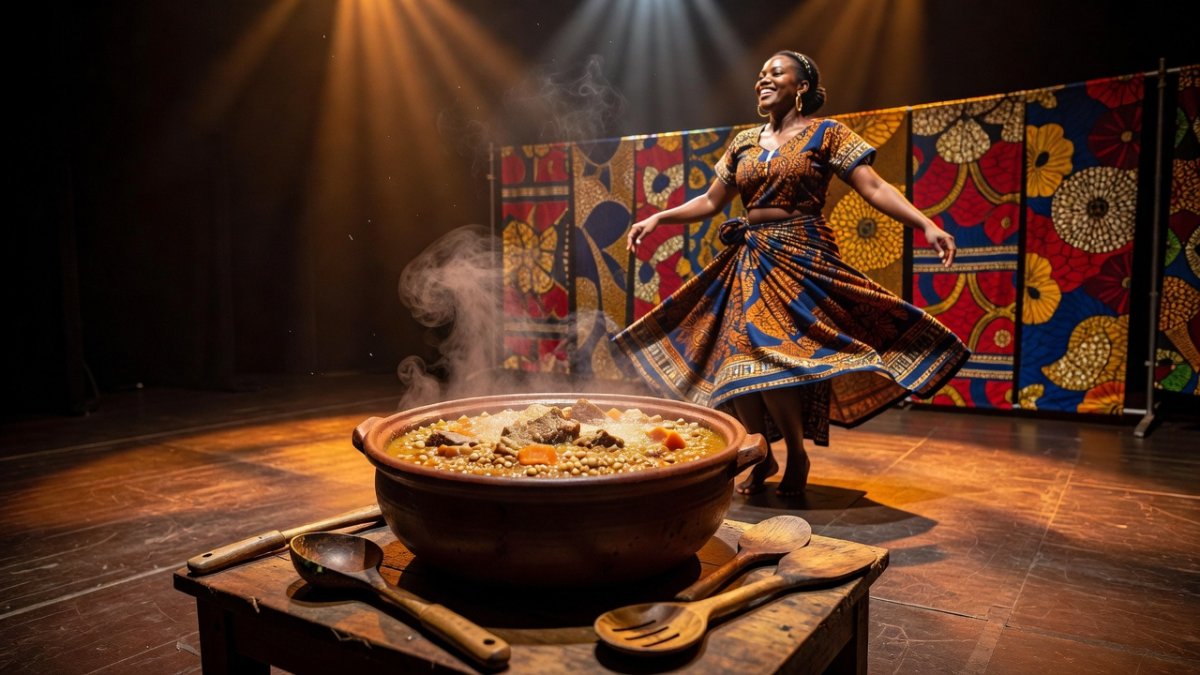
A Feast for the Senses — The Stage Becomes a Kitchen
The unusual smell that fills the room at the Festival Confit de Cavaillon comes from a mafé bubbling away on the stage. This slightly sweet and earthy scent of the traditional West African stew draws audiences into an immersive environment where the kitchen itself transforms into the performance space. Eva Doumbia designed the set so that cooking utensils, ingredients, and simmering pots occupy center stage alongside dancers and actors.
Bamoussa Diomande performs as the dancer, actor and choreographer on this kitchen-stage. His movements weave through the preparation area, turning the act of stirring and chopping into choreographed sequences that heighten the sensory experience. The performance merges these elements so that sight, smell, and sound combine to create a complete theatrical environment.
The real mafé prepared on stage during the performance releases aromas that travel through the auditorium. At the end, the audience shares the mafé together in a communal meal that extends the performance beyond the stage. This shared eating moment turns spectators into participants in the cultural narrative.
Audience member Myriam Douhi described the experience as both moving and playful. She noted how the sensory details pulled her into the action while the live cooking kept the atmosphere light and engaging. The kitchen-stage concept ensures that every element serves both artistic and narrative purposes.
Eating History — Colonialism on the Plate
Behind the playful ballet of the senses lies a political dimension that examines how everyday ingredients tell stories of power and displacement. The performance tells the history of food through rice, sugar, chocolate, bananas, and peanuts, showing how these ingredients carry colonial histories from plantation economies to modern kitchens.
Eva Doumbia says the work directly addresses these connections. "It's really a play that criticises the devastating impact of colonisation. Colonisation and food are closely related," she explains. The narrative asks where the food we consider ours really comes from and what stories, often violent, it carries from centuries of exploitation.
The story of slavery, exploitation, and migration forms the central themes that run through each scene. Ingredients arrive on stage with accompanying accounts of forced labor and transatlantic routes, linking African production sites to European consumption. This approach reveals the global supply chains that still shape what appears on dinner tables today.
The questions posed during the performance encourage reflection on cultural ownership. By tracing peanuts from West African farms to French markets or bananas from Caribbean plantations to supermarket shelves, the piece demonstrates how food remains tied to historical power structures. These details ground the theatrical experience in concrete historical facts.
Eva Doumbia — Theatre as Political Reclamation
"Autophagies" was created by Eva Doumbia, a French playwright, director, and actress of Ivorian origin. She runs her own theatre company called La Part du Pauvre, which produces works that examine identity and history through performance. Her approach consistently mixes contemporary theatre with African oral traditions, music, and political reflection.
The title "Autophagies" refers to autophagy, the biological process where cells break down and recycle their own components. Doumbia uses this as a metaphor for cultural self-devouring and reclamation, suggesting that societies must examine and transform their inherited narratives. This concept drives the entire structure of the piece.
The performance was previously programmed at the Festival d'Avignon in 2021. That early presentation established the work's reputation for combining culinary elements with historical critique. Doumbia's background allows her to draw from both French theatrical traditions and Ivorian cultural perspectives in equal measure.
Her direction ensures that political content never overwhelms the artistic form. Instead, the integration of music and oral storytelling traditions creates space for audiences to absorb difficult histories through familiar African expressive modes. This balance has become a signature of her productions with La Part du Pauvre.
The work sits within a growing tradition of African diasporic artists using food as a medium for political expression. From Senegalese chef-activists reclaiming thieboudienne narratives to Ghanaian artists exploring cocoa's colonial legacy, the politics of eating has become a fertile ground for creative examination. Doumbia's particular contribution lies in bringing the kitchen directly onto the stage, making the cooking process itself the central dramatic action rather than a secondary element. This approach prioritises African culinary knowledge as both performance and pedagogy.
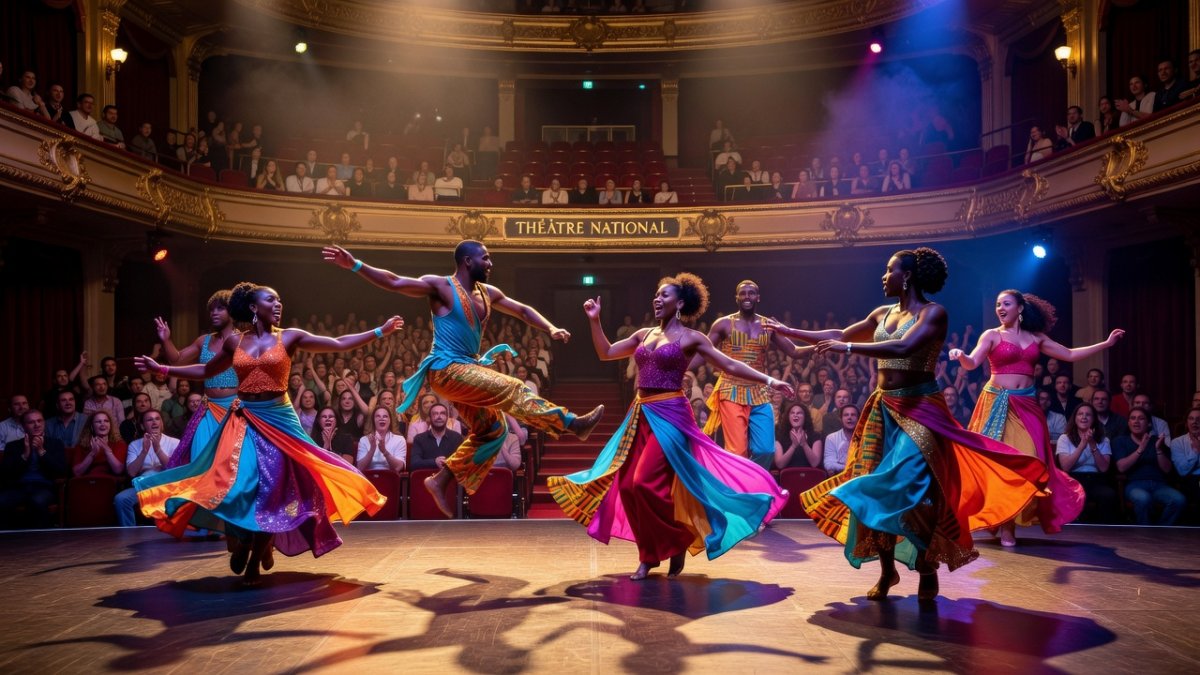
Dance, Memory, and the Body
Bamoussa Diomande brings physical intensity to the role through choreography that blends contemporary dance, African dance, and coupé-décalé, a popular dance from Abidjan, Côte d'Ivoire. His sequences move between precise contemporary gestures and the energetic footwork of coupé-décalé, grounding the abstract themes in bodily experience.
The physical vocabulary of "Autophagies" draws from multiple African dance traditions. The coupé-décalé segments capture the energy of contemporary Abidjan, with its quick footwork and playful shoulder movements. When Diomande transitions into traditional West African dance forms, he connects urban youth culture to ancestral practice through the body's capacity for memory. These shifts underscore how African dance continues to evolve while retaining connections to its historical roots. The kitchen-stage setting allows these dance sequences to flow naturally around the cooking action.
Diomande says the physical demands of the performance create a direct connection to memory. "When I dance, I really get goosebumps and it motivates me, because dance for me is also a type of sport and it gives me a lot of energy," he explains. This energy transmits to audiences as the dance illustrates the lived realities behind food histories.
The choreography positions the body as an archive of migration and cultural exchange. Movements reference both traditional African dance forms and urban Ivorian styles, showing how physical expression carries forward collective experiences across generations. Each gesture on the kitchen-stage reinforces the connection between movement and memory.
Diomande's presence alongside the cooking elements creates a dialogue between the dancer's body and the prepared ingredients. The performance uses this interplay to show how cultural practices survive through both physical tradition and material culture. His work ensures the piece remains dynamic even during quieter narrative moments.
From Avignon to Cavaillon — The Journey of a Performance
The performance toured to Théâtre du Nord in Lille/Tourcoing in September 2022 after its Avignon debut. Each stop allowed Doumbia to refine the integration of live cooking with historical reflection, building toward the presentation at Festival Confit de Cavaillon. The piece has maintained its core structure while adapting to different venues.
The Festival Confit de Cavaillon, organized by La Garance, the national stage of Cavaillon, provided an ideal setting because of its focus on gastronomy and living arts. The 20 May 2025 date placed the work within a program explicitly designed to examine cultural and political issues through food-related performances.
Africanews coverage on 22 May 2025 highlighted how the production connects African culinary traditions to broader European audiences. The dual-language reporting in English and French extended the reach of Doumbia's message about decolonizing both memory and taste. This media attention underscores the growing interest in diasporic artistic voices.
The journey of "Autophagies" demonstrates how works that center African perspectives can find sustained platforms across France. From the prestigious Festival d'Avignon to regional stages like La Garance, the performance has built an audience that values its combination of sensory pleasure and historical inquiry.
What This Means for African Cultural Expression
The significance of African diasporic artists using food and performance to reclaim narratives extends far beyond individual productions. Eva Doumbia's work with La Part du Pauvre contributes to a broader African cultural renaissance where creators assert control over how histories of slavery and migration are told. Such performances strengthen cultural identity across continents.
Festivals that center African and diasporic creative voices, like the Festival Confit de Cavaillon, play a vital role in this process. By programming pieces that combine mbalax influences or Senegalese oral traditions with contemporary forms, these events create spaces for dialogue that honor both heritage and innovation. The communal meal at the end of "Autophagies" symbolizes reconciliation and shared humanity.
For African readers, the performance illustrates how cultural exports such as mafé or coupé-décalé can serve as tools for global education. When audiences in southern France share a West African stew while learning its colonial backstory, the creative economy gains new avenues for influence and tourism potential.
The approach taken by Doumbia and Diomande points toward future collaborations between African artists and European institutions. These partnerships can amplify political reflection while celebrating the sensory richness of African music, dance, and cuisine. The result is a more accurate and inclusive understanding of global cultural histories.
By Amara Diop, Staff Writer
This article was produced with AI-assisted research and editorial support. Reporting is based on sources cited in the article.
What's Your Reaction?
 Like
0
Like
0
 Dislike
0
Dislike
0
 Love
0
Love
0
 Funny
0
Funny
0
 Wow
0
Wow
0
 Sad
0
Sad
0
 Angry
0
Angry
0

West Africa/Sahel Correspondent at Global1.News. Dakar-based journalist covering politics, security, climate, and development across Francophone and Anglophone West Africa. Tells the stories of a region undergoing profound transformation.













Comments (0)