
Clashes Erupt as Haredi Draft Protests Shut Down Israeli Highways
In a recent i24NEWS English report on the ground, thousands of Haredi men blocked the Ganot junction and multiple major highways across central Israel on June 12, 2026, bringing traffic to a complete standstill in support of yeshiva students arrested for draft evasion. Clashes Erupt as Haredi Draft Protests Shut Down Israeli Highways Jerusalem, Israel — June 14, 2026 — Police o
In a recent i24NEWS English report on the ground, thousands of Haredi men blocked the Ganot junction and multiple major highways across central Israel on June 12, 2026, bringing traffic to a complete standstill in support of yeshiva students arrested for draft evasion.
Clashes Erupt as Haredi Draft Protests Shut Down Israeli Highways
Jerusalem, Israel — June 14, 2026 — Police officers deployed stun grenades and additional riot dispersal methods to clear the roads after protesters refused to disperse, resulting in at least two protesters injured during the confrontations at the central Israel site.
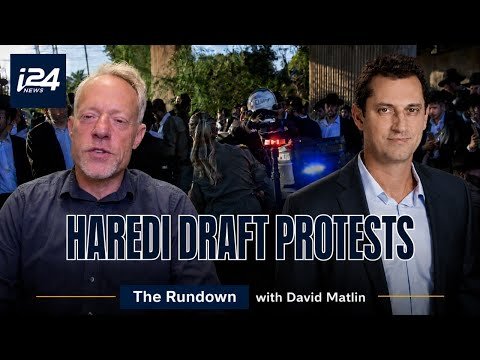
Immediate Clashes Erupt at Ganot Junction
The demonstrations halted movement on key arteries connecting Tel Aviv to Jerusalem and surrounding areas, directly affecting daily commutes for thousands of Israeli civilians and commercial transport routes used by the IDF for logistics.
Similar actions the previous week had already blocked central highways and railroads, showing the pattern of escalation that security forces from the Israel Police now confront on a recurring basis.
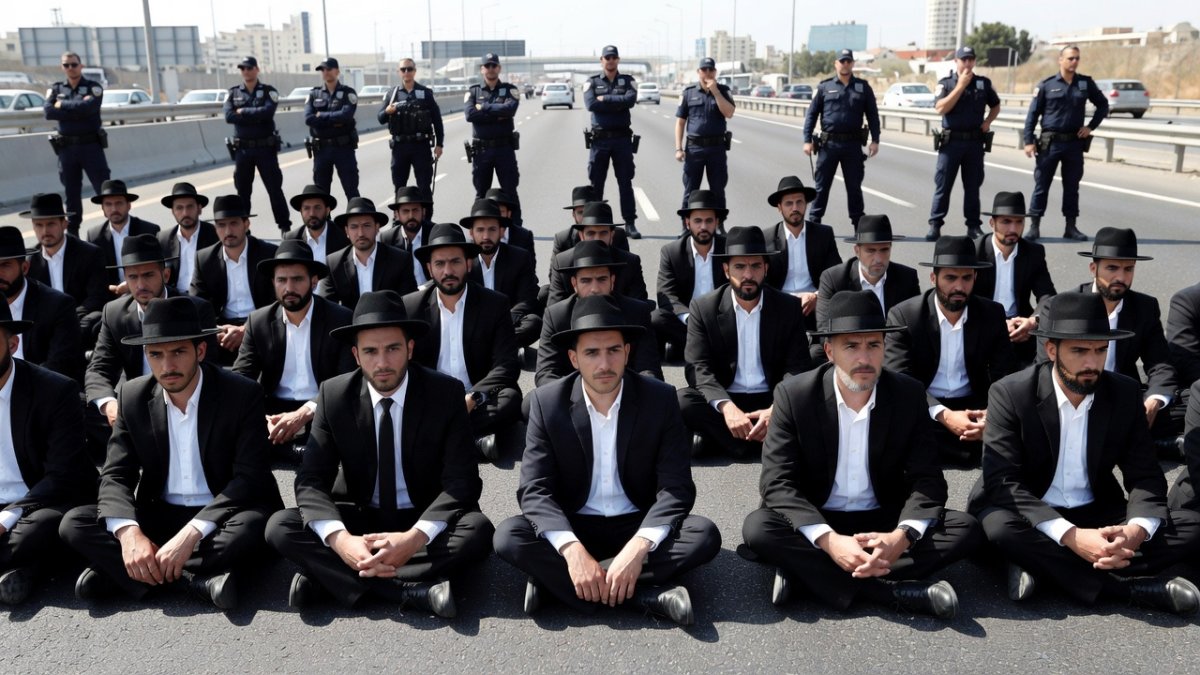
Supreme Court Ruling Intensifies Conscription Crisis
The Supreme Court of Israel ruled that blanket draft exemptions for yeshiva students violate the law, forcing the government to address the status of approximately 66,000 Haredi men of draft age who received exemptions in recent years.
The IDF stated it possesses the capacity to absorb thousands of new Haredi recruits provided proper accommodations for religious observance are implemented at training bases across the country.
Arrests of non-compliant yeshiva students triggered the June 12 protests, linking directly to ongoing enforcement efforts by recruitment offices operating under the Ministry of Defense in Jerusalem and other districts.
Secular Israelis in cities such as Tel Aviv and Haifa have repeatedly voiced concerns that the exemptions create an unequal burden on those who complete mandatory service in combat and support units.
Coalition Partners Face Renewed Political Pressure
Haredi political parties Shas and United Torah Judaism, serving as key coalition partners in the current government, have warned that any new draft legislation could trigger another coalition crisis inside the Knesset.
Prime Minister's Office officials have held repeated rounds of talks with party leaders to craft a revised conscription framework that satisfies both the Supreme Court directive and the demands of Haredi representatives from Jerusalem and Bnei Brak.
The Foreign Ministry has monitored international reactions, noting that prolonged domestic instability over the draft issue could affect diplomatic coordination with the United States and European Union partners on regional security matters.
Shin Bet assessments have flagged the risk that sustained street protests could spill into broader public disorder, requiring coordinated responses between national police command and local authorities in Haredi neighborhoods.
Religious and Social Fault Lines Deepen
Within the Haredi community, leaders maintain that full-time Torah study at yeshivas holds equal national value to military service, a position rooted in institutions located in Jerusalem's Mea Shearim and other historic centers of ultra-Orthodox life.
Secular advocacy groups and families of IDF soldiers have organized counter-demonstrations in Tel Aviv, arguing that shared sacrifice strengthens national resilience amid ongoing threats from Gaza and Hezbollah positions along the northern border.
Daily life in mixed cities such as Beit Shemesh has seen increased tension between Haredi and non-Haredi residents over recruitment enforcement and public space usage during protest periods.
The IDF has developed specialized programs at certain bases to accommodate Haredi recruits, including separate living quarters and adjusted schedules that respect prayer times and dietary requirements.
Next Steps for Legislation and Enforcement
Parliamentary committees in the Knesset are scheduled to resume deliberations on a new draft law in the coming weeks, with input from both defense officials and Haredi party negotiators.
Security planners at the Ministry of Defense are preparing contingency measures should protests expand to additional junctions and rail lines beyond the central region affected.
Regional analysts note that resolution of the conscription issue carries implications for Israel's overall force readiness, particularly as the IDF maintains operations along the Gaza border and in the West Bank.
Public discourse in Jerusalem and Tel Aviv continues to focus on balancing religious freedoms with the legal requirement of military service, a debate that will shape coalition stability and street-level dynamics in the months ahead.
By Hannah Berg, Staff Writer
This article was produced with AI-assisted research and editorial support. Reporting is based on sources cited in the article.
What's Your Reaction?
 Like
0
Like
0
 Dislike
0
Dislike
0
 Love
0
Love
0
 Funny
0
Funny
0
 Wow
0
Wow
0
 Sad
0
Sad
0
 Angry
0
Angry
0
Israel Correspondent at Global1.News. Based in Tel Aviv, covering Israeli politics, security, technology, and society. Provides balanced, deeply-sourced reporting on one of the most closely-watched regions in the world.











Comments (0)