
China's Import of Custard Apples is Sparking Fears in Taiwan
China's Import of Custard Apples is Sparking Fears in Taiwan The Unique Position of Atemoya in Taiwan's Agriculture The atemoya, recognized as a hybrid custard apple featuring creamy white flesh encased in a rough green exterior, stands as a signature product of Taiwan's Taitung county. This fruit has carved out a distinctive niche in the island's agricultural landscape, contri
The Unique Position of Atemoya in Taiwan's Agriculture
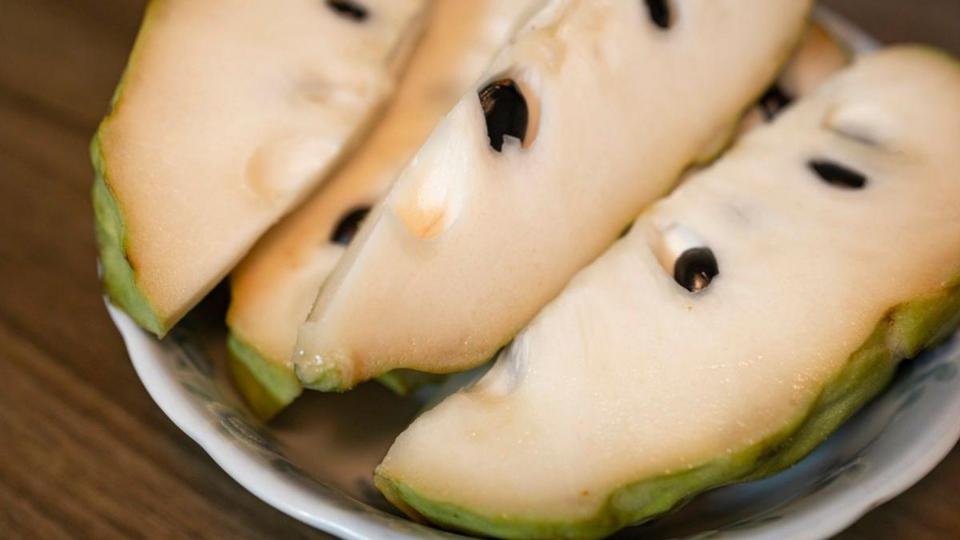
The atemoya, recognized as a hybrid custard apple featuring creamy white flesh encased in a rough green exterior, stands as a signature product of Taiwan's Taitung county. This fruit has carved out a distinctive niche in the island's agricultural landscape, contributing to local economies through specialized cultivation practices that emphasize quality and regional branding. Farmers in Taitung have invested years in developing techniques suited to the area's climate, positioning atemoya as more than a mere commodity but a symbol of Taiwan's horticultural expertise.
Its appeal extends beyond domestic markets, with potential for international recognition due to its distinctive texture and flavor profile. The fruit's cultivation supports employment in rural areas and integrates with broader agricultural networks that include related produce. This specialization underscores the vulnerability of concentrated production zones when external market dynamics shift, as reliance on a single export destination can amplify risks for entire communities dependent on seasonal harvests.
Efforts to highlight atemoya's value have included comparisons to high-tech sectors, framing it as a cornerstone of Taiwan's soft power in global trade. Such positioning reflects strategic thinking among local leaders who see agricultural specialties as parallel to advanced industries in driving economic resilience. The focus on Taitung's output illustrates how regional specialties can influence national discussions on trade diversification and self-sufficiency in food production.
China's Commitment to Expanding Taiwanese Fruit Imports
At a forum held in Xiamen, China pledged to increase purchases of atemoya along with other Taiwanese exports such as fish and tea. This announcement formed part of a wider initiative aimed at broadening the scope of cross-strait trade in agricultural goods. The commitment was presented as an opportunity for Taiwanese producers to access larger markets, potentially stabilizing incomes for growers in specialized regions like Taitung.
Business leaders and opposition politicians from Taiwan attended the event, highlighting interest in exploring these expanded trade avenues despite restrictions imposed by Taiwan's central government on official participation. The forum served as a platform for discussing practical steps toward greater import volumes, with emphasis on the mutual benefits of increased flows of these specific products. Such pledges align with ongoing efforts to integrate Taiwanese specialties into supply chains on the mainland.
The inclusion of atemoya in these discussions points to targeted interest in high-value fruits that complement existing trade categories. Participants explored avenues for scaling up shipments, which could involve adjustments in logistics and quality standards to meet demand. This approach reflects a calculated expansion of import categories that builds on prior patterns of agricultural exchange between the two sides.
The Pattern of 'Raise, Trap, Kill' as Described by Taiwanese Authorities
Taiwan's agriculture ministry has characterized China's approach to atemoya imports as a classic example of a "raise, trap, kill" process. In this framework, initial encouragement of exports creates dependency among farmers, followed by sudden policy shifts that expose producers to abrupt market disruptions. The ministry's assessment draws from observed sequences where reliance on a single large buyer leads to heightened vulnerability when conditions change.
This description emphasizes the strategic use of import policies to influence agricultural sectors over time. By first promoting purchases and then altering terms, the process can leave producers without alternative outlets, forcing rapid adjustments in production or marketing. The ministry's warning serves as a cautionary note for industries that have oriented significant portions of output toward mainland markets.
Officials have linked this pattern to broader concerns about economic leverage in cross-strait relations. The ministry advocates for proactive measures to mitigate such risks, including the development of varied processing methods that extend beyond fresh exports. These recommendations aim to build buffers against potential future interruptions in trade flows.
Disruptions from Previous Import Suspensions and Bans
In 2021, China suspended imports of atemoya from Taiwan, citing concerns over pests. This action followed a similar ban on Taiwanese pineapples that same year, which caused substantial disruption to farmers' livelihoods and prompted a domestic consumption campaign within Taiwan. The suspension highlighted the immediate effects of import halts on specialized producers who had geared operations toward mainland demand.
Partial resumption of atemoya imports occurred in 2023, allowing limited volumes to resume under adjusted protocols. However, the earlier interruption had already prompted reevaluation of export strategies among Taitung growers. The sequence of events demonstrated how pest-related justifications could lead to extended periods of uncertainty for the industry.
The 2021 pineapple ban provided a direct precedent, illustrating the ripple effects across agricultural communities when access to key markets is curtailed. Farmers responded by seeking local outlets, which temporarily supported prices but could not fully offset losses from export shortfalls. These episodes have informed ongoing debates about the sustainability of concentrated export dependencies.
Recent Tax Applications and Domestic Cultivation Expansion by China
China applied taxes on atemoya imports in 2024, adding another layer of complexity to trade conditions following the partial resumption. This measure coincided with China's own expansion of atemoya cultivation, which introduces direct competition for Taiwan's producers in both domestic and potentially third markets. The growth of mainland production capacity poses a structural challenge to the long-term viability of Taiwan's specialized output.
The combination of taxation and increased local supply on the mainland alters the economic calculus for exporters. Taiwanese farmers now face not only policy barriers but also the prospect of reduced market share as Chinese cultivation scales up. This development underscores the dual pressures of regulatory changes and competitive shifts within the same product category.
Agricultural planners in Taiwan have noted that such expansions by China reflect deliberate investments in replicating successful Taiwanese varieties. The resulting oversupply dynamics could further compress margins for Taitung operations, prompting calls for accelerated innovation in product forms that differentiate Taiwan's offerings.
The Xiamen Forum and Participation Controversies
The Xiamen forum drew attendance from business leaders and opposition politicians from Taiwan, even as the central government maintained an official ban on such participation. Taiwan's Mainland Affairs Council issued warnings that attendees could face investigation for their involvement, framing the event as potentially undermining official cross-strait policies. This stance reflects efforts to maintain unified approaches to trade engagements.
Critics within Taiwan, including KMT lawmakers, argued that the government warnings represented an attempt to politicize the atemoya industry unnecessarily. They contended that commercial discussions at the forum could yield practical benefits without compromising broader security considerations. The debate illustrates tensions between economic pragmatism and regulatory oversight in managing cross-strait interactions.
Taipei Mayor Chiang Wan-an referred to atemoya as the "TSMC of the fruit world," emphasizing its economic importance while accusing the Mainland Affairs Council of using the issue to "bully and oppress" Taiwanese farmers. Such rhetoric highlights how agricultural trade issues intersect with domestic political discourse, influencing public perceptions of trade policy effectiveness.
Strategic Implications for Taiwan's Export Strategy
Taiwan's agriculture ministry has urged the adoption of diversified processing techniques for atemoya, including frozen fruit, puree, and wine production. These recommendations aim to reduce dependence on fresh fruit exports and create value-added products that may withstand market fluctuations more effectively. Implementation of such strategies could help stabilize revenues for Taitung producers amid evolving trade conditions.
The overall situation demonstrates the interplay between import policies, competitive cultivation, and internal political dynamics in shaping agricultural outcomes. By focusing on processing diversification, Taiwan seeks to enhance resilience without relying solely on any single market channel. This approach aligns with efforts to safeguard rural economies that have historically benefited from specialty fruit exports.
Longer-term considerations include balancing the pursuit of expanded trade opportunities with safeguards against over-reliance. The atemoya case serves as a reference point for evaluating similar dynamics in other Taiwanese agricultural sectors, where historical patterns of market access and restriction continue to inform strategic planning. Through these measures, the industry aims to navigate uncertainties while preserving its established strengths in quality production.
By Prof. Marcus Chen, Staff WriterThis article was produced with AI-assisted research and editorial support. Reporting is based on sources cited in the article.
What's Your Reaction?
 Like
0
Like
0
 Dislike
0
Dislike
0
 Love
0
Love
0
 Funny
0
Funny
0
 Wow
0
Wow
0
 Sad
0
Sad
0
 Angry
0
Angry
0

World Politics Analyst at Global1.News. Based in Beijing, covering US-China relations, global trade, and geopolitical strategy. Brings deep analytical perspective to the power dynamics shaping international affairs.















Comments (0)