
China's Ethnic Unity Law Signals Expanded Reach Beyond Borders
The Ethnic Unity Law and Its Core Provisions The Ethnic Unity Law represents a significant development in China's legislative framework aimed at addressing matters of national cohesion and cultural integration within its borders. This legislation, which takes effect on Wednesday, establishes clear guidelines for promoting harmony among various ethnic groups recognized by the st
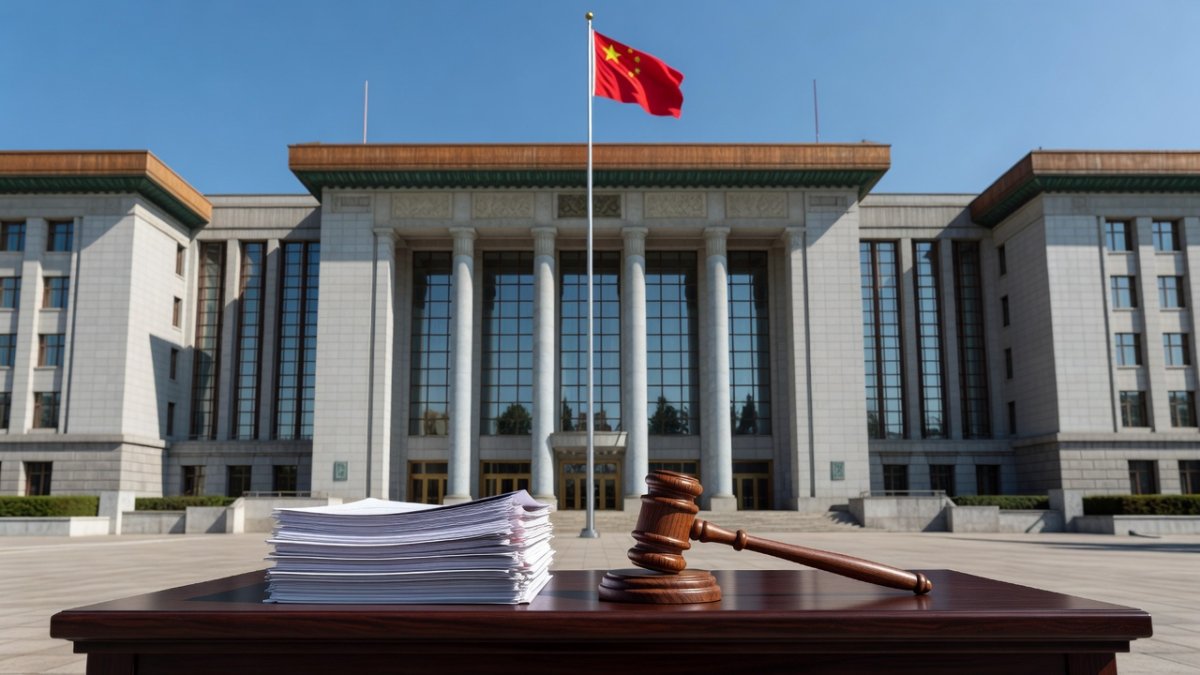
The Ethnic Unity Law and Its Core Provisions
The Ethnic Unity Law represents a significant development in China's legislative framework aimed at addressing matters of national cohesion and cultural integration within its borders. This legislation, which takes effect on Wednesday, establishes clear guidelines for promoting harmony among various ethnic groups recognized by the state. In an academic analysis, one observes that such laws often serve to reinforce the principle that all territories, including those with distinct historical narratives like Tibet, form an inseparable component of the national whole. Beijing maintains that Tibet constitutes an integral part of China, a position that underpins much of the policy orientation reflected in this new statute. The law's structure emphasizes conformity to state-defined standards of unity, thereby shaping public discourse and individual expressions related to ethnic identity.
Further examination reveals that the statute seeks to balance the protection of ethnic diversity with the imperative of preventing actions perceived as divisive. Official interpretations highlight the necessity for all citizens and entities to align with these unity objectives, avoiding any form of advocacy that could be construed as undermining collective stability. This approach draws from longstanding strategic priorities in governance, where legal instruments function as tools for maintaining internal order amid external pressures. The provisions extend beyond domestic application in certain respects, signaling an intent to project regulatory influence more broadly. Academic observers note that this reflects a calculated evolution in how states manage transnational narratives concerning sensitive regions.
Contextualizing the law within recent diplomatic engagements provides additional insight. Several world leaders, including US President Donald Trump and UK PM Sir Keir Starmer, have visited Beijing recently, coinciding with the law's implementation phase. These interactions occur alongside loosened visa restrictions that encourage people from 77 countries to visit China, potentially facilitating greater people-to-people exchanges while the new legal measures take hold. Such developments underscore the multifaceted nature of China's international posture, where legal reforms intersect with efforts to enhance global connectivity. The law thus operates not in isolation but as part of a broader strategic calculus designed to affirm sovereignty while navigating complex bilateral relationships.
Article 63 and Extraterritorial Legal Reach
Article 63 of the Ethnic Unity Law introduces provisions that authorize action against organizations and individuals outside China that undermine ethnic unity or create division. This clause marks a notable expansion in the potential scope of Chinese legal authority, extending considerations beyond territorial boundaries. In scholarly terms, extraterritorial reach in legislation often raises questions about jurisdiction, sovereignty, and the practical limits of enforcement in an interconnected world. The article specifically targets behaviors deemed harmful to ethnic cohesion, including those expressed through digital platforms or international advocacy. Critics abroad have expressed apprehension regarding how this might affect their activities, particularly when such expressions involve support for figures viewed unfavorably by Beijing.
The extraterritorial dimension invites analysis of how states increasingly incorporate global dimensions into domestic statutes. By including language that addresses actions originating from abroad, the provision aims to deter perceived threats to national integrity from distant locations. This aligns with patterns observed in various legal systems where governments seek to regulate conduct that crosses borders. The focus on undermining ethnic unity encompasses a wide array of potential expressions, from public statements to organizational affiliations. Academic discourse on this topic emphasizes the tension between national security imperatives and the principles of free expression that prevail in many host countries where critics reside.
Implementation of such clauses requires careful consideration of international norms and bilateral agreements. The law's designers appear to have crafted Article 63 to serve as a deterrent, signaling that geographic distance does not confer immunity from scrutiny. This approach reflects strategic thinking about the role of law in preserving state narratives on sensitive issues such as separatism. As the measure comes into force, observers will monitor its application in relation to existing frameworks for international cooperation. The provision thus contributes to an evolving landscape where legal boundaries adapt to the realities of global communication and mobility.
The Signal to Dissidents and Critics Abroad
The introduction of the Ethnic Unity Law, particularly through Article 63, conveys a clear message to individuals and groups operating outside China who voice opposition to official positions. Critics of the Chinese government who live abroad fear what the new law means for them, as it potentially broadens the avenues through which authorities might respond to dissenting views. This signal operates on multiple levels, combining legislative text with the implicit threat of enforcement mechanisms. In academic terms, such laws function as communicative instruments, shaping behavior through anticipation of consequences rather than solely through direct application. The emphasis on preventing division serves to discourage expressions that challenge the state's territorial and ethnic policies.
One illustrative case involves Zhang Yadi, 23, also known as Tara, who is believed to be in detention in China after posting support for the Dalai Lama while studying abroad. Beijing views the exiled spiritual leader as a separatist, a stance that informs the broader context of the law's objectives. This incident highlights how online activities conducted from foreign locations can intersect with domestic legal processes upon return or through other channels. The law's provisions may amplify concerns among overseas communities, prompting self-censorship or reevaluation of public stances. Strategic analysis suggests that the measure aims to extend the reach of normative expectations regarding ethnic unity into transnational spaces.
Furthermore, the legislation underscores the challenges faced by diaspora populations in balancing personal convictions with potential legal repercussions. Academic perspectives on authoritarian legal strategies often point to the use of such tools to maintain narrative control across borders. By codifying responses to external actions, the law reinforces the idea that loyalty to ethnic unity principles transcends location. This dynamic contributes to a climate where individuals must navigate complex considerations when engaging with topics deemed sensitive by Chinese authorities. The overall effect is to project an image of comprehensive regulatory oversight in matters of national cohesion.
European Union Perspectives and Diplomatic Relations
Relations between the European Union and China have encountered new dimensions with the advent of the Ethnic Unity Law. Members of the European Parliament have warned member states to consider suspending extradition treaties with China, reflecting heightened caution regarding potential legal entanglements. This recommendation arises amid concerns that the law's extraterritorial elements could affect EU citizens or residents engaged in advocacy related to ethnic issues. In an academic framework, such parliamentary interventions illustrate the interplay between domestic legislation in one jurisdiction and protective measures in another. The warnings serve as a strategic response aimed at safeguarding individuals within EU territories from unforeseen legal exposures.
Diplomatic visits by prominent figures, including US President Donald Trump and UK PM Sir Keir Starmer to Beijing recently, provide a backdrop against which these EU considerations unfold. These engagements highlight ongoing efforts to manage bilateral ties even as legislative changes introduce uncertainties. Loosened visa restrictions encouraging visits from 77 countries further complicate the picture, as they promote openness while the new law asserts boundaries on expression. Scholars of international relations observe that such dual tracks—facilitating movement alongside regulatory tightening—characterize contemporary statecraft in major powers. The EU's position thus emerges from a careful assessment of risks and opportunities in the evolving relationship.
Amnesty International Deputy Regional Director Sarah Brooks has commented on the law, stating that rather than protecting diversity and equality, the law requires conformity. This perspective resonates with EU parliamentary concerns, emphasizing potential implications for human rights frameworks that EU member states uphold. Academic inquiry into these dynamics reveals how legal reforms in China prompt reevaluations of cooperative mechanisms, including extradition arrangements. The resulting discourse contributes to a more cautious approach in EU-China interactions, where policy adjustments seek to mitigate perceived overreaches. Overall, the situation exemplifies the complexities inherent in maintaining robust international partnerships amid shifting legal landscapes.
International Concerns and Enforcement Realities
Enforcement realities surrounding the Ethnic Unity Law and its Article 63 remain subject to ongoing observation by the international community. While the legislation authorizes actions against external entities that undermine ethnic unity, practical application depends on factors such as cooperation from foreign governments and the availability of jurisdictional mechanisms. Academic analyses of extraterritorial laws frequently note discrepancies between statutory language and operational outcomes, influenced by diplomatic relations and legal traditions in host countries. The signal sent to critics abroad thus operates partly through uncertainty, encouraging restraint without necessitating frequent direct interventions. This approach aligns with strategic uses of law to shape global behaviors indirectly.
The case of Zhang Yadi illustrates potential pathways for enforcement, where activities conducted abroad intersect with domestic proceedings upon an individual's return. Beijing's characterization of the Dalai Lama as a separatist provides the ideological foundation for such measures, linking individual expressions to broader narratives of division. International actors, including those in the European Parliament, respond by advocating protective steps like treaty suspensions to address these realities. The law's timing, effective Wednesday, coincides with increased diplomatic traffic to Beijing, suggesting an integrated strategy that combines legal assertion with engagement. Observers anticipate that enforcement will evolve based on specific incidents and responses from affected parties.
Broader global reactions underscore the challenges of implementing provisions with extraterritorial scope in a multipolar world. Loosened visa policies for 77 countries indicate China's interest in fostering international ties, yet these coexist with measures that may constrain certain forms of discourse. Academic perspectives emphasize the need for nuanced understanding of how such laws function within existing international legal architectures. Enforcement will likely hinge on case-by-case assessments rather than uniform application, reflecting pragmatic considerations in foreign policy. The overall framework positions the Ethnic Unity Law as a tool for reinforcing core principles while navigating the intricacies of cross-border interactions.
Strategic Implications for Global Discourse on Ethnic Issues
The Ethnic Unity Law's provisions, especially Article 63, carry strategic implications for how ethnic and territorial matters are discussed on the international stage. By extending potential accountability to actions abroad, the legislation seeks to influence narratives surrounding regions like Tibet, where official positions emphasize indivisibility from China. This development prompts academic reflection on the balance between state sovereignty and the transnational flow of ideas. Critics abroad, already wary of repercussions, may adjust their approaches in light of the clarified legal stance. The measure thus contributes to a reconfigured environment for advocacy and commentary on sensitive topics.
Integration with recent high-level visits, such as those by US President Donald Trump and UK PM Sir Keir Starmer, highlights China's multifaceted engagement strategy. These interactions occur as the law activates, potentially serving to contextualize the legislation within cooperative frameworks. Visa relaxations for visitors from 77 countries further illustrate efforts to project accessibility alongside regulatory firmness. In this context, the law functions as both a domestic consolidator and an international signal. Strategic thinkers note that such combinations allow states to advance core interests while managing external perceptions.
Ultimately, the legislation invites continued scholarly attention to its effects on global discourse. The quote from Amnesty International Deputy Regional Director Sarah Brooks regarding conformity rather than diversity captures one dimension of international critique. European parliamentary recommendations on extradition treaties add another layer of response. As enforcement realities unfold, the law's impact on dissidents and relations will provide empirical material for analysis. This evolving situation exemplifies the intersections of law, diplomacy, and identity in contemporary geopolitics.
By Prof. Marcus Chen, Staff Writer.This article was produced with AI-assisted research and editorial support. Reporting is based on sources cited in the article.
What's Your Reaction?
 Like
0
Like
0
 Dislike
0
Dislike
0
 Love
0
Love
0
 Funny
0
Funny
0
 Wow
0
Wow
0
 Sad
0
Sad
0
 Angry
0
Angry
0

World Politics Analyst at Global1.News. Based in Beijing, covering US-China relations, global trade, and geopolitical strategy. Brings deep analytical perspective to the power dynamics shaping international affairs.













Comments (0)