
US-Iran War Escalates: State Department Issues Worldwide Travel Warning After Attack Kills 2 American Soldiers
US-Iran war escalates after Iranian attack kills 2 US soldiers in Jordan; US launches 8th night of strikes on Iranian targets; State Dept issues worldwide travel warning citing escalation risks; 16 US troops dead since Feb 2026, 11k+ targets hit; no diplomatic off-ramp in sight.
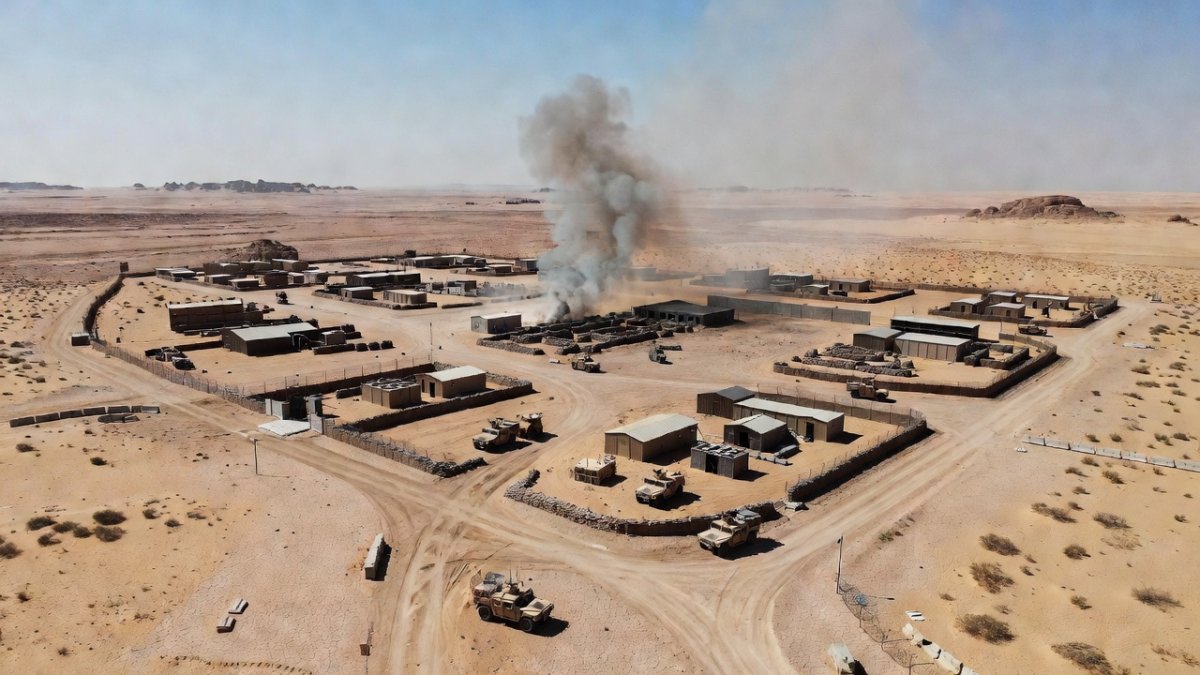
The United States just lost two more soldiers in a widening war with Iran, and the State Department’s worldwide travel warning is the clearest signal yet that this conflict has no guardrails left. On July 18, Iranian missiles and drones slammed into a US base in Jordan, killing two Americans, leaving one missing, and forcing four others into medical evacuation. Hours later, the eighth straight night of American strikes rained down on Iranian territory. This is not containment. This is open-ended escalation with American troops and civilians now squarely in the crosshairs.
Breaking: What Happened in Jordan
The attack hit a US installation in Jordan with precision ballistic missiles and drones. Two service members died on the spot. One remains unaccounted for. Four others were rushed out for treatment. CENTCOM confirmed the casualties without the usual fog of vague language. This was not a proxy skirmish. Iranian forces struck a sovereign US position and drew American blood directly.
President Trump, in a NewsNation call, called the deaths “a very sad thing.” That is the extent of the public reaction from the commander-in-chief so far. No promises of swift justice. No timeline for de-escalation. Just acknowledgment that more Americans are coming home in coffins while the war machine keeps turning.
The Response: Eighth Night of Strikes
The United States answered with another barrage. CENTCOM targeted coastal surveillance posts, air defense radars, maritime facilities, and missile and drone storage sites along Iran’s coastline. This marks the eighth consecutive night of strikes since hostilities resumed in February. The tempo shows no sign of slowing. Each night adds new coordinates to the target list and new risks for US forces stretched across the region.
One strike hit a desalination plant in Iran’s Jask county, cutting water to roughly 10,000 people in twenty villages. That is the reality of modern war: infrastructure collapses and civilians pay first. Iran’s health ministry reports 50 killed and more than 500 wounded since the latest round began. Those numbers will climb. They always do.
The eighth night of strikes relied on a mix of B-2 bombers flying from Diego Garcia, Tomahawk cruise missiles launched from the destroyer USS Ross and two other Arleigh Burke-class ships in the Gulf, and carrier-based F/A-18s operating from the USS Gerald R. Ford strike group. CENTCOM described the targets as “command-and-control nodes and strike infrastructure” meant to blunt Iran’s ability to mass missiles and drones against U.S. positions. In practice the list keeps expanding each night, with fresh coordinates added after every Iranian launch.
One of those coordinates was a desalination plant in Jask county. The strike cut water to roughly 10,000 residents across twenty villages already short on fuel for backup generators. Iran’s health ministry says the loss of potable water has driven a spike in dehydration cases and forced emergency trucking that itself becomes a target. Humanitarian groups on the ground report that the plant served both civilian and military-adjacent populations, raising the familiar question of whether dual-use infrastructure counts as a legitimate military objective or simply another turn of the retaliation wheel.
So far the campaign has not produced the promised degradation of Iranian launch capacity. Missile and drone salvos continue at roughly the same tempo, and each U.S. strike gives Tehran fresh propaganda footage of American aircraft and ships operating inside its claimed waters. The result is a tightening loop: more targets hit, more Iranian responses generated, more U.S. forces required to protect the next wave of strikes. No measurable reduction in Iranian capability has offset the steady climb in American casualties and regional resentment.
Worldwide Travel Warning — What It Means
The State Department issued a Worldwide Caution on July 18 and 19. Americans are told to exercise increased caution everywhere, with special emphasis on the Middle East because of “potential for unforeseen escalation.” That phrasing is bureaucratic code for “we have no idea how far this spreads.” Level 4 “Do Not Travel” advisories already cover Haiti and parts of Mexico. The new warning effectively puts the entire planet on notice that US-Iran fighting can reach any airport, any hotel, any street.
This is not routine caution. It is an admission that the conflict has outgrown its original boundaries. Commercial flights, shipping lanes, and expatriate communities now sit under the same threat umbrella. If you are an American abroad, the government’s message is simple: you are on your own if things spiral further.
The last time the State Department issued a worldwide caution was March 2026, also tied to Iranian threats after the first round of U.S. strikes on coastal radars. That alert was lifted after six weeks. The July 18–19 version carries no expiration and uses the explicit phrase “potential for unforeseen escalation,” language that appears in internal cables when planners cannot rule out attacks on U.S. diplomatic facilities from Beirut to Manila. The warning effectively tells Americans that any airport, hotel, or government building could become a target without warning.
For the roughly 45,000 U.S. citizens still in the Middle East, the advisory has translated into concrete movement restrictions. Embassies in Jordan, Kuwait, and Iraq have ordered non-emergency personnel to depart and told remaining staff to remain inside hardened compounds. Commercial carriers have suspended flights into Doha, Dubai, and Riyadh through at least the end of the month, with reroutes adding six to nine hours and thousands of dollars per ticket. Insurance underwriters have pulled war-risk coverage for the entire Gulf, leaving airlines to self-insure or cancel.
The specific threats cited include Iranian-backed groups already under surveillance for plotting attacks on U.S. embassies and consulates outside the immediate theater. Intelligence summaries shared with allies describe surveillance of diplomatic housing compounds in Ankara, Amman, and even European capitals hosting large Iranian exile communities. The worldwide label is therefore not rhetorical; it reflects the assessment that Iranian retaliation is no longer geographically bounded.
The Broader War: 11,000 Targets and Counting
Since fighting reignited in February 2026, the United States has struck more than 11,000 targets inside Iran. Sixteen American service members have been killed and over 430 wounded. Iran claims 50 dead and hundreds injured on its side. The Strait of Hormuz remains the central flashpoint, with Tehran openly threatening commercial shipping that carries a fifth of the world’s oil.
Eleven thousand targets is not a limited campaign. It is systematic destruction of Iran’s military and dual-use infrastructure. Yet the attacks continue and the body count on both sides keeps rising. There is no diplomatic off-ramp on the table. Both capitals are doubling down, expanding the scope and intensity with each passing week. The war is feeding itself.
Global Fallout: Oil, Shipping, Diplomacy
Any sustained threat to the Strait of Hormuz sends oil prices higher and insurance rates through the roof. Shipping companies are already rerouting vessels, adding weeks and millions in costs. The ripple effects hit gas stations from California to Europe within days. Meanwhile, traditional diplomatic channels remain frozen. No back-channel talks, no cease-fire proposals gaining traction, just nightly exchanges of fire and fresh casualty reports.
The United States has also refreshed warnings for Haiti and Mexico, signaling that resources and attention are stretched thin. When a single conflict forces global travel alerts and diverts focus from other hotspots, the strategic overstretch becomes impossible to ignore. Iran’s leadership knows this. So does every other adversary watching the United States burn through munitions and political capital in the Gulf.
Brent crude has climbed past $118 a barrel, up more than 35 percent since the February resumption of strikes, with futures markets pricing in sustained disruption through the fourth quarter. European NATO members already facing winter storage shortfalls have watched LNG spot prices jump in tandem, prompting emergency talks in Brussels about shared purchases that would further crowd out Asian buyers. The energy shock has given Iran leverage it lacked during previous rounds of sanctions.
Israel’s posture has hardened in parallel. Prime Minister Netanyahu warned in a televised address that any Iranian missile crossing into Israeli airspace would trigger “immediate and disproportionate” strikes on Iranian oil terminals, a threat that has already prompted additional U.S. air-defense deployments to the eastern Mediterranean. At the same time, Gulf hosts of American bases are absorbing indirect fire. UAE and Bahraini officials have privately told Washington that Iranian drones launched at U.S. positions in their territory are testing whether those governments will allow American forces to remain once civilian casualties mount.
The cumulative effect is a slow slide from bilateral U.S.-Iran fighting into a wider regional conflict. With every additional night of strikes, more capitals are forced to choose sides or harden defenses, and the original objective of restoring deterrence looks increasingly distant from the expanding battlefield. No capital has yet offered a credible off-ramp that both sides could accept without appearing to capitulate.
The Bottom Line
Two more American soldiers are dead. The eighth night of strikes has already happened, and nothing suggests the ninth will be the last. The State Department’s worldwide warning is not theater; it is recognition that this war can touch Americans anywhere. Eleven thousand targets later, the only certainty is more targets, more casualties, and no visible exit. The United States is locked into a conflict whose costs are rising faster than any stated objectives. That is the situation on the ground and in the air tonight. Everything else is just noise.
By Jessica Ali, Staff WriterThis article was produced with AI-assisted research and editorial support. Reporting is based on sources cited in the article.
What's Your Reaction?
 Like
0
Like
0
 Dislike
0
Dislike
0
 Love
0
Love
0
 Funny
0
Funny
0
 Wow
0
Wow
0
 Sad
0
Sad
0
 Angry
0
Angry
0

Editor-in-Chief at Global1.News. Atlanta-based journalist who cuts through the BS and tells it like it is. Lead anchor, host, and the voice you hear when the spin stops and the truth starts.












Comments (0)