
Palestinian woman dies after Israeli army delays ambulance for more than 30 minutes in Ramallah
Sujoud Fuqaha, a 30-year-old mother of two, died after Israeli forces delayed her ambulance for more than 30 minutes at a military checkpoint near Sinjil in the occupied West Bank. The town has been under full closure since July 15, 2026. According to WHO documentation, checkpoint delays cause an average 45-minute increase in ambulance response times. UN OCHA reports more than 700 barriers across the West Bank. Monitoring organizations have documented 14 similar deaths since 2023.
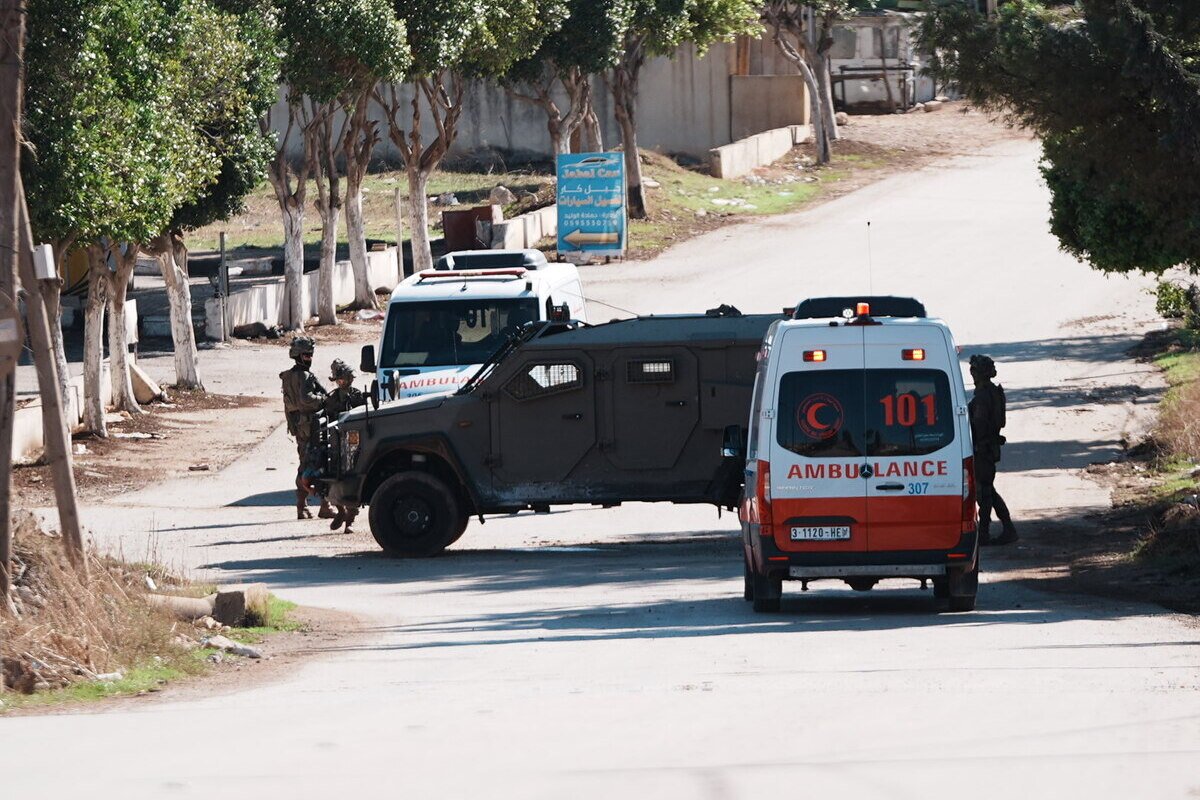
The Fatal Delay at the Sinjil Barrier
A 30-year-old mother of two, Sujoud Fuqaha, died after an ambulance transporting her during a heart attack was held for more than 30 minutes at an Israeli military gate outside Sinjil. Mayor Mutez Tawafsha of the Sinjil Municipality stated in a video announcement that the crew was denied passage despite the clear medical urgency, and that time lost at the barrier prevented her arrival at a hospital equipped to treat cardiac emergencies.
Fuqaha leaves behind two young children. Community members have gathered to support the family. Tawafsha recounted the incident: "We watched the ambulance wait while soldiers checked papers that should never have mattered more than a woman's life." Residents have organized vigils and petitions, demanding accountability.
The Siege Imposed on Sinjil Since July 2026
Sinjil, located 17 kilometers north of Ramallah in the occupied West Bank, has remained under full closure since July 15, 2026. All entrances were sealed with iron gates and earth mounds, cutting the town off from surrounding areas. These measures followed clashes after settler incursions on July 17. The restrictions have isolated the town's several thousand inhabitants and limited access to essential services beyond the immediate locality.
Repeated Military Raids and Road Closures
Local accounts describe a pattern of Israeli forces conducting frequent raids combined with sudden roadblocks. These actions have compounded the effects of the permanent barriers erected in mid-July 2026. Movement between Sinjil and Ramallah now requires passage through controlled points where soldiers determine entry or exit on a case-by-case basis. Such procedures extend travel times even for routine journeys and create additional hazards during health crises.
Historical Role of Checkpoints Across the West Bank
Israeli military checkpoints and barriers have formed part of the control system in the West Bank for decades. Their numbers expanded significantly after 2000 and continued to grow in subsequent years. According to UN OCHA data, more than 700 permanent barriers and flying checkpoints exist across the West Bank, regulating Palestinian movement between towns, villages, and medical facilities. These installations often require prior coordination or result in unpredictable waits.
Consequences for Emergency Medical Access
Delays at checkpoints have repeatedly interfered with ambulance transfers. In cardiac cases, every minute without intervention reduces survival chances. The more than 30-minute hold reported in Fuqaha's case illustrates how physical barriers intersect with medical timelines. Similar incidents have been documented in other sealed localities, where patients must navigate multiple layers of approval before reaching hospitals.
According to WHO documentation, checkpoint delays in the West Bank cause an average 45-minute increase in ambulance response times, directly contributing to higher mortality rates for trauma and obstetric emergencies. These obstructions compound existing shortages of mobile clinics, leaving rural communities like Sinjil especially vulnerable.
Since 2023, monitoring organizations have documented at least 14 cases of patients dying at or near checkpoints after prolonged holds, including pregnant women and children. Similar sealed towns such as Huwwara and Beit Furik report parallel patterns, where barriers sever access to hospitals in Nablus or Ramallah.
Palestinian Red Crescent paramedics and Physicians for Human Rights Israel have stated that soldiers routinely override medical priority. Their statements highlight the need for independent monitoring to ensure safe passage for emergency vehicles.
Human Rights Dimensions of Movement Restrictions
Prolonged closures and checkpoint policies affect the right to health and freedom of movement. Article 56 of the Fourth Geneva Convention explicitly requires occupying powers to maintain medical services and ensure civilian access to health care in occupied territories. The checkpoint regime in the West Bank routinely subordinates urgent medical needs to security protocols.
UN OCHA reports more than 700 permanent barriers and flying checkpoints across the West Bank, fragmenting territory and isolating populations from hospitals. These obstacles restrict access to health care for hundreds of thousands of Palestinians.
The UN Special Rapporteur on the occupied Palestinian territory has stated that denying timely medical access constitutes a violation of international human rights law. The International Committee of the Red Cross reinforces that medical personnel and vehicles must be granted safe passage regardless of security concerns.
Local Economy and Daily Realities Under Closure
The siege has disrupted commerce, schooling, and family connections in Sinjil. Farmers cannot easily reach fields or markets, while workers face uncertain commutes to Ramallah. Families report shortages of certain goods and increased costs for items that enter through limited channels. These economic pressures add to the strain created by restricted medical access during emergencies.
Calls for Review of Barrier Procedures
Mayor Tawafsha emphasized that medical emergencies require unimpeded passage. Palestinian officials and health workers have urged Israeli authorities to establish clear protocols that prioritize ambulances at all barriers. International organizations including the UN and EU missions have demanded an independent review of checkpoint protocols to prioritize life-saving medical transport.
Amnesty International and Human Rights Watch have condemned the lethal impact of these policies, describing them as disproportionate restrictions that breach international humanitarian law. Both groups have called for accountability mechanisms until procedures are reformed.
The Palestinian Authority Ministry of Health has condemned the incident and proposed joint medical corridors with international observers. In the broader context of the July 2026 West Bank closures, these demands gain urgency as further barriers threaten to deepen the humanitarian crisis.
By Fatima Al-Rashid, Staff WriterThis article was produced with AI-assisted research and editorial support. Reporting is based on sources cited in the article.
What's Your Reaction?
 Like
0
Like
0
 Dislike
0
Dislike
0
 Love
0
Love
0
 Funny
0
Funny
0
 Wow
0
Wow
0
 Sad
0
Sad
0
 Angry
0
Angry
0

Middle East Correspondent at Global1.News. Based in Beirut, covering politics, conflict, energy, and society across the Middle East. Brings context and depth to a region often reduced to headlines.














Comments (0)