
South Korea and the New Nuclear Geopolitics of Southeast Asia
Nuclear reactor exports have emerged as a consequential arena of strategic competition in the Indo-Pacific, where energy security vulnerabilities, rising electricity demand, and great-power rivalry intersect. Following the release of sectoral components of China’s 15th Five-Year Plan by the end of June 2026, including the plan for a New-type Energy System, Beijing has signaled a clear ambition to expand its role in global nuclear governance and reactor exports. Almost simultaneously, the Unit...
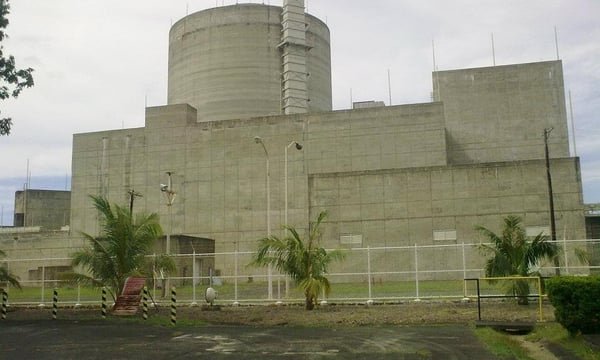
Nuclear reactor exports have emerged as a consequential arena of strategic competition in the Indo-Pacific, where energy security vulnerabilities, rising electricity demand, and great-power rivalry intersect. Following the release of sectoral components of China’s 15th Five-Year Plan by the end of June 2026, including the plan for a New-type Energy System, Beijing has signaled a clear ambition to expand its role in global nuclear governance and reactor exports. Almost simultaneously, the United States, Japan, and South Korea announced a Memorandum of Cooperation on small modular reactors (SMRs) at the NATO Summit, with an initial focus on accelerating deployment in third countries, beginning with the Indo-Pacific. These parallel developments place Southeast Asia at the center of a long-term contest over technology standards, supply chains, and political alignment that will shape regional energy systems for decades.
For South Korea, the stakes extend well beyond commercial opportunity. Nuclear exports sit at the intersection of Seoul’s export-oriented industrial model, its alliance commitments with Washington, and its need to manage a complex relationship with Beijing. Understanding this competition requires attention to Southeast Asia’s structural energy challenges, the distinct export models of the major suppliers, and Korea’s proven capacity to deliver large reactors on time and on budget.
Southeast Asia’s Energy Security Imperative
Energy security remains a structural vulnerability for Southeast Asia. The temporary closure of the Strait of Hormuz underscored the region’s exposure: roughly 60 percent of Southeast Asia’s crude oil passes through that chokepoint. At the same time, electricity demand is projected to grow by more than 100 TWh by 2030, driven by data centers, electric vehicle adoption, and industrial expansion. Several governments have responded by incorporating nuclear power into long-term planning. Indonesia, the Philippines, and Vietnam have set national targets to operate their first nuclear reactors before 2035. Malaysia, Myanmar, Singapore, and Thailand are actively examining nuclear energy as part of their future mix, with particular interest in SMRs.
For states new to nuclear power, the decision to import a reactor is not a simple procurement choice. According to the International Atomic Energy Agency, establishing the necessary regulatory framework, human capital, and safety culture typically requires 10 to 15 years. With reactor operating lives now extended to 60 to 80 years and decommissioning adding another 10 to 25 years, a single import decision can lock in roughly a century of political, legal, educational, and logistical alignment with the supplier country. That duration elevates nuclear exports from a commercial transaction to an instrument of long-term influence.
China’s Export Ambitions and the Limits of Early Performance
China’s 15th Five-Year Plan documents frame nuclear energy as both a domestic decarbonization tool and a vector of external influence. The state-owned China National Nuclear Corporation and China General Nuclear Power Group anchor Beijing’s export effort. China’s Hualong One design is the principal offering for overseas markets. Although earlier aspirations included building dozens of reactors in Belt and Road Initiative countries by 2030, concrete overseas construction has so far been limited primarily to Pakistan. That gap between ambition and realized projects leaves open space for competitors, yet it does not diminish the strategic intent signaled in the new planning documents.
Beijing’s model relies on integrated state financing and the capacity to bundle reactors with broader infrastructure packages. For Southeast Asian governments weighing cost, technology transfer, and political conditionality, Chinese offers will remain part of the calculus. The question is whether China can translate domestic construction experience into timely, bankable projects abroad while navigating growing scrutiny over dual-use technology and supply-chain security.
The US-Japan-Korea SMR Memorandum and Allied Coordination
The Memorandum of Cooperation announced by the United States, Japan, and South Korea at the NATO Summit represents an effort to coordinate allied approaches to SMR deployment in third countries, with the Indo-Pacific as the initial geographic priority. The agreement is best understood as a framework for accelerating cooperation rather than a fully elaborated operational regime; its provisions are coming into force through subsequent working-level arrangements. It builds on existing U.S. tools, including the Foundational Infrastructure for Responsible Use of Small Modular Reactor Technology (FIRST) program, which emphasizes nuclear security, safety, and nonproliferation capacity-building, as well as financing instruments available through the Export-Import Bank of the United States and the International Development Finance Corporation.
For Seoul, participation aligns with a broader shift in U.S. policy that has increasingly linked civil nuclear deployment to national security. The network of “123 Agreements” for peaceful nuclear cooperation has become a leading indicator of American nuclear diplomacy, and recent signatories and expressions of interest have concentrated in Southeast Asia—the same region where China is intensifying civil nuclear engagement. Korea’s inclusion in the trilateral SMR memorandum positions its industry inside an allied technology and financing ecosystem, even as Korean firms continue to pursue independent commercial opportunities.
South Korea’s Track Record and Design Competition
South Korea enters this competition with a distinctive asset: a demonstrated ability to deliver large reactors on schedule and within budget. The Barakah nuclear power plant in the United Arab Emirates stands as the clearest reference case. Korea Electric Power Corporation and its partners brought the APR-1400 units online in a manner that contrasted with cost overruns and delays that have plagued many Western projects. That performance record matters in Southeast Asia, where governments are acutely sensitive to the fiscal and political risks of multi-year megaprojects.
Korean designs—the APR-1400 and its evolutionary APR+ variant—now compete directly with China’s Hualong One for market share among newcomer nuclear states. Korea’s advantages include operational credibility, a mature domestic supply chain, and growing experience in project management under diverse regulatory environments. Challenges remain, including the capital intensity of large reactors and the need to scale SMR offerings that match the smaller grid sizes and financing constraints of many Southeast Asian economies. The trilateral memorandum provides a pathway for Korean SMR developers to align with U.S. and Japanese partners on licensing, fuel services, and financing, potentially offsetting the integrated state support that Chinese vendors can mobilize.
Implications for Korean Energy Security and Export Strategy
Nuclear exports reinforce Korea’s broader economic model, which depends on high-value industrial exports and the global competitiveness of its chaebol-linked energy and heavy-industry sectors. Success in Southeast Asian markets would sustain domestic nuclear supply chains at a time when new build opportunities at home are politically constrained, thereby preserving skilled employment and technological capacity. It would also generate long-term service and fuel-cycle revenues that extend well beyond initial construction.
From an energy security perspective, a robust export program strengthens the rationale for maintaining a full domestic nuclear ecosystem—regulatory expertise, workforce training, and manufacturing depth—that underpins Korea’s own low-carbon power system. Conversely, failure to secure a meaningful share of the emerging SMR and large-reactor market in Southeast Asia would cede both commercial ground and standard-setting influence to Chinese vendors, with second-order effects on regional infrastructure norms.
Nuclear Diplomacy and Korea’s Foreign Policy Balance
Nuclear cooperation inevitably shapes Seoul’s wider diplomatic posture. Deepening alignment with the United States and Japan on SMR deployment strengthens the technology and security pillars of the trilateral relationship, consistent with Korea’s alliance-centered foreign policy. At the same time, China remains Korea’s largest trading partner and a critical node in regional supply chains. Visible competition with Chinese nuclear vendors in Southeast Asia must therefore be managed so that it does not produce unnecessary spillover into other domains of the Sino-Korean relationship.
Historically, Korea has sought to separate commercial nuclear activity from the most sensitive strategic questions on the peninsula. That separation is becoming harder to maintain as civil nuclear exports acquire clearer geopolitical weight. Policymakers in Seoul will need to calibrate messaging, financing structures, and technology-transfer terms in ways that reassure Southeast Asian partners of Korea’s reliability while avoiding framing every tender as a zero-sum contest with Beijing. The quality of Korea’s offer—timeliness, safety culture, workforce development, and transparent contracting—will ultimately determine its influence more than declarative alignment alone.
Southeast Asia’s nuclear choices will unfold over decades, not electoral cycles. The combination of China’s planning ambitions, the U.S.-Japan-Korea SMR memorandum, and Korea’s construction record has opened a competitive window. How Seoul converts that window into durable partnerships will affect not only its export ledgers but also the architecture of energy governance and political alignment across a strategically vital region.
By Prof. David Park, Staff WriterThis article was produced with AI-assisted research and editorial support. Reporting is based on sources cited in the article.
What's Your Reaction?
 Like
0
Like
0
 Dislike
0
Dislike
0
 Love
0
Love
0
 Funny
0
Funny
0
 Wow
0
Wow
0
 Sad
0
Sad
0
 Angry
0
Angry
0

East Asia/Technology Correspondent at Global1.News. Seoul-based voice covering Korean politics, technology, business, and culture. Analyzes how technology and geopolitics intersect across East Asia.















Comments (0)