
Andy Burnham as PM: Scraps Digital ID, Expands North Sea Oil
Andy Burnham is poised to enter Downing Street as Prime Minister on Monday, bringing an abrupt end to Keir Starmer’s troubled tenure and signalling a decisive break from several flagship Labour policies. His return follows a rapid leadership contest triggered by backbench discontent, with early moves to scrap the digital identity programme and expand North Sea oil and gas licences already reshaping the government’s priorities on privacy, energy and the cost of living.
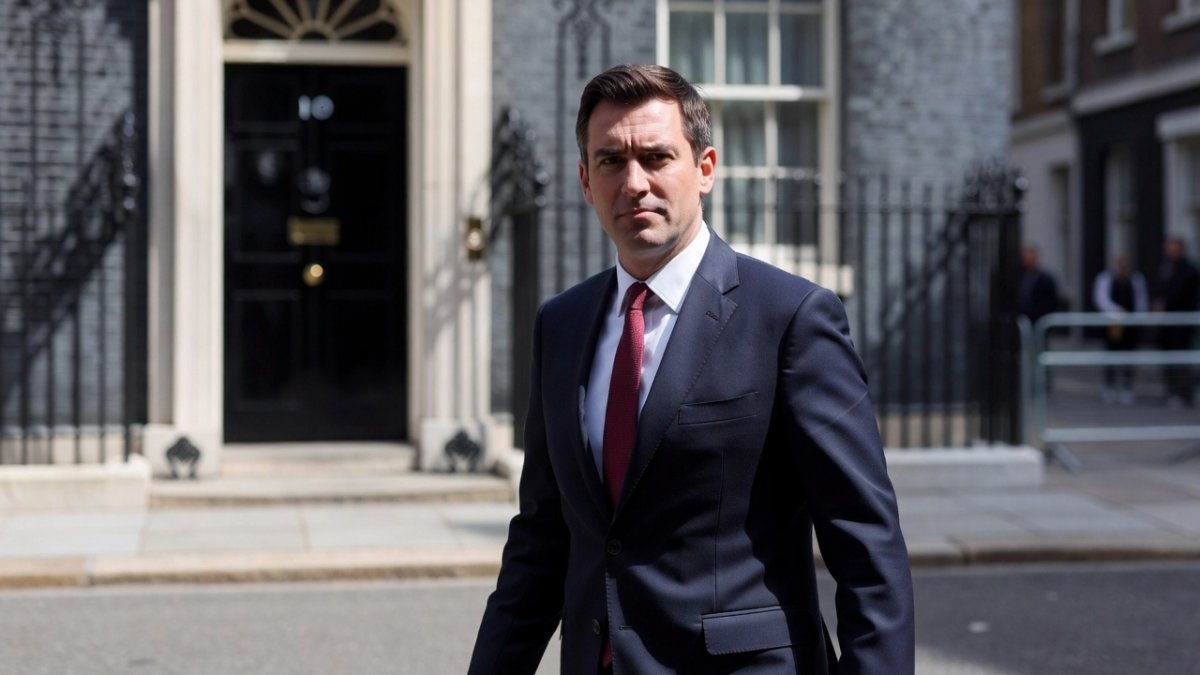
Burnham's PM Bid: Digital ID Axed, North Sea Oil Push
London, UK — Article continues...
The Path to Downing Street
Andy Burnham will take office as Prime Minister on Monday after meeting King Charles III, following his victory in the 2026 Labour leadership contest. Keir Starmer stepped down on 22 June after losing the confidence of Labour MPs, prompting a swift internal election that returned Burnham to Parliament through the Makerfield by-election. His earlier roles as Health Secretary under Gordon Brown and Mayor of Greater Manchester provide the administrative record he now brings to No 10.
The rapid sequence of events that forced Keir Starmer’s resignation echoes the pattern of internal party fractures seen during previous periods of Labour turbulence, most notably the 2016 leadership contest after the Brexit referendum. Loss of confidence among MPs often stems from cumulative pressures over economic management and electoral performance, with backbench rebellions accelerating once a critical mass of colleagues conclude that the leader can no longer command the parliamentary party. Burnham’s swift return via the Makerfield by-election illustrates the party’s willingness to parachute experienced figures into safe seats when circumstances demand immediate elevation to the front rank.
Burnham’s decade as Mayor of Greater Manchester supplies a distinctive record of devolved governance that contrasts with the centralised approach associated with recent Westminster administrations. The Greater Manchester Combined Authority’s handling of transport, health and skills devolution offers a template for regional policy delivery that Burnham has repeatedly cited as evidence of his capacity to bridge national and local priorities. Observers within the Institute for Government note that such mayoral experience has become an increasingly common route to senior ministerial office, reflecting the shift in power away from Whitehall since the 2010s.
Becoming the seventh Prime Minister in ten years places Burnham within a cycle of leadership instability that began with the 2016 referendum and continued through successive Conservative and Labour transitions. This frequency has strained institutional norms around ministerial continuity and civil-service planning, with the Cabinet Office repeatedly required to manage abbreviated handover periods. Burnham’s pledge to govern for all regions is therefore framed against this backdrop of fragmentation, where public confidence in No 10 has fluctuated sharply with each change of occupant.
Digital Identity Programme Abandoned
Burnham has confirmed the immediate cancellation of the digital ID scheme designed to issue government-verified identification to every adult. Deputy leader Lucy Powell described the decision as a step to clear the decks and redirect resources toward the cost of living. Funds previously allocated to the programme will now support measures aimed at household bills and wage pressures rather than new identity infrastructure.
The abandoned digital ID scheme would have required substantial investment in secure data infrastructure and verification systems, drawing on precedents such as the earlier identity-card proposals that were ultimately withdrawn in 2010. Civil-liberties organisations including Liberty and Big Brother Watch had already registered formal objections on grounds of data retention and potential mission creep, arguing that centralised identity verification risked disproportionate interference with privacy rights under the Human Rights Act. The decision to cancel therefore aligns with a long-standing cross-party scepticism toward large-scale identity databases.
Lucy Powell’s description of the move as necessary “to clear the decks” signals an explicit reprioritisation toward immediate household pressures rather than long-term digital infrastructure. Redirected resources are expected to support targeted interventions on energy bills and council-tax relief, measures that have featured in previous fiscal statements when chancellors sought to address cost-of-living spikes. Such reallocation mirrors the approach taken during the 2022 energy crisis, when unspent capital budgets were repurposed for direct household support.
The cancellation also removes a potential flashpoint with trade unions and privacy advocates who had warned that the scheme could complicate access to public services for vulnerable groups. By halting the programme before full rollout, the new administration avoids the protracted legal and technical disputes that accompanied earlier attempts at national identity systems. This early reversal is presented as evidence of a government willing to abandon inherited commitments when they conflict with short-term economic priorities.
North Sea Licensing Decisions
The incoming government is expected to authorise additional oil and gas licences in the North Sea, a move that sits alongside the digital ID reversal. Officials have framed the licences as part of a managed transition that maintains domestic supply while climate targets remain in place. Environmental groups have already signalled legal challenges, citing Labour’s earlier commitments on emissions reduction.
The planned expansion of North Sea oil and gas licences revives a long-running tension between energy-security arguments and the United Kingdom’s legally binding net-zero targets under the Climate Change Act 2008. Successive governments have justified continued licensing rounds by citing the need to maintain domestic production while renewables scale up, yet the Climate Change Committee has repeatedly warned that new fields risk locking in emissions incompatible with the 2030 and 2035 carbon budgets. Environmental groups including ClientEarth and Greenpeace have indicated they will seek judicial review, drawing on the precedent of the 2022 Rosebank legal challenge.
Current oil-price volatility, driven by global supply constraints, provides the immediate economic context for the licensing decision. Officials argue that additional domestic output can reduce reliance on imported liquefied natural gas, whose carbon footprint is higher when transport emissions are included. This “managed transition” framing echoes the language used by the Oil and Gas Authority in earlier licensing rounds, though critics contend it underplays the International Energy Agency’s finding that no new oil and gas fields are compatible with limiting warming to 1.5 °C.
Labour’s earlier manifesto commitments on emissions reduction now sit alongside the pragmatic acceptance that abrupt cessation of licensing could trigger job losses in Aberdeen and surrounding regions. The government’s approach therefore attempts to balance Treasury concerns over energy bills with the statutory obligations of the Climate Change Committee, a balancing act that will be tested when the next carbon-budget delivery plan is published.

Cabinet Formation Under Scrutiny
Shabana Mahmood, currently Home Secretary, is the leading candidate to become Chancellor of the Exchequer, replacing Rachel Reeves. Ed Miliband is also under consideration for the role. Yvette Cooper is expected to remain at the Foreign Office. Burnham has stated that final decisions on the top posts are still under review, with left-wing MPs warning of internal resistance should Mahmood be appointed over Miliband.
Shabana Mahmood’s potential move to the Treasury would mark a significant milestone, following her tenure as the first Muslim woman to serve as Home Secretary. Her record on prisons and security policy is viewed by some colleagues as evidence of a pragmatic, centrist approach that could reassure financial markets ahead of the autumn fiscal statement. Yet the prospect has already prompted warnings from left-wing MPs that her appointment over Ed Miliband would signal a narrowing of economic thinking within the new leadership.
Ed Miliband’s alternative candidacy reflects ongoing debate inside the parliamentary party about the balance between green industrial strategy and traditional fiscal caution. Supporters argue that his experience at the Department for Energy and Climate Change equips him to integrate net-zero investment with growth policy, while detractors question whether his profile would provide sufficient reassurance to bond markets. The choice between the two therefore functions as an early indicator of Burnham’s willingness to accommodate different wings of the party.
Yvette Cooper’s expected retention at the Foreign Office provides an element of continuity in a period otherwise defined by rapid personnel change. Her long-standing engagement with European security issues is regarded as an asset at a time when the government must manage both domestic economic pressures and international alliances. The overall composition of the top team will be scrutinised for signs of whether Burnham intends to consolidate a broad church or to consolidate around a narrower governing faction.
Policy Reset on Transport and Housing
Among the twelve priority areas outlined by Burnham’s team are the renationalisation of bus services and accelerated housing reform. These measures are presented as direct responses to regional inequality and the shortage of affordable homes. Greater Manchester’s existing bus franchising model is cited as the template for national rollout, while planning changes are intended to speed up construction without overriding local council oversight.
NHS Waiting Lists and Fiscal Discipline
Burnham has placed NHS performance at the centre of his early agenda, promising additional diagnostic capacity and workforce planning. At the same time he has reiterated commitments to fiscal rules that limit day-to-day spending increases. The combination reflects the dual pressure of record waiting lists and the need to reassure financial markets ahead of the autumn fiscal statement.
Seventh Prime Minister in Ten Years
Burnham becomes the seventh occupant of No 10 in a decade marked by repeated leadership changes. His pledge to govern for all regions of the United Kingdom is intended to address the fragmentation that has characterised recent Westminster politics. Observers note that success will depend on whether he can stabilise both the parliamentary party and public confidence within the first six months.
Immediate Tests for the New Administration
Cost of living support, housing supply and NHS capacity form the immediate tests facing Burnham when he enters Downing Street. The decision to scrap digital ID and expand North Sea drilling signals an early willingness to adjust inherited policies. How these choices balance with climate targets and internal party expectations will shape the first months of the new premiership.
Cost-of-living pressures remain the most immediate political test, with household energy bills and food-price inflation continuing to outpace wage growth according to Office for National Statistics data. Burnham’s team has indicated that redirected funds from the cancelled digital ID programme will be directed toward targeted bill support and wage-subsidy schemes, measures that must be calibrated against the fiscal rules reaffirmed in his first statement. Success in the first 100 days will be measured by whether these interventions produce measurable relief before the winter period.
NHS waiting lists, which reached record levels exceeding seven million treatments by the end of the previous parliament, constitute a second urgent benchmark. Additional diagnostic capacity and workforce planning will require both capital investment and cooperation with NHS England and the royal colleges, whose representatives have emphasised the need for sustainable staffing rather than short-term targets. Early progress on reducing the backlog will be viewed as a litmus test of the government’s ability to deliver visible public-service improvement.
Housing supply targets, framed around accelerated planning reform without removing local oversight, must contend with persistent shortfalls in affordable units documented by the National Audit Office. The national rollout of Greater Manchester’s bus-franchising model offers a parallel test of whether regional policy successes can be translated into legislation that commands support across different local authorities. Observers within the Constitution Unit suggest that demonstrable movement on these three fronts within the first 100 days will be critical to establishing parliamentary and public confidence in the new administration. By Erica Thornton, Staff Writer
This article was produced with AI-assisted research and editorial support. Reporting is based on sources cited in the article.
What's Your Reaction?
 Like
0
Like
0
 Dislike
0
Dislike
0
 Love
0
Love
0
 Funny
0
Funny
0
 Wow
0
Wow
0
 Sad
0
Sad
0
 Angry
0
Angry
0

US Politics and Policy Correspondent at Global1.News. Based in Washington DC, covering American politics, policy, elections, and the courts. Knows how the system works and tells you what it actually means.















Comments (0)