
China's MOFCOM Hits Out at UK Nationalisation of British Steel
MOFCOM's Formal Protest and Invocation of the 1986 Bilateral Investment Treaty On 17 July 2026, China's Ministry of Commerce (MOFCOM) issued a strongly worded statement expressing firm opposition and "strong dissatisfaction" with the United Kingdom government's decision to nationalise British Steel, a company owned by China's Jingye Group.
MOFCOM's Formal Protest and Invocation of the 1986 Bilateral Investment Treaty
On 17 July 2026, China's Ministry of Commerce (MOFCOM) issued a strongly worded statement expressing firm opposition and "strong dissatisfaction" with the United Kingdom government's decision to nationalise British Steel, a company owned by China's Jingye Group. The ministry argued that the move "seriously infringed upon Jingye's legitimate rights and interests" and "severely undermined the confidence of Chinese companies investing in the UK." MOFCOM specifically called on London to "faithfully fulfil" its obligations under the China-UK Bilateral Investment Treaty signed in 1986, a legally binding agreement designed to promote and protect mutual investments between the two countries.
This invocation of the 1986 treaty is significant. The agreement contains standard clauses on fair and equitable treatment, protection against expropriation without compensation, and mechanisms for dispute settlement. By referencing the treaty, MOFCOM is signalling that it views the nationalisation as potentially constituting indirect expropriation, even though the UK government has indicated it will appoint an independent valuer in autumn 2026 to determine compensation — which could theoretically amount to nil. Beijing's position is that the UK must adhere strictly to the treaty's protections regardless of domestic political considerations.
Background to the Nationalisation Decision
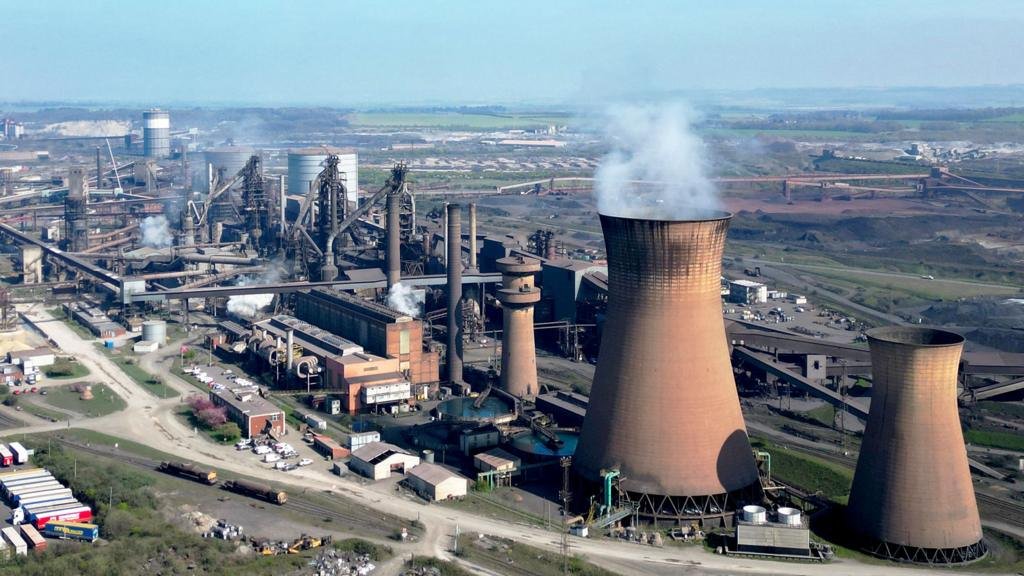
The UK government's move follows months of negotiations with Jingye Group after it took operational control of British Steel's Scunthorpe works last year while the Chinese firm retained ownership. On Thursday, ministers announced that bringing the loss-making entity into public ownership would protect approximately 2,700 direct jobs at Scunthorpe and safeguard thousands more in the supply chain. The government cited both economic necessity and the need to preserve a "vital national capability" in steel production, noting that the UK imports the majority of its steel from suppliers including the European Union, the United States, China and India.
Jingye had previously stated that the business was losing £700,000 per day. The nationalisation was enabled by legislation passed by Parliament allowing the government to bring steel assets into public ownership where they meet a public interest test. Small Business Minister Blair McDougall told the House of Commons that an independent valuer would assess compensation due to Jingye, underscoring that the figure "could be nil" if the valuation reflected the company's ongoing losses.
A UK government spokesperson later emphasised that negotiations had been conducted in good faith but "it wasn't possible to reach an agreement that represented value to the taxpayer." The spokesperson added that Britain "highly value[s] our relationship with China and remain[s] open to Chinese investment," attempting to soften the diplomatic blow.
Historical Context: From Thatcher-Era Privatisation to 2026 Nationalisation
The nationalisation of British Steel carries particular historical resonance. The company was last under full state ownership in 1988 before being privatised by Margaret Thatcher's Conservative government as part of its sweeping programme of denationalisation and market liberalisation. That privatisation was presented at the time as a triumph of efficiency over state bureaucracy. Nearly four decades later, a Labour-led government under incoming Prime Minister Andy Burnham has been forced to reverse that legacy, citing the strategic importance of domestic steelmaking capacity in an era of heightened geopolitical tension and supply chain vulnerabilities.
This reversal illustrates the cyclical nature of industrial policy in the UK. While Thatcher's administration prioritised market signals and fiscal discipline, the current government faces different pressures: decarbonisation targets, national security concerns over critical supply chains, and the political imperative of protecting industrial communities in northern England. For China, the episode serves as a reminder that Western governments' commitment to open markets can prove conditional when domestic political or strategic calculations shift.
National Security Justification Versus Chinese Perception of Protectionism
The UK government has framed its decision primarily through the lens of national security and public interest, arguing that control over steel production constitutes a strategic capability that cannot be left vulnerable to foreign ownership amid global uncertainties. This justification aligns with a broader trend among Western governments to scrutinise Chinese investments in sensitive sectors under evolving national security frameworks.
MOFCOM's statement, however, rejects this characterisation. The ministry asserted that the UK had disregarded "Jingye's significant contribution to the UK economy and society" and had used national security as a pretext for what Beijing perceives as economic protectionism. This divergence in interpretation is not merely rhetorical. It reflects fundamentally different worldviews: Western capitals increasingly view certain industrial sectors as too important to be subject to market forces alone, while China maintains that such interventions violate the spirit — if not the letter — of bilateral investment agreements.
The tension highlights a growing challenge in global economic governance. As countries invoke national security exceptions with increasing frequency, the boundaries between legitimate strategic protection and disguised protectionism become blurred, complicating dispute resolution under treaties such as the 1986 China-UK agreement.
Strategic Implications for China's Outbound Investment Strategy in Western Markets
The British Steel case carries significant implications for China's broader outbound investment strategy, particularly in Western markets. For years, Beijing has encouraged its enterprises to "go global" as part of its wider foreign policy objectives, seeking technological know-how, market access, and strategic assets. The Dual Circulation strategy outlined in the 14th Five-Year Plan (2021-2025) and subsequent policy documents has sought to balance domestic economic resilience with continued international engagement.
Incidents such as the nationalisation of British Steel risk eroding the confidence of Chinese firms considering investments in Europe and North America. MOFCOM's explicit warning that the move "severely undermined the confidence of Chinese companies investing in the UK" serves both as a diplomatic signal to London and a domestic message to Chinese enterprises. If major investments in legacy industries like steel can be nationalised despite existing bilateral treaties, Chinese firms may recalibrate their risk assessments for investments in critical infrastructure, advanced manufacturing, and other sectors that could be deemed strategically sensitive.
This development comes at a time when Chinese outbound direct investment (ODI) faces heightened scrutiny globally. Western governments have tightened foreign investment screening mechanisms, citing concerns over technology transfer, supply chain security, and potential dual-use applications. For Beijing, the calculus involves balancing the pursuit of technological self-sufficiency at home with the need to protect overseas assets and maintain access to international markets.
China's Broader Approach: Leveraging Trade Agreements and Legal Frameworks
MOFCOM's response reflects China's evolving approach to protecting overseas investments through a combination of diplomatic pressure, invocation of legal instruments, and support for affected companies. By referencing the 1986 Bilateral Investment Treaty, Beijing is demonstrating its willingness to utilise formal legal mechanisms rather than relying solely on political channels. This represents a maturation of China's strategy as its enterprises have accumulated substantial assets abroad.
China has increasingly sought to strengthen investment protection through newer agreements and through engagement with multilateral institutions. While the 1986 treaty with the UK is relatively dated by contemporary standards, its continued relevance demonstrates how older frameworks can be activated when disputes arise. Beijing has also been active in reforming international investment dispute settlement mechanisms, seeking to ensure that Chinese investors receive treatment consistent with global standards.
The statement that Beijing would "monitor developments closely and support Chinese firms to protect their rights" indicates that the government stands ready to provide diplomatic, legal, and potentially financial backing to Jingye Group. This approach aligns with China's broader foreign policy doctrine of defending the legitimate interests of its enterprises while avoiding direct confrontation that could escalate into broader diplomatic crises.
The Incoming Burnham Government's Strategic Dilemma
The timing of the nationalisation could not be more politically delicate. Andy Burnham is set to enter Downing Street on Monday following what appears to have been a significant shift in UK politics. The new prime minister will inherit a complex dilemma: balancing the need to protect British industrial communities and strategic capabilities against the economic benefits of maintaining constructive relations with China, the world's second-largest economy.
On one hand, the steel industry holds symbolic and practical importance for the UK's industrial heartlands. Protecting jobs in Scunthorpe and preserving domestic steelmaking capacity aligns with political promises to "level up" regions that have suffered from deindustrialisation. On the other hand, alienating Chinese investors risks broader economic consequences. China remains a crucial trading partner, and Chinese investment has played a role in various UK sectors including infrastructure, renewable energy, and advanced manufacturing.
Burnham's government will need to navigate this tension carefully. The UK's relationship with China has already been complicated by differences over technology security, human rights, and geopolitical alignments. The British Steel nationalisation adds an economic dimension to these frictions. How the new administration handles compensation negotiations with Jingye, manages the transition to public ownership, and communicates its broader China policy will be closely watched in Beijing.
Connection to China's Steel Overcapacity and Global Trade Tensions
The dispute cannot be separated from longstanding global tensions over steel trade. China has faced repeated accusations from Western economies and developing nations alike regarding steel overcapacity. Beijing has implemented various measures to address excess production, including capacity cuts and stricter environmental standards, but global markets remain sensitive to Chinese steel exports.
The UK, like many countries, imports substantial quantities of steel while maintaining limited domestic production. The nationalisation of British Steel reflects not only national security considerations but also industrial policy aimed at supporting domestic producers against what some perceive as unfairly subsidised foreign competition. This dynamic has played out in various forums, including at the World Trade Organization and through bilateral trade remedies.
For China, the British Steel case represents another chapter in its efforts to manage its position in global steel markets while defending the interests of its overseas investors. MOFCOM's response links the specific dispute to broader principles of fair trade and investment protection, suggesting that Beijing sees the UK's actions as part of a pattern rather than an isolated incident.
Implications for Future Chinese Investment in UK Infrastructure and Manufacturing
The nationalisation is likely to have a chilling effect on future Chinese investment in UK infrastructure and manufacturing sectors. While the UK government maintains that it remains "open to Chinese investment," the practical reality is that Chinese firms will now apply greater scrutiny to political and regulatory risks when evaluating UK opportunities.
Sectors that could be considered strategically sensitive — including energy, transport infrastructure, advanced materials, and defence-adjacent manufacturing — may see reduced Chinese interest or more cautious approaches, such as minority stakes rather than majority ownership. This shift could complicate the UK's efforts to attract foreign capital for its net-zero transition and industrial modernisation programmes.
Conversely, the episode may accelerate China's efforts to diversify its outbound investment destinations, with greater focus on markets in the Global South, ASEAN countries, and regions where investment treaties are seen as more reliably enforced. This realignment would align with Beijing's broader foreign policy objectives of expanding influence in the developing world while hedging against risks in traditional Western markets.
The dispute also raises questions about the future of the China-UK Bilateral Investment Treaty itself. While neither side has signalled an intention to terminate the agreement, the current controversy may prompt discussions about modernisation or clarification of certain provisions, particularly those relating to national security exceptions and compensation standards.
Geopolitical Calculus and Second-Order Effects
From a geopolitical perspective, both sides face complex calculations. For the UK, the decision reflects a broader Western trend of friend-shoring and securing critical supply chains amid great power competition. The incoming Burnham government must weigh short-term industrial policy gains against potential long-term costs in its relationship with China, including possible retaliatory measures in other economic domains.
Beijing, meanwhile, seeks to defend the principle that its enterprises should receive fair treatment abroad while avoiding escalation that could damage its broader economic interests in Europe. The strategic objective is to maintain access to Western markets and technology while advancing technological self-sufficiency at home through initiatives outlined in successive Five-Year Plans.
Second-order effects are likely to be felt across the European Union and the Global South. EU member states observing the dispute may reconsider their own approaches to Chinese investment in strategic sectors. For developing economies, the episode provides a case study in the tensions between investment protection and national development priorities.
The timing of the dispute, coinciding with leadership transition in the UK, adds another layer of complexity. How the new British government navigates its early weeks in office on this issue will help define its broader approach to economic statecraft and great power relations.
Ultimately, the British Steel nationalisation encapsulates the challenges facing the global economic order as geopolitical competition intensifies. The outcome of compensation negotiations, the operational performance of the newly nationalised entity, and the broader diplomatic management of the dispute will provide important signals about the future trajectory of China-UK economic relations and, by extension, China's engagement with Western economies more generally.
The episode underscores that while economic interdependence creates mutual vulnerabilities, it also generates friction when national security imperatives collide with commercial interests. Both Beijing and London will need to manage this tension carefully if they wish to preserve the substantial economic relationship that has developed over recent decades despite periodic political difficulties.
China's firm response through MOFCOM reflects not only defence of specific commercial interests but also a broader assertion of its role as a major global investor whose enterprises deserve protection under international agreements. How this particular dispute is resolved may influence patterns of investment and diplomatic engagement for years to come.
By Prof. Marcus Chen, Staff Writer
This article was produced with AI-assisted research and editorial support. Reporting is based on sources cited in the article.
What's Your Reaction?
 Like
0
Like
0
 Dislike
0
Dislike
0
 Love
0
Love
0
 Funny
0
Funny
0
 Wow
0
Wow
0
 Sad
0
Sad
0
 Angry
0
Angry
0

World Politics Analyst at Global1.News. Based in Beijing, covering US-China relations, global trade, and geopolitical strategy. Brings deep analytical perspective to the power dynamics shaping international affairs.














Comments (0)