
The Arrest of U Min Zin: Tensions at the Intersection of US-China Relations and Myanmar Dynamics
Confirmation of the Arrest and National Security Accusations China's foreign ministry has confirmed the arrest of a US scholar, accusing him of spying and endangering Chinese national security. This development marks a notable instance where details have been officially acknowledged amid limited public information. The individual in question, U Min Zin, was taken into custody i
Confirmation of the Arrest and National Security Accusations
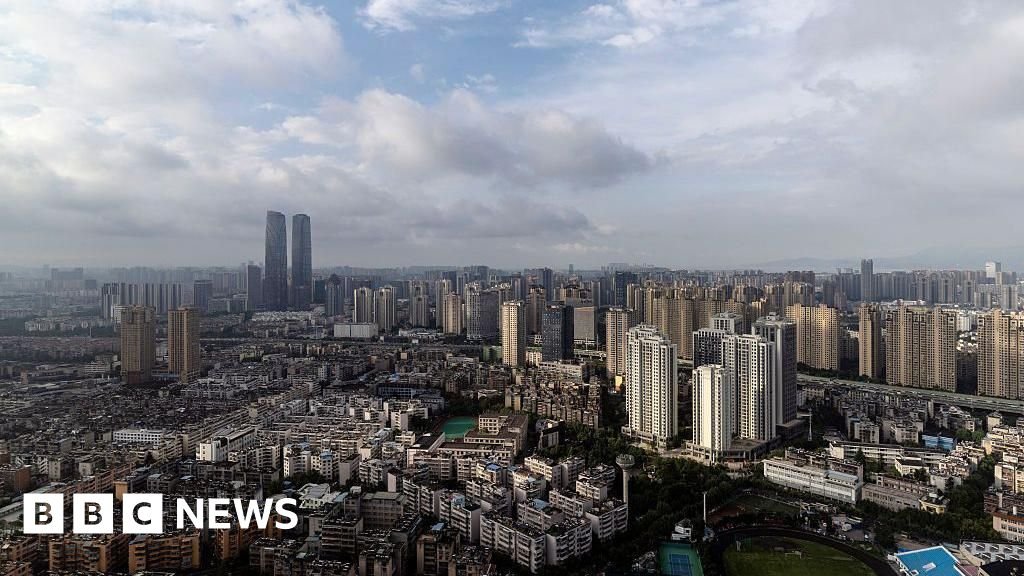
China's foreign ministry has confirmed the arrest of a US scholar, accusing him of spying and endangering Chinese national security. This development marks a notable instance where details have been officially acknowledged amid limited public information. The individual in question, U Min Zin, was taken into custody in early June, with reports indicating his disappearance in the Chinese city of Kunming. Such confirmations from the foreign ministry underscore the gravity with which the matter is being treated at the official level.
The accusations center on activities perceived as threats to national security, though further operational details remain unavailable. This case stands out because it involves a US citizen, an occurrence that sources describe as uncommon in the context of national security charges. The limited availability of additional information highlights the controlled nature of disclosures surrounding such detentions. Analysts note that the foreign ministry's statement provides the primary official framing, directing attention to the security dimensions without elaborating on procedural aspects.
Given the proximity of Kunming to Myanmar, the location adds a layer of geographic relevance to the incident. The arrest occurred while the scholar was attending a meeting on 3 June, according to reports from news agency AFP citing multiple sources. Family members have expressed concern and are reportedly following up with the US consulate in Guangzhou. These elements collectively illustrate how the event has prompted immediate responses from affected parties while official channels maintain a measured release of information.
Profile and Professional Background of the Scholar
U Min Zin serves as executive director at the Myanmar Institute for Strategic and Policy Studies, a think tank based in Thailand. This organization focuses on China's role in Myanmar, encompassing interests, relations, and regional influence. His position places him at the center of research examining cross-border dynamics, which aligns with the timing and location of his detention in Kunming. The think tank's emphasis on these topics provides context for understanding why his activities might intersect with official scrutiny.
Additional details indicate that U Min Zin is also a PhD student at the University of California Berkeley. He currently resides in Thailand but divides his time between the United States and Myanmar. His earlier trajectory includes participation as a student activist in Myanmar's 1988 pro-democracy movement, after which he fled to Thailand. He subsequently studied in the US and returned to Myanmar in 2010. These biographical elements establish a pattern of engagement across multiple countries and academic institutions.
At the time of the arrest, U Min Zin was scheduled to speak at a conference in Kathmandu later in the month. This upcoming commitment reflects ongoing involvement in regional discussions. The combination of his think tank leadership and academic pursuits underscores a career oriented toward policy analysis, particularly concerning Myanmar's external relations. Such a profile situates the individual within networks that monitor and interpret China's regional engagements.
Diplomatic Timing and Recent High-Level Interactions
The detention occurred just weeks after US President Donald Trump's visit to Beijing, where he met with Chinese President Xi Jinping and received a grand welcome. This sequence places the arrest in close proximity to a period of direct engagement between the two nations' leadership. The timing suggests that the event unfolded against a backdrop of ongoing diplomatic exchanges, even as bilateral interactions continued at the highest levels.
Further context arises from the planned visit of Myanmar's President Min Aung Hlaing to Beijing the following week. This upcoming trip reinforces the interconnected nature of the developments, linking the arrest to scheduled regional diplomacy. The foreign ministry's confirmation of the charges emerges precisely during this window, potentially influencing perceptions of stability in cross-border relations.
Observers may interpret the arrest as occurring at a juncture when multiple diplomatic threads were active. The visit by the US president and the impending arrival of Myanmar's leader highlight overlapping calendars of engagement. Without additional official elaboration, the precise interplay remains subject to analysis based on the established sequence of events. This alignment of dates illustrates how individual cases can coincide with broader state-to-state movements.
China's Established Relationship with Myanmar's Leadership
Beijing maintains a close relationship with Myanmar's junta, the military government that assumed power following the 2021 coup. This connection forms a consistent element in the regional landscape, providing a foundation for understanding interactions involving actors from Myanmar. The junta's position as the governing authority shapes the parameters within which external research and travel occur.
U Min Zin's work at the think tank explicitly addresses China's role in Myanmar, including interests and regional influence. His presence in Kunming, a city bordering Myanmar, occurred in this relational context. The arrest at the airport while attending a meeting thus intersects with an area of established bilateral ties between Beijing and the Myanmar authorities.
Such ties have persisted across different periods, encompassing economic, political, and security dimensions. The planned visit by President Min Aung Hlaing exemplifies the continuity of these contacts. In this setting, research activities focused on China's regional posture may encounter varying degrees of official attention, particularly when conducted near border areas. The case therefore reflects the operational environment shaped by these longstanding connections.
The Uncommon Character of National Security Detentions
Reports indicate that arresting US citizens on national security charges remains uncommon in China. This characterization distinguishes the present incident from more routine matters and draws attention to its exceptional status. The foreign ministry's confirmation of both the arrest and the specific accusations further emphasizes the deliberate nature of the official response.
The limited details available underscore the controlled dissemination of information typical in such matters. Sources cited by the New York Times and AFP have provided initial accounts, including the date of 3 June and the location at Kunming airport. Family concerns communicated through the US consulate in Guangzhou represent one channel of follow-up, yet broader procedural transparency is absent.
This rarity invites consideration of the factors that elevate a case to this level. The scholar's focus on China's role in Myanmar, combined with travel in a border region, aligns with the security framing advanced by authorities. The event thus stands as an outlier that may prompt reevaluation of travel and research practices among similar professionals, even as the precise thresholds for such actions stay unspecified in public records.
Regional Geopolitical Ramifications and Influence Networks
The incident carries potential implications for how think tanks and academic researchers navigate China's regional engagements. ISP-Myanmar's explicit study of Chinese interests positions its leadership within sensitive analytical spaces. Detention in Kunming, a gateway to Myanmar, may signal heightened scrutiny of activities that map these connections.
Second-order effects could extend to ASEAN forums and broader Global South interactions, where Myanmar-related research informs policy discussions. The upcoming conference appearance in Kathmandu illustrates the transnational character of such work. Disruptions at this level may influence participation patterns among scholars balancing US, Thai, and Myanmar affiliations.
From a strategic standpoint, the case highlights leverage points available to Chinese authorities in managing information flows about their regional posture. The close Beijing-Myanmar relationship provides a stable platform for such management. Meanwhile, US-based academic ties, including the Berkeley PhD program, introduce countervailing networks that may seek consular engagement. These dynamics illustrate competing interests without altering the underlying diplomatic architecture.
Strategic Calculus for US-China-Myanmar Interactions
Each actor operates with distinct objectives shaped by the available facts. Chinese authorities have framed the matter through national security, consistent with the foreign ministry statement. The US side has seen family outreach to its consulate, reflecting standard protective functions. Myanmar's leadership maintains its scheduled engagement with Beijing, preserving established channels.
Leverage in this setting derives from control over borders, information, and diplomatic calendars. The arrest near Myanmar's frontier, combined with the think tank's research mandate, demonstrates one form of influence. At the same time, the rarity of such actions against US citizens suggests a calibrated approach rather than routine application.
Longer-term consequences may involve adjustments in how researchers assess risks when examining China's role in Myanmar. The sequence following the Trump-Xi meeting and preceding the Min Aung Hlaing visit shows how individual cases can overlay high-level diplomacy. This layering encourages careful navigation of academic and policy work across the three countries, with attention to timing and location as documented in the present episode.
By Prof. Marcus Chen, Staff WriterThis article was produced with AI-assisted research and editorial support. Reporting is based on sources cited in the article.
What's Your Reaction?
 Like
0
Like
0
 Dislike
0
Dislike
0
 Love
0
Love
0
 Funny
0
Funny
0
 Wow
0
Wow
0
 Sad
0
Sad
0
 Angry
0
Angry
0

World Politics Analyst at Global1.News. Based in Beijing, covering US-China relations, global trade, and geopolitical strategy. Brings deep analytical perspective to the power dynamics shaping international affairs.














Comments (0)