
Kazakh President's Rare Freeze Appeal Exposes Kremlin Isolation on Ukraine
In a striking diplomatic break from tradition, Kazakh President Kassym-Jomart Tokayev directly urged Russian President Vladimir Putin to freeze the Ukraine war and revive stalled Istanbul-style talks during a bilateral forum in Omsk. The public appeal underscores deepening isolation for the Kremlin even among its closest post-Soviet partners. Tokayev framed the move as essential to deny adversaries further advantage while praising limited flexibility shown in recent U.S. engagements.
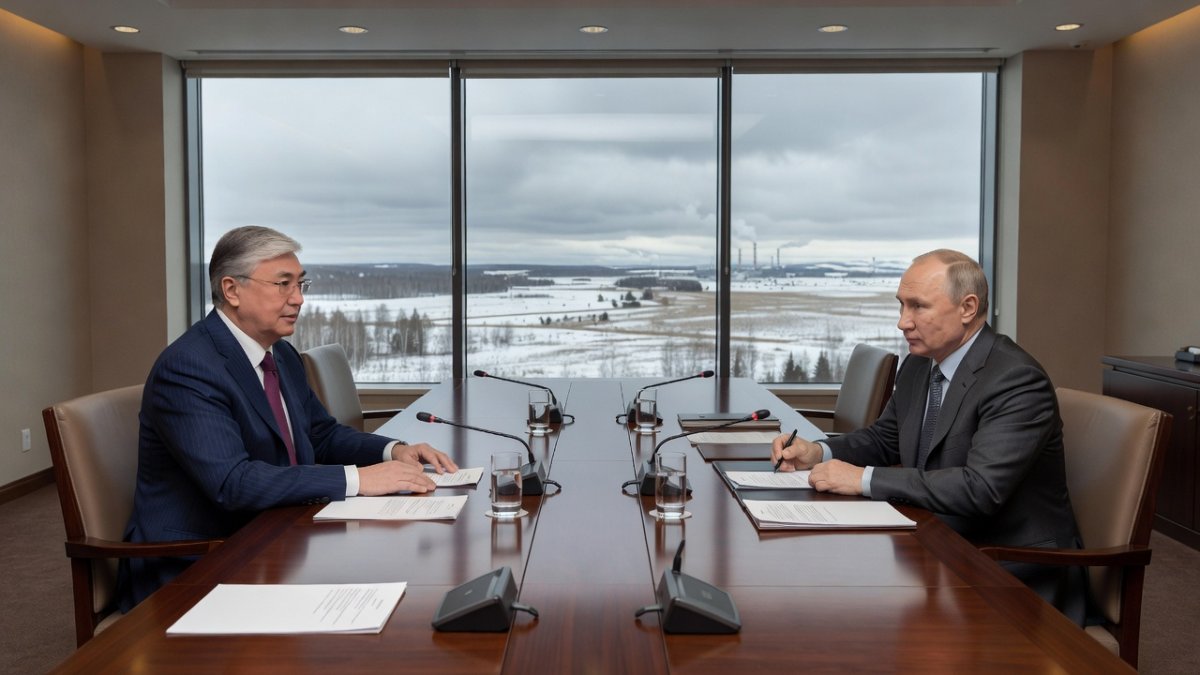
In a striking diplomatic break from tradition, Kazakh President Kassym-Jomart Tokayev directly urged Russian President Vladimir Putin to freeze the Ukraine war and revive stalled Istanbul-style talks during a bilateral forum in Omsk. The public appeal underscores deepening isolation for the Kremlin even among its closest post-Soviet partners. Tokayev framed the move as essential to deny adversaries further advantage while praising limited flexibility shown in recent U.S. engagements.
Kazakh President's Rare Freeze Appeal Exposes Kremlin Isolation on Ukraine
Omsk, Russia — Article continues...
Tokayev's Bold Intervention
Kazakhstan's President Kassym-Jomart Tokayev addressed Russian President Vladimir Putin directly on Saturday during the 22nd Russia-Kazakhstan Interregional Cooperation Forum in the Siberian city of Omsk. He called for the conflict in Ukraine to be frozen and for both sides to return to negotiations under what he termed an "Istanbul formula 2.0" framework. Tokayev praised Putin's "utmost diplomatic flexibility" while stating that the war must end because its continuation serves the interests of Russia's adversaries.
The Kazakh leader also referenced the August 2025 meeting in Anchorage between Putin and U.S. President Donald Trump, noting the same political flexibility on display there. In remarks reported by multiple outlets, Tokayev added that he "still does not understand why Russia launched its aggression against Ukraine." This public appeal stands out because Kazakhstan has traditionally avoided open disagreements with Moscow on foreign policy matters.
The Istanbul 2.0 Framework
Tokayev proposed reviving elements of the Istanbul talks that took place shortly after Russia's full-scale invasion in early 2022 and again in 2025. He suggested that security guarantees from the great powers, including Russia, could allow progress toward a long-awaited peace. The proposal frames a potential freeze as a practical step rather than a final settlement, drawing on the precedent of earlier negotiations that failed to produce a breakthrough.
Official accounts confirm that Tokayev presented the idea as a way to bring the conflict to an end while acknowledging the historical differences between the Ukraine situation and other regional tensions, such as those between Azerbaijan and Armenia. The emphasis remained on resuming dialogue rather than imposing new conditions at the outset.
Kremlin Cold Response
Kremlin spokesman Dmitry Peskov stated that freezing the conflict as such is impossible given Kyiv's position. Peskov quoted Putin as telling Tokayev that military action could be halted today if Kyiv adopted appropriate decisions. The Kremlin leader reiterated longstanding demands that Ukraine withdraw from four regions Russia claims as its own and publicly drop plans to join NATO.
Peskov further noted that Russia's key prerequisite remains the achievement of its stated goals. This response aligns with Putin's earlier statements last month outlining the same conditions for any halt in operations. The exchange occurred alongside discussions of the current state of Russia's military operations, as relayed by the Kremlin spokesman.
Peskov’s reply reflects the Kremlin’s established communication strategy of restating core demands while avoiding outright rejection of dialogue. By insisting that Kyiv must first withdraw from four regions and renounce NATO aspirations, the spokesman maintains the narrative that Russia remains open to peace on its terms. This approach allows Moscow to portray any continuation of fighting as Ukraine’s responsibility without appearing inflexible to domestic audiences.
Internally, the response aligns with hardliner preferences that view negotiations as premature until battlefield gains are consolidated. Putin faces domestic constraints from nationalist constituencies who frame the “special military operation” as an existential struggle; any perceived softening risks criticism that the leadership is abandoning stated goals. The measured tone therefore balances external signaling with the need to preserve internal cohesion.
Ukraine Welcomes Kazakh Diplomacy
Ukrainian officials responded positively to Tokayev's proposal, assigning responsibility for any continuation of the conflict to Moscow. Kyiv's position frames the Kazakh appeal as an acknowledgment that Russia holds the decisive role in determining whether negotiations can resume. This reaction highlights Ukraine's openness to renewed talks under an updated Istanbul framework while maintaining that core security concerns must be addressed.
Reports from Ukrainian sources indicate that the proposal is viewed as a constructive signal from a partner traditionally aligned with Moscow. The response underscores that any freeze would require verifiable steps from Russia rather than unilateral concessions from Kyiv.
Kazakhstan's Delicate Balancing Act
Kazakhstan shares the longest land border with Russia among Central Asian states and remains bound to Moscow through the Collective Security Treaty Organization and the Eurasian Economic Union. Tokayev has maintained a careful balancing act between Russia, China, and Western powers, avoiding public friction on foreign policy until this intervention. The appeal reflects Kazakhstan's interest in regional stability without directly challenging core alliance commitments.
By raising the issue at a bilateral forum in Omsk, Tokayev chose a setting that allowed the message to reach Putin while preserving space for continued economic and security cooperation. This approach demonstrates how even close partners can signal limits on indefinite support for prolonged military operations.
Kazakhstan has long pursued a multi-vector foreign policy under President Tokayev, carefully calibrating relations with Russia, China, the European Union, and the United States to maximize autonomy and economic advantage. This approach allows Astana to participate in Russian-led structures such as the CSTO and EAEU while simultaneously deepening ties with Beijing through the Belt and Road Initiative and securing Western investment in energy infrastructure. The strategy has enabled Kazakhstan to avoid over-reliance on any single power, preserving room for maneuver even as regional tensions rise.
Economically, the war has accelerated diversification. While EAEU membership keeps significant trade flowing with Russia, Kazakhstan has expanded oil exports via the Caspian Pipeline Consortium to European markets and increased cooperation with Chinese firms on logistics and mining projects. These shifts reduce vulnerability to Russian sanctions or supply disruptions. Tokayev’s public call for a freeze in Ukraine carries political risks, including potential economic retaliation or strained security cooperation, yet it also signals to domestic elites and international partners that Astana will not indefinitely subordinate its interests to Moscow’s military campaign.
Wider Implications for Central Asia
The intervention carries weight across Central Asia because Kazakhstan's stance often influences neighboring states within shared institutions like the CSTO and EAEU. Other regional actors have watched Moscow's actions in Ukraine closely, particularly regarding energy politics and post-Soviet security arrangements. Tokayev's comments suggest that prolonged conflict may strain traditional alignments more than previously acknowledged.
Perspectives from Western and Chinese observers note that Kazakhstan's position could encourage similar quiet diplomacy elsewhere in the region. At the same time, Russian officials continue to emphasize that bilateral ties with Astana remain strong despite the public difference on Ukraine policy.
Analysis and Outlook
One interpretation of the Omsk exchange is that it reveals the limits of Russia's ability to secure unqualified backing from even its closest partners for an open-ended military campaign. Tokayev's reference to Istanbul 2.0 and security guarantees from major powers frames a potential path that differs from the Kremlin's stated prerequisites. This reading aligns with the pattern of occasional public nudges from partners who otherwise coordinate closely with Moscow.
Another perspective holds that the Kremlin's response, delivered through Peskov, simply restates established positions without closing the door on future talks. The emphasis on Kyiv making "appropriate decisions" leaves room for movement if battlefield or diplomatic conditions shift. Observers will watch whether similar appeals emerge from other CSTO or EAEU capitals in coming weeks.
The Omsk exchange underscores growing Kremlin isolation even among its closest post-Soviet partners. Tokayev’s willingness to publicly advocate an “Istanbul 2.0” framework reveals that prolonged fighting is testing traditional alignments more than Moscow admits. By referencing the August 2025 Anchorage summit between Putin and Trump, Tokayev implicitly highlighted alternative diplomatic channels that bypass Russia’s maximalist demands, suggesting that some CSTO members see value in engaging Washington directly on Ukraine.
Other Central Asian states may follow Kazakhstan’s lead with greater caution. Uzbekistan and Kyrgyzstan have avoided similar public statements but share concerns about economic fallout and regional instability. The episode could lend momentum to the Istanbul 2.0 concept by framing security guarantees from major powers as a pragmatic starting point rather than a concession. For ordinary Russians, the development signals deeper isolation and the likelihood of an extended conflict, as even reliable partners signal limits on unconditional support.
Conclusion
Tokayev's Saturday remarks in Omsk mark a notable departure from Kazakhstan's usual restraint on Ukraine policy. While the Kremlin maintains that freezing the conflict remains impossible without Kyiv meeting its core demands, the Kazakh proposal has drawn a positive response from Ukraine and renewed attention to the Istanbul framework. The episode illustrates the complex interplay of alliance commitments, border realities, and differing views on how the conflict might eventually conclude.
By Irina Volkov, Staff WriterThis article was produced with AI-assisted research and editorial support. Reporting is based on sources cited in the article.
What's Your Reaction?
 Like
0
Like
0
 Dislike
0
Dislike
0
 Love
0
Love
0
 Funny
0
Funny
0
 Wow
0
Wow
0
 Sad
0
Sad
0
 Angry
0
Angry
0
Russia/Eastern Europe Correspondent at Global1.News. Covering Russian politics, energy, security, and the shifting dynamics of the post-Soviet space. Provides clear-eyed analysis on one of the world's most opaque regions.










Comments (0)