
US-Iran Peace Deal Signals Strategic Shift in Middle East Energy and Security Dynamics
The CGTN interview with Mohammad Marandi offers a measured Iranian perspective on the emerging US-Iran framework that surfaced in Geneva last month. Marandi emphasizes that any agreement must prioritize regional de-escalation over maximalist demands, a point that aligns with the two-stage structure now circulating among diplomats. The video underscores how Tehran views the deal
The Architecture of the Two-Stage Agreement
The two-stage agreement outlined in Geneva separates immediate regional stabilization from longer-term nuclear questions. Stage 1 focuses on reopening the Strait of Hormuz to commercial traffic, establishing a monitored ceasefire across proxy fronts, delivering targeted sanctions relief on oil exports and banking access, and halting Iranian funding to militant groups in Yemen, Lebanon, and Iraq. These measures aim to reduce daily tensions that have disrupted shipping lanes and raised insurance premiums for energy carriers. Stage 2 defers detailed nuclear discussions to a later date, allowing both sides to build confidence through verifiable implementation of the initial steps. The unreleased full text reportedly contains annexes on monitoring mechanisms and dispute-resolution procedures that remain confidential to prevent domestic political interference in Washington and Tehran.
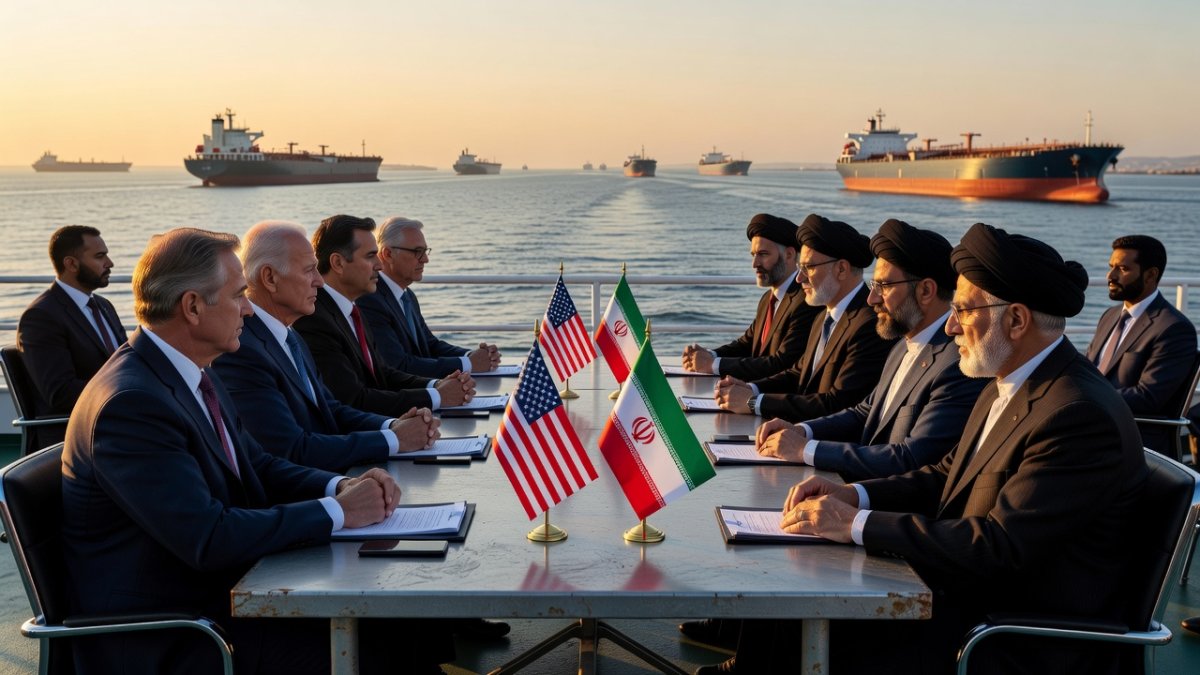
Mohammad Marandi’s CGTN analysis highlights that this sequencing prevents the nuclear file from derailing early progress on Hormuz security. He notes that Iranian negotiators insisted on clear timelines for sanctions removal tied to observable actions rather than vague promises. The architecture deliberately avoids the comprehensive scope of the original JCPOA, instead creating modular commitments that can be adjusted if one side fails to deliver. Regional actors have received briefings on the broad contours, though the precise verification protocols for militant funding remain opaque. This structure reflects a pragmatic recognition that simultaneous resolution of every issue would overwhelm the limited political capital available to both capitals. Implementation will hinge on third-party monitoring arrangements, possibly involving Oman or Switzerland, to maintain momentum toward Stage 2 talks.
Israel's Rejection and the Fragile Regional Consensus
Israeli Prime Minister Netanyahu delivered a forceful address rejecting the Geneva framework, arguing that any sanctions relief without ironclad nuclear restrictions would empower Iran’s regional ambitions. His government has signaled it will not be bound by the agreement and may pursue independent measures to counter perceived threats. This stance has complicated efforts to build a broader regional consensus, as Gulf states adopt a cautious posture that balances economic interests with security concerns. Saudi Arabia and the UAE have issued measured statements welcoming de-escalation while privately pressing for stronger guarantees against Iranian missile development and proxy expansion.
Hezbollah’s position adds another layer of fragility. The group has indicated willingness to observe a temporary ceasefire along the Lebanese border provided sanctions relief flows and reconstruction funds become available, yet its leadership remains wary of commitments that could constrain future operations. The deal therefore creates clear winners and losers: energy importers in Asia stand to benefit from stabilized Hormuz transit, while Israel and certain Sunni Arab states perceive heightened vulnerability. This uneven distribution of gains explains why the regional consensus remains tentative and subject to rapid reversal if verification shortfalls emerge during Stage 1. Diplomatic channels continue to shuttle between capitals to prevent outright sabotage, but the absence of Israeli buy-in limits the agreement’s durability.
China's Strategic Silence on the Geneva Framework
Beijing has maintained a deliberate silence on the Geneva framework despite its status as Iran’s largest oil customer. Chinese state media have carried only factual summaries of the talks without official commentary from the Ministry of Foreign Affairs or the Ministry of Commerce. This restraint aligns with China’s Dual Circulation strategy, which prioritizes stable energy inflows through the Strait of Hormuz to support domestic manufacturing and the 14th Five-Year Plan’s diversification targets. A premature endorsement could expose Beijing to criticism from Washington or complicate ongoing trade negotiations with the United States.
The strategic logic of quiet positioning allows China to secure de facto benefits from lower freight rates and resumed Iranian crude deliveries without assuming formal responsibility for enforcement. Chinese energy firms have already begun adjusting procurement contracts in anticipation of phased sanctions relief, yet MFA spokespeople continue to deflect questions by reiterating support for multilateral diplomacy. This approach preserves flexibility: if Stage 1 falters, Beijing can distance itself; if implementation succeeds, China can claim credit for regional stability that advances its Belt and Road connectivity goals. The absence of a formal statement therefore reflects calculated risk management rather than indifference.
Oil Markets React to the Prospect of Iranian Return
Brent crude prices declined noticeably after June 14 once reports of the two-stage framework surfaced, reflecting trader expectations of additional Iranian barrels entering global markets. The phased nature of sanctions relief has introduced uncertainty, however, because full restoration of export volumes depends on verification milestones that could slip. OPEC+ members have begun recalibrating production quotas to accommodate potential Iranian supply without triggering a price collapse that would harm fiscal balances across the Gulf.
Shipping rates for very large crude carriers have eased modestly as operators anticipate lower war-risk premiums once Hormuz transit normalizes. Insurance markets remain cautious, with underwriters demanding detailed compliance documentation before extending coverage to vessels loading Iranian crude. The overall market reaction has been measured rather than euphoric, because participants recognize that any disruption in Stage 1 implementation could quickly reverse recent price declines. Refiners in Asia have started positioning for higher Iranian volumes, yet they continue to diversify sources to mitigate political risk. These dynamics illustrate how the agreement’s economic dividends remain contingent on sustained diplomatic follow-through.
Nuclear Issues: Delayed but Not Defused
Nuclear negotiations were deliberately deferred to Stage 2 to prevent the more contentious issues of enrichment levels and centrifuge numbers from blocking immediate regional de-escalation. Historical experience with the JCPOA demonstrated that linking every dispute into a single package often leads to collapse when domestic politics shift. The current sequencing allows confidence-building measures around Hormuz and proxy funding to create political space for later nuclear talks. IAEA verification challenges persist, particularly regarding access to undeclared sites and the scope of continuous monitoring required for any new limits.
Advancing to Stage 2 will require demonstrable Iranian compliance with Stage 1 commitments and reciprocal sanctions relief that withstands scrutiny in the US Congress. Iranian negotiators have signaled that further nuclear concessions will depend on irreversible sanctions removal rather than temporary waivers. The deferred timeline therefore buys breathing room but does not eliminate underlying disagreements over breakout capacity and weaponization concerns. Success in Stage 2 will ultimately rest on whether both sides can translate early stabilization into durable verification arrangements acceptable to their respective domestic audiences.
Pakistan, South Asia, and the Connectivity Dimension
Pakistan’s prime minister publicly confirmed support for the Geneva framework, citing potential benefits for regional energy corridors. The agreement could revive long-stalled pipeline projects linking Iranian gas fields to Pakistani power plants, easing chronic electricity shortages. South Asian perspectives emphasize economic connectivity over geopolitical rivalry, with Indian analysts noting that stable Hormuz transit would also facilitate greater liquefied natural gas imports from the Gulf.
Chinese-backed infrastructure initiatives stand to gain from reduced maritime insurance costs, allowing more predictable freight movement through the Arabian Sea. Pakistani officials have quietly explored trilateral coordination mechanisms that would link Iranian energy supplies with Chinese-financed port development at Gwadar. These connectivity prospects explain why South Asian capitals have welcomed the two-stage approach even while nuclear questions remain unresolved. The framework’s success could therefore catalyze broader economic integration across the region, provided implementation benchmarks are met on schedule.
Second-Order Effects on ASEAN, the EU, and the Global South
ASEAN energy importers anticipate lower freight rates and more diversified crude supply once Iranian oil returns under regulated conditions. Singaporean and Malaysian refiners have already modeled scenarios showing improved margins from reduced war-risk premiums. The EU faces coordination challenges as member states weigh continued alignment with US secondary sanctions against the economic appeal of resumed trade with Iran. European diplomats have stressed the need for robust verification to justify any relaxation of existing restrictive measures.
Across the Global South, the agreement illustrates shifting dynamics in great-power competition. Countries that previously navigated between Washington and Beijing now observe a pragmatic US-Iran channel that may reduce pressure to choose sides. This perception could encourage middle powers to pursue independent energy and trade policies rather than aligning strictly with one bloc. The second-order effects therefore extend beyond immediate energy markets to influence broader diplomatic maneuvering in an increasingly multipolar environment.
Historical Context: From the Hormuz Blockade to the Geneva Table
The historical arc of US-Iran tensions reveals a pattern of escalation rooted in the 2019-2025 Hormuz blockade episodes, where Iranian naval posturing directly challenged energy transit routes, compounded by sustained proxy confrontations in Yemen and Syria that drew in Saudi and Israeli actors. These flashpoints intersected with the nuclear standoff, where enrichment thresholds repeatedly tested international red lines and prompted cycles of sanctions and covert operations. Throughout this period, China's UN posture has emphasized multilateral negotiation over unilateral pressure, consistently framing the crisis as one requiring Security Council-mediated dialogue rather than coercive isolation.
This Chinese emphasis on negotiated outcomes has provided diplomatic cover for back-channel explorations that ultimately produced the June 2026 framework, illustrating Beijing's strategic preference for stabilizing energy markets while preserving Iranian sovereignty within a rules-based order.
Iran's Domestic Calculus: Economic Pressure and Political Survival
Iran's domestic economy, burdened by inflation exceeding 40 percent in recent years and widespread elite dissatisfaction over living standards, created urgent incentives for Supreme Leader Khamenei to endorse the two-stage deal structure. Sanctions relief under the agreement promises to unlock frozen assets and revive oil exports, potentially easing fiscal pressures and enabling targeted subsidies that could shore up regime legitimacy. Yet the phased implementation also allows the leadership to retain leverage over compliance benchmarks, ensuring that economic reopening does not immediately erode core ideological controls.
Such calibrated relief could redirect revenues toward infrastructure and technology imports, gradually reshaping Iran's rentier model into one more integrated with Asian supply chains while still subject to Supreme Leader oversight.
Third-Party Mediation: The Oman-Pakistan-Switzerland Model
Oman, Pakistan, and Switzerland each contributed distinct mediation assets: Muscat's established trust with both Tehran and Washington, Islamabad's regional influence over proxy networks, and Bern's role as a secure venue for technical talks. Their collective involvement signals an emerging diplomatic template that privileges discreet, multi-state facilitation over great-power brokerage alone. This model may prove replicable in other protracted disputes where direct bilateral channels remain blocked.
By distributing mediation responsibilities, these actors reduce the risk of any single power claiming credit or incurring blame, thereby lowering entry barriers for future negotiations.
Implications for Russia-China-Iran Coordination in the SCO and BRICS
The US-Iran agreement is unlikely to erode Russia-China-Iran coordination within the SCO and BRICS, as shared interests in multipolar energy governance and sanctions circumvention persist beyond the bilateral settlement. Instead, the deal may free Iranian resources for deeper participation in Eurasian infrastructure projects, reinforcing trilateral alignment on issues such as de-dollarization and alternative payment mechanisms. Over the longer term, this configuration could evolve into a more institutionalized coordination mechanism that absorbs the diplomatic gains from Geneva without diluting anti-hegemonic objectives.
Thus the peace framework functions less as a Western wedge and more as an adaptive layer within an expanding non-Western diplomatic architecture.
What to Watch After Geneva
Implementation benchmarks will determine whether the two-stage agreement survives its first year. Observers should monitor the pace of sanctions relief disbursements, the frequency of IAEA inspections, and any reported incidents involving proxy forces. Verification milestones tied to Hormuz traffic and banking channel restoration will serve as early indicators of commitment from both capitals. Domestic politics in Washington and Tehran remain volatile, with congressional oversight hearings and Iranian parliamentary debates capable of generating sudden obstacles.
Key risks include Israeli military action that could derail Stage 1, Iranian non-compliance on militant funding, or disputes over the precise scope of sanctions relief. Sustained third-party mediation and transparent reporting mechanisms will be essential to manage these pressures. The coming months will reveal whether the Geneva framework can evolve from a fragile ceasefire into a durable platform for addressing the nuclear file in Stage 2. By Prof. Marcus Chen, Staff Writer
This article was produced with AI-assisted research and editorial support. Reporting is based on sources cited in the article.
What's Your Reaction?
 Like
0
Like
0
 Dislike
0
Dislike
0
 Love
0
Love
0
 Funny
0
Funny
0
 Wow
0
Wow
0
 Sad
0
Sad
0
 Angry
0
Angry
0

World Politics Analyst at Global1.News. Based in Beijing, covering US-China relations, global trade, and geopolitical strategy. Brings deep analytical perspective to the power dynamics shaping international affairs.












Comments (0)