
MOU Collapse Raises Middle East Energy and Security Risks
In a recent CGTN report on the collapse of a regional Memorandum of Understanding, analysts trace how an instrument once intended to manage flashpoints across the Middle East has unraveled, producing sharper confrontations between major actors. The thirty-minute segment outlines immediate diplomatic fallout without assigning precise enforcement dates, underscoring that any foll
In a recent CGTN report on the collapse of a regional Memorandum of Understanding, analysts trace how an instrument once intended to manage flashpoints across the Middle East has unraveled, producing sharper confrontations between major actors. The thirty-minute segment outlines immediate diplomatic fallout without assigning precise enforcement dates, underscoring that any follow-on arrangements remain under discussion rather than operational.
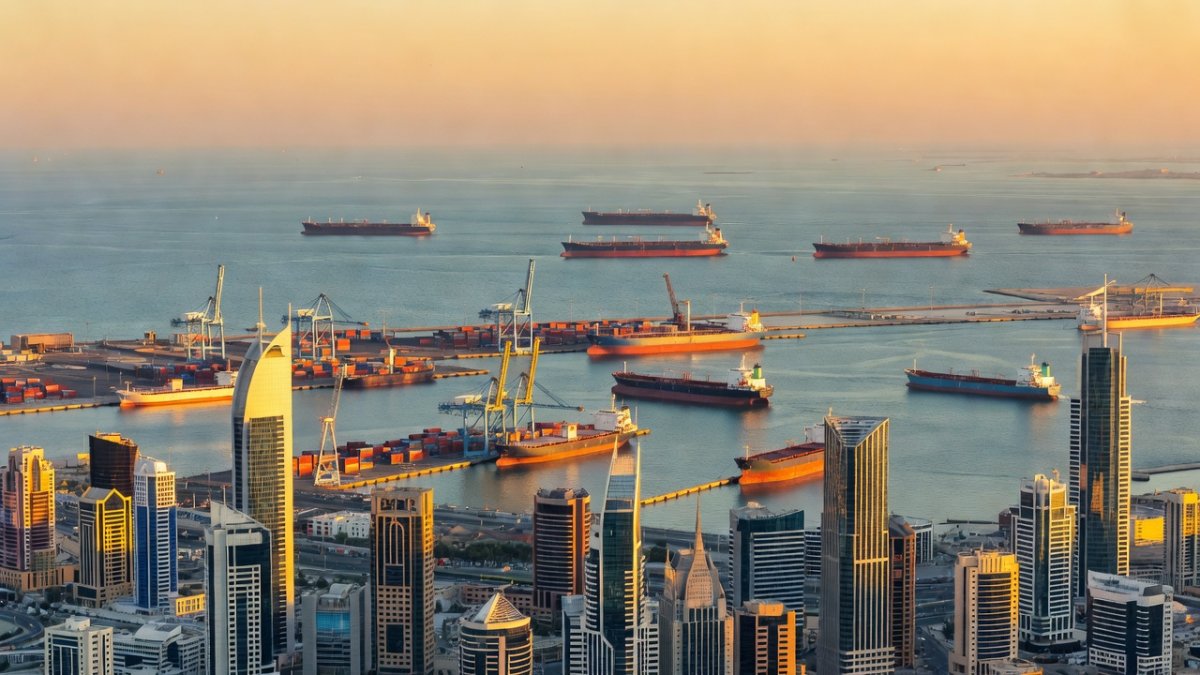
The stakes extend well beyond the signatories. Disruptions in the Persian Gulf directly affect crude flows through the Strait of Hormuz, while parallel shifts in Israeli threat assessments and Gulf state hedging strategies reshape the wider security architecture. External powers, including the United States and China, must recalibrate their approaches amid these fluid alignments.
Beijing’s perspective receives particular attention in the broadcast, given China’s reliance on stable energy imports and its ongoing Belt and Road projects in the region. The report therefore serves as a useful entry point for examining how the MOU’s breakdown intersects with longer-term Chinese strategic priorities.
The Nature of the Collapsed Framework
The CGTN segment describes the MOU as a set of understandings reached among several regional governments to limit escalation along contested borders and maritime zones. Specific signatories and clauses receive limited elaboration in open reporting, and the precise sequence of events that produced its termination has not been fully disclosed by participating capitals. Observers therefore note that any reconstruction of the document’s operational history must remain provisional.
Public statements from involved ministries have so far avoided detailed attribution of blame. Instead, officials have cited changing security environments and unmet confidence-building measures as contributing factors. This cautious phrasing suggests that the framework’s suspension, rather than outright abrogation, may still leave limited channels for technical coordination intact.
Because the MOU’s text has not been released in full, analysts focus on observable behavioral changes since its reported lapse. Increased naval patrols, accelerated arms acquisitions, and sharper rhetorical exchanges between capitals now serve as the primary indicators that the previous restraint mechanisms are no longer functioning at prior levels.
Regional media have begun to publish competing narratives about the timing and responsibility for the breakdown. These accounts remain difficult to verify independently, reinforcing the need for continued monitoring of official communiqués from foreign ministries rather than reliance on any single interpretation.
Regional Power Realignments
Iran’s posture has shifted toward greater emphasis on asymmetric capabilities and diplomatic outreach to non-Gulf actors. Tehran’s foreign ministry has framed recent moves as defensive responses to perceived encirclement, while avoiding commitments that would lock in earlier restraint patterns. This recalibration affects both its immediate neighbors and wider Shia-aligned networks across the Levant and Red Sea.
Saudi Arabia’s security calculus now incorporates accelerated diversification of defense suppliers alongside continued coordination with other Gulf Cooperation Council members. Riyadh has signaled interest in bilateral confidence measures that bypass the defunct MOU structure, yet it continues to condition deeper engagement on verifiable limits to Iranian regional activities. The kingdom’s approach reflects a preference for managed competition rather than open confrontation.
Israel’s threat perception has evolved to treat the MOU’s absence as an additional variable in its multi-front planning. Israeli officials have increased public references to maritime interdiction requirements and long-range strike options, while still leaving room for deconfliction channels with select Arab states. These adjustments occur against the backdrop of ongoing domestic debates over force posture and alliance reliability.
Smaller Gulf states have adopted varied hedging strategies. Some have quietly expanded economic ties with Iran while maintaining security links to larger partners. Others have accelerated participation in multilateral naval exercises, signaling a desire for external presence without formal new alliance commitments. The resulting patchwork reduces the likelihood of any single replacement framework emerging quickly.
China’s Calculated Stake in Stability
China’s Ministry of Foreign Affairs has consistently advocated dialogue among regional parties without endorsing any particular mediation format. Beijing’s statements emphasize respect for sovereignty and non-interference, positions that align with its broader diplomatic doctrine while protecting concrete interests in energy supply and infrastructure.
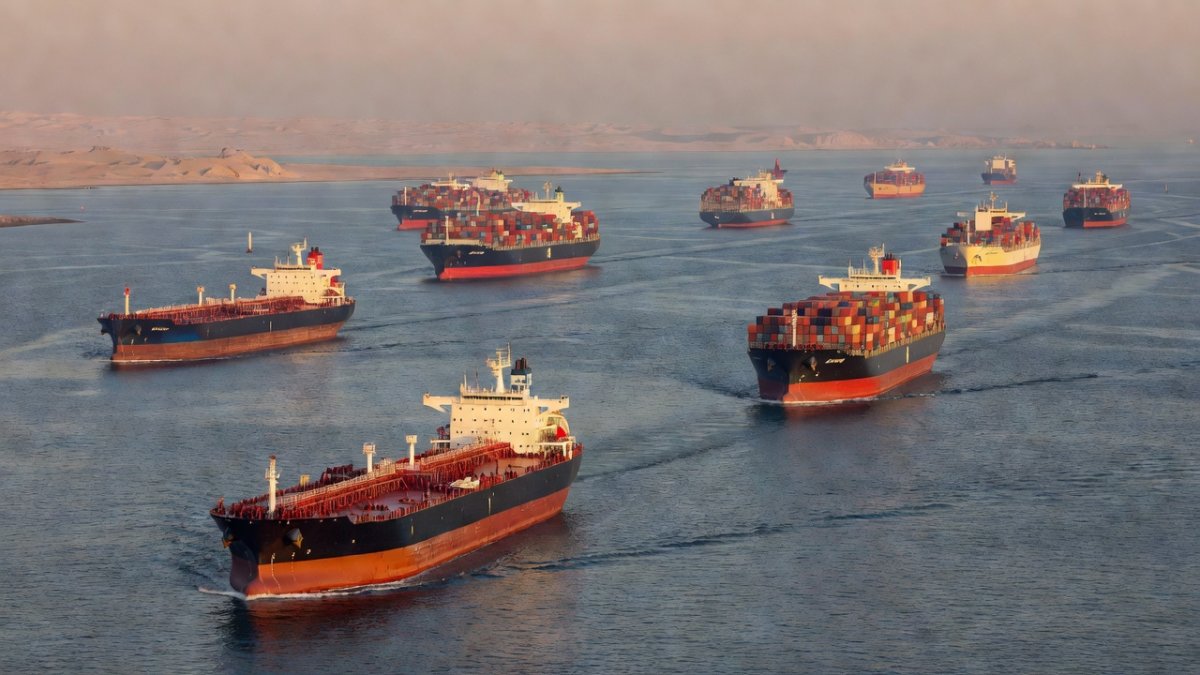
Energy security remains central. Roughly half of China’s crude imports transit the Strait of Hormuz, making any sustained disruption a direct concern for the National Development and Reform Commission and state energy firms. The collapse of the MOU therefore prompts quiet contingency planning rather than public alarm.
Belt and Road projects in the Gulf and adjacent corridors face renewed risk assessments. Port and rail initiatives already under construction require predictable political conditions to meet financing schedules set by Chinese policy banks. Delays traceable to heightened tensions could affect repayment timelines and future project pipelines.
Chinese analysts also weigh second-order effects on the Global South. Many Belt and Road partner countries depend on affordable Gulf energy and stable shipping lanes; prolonged instability could therefore complicate Beijing’s narrative of mutually beneficial connectivity. MFA spokespersons have accordingly reiterated calls for restraint while avoiding entanglement in local disputes.
External Powers and Leverage Points
The United States has continued its gradual reduction of permanent forward deployments while preserving rapid-reaction options and intelligence-sharing arrangements. Washington’s approach combines pressure on Iranian oil exports with selective engagement on nuclear issues, yet it lacks a comprehensive regional architecture to replace the lapsed MOU. European capitals have largely followed similar patterns, favoring sanctions coordination and limited naval contributions.
Russia maintains parallel channels with multiple Gulf governments and Iran, leveraging arms sales and energy coordination to preserve influence. Moscow’s diplomatic bandwidth remains constrained by other priorities, limiting its capacity to broker new multilateral understandings even when local actors express interest in third-party facilitation.
Neither Washington nor European governments have advanced concrete proposals for a successor framework in recent weeks. Instead, they have focused on preventing immediate escalation through back-channel communications. This reactive posture leaves space for other actors, including China, to explore limited convening roles if conditions permit.
Regional states themselves retain the greatest leverage over outcomes. Their willingness to accept incremental, verifiable restraints will determine whether any new arrangement can take hold. External powers can at best provide guarantees or economic incentives; they cannot substitute for direct understandings among the primary stakeholders.
Energy, Shipping, and Global South Effects
Any prolonged closure or harassment of Hormuz traffic would immediately register in global benchmark prices, with Asian importers facing the steepest exposure. ASEAN economies already managing post-pandemic recovery would confront higher input costs for manufacturing and transport, potentially slowing growth trajectories outlined in national development plans.
African nations dependent on Gulf refined products for electricity generation and agriculture would experience similar pressures. Several Sahel and East African states have only recently expanded trade links with Gulf suppliers; sudden price spikes could strain fiscal balances and complicate debt-servicing obligations to international lenders.
Shipping companies have begun adjusting war-risk premiums and routing options, adding days and expense to voyages between the Indian Ocean and Mediterranean. These adjustments compound existing disruptions in the Red Sea and underscore the interconnected nature of maritime chokepoints.
China’s Dual Circulation strategy offers partial insulation through expanded domestic storage and diversified supplier relationships, yet it cannot fully neutralize price volatility transmitted through global markets. Beijing therefore continues to monitor both physical transit conditions and diplomatic signals that might restore a measure of predictability.
Prospects for Renewed Diplomacy
Track-two initiatives involving academic and former official participants have already resumed in several European and Asian venues. These discussions focus on identifying minimal confidence-building steps that could precede any formal replacement for the collapsed MOU. Progress remains slow and dependent on parallel political decisions in key capitals.
Mediation offers from neutral parties, including Oman and Qatar, continue to circulate. Both states possess established lines to Tehran and Riyadh, yet they have so far refrained from announcing formal processes until clearer mandates emerge from the principals. Their quiet diplomacy may nevertheless keep limited channels open.
Future indicators to watch include the resumption of joint maritime patrols under new auspices, the publication of updated oil export data from Iran, and any high-level visits between Gulf foreign ministries. Each development would signal whether actors are prepared to accept operational constraints in exchange for reduced confrontation risks.
China’s MFA has indicated willingness to support any regionally owned process that contributes to stability, without positioning itself as lead mediator. This calibrated stance preserves Beijing’s influence while avoiding commitments that could conflict with its non-interference principles. The coming months will test whether such restraint can coexist with the practical need to safeguard energy and infrastructure interests.
By Prof. Marcus Chen, Staff WriterThis article was produced with AI-assisted research and editorial support. Reporting is based on sources cited in the article.
What's Your Reaction?
 Like
0
Like
0
 Dislike
0
Dislike
0
 Love
0
Love
0
 Funny
0
Funny
0
 Wow
0
Wow
0
 Sad
0
Sad
0
 Angry
0
Angry
0

World Politics Analyst at Global1.News. Based in Beijing, covering US-China relations, global trade, and geopolitical strategy. Brings deep analytical perspective to the power dynamics shaping international affairs.












Comments (0)