
Chad's At the Heart of Art Festival Returns: A Cultural Incubator Empowering a New Generation of Creative Talent in N'Djamena
In N'Djamena's Bakara district this May, the third edition of the "At the Heart of Art" festival closed with soaring voices, bold rhythms, and a shared conviction taking root across Chad: for the country's youth, art is not a luxury — it is a future worth building. Chad's 'At the Heart of Art' Festival Returns: A Cultural Incubator Empowering a New Generation of Creative Talent
In N'Djamena's Bakara district this May, the third edition of the "At the Heart of Art" festival closed with soaring voices, bold rhythms, and a shared conviction taking root across Chad: for the country's youth, art is not a luxury — it is a future worth building.
Chad's 'At the Heart of Art' Festival Returns: A Cultural Incubator Empowering a New Generation of Creative Talent in N'Djamena
N'Djamena, Chad — Deep in the Bakara district of Chad's capital, the third edition of the "At the Heart of Art" festival brought together hundreds of young participants, international artists, and local performers in a celebration of creativity and youth empowerment that has quickly become a cultural anchor for the city.
A Festival Born from a Vision: Célestin Mawndoé and Au Nom de l'Art
Founder Célestin Mawndoé, a respected Chadian singer and artistic director, shaped the third edition of the "At the Heart of Art" festival around the theme "Reimagining Education" (Réimaginer l'éducation). His vision centers on turning creative expression into a practical path for young people in N'Djamena's Bakara district.
Mawndoé leads the association Au Nom de l'Art, which organized the event from May 4 to 10, 2026, with closing concerts extending through May 12. The festival has grown steadily since its first edition into a steady cultural anchor that draws hundreds of participants each year.
Through concerts, art exhibitions, training workshops, and cultural exchanges, the programme highlights cultural diversity, sharing experiences, and social cohesion for youth. Mawndoé sees these elements as essential for building confidence in a country facing security challenges from Boko Haram attacks in the Lake Chad region.
The festival's expansion reflects a deliberate effort to show young Chadians that art can sustain livelihoods. Mawndoé has stated, "It is so important because it also represents the future. We want to show a new generation that it is possible to live from art here… and they have so much talent."
Each edition builds directly on the last by adding new training tracks and inviting more regional artists. This steady growth has positioned the event as a reliable gathering point for creative communities across Chad.
The association's work connects local talent to broader African networks, creating opportunities that extend beyond the festival dates and into everyday artistic practice in N'Djamena.
Bakara itself carries a long history as a working-class neighbourhood where street vendors, griots, and informal musicians have long shaped daily rhythms, giving the festival a natural home amid this vibrant street culture. Mawndoé's own path as a Chadian musician, navigating scarce recording studios and almost no formal arts education outside the capital, directly informs his insistence that the festival must address these structural barriers head-on.
Chad's wider cultural landscape remains marked by limited infrastructure, with most professional training concentrated in N'Djamena and few venues equipped for sustained artistic development. Au Nom de l'Art therefore runs smaller, ongoing workshops in outlying neighbourhoods throughout the year, ensuring that the May gathering serves as a high point rather than an isolated moment.
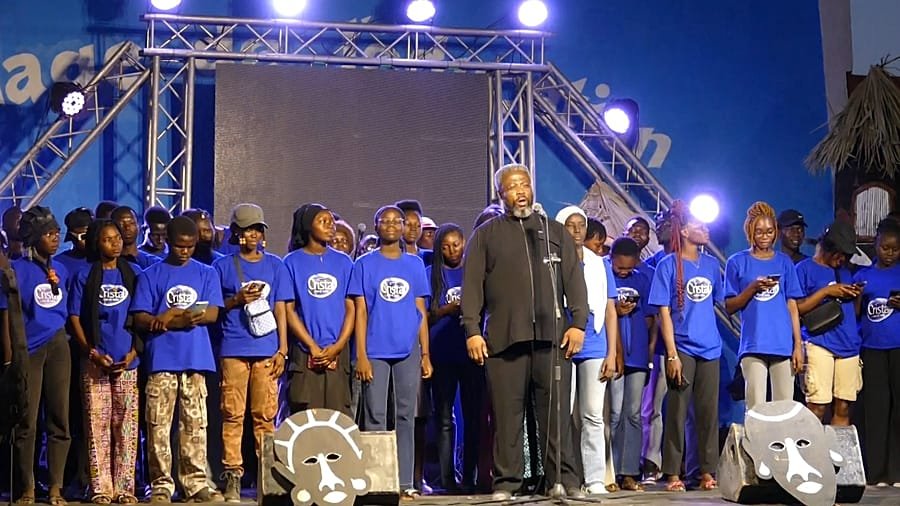
Camp 500: Opera, Training, and the Power of Mentorship
Cameroonian opera singer Greg Belobo, a laureate of major European competitions, led the "Camp 500" training sessions during the festival. His presence brought classical technique directly into workshops attended by more than 500 trainees.
The sessions also reached 1,000 children from underprivileged neighbourhoods through UNICEF-supported workshops. These programmes focus on giving youth marketable skills in the arts while encouraging discipline and creative risk-taking.
Belobo's electrifying delivery during daily rehearsals inspired participants who had never encountered opera before. The exchange showed how classical forms can blend with Chadian rhythms to create fresh expressions.
Trainees learned vocal control, stage presence, and ensemble work alongside local percussion and vocal traditions. This meeting of styles produced performances that felt both rooted and innovative.
The emphasis remained on practical outcomes: participants left with portfolios, performance experience, and connections that can lead to paid work in Chad's growing cultural sector.
Greg Belobo's mentorship model demonstrated that rigorous training can thrive even in challenging environments, offering a template other Sahel cities might adapt.
Belobo's laureate status includes first prizes at the Queen Elisabeth Competition in Brussels and the International Vocal Competition in 's-Hertogenbosch, credentials that lent immediate credibility to the sessions. The fusion of his operatic precision with Chadian vocal traditions yielded original compositions premiered at the closing concert, blending bel canto lines with local call-and-response patterns.
Several Camp 500 graduates have already formed their own music collectives, securing small performance contracts at local venues and community events. UNICEF's broader Sahel education strategy positions arts training as a complementary pathway to formal schooling, helping adolescents develop both cognitive skills and economic resilience in regions where conventional classrooms remain under-resourced.
New Voices Take the Stage: Pulcherie and KaeZy
Pulcherie, the Cameroonian-Chadian artist who blends RnB, afro-soul, and afrobeat, performed in Bakara as a meaningful homecoming. Her set drew families and young fans who recognized her fusion of styles from both sides of the border.
She described the experience by saying, "The festival allowed me to discover a new audience… I am going back to my roots." The performance reinforced ties between Chadian and Cameroonian creative scenes.
KaeZy, one of Chad's most followed artists, took the stage later in the week. His viral 2025 hit "Ato Bane Wa" had already become a TikTok phenomenon and a rallying cry for young Chadians seeking affirmation.
He explained the song's message: "It's a song about self-affirmation… being proud of where we come from." The crowd erupted when the opening notes played, turning the Bakara venue into a sea of voices.
Both artists participated in daytime workshops, sharing songwriting techniques and career advice with the 500 trainees. Their presence showed that commercial success and cultural authenticity can coexist.
The performances highlighted how new voices are reshaping Chad's music landscape while staying connected to community expectations and local rhythms.
Pulcherie's career path has taken her from Douala nightclubs to N'Djamena studios, where she first gained notice for merging Cameroonian makossa grooves with Chadian melodic phrasing. KaeZy's "Ato Bane Wa" amassed over 2.3 million TikTok views within weeks of release, its lyrics echoing across youth gatherings as a declaration of regional pride.
Other rising figures such as Anour D. are similarly reshaping the scene by fusing traditional Sara rhythms with contemporary production, while social media platforms now allow Chadian artists to reach pan-African listeners without relying on distant record labels. These digital connections have turned isolated bedrooms into recording hubs and created informal networks that extend far beyond national borders.
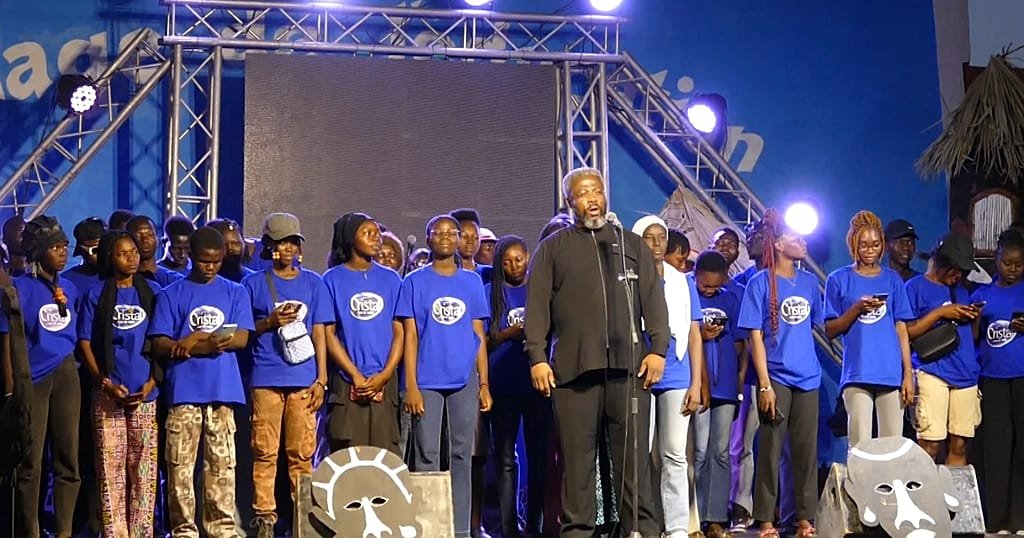
A'Salfo and Magic System: Pan-African Artistic Patronage
Ivorian superstar A'Salfo, whose real name is Salif Traoré, served as artistic patron for the third edition. As leader of Magic System, one of Africa's most successful musical groups, he brought decades of experience in building audiences across the continent.
A'Salfo also serves as commissioner of FEMUA, the Festival des musiques urbaines d'Anoumabo in Ivory Coast. His involvement linked Chad's festival directly to established West African cultural platforms.
His presence created concrete cultural exchange between Chad and Ivory Coast, including joint workshops on production and stagecraft. Participants gained insight into how large-scale events operate in Abidjan and beyond.
The pan-African artistic solidarity on display reminded attendees that creative work in the Sahel does not happen in isolation. A'Salfo's guidance encouraged young artists to think regionally from the start.
Magic System's history of turning street rhythms into global hits offered practical lessons on sustaining careers while remaining grounded in African realities.
The partnership strengthened the festival's reputation as a serious platform rather than a one-off gathering, opening doors for future collaborations.
Magic System's milestones include the multi-platinum Félicité album and multiple African Music Awards, alongside tours spanning more than twenty countries. FEMUA itself has grown from a neighbourhood street party into one of West Africa's largest urban music festivals, drawing over 150,000 attendees annually.
A'Salfo personally led workshops on production techniques, stage management, and artist branding, drawing directly from his experience scaling Magic System from Abidjan streets to international stages. These exchanges have already prompted discussions between Chadian and Ivorian cultural ministries about a formal co-production agreement that could facilitate artist residencies and shared touring circuits.
Beyond the Stage: Art as a Tool for Social Transformation in the Sahel
Chad faces ongoing security challenges from Boko Haram attacks in the Lake Chad region, making cultural events like this festival especially significant for youth engagement. The programme deliberately positioned art as a constructive alternative to isolation or conflict.
Similar Sahel initiatives such as FESTICLAC, focused on reading and art, show a regional pattern of using culture for education and citizenship. Chad's edition adds music and performance training to that model.
UNICEF Chad ambassadors, including Mawndoé, Nair Abakar, and Asalfo Magic, supported the workshops that reached 325 to 500 youth across activities. Their involvement ensured the focus stayed on adolescents often overlooked in formal schooling.
The festival treated cultural diversity, sharing experiences, and social cohesion as core outcomes rather than side benefits. Participants practiced collaboration across ethnic and regional lines during joint rehearsals.
Reported by Dominic Wabwireh with Sasha Gankin for africanews, the coverage noted how these events build resilience in communities under pressure. The emphasis on marketable skills gives young people tangible reasons to stay engaged.
By combining training with public performances, the festival demonstrated that art can serve both personal development and broader peace-building goals in the Sahel.
FESTICLAC and the Festival des Arts et de la Culture Azumeina illustrate how Sahel nations increasingly turn to cultural programming to counter radicalisation and displacement. Chad's own challenges include repeated Boko Haram incursions that have created large internally displaced populations, many of them young people severed from traditional support structures.
The festival deliberately mixes participants from Sara, Arab, Toubou, and Hadjarai communities, fostering daily rehearsals that require cross-ethnic cooperation. Several graduates from earlier editions have since launched small arts businesses or secured teaching positions, demonstrating how sustained cultural investment can redirect individual trajectories away from marginalisation.
A Year-Round Creative Incubator: What Comes Next
The Au Nom de l'Art space in Bakara operates year-round as a creative incubator, offering continuous artistic training beyond the May dates. Young artists return for weekly sessions in music, visual arts, and performance.
Skills, confidence, and community ties formed during the festival continue to develop in this permanent venue. Participants report forming small collectives that book local gigs and apply for regional grants.
The next edition of the festival is set to return in 2027, giving organizers time to expand partnerships and deepen the training curriculum. The gap allows the year-round space to prepare a new cohort.
The long-term vision centers on making art accessible, empowering, and transformative across Chad. Mawndoé and his team aim to replicate elements of the model in other cities facing similar youth employment pressures.
By treating the festival as one moment in an ongoing cycle, the association ensures that the energy of May 4-10, 2026, translates into sustained creative practice rather than fading after the final concert.
The Sahel's creative youth are redefining what is possible through cultural expression, and N'Djamena's Bakara district now stands as a clear example of that shift.
Weekly music production classes, visual arts workshops, and dance sessions keep the Bakara space alive throughout the year, turning it into a reliable hub for skill-building. Mawndoé has already floated potential partnerships with the French Alliance Française and Goethe-Institut for 2027, which could bring additional technical resources and international mentors.
The same incubator model could be adapted in Ouagadougou, Bamako, or Niamey, where similar youth demographics and security pressures exist. Local vendors, transport workers, and food sellers in Bakara report noticeable income spikes during festival week, underscoring how cultural events generate immediate economic ripples that extend well beyond the stage.
By Amara Diop, Staff Writer
This article was produced with AI-assisted research and editorial support. Reporting is based on sources cited in the article.
What's Your Reaction?
 Like
0
Like
0
 Dislike
0
Dislike
0
 Love
0
Love
0
 Funny
0
Funny
0
 Wow
0
Wow
0
 Sad
0
Sad
0
 Angry
0
Angry
0
West Africa/Sahel Correspondent at Global1.News. Dakar-based journalist covering politics, security, climate, and development across Francophone and Anglophone West Africa. Tells the stories of a region undergoing profound transformation.









Comments (0)